Microsoft Lens Proves Captions Beat Raw Scale for Better Image Generators
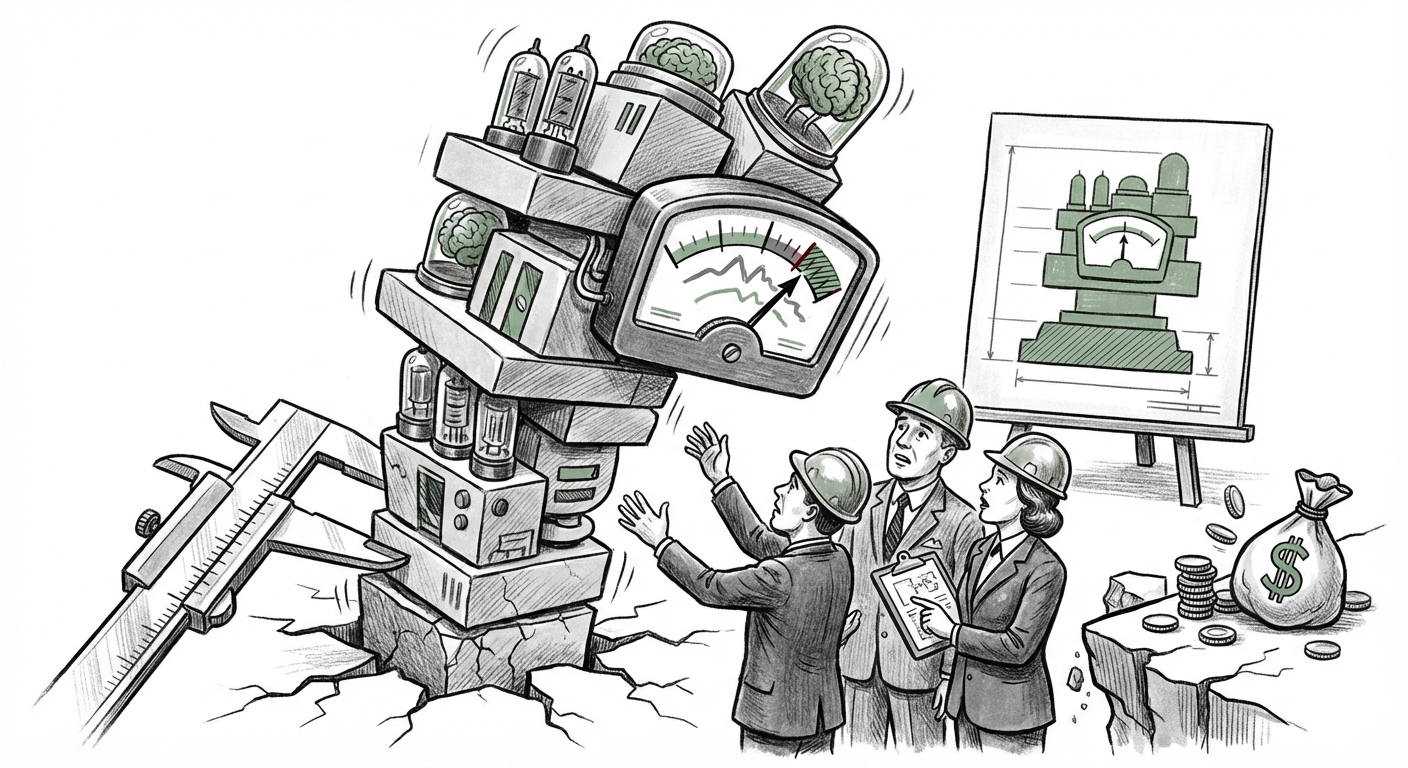
For years, the AI world has been obsessed with one thing: bigger is better. Bigger models, more data, more computing power. But a groundbreaking project from Microsoft Research called Lens is turning that idea on its head. According to findings reported by the-decoder.com on June 8, 2026, the secret to training truly efficient and high-quality image generators isn't just about raw scale — it's about the quality of the captions used to describe the images. And that insight could reshape how we build, deploy, and pay for AI in the years ahead.
Let's unpack what Lens found, why it matters, and what it means for businesses, creators, and the future of artificial intelligence.
What Is Microsoft Research's Lens?
Lens is a research initiative from Microsoft that challenges one of the core assumptions behind modern image generation models. Most people assume that to get better results from an AI image generator — think tools like DALL-E, Midjourney, or Stable Diffusion — you need to make the model itself bigger: more parameters, more layers, more training data. That approach has worked, but it comes with steep costs: massive energy consumption, expensive hardware, and slower inference times.
Lens takes a different path. Instead of scaling up the model, it focuses on scaling up the captions. The idea is simple but powerful: if you give an image generator richer, more detailed descriptions of what's in each training image, the model learns more from each example. It doesn't need to see millions more pictures to get better. It just needs to understand the ones it already has at a much deeper level.
The research shows that detailed captions matter more than raw scale for training efficient image generators. That's a huge shift in thinking. It means we might not need to keep building ever-larger models to push the boundaries of what AI can create. Instead, we can make smarter use of the data we already have.
How Does Caption Quality Change the Game?
To understand why this is such a big deal, you have to understand how image generators are typically trained. Most models are trained on pairs of images and text descriptions. The model learns to associate words with visual features. But many existing datasets use captions that are short, generic, or even inaccurate. A picture of a dog might just be labeled "dog." That doesn't tell the model much about the breed, the setting, the lighting, the pose, or the emotion.
Lens shows that when you replace those thin captions with rich, detailed descriptions — "a golden retriever sitting on a grassy hill at sunset, ears floppy, tongue out, looking happy" — the model learns far more from each image. It builds a much richer understanding of the relationship between language and visuals. And because it learns more per image, it can achieve the same or better quality with a smaller model and less data.
This is a classic example of quality over quantity. The AI industry has been obsessed with quantity — more images, more parameters, more GPUs. Lens suggests that the untapped goldmine might be in the quality of the labels we use to teach AI.
What This Means for the Future of AI
The implications of Lens go far beyond just image generation. They point to a broader trend in AI research: the move from brute-force scaling to intelligent data use. Here are a few key ways this could shape the future.
1. Smaller, Cheaper, Faster AI Models
If detailed captions allow smaller models to perform as well as larger ones, we could see a wave of more efficient AI that runs on ordinary hardware. Instead of needing a cluster of expensive GPUs, a well-captioned model might run on a laptop or even a smartphone. That would make AI image generation accessible to far more people and businesses. It would also slash the energy costs and carbon footprint of running these systems.
For businesses, this means lower barriers to entry. A small design shop or a local marketing agency could afford to run its own image generation AI without subscribing to a cloud service. They could fine-tune it on their own data with rich captions and get results that rival the big players.
2. A Shift in AI Training Strategy
Right now, the AI arms race is about who can build the biggest model. Lens suggests that the next competitive edge might come from who can build the best training data. Companies that invest in creating high-quality, richly captioned datasets will have an advantage, even if their models are smaller. This could lead to a new focus on data curation, annotation, and quality control within the AI industry.
We might even see new job roles emerge: caption specialists, data quality engineers, and annotation tool designers. The human touch — writing clear, detailed, accurate descriptions — becomes a core part of the AI pipeline, not just a checkbox.
3. Better Alignment with User Intent
When a user types a prompt into an image generator, they want the output to match what they imagined. Detailed captions during training help the model understand the nuance of language — not just nouns and verbs, but adjectives, context, and style. That means the model will be better at handling complex prompts. A prompt like "a cozy living room with a fireplace, warm lighting, and a cat sleeping on a rug" will produce something much closer to what the user envisioned, because the model has seen many examples with that level of detail.
For businesses that use AI to generate marketing images, product mockups, or creative content, this means higher quality outputs with fewer iterations. Less time tweaking prompts, more time using the results.
Practical Implications for Businesses and Society
So what does this mean for people who actually use AI — or are trying to figure out how to use it?
For Businesses: Rethink Your Data Strategy
If your company is building or customizing an AI image generator, the lesson from Lens is clear: invest in your captions. Don't just scrape images and use whatever labels come with them. Take the time to write detailed, accurate descriptions. This might cost more upfront, but the payoff is a model that performs much better without needing to be larger. It's a smarter investment than simply throwing more compute at the problem.
For companies that rely on third-party AI services, the takeaway is a bit different: ask about the training data. The quality of the captions used to train the model will directly affect the quality of the outputs you get. A model trained on rich captions will be more responsive and accurate than one trained on thin labels, even if the latter is larger.
For Creators and Artists: More Control, Less Cost
Artists and designers who use AI as a creative tool stand to benefit directly. If smaller models can produce high-quality images, that means tools that run locally, offline, without subscription fees. It also means more control over the style and content of the output because the model understands detailed language better. You can describe exactly what you want and get closer to it on the first try.
There is also a wider societal benefit: lower energy consumption. AI image generation has been criticized for its environmental impact. If we can make models that are smaller and require less power to train and run, that's a win for everyone. Lens points a way toward more sustainable AI.
For Educators and Researchers: A New Path Forward
Academic labs and research institutions often don't have the budget to train massive models. Lens offers a way to do cutting-edge work without breaking the bank. By prioritizing caption quality, smaller labs can produce meaningful results and contribute to the field. This could democratize AI research and open up new avenues of exploration.
Actionable Insights You Can Use Right Now
Even if you're not training your own AI model, the Lens research offers lessons you can apply today.
- If you use AI image tools, write better prompts. The same principle that makes caption quality matter during training also matters at inference time. Be specific. Use adjectives. Provide context. The more detail you give, the better the output.
- If you manage data, audit your labels. For any AI project, look at the quality of your training labels. Are they generic or detailed? Investing in better captions could give you a bigger performance boost than buying more GPUs.
- If you're evaluating AI vendors, ask about their data. A model that was trained on rich captions will likely outperform one that wasn't, even if it has fewer parameters. Make caption quality a factor in your procurement decisions.
- If you're a creator, explore local AI tools. As models become more efficient thanks to approaches like Lens, local and offline tools will become more capable. Keep an eye on open-source projects that emphasize data quality over raw scale.
The Bigger Picture: A Smarter, More Sustainable AI
Microsoft Research's Lens is a reminder that the AI field is still young, and many of its core assumptions are up for revision. For a long time, the dominant narrative has been that scale solves everything. But Lens shows that intelligence can come from quality, not just quantity. A smaller model, trained thoughtfully on richly captioned data, can rival or even surpass a larger model trained on thin labels.
This is not just a technical insight. It is a strategic one. It suggests that the next wave of AI progress might not be driven by who builds the biggest supercomputer, but by who builds the most meaningful dataset. It elevates the role of human judgment, language, and creativity in the AI pipeline. And it offers a path toward AI that is more accessible, more affordable, and more sustainable.
For businesses, the message is clear: don't just think about scaling up. Think about scaling smart. Invest in the quality of your data. Train your models to really understand the world, not just to see more of it. The future of AI is not just bigger — it's better described.
As we move forward, the Lens project will likely be cited as a turning point — the moment when the AI community started to realize that words matter as much as numbers. The captions we write today are shaping the intelligence of tomorrow. It is worth taking the time to make them count.