Google's NotebookLM Now Runs Its Own Cloud Computer — What This Means for AI Research and the Future of Knowledge Work
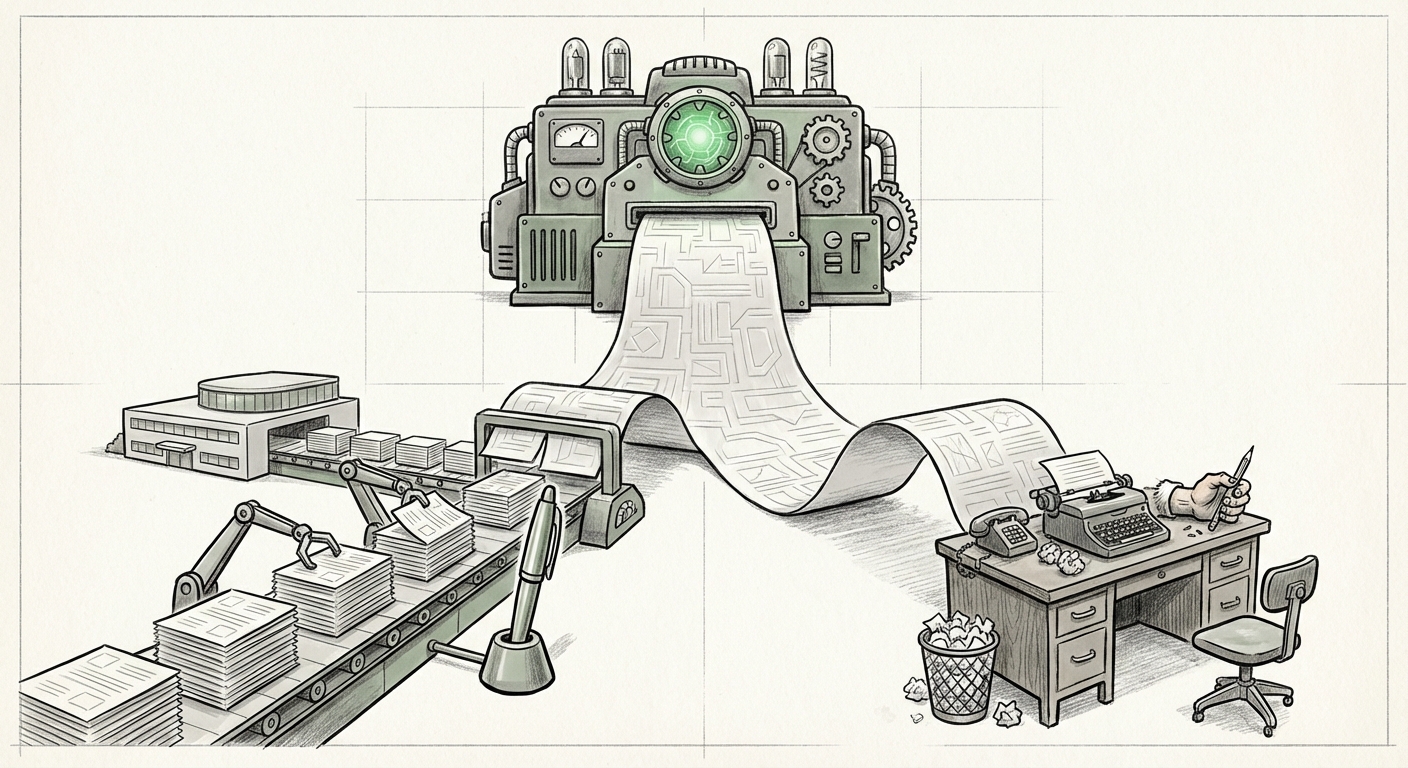
On June 10, 2026, Google took a major step forward in AI-powered research. NotebookLM, the company's note-taking and research tool, gained a powerful new capability: it now runs its own cloud computer with code execution and agent-based research. This isn't just another feature update — it's a fundamental shift in how we think about AI assistants. NotebookLM is no longer just a smart notebook that summarizes documents. It is now a fully autonomous research platform that can run code, perform complex analyses, and carry out multi-step research tasks on its own.
This article breaks down what this update means, why it matters, and how it will shape the future of AI-powered research for businesses, researchers, students, and everyday users.
What Exactly Changed with NotebookLM?
Before this update, NotebookLM was already a powerful tool. It could take notes, summarize long documents, answer questions based on uploaded sources, and help users organize information. But it was essentially a smart reader — it worked with what you gave it, but it couldn't do anything beyond text analysis.
Now, NotebookLM runs its own cloud computer. That means it can execute code directly in the cloud. Instead of just telling you what a dataset contains, it can run a Python script to analyze that dataset, generate charts, or even build interactive visualizations. Instead of just summarizing a research paper, it can write and run code to test a hypothesis using the data you provide.
The addition of agent-based research is perhaps the bigger headline. Agents are AI programs that can plan and execute multi-step tasks on their own. With agents, NotebookLM can now break down a complex research question into smaller steps, search for information across multiple sources, run analyses, check its own work, and deliver a complete answer — all without the user having to guide every step.
Together, these two features turn NotebookLM from a passive note-taking tool into an active research partner that doesn't just understand information — it can do something with it.
Code Execution: Why It's a Game-Changer for Research
Code execution in the cloud means NotebookLM can run scripts, perform calculations, process data, and generate outputs that go far beyond what a language model can do with text alone. Here's what this unlocks:
- Real data analysis: You can upload a spreadsheet or a CSV file and ask NotebookLM to find trends, calculate averages, identify outliers, or even build a machine learning model. It will write the code, execute it, and show you the results.
- Visualizations on demand: Instead of describing a chart, NotebookLM can actually generate one — a bar graph, a scatter plot, a heatmap, whatever you need — and embed it directly in your notes.
- Reproducible research: Every piece of code that gets executed can be saved, reviewed, and rerun. This is huge for academic research, where reproducibility is essential.
- Interactive exploration: You can ask follow-up questions like "What happens if I filter out these data points?" or "Can you run a regression analysis on this column?" and NotebookLM will adjust the code and rerun it instantly.
For anyone who has ever struggled with spreadsheets, data analysis tools, or programming just to answer a simple question, this is a massive time-saver. The cloud computer handles the computational heavy lifting, and you just ask questions in plain English.
Agent-Based Research: From Question to Answer Without Hand-Holding
Agent-based research is the other pillar of this update. An AI agent is like a personal research assistant that doesn't need constant supervision. You give it a goal, and it figures out the steps needed to accomplish that goal.
For example, imagine you ask NotebookLM: "Compare the revenue growth of Tesla and Ford over the last five years, and identify the key factors driving the difference."
An agent-based system would:
- Break this question into sub-tasks: gather financial data for both companies, find relevant news articles and analyst reports, identify revenue trends, compare growth rates, and summarize the key factors.
- Search across multiple sources — internal documents you've uploaded, web searches, financial databases, and any other connected data sources.
- Use code execution to compute growth rates, generate comparison charts, and perform any necessary calculations.
- Cross-check findings from different sources to ensure accuracy and consistency.
- Deliver a comprehensive answer with supporting evidence, visualizations, and citations.
This is not just a faster search. It's a fundamentally different way of doing research. Instead of the user having to find information, analyze it, and synthesize it, the agent does all of that autonomously. The user's role shifts from doer to director — you set the goal, and the AI handles the execution.
What This Means for the Future of AI
This update to NotebookLM signals a broader trend in AI development: the move from conversational assistants to autonomous agents that can perform real work. Here's what this shift means for the future:
1. AI Becomes a True Collaboration Partner
Until now, AI assistants were mostly reactive — you ask a question, they give an answer. With agents and code execution, AI becomes proactive. It can suggest analyses you hadn't thought of, surface insights you might have missed, and carry out complex tasks without waiting for your next instruction. The relationship moves from query-response to collaborative exploration.
2. Research Becomes Faster and More Democratic
High-quality research often requires technical skills — programming, statistical analysis, data visualization — that not everyone has. With NotebookLM's cloud computer and agents, those barriers drop significantly. A high school student can analyze climate data as easily as a data scientist. A small business owner can run financial analyses without hiring a consultant. This democratization of research has profound implications for education, business, and society.
3. Trust and Verification Become Even More Important
When an AI agent runs code and delivers findings, how do you know it's correct? The answer lies in transparency. NotebookLM can show you the code it wrote, the data it used, and the steps it took. This is critical for building trust. In the future, any AI system that performs autonomous research will need to provide auditable trails — a record of every action it took, every source it consulted, and every calculation it performed.
4. The Line Between "Tool" and "Worker" Blurs
When an AI can run code, analyze data, and produce finished research reports, it starts to look less like a tool and more like a colleague. This raises important questions about how we define productivity, intellectual contribution, and even authorship. If an AI agent produces a market analysis that a company uses to make decisions, who deserves credit? The user who asked the question? The developers who built the system? The AI itself? These are questions society will need to grapple with as agent-based AI becomes more common.
Practical Implications for Businesses
For businesses, the NotebookLM update is not just a cool new feature — it's a glimpse into how work will be done in the near future. Here are the practical implications:
- Faster decision-making: Instead of waiting days for a data analyst to produce a report, executives can ask NotebookLM for an analysis and get results in minutes.
- Reduced need for specialized technical staff: Many routine analytical tasks that currently require a data scientist or analyst can be handled by the AI. This doesn't eliminate those roles, but it shifts them toward higher-level work — designing research questions, interpreting results, and making strategic decisions.
- Better documentation and knowledge management: NotebookLM's agent-based research produces auditable trails that can be saved, shared, and reused. This helps organizations build institutional knowledge that doesn't disappear when employees leave.
- Lower barriers to data-driven decision-making: Small businesses that could never afford a dedicated data team can now access powerful analytical capabilities through a simple chat interface.
However, there are also risks. Businesses must be careful not to over-trust AI-generated analyses. The code might have bugs, the data might be incomplete, or the agent might misinterpret the question. Human oversight remains essential, especially for high-stakes decisions.
Practical Implications for Researchers and Academics
For researchers, this update is particularly exciting. NotebookLM's code execution and agent capabilities can dramatically speed up the research process:
- Literature reviews: An agent can search across thousands of papers, extract key findings, compare methodologies, and produce a synthesized summary.
- Data analysis: Researchers can upload datasets and ask NotebookLM to run statistical tests, build models, and generate visualizations — all with reproducible code.
- Hypothesis testing: A researcher can describe a hypothesis in plain language, and the agent can design and run an appropriate test, check for statistical significance, and report the results.
- Collaboration: NotebookLM notebooks can be shared with collaborators, allowing teams to build on each other's analyses and maintain a shared record of the research process.
Of course, researchers must be mindful of the limitations. AI agents can miss context, misinterpret data, or produce results that look correct but are actually flawed. The agent is a powerful assistant, not a replacement for critical thinking.
Practical Implications for Students and Educators
For students, NotebookLM becomes a personal tutor and research assistant. A student working on a history paper can ask the agent to compare primary sources, identify conflicting accounts, and suggest lines of inquiry. A student learning statistics can ask the agent to explain a concept and then run a live example with real data.
For educators, this raises both opportunities and challenges. On the one hand, AI can help students learn faster and more deeply by providing personalized assistance. On the other hand, educators will need to rethink assignments — if an AI agent can write a research paper, what does it mean to assess a student's understanding? The focus may shift from assessing outputs (the final paper) to assessing process (how the student used the AI, what questions they asked, how they verified the results).
What This Means for Everyday Users
Even if you're not a researcher or business analyst, this update matters. NotebookLM's new capabilities make it useful for everyday tasks:
- Personal finance: Upload your bank statements and ask NotebookLM to analyze your spending habits, identify savings opportunities, and generate a budget.
- Health and wellness: Track your diet, exercise, or sleep data and ask the agent to find patterns and suggest improvements.
- Learning any topic: Ask NotebookLM to create a study plan, generate practice questions, and test your knowledge — all while pulling from sources you trust.
- Home projects: Planning a renovation? Upload cost estimates, measurements, and material specs, and ask the agent to calculate quantities, compare prices, and create a project timeline.
The key insight is that any task that involves gathering, analyzing, or synthesizing information can potentially be accelerated or automated with NotebookLM's new capabilities.
The Bigger Picture: AI Is Becoming an Infrastructure Layer
NotebookLM's cloud computer represents something larger: AI is evolving from a product into an infrastructure layer. Just as cloud computing (AWS, Google Cloud, Azure) became the underlying platform for modern software, AI agents with code execution are becoming the underlying platform for modern knowledge work.
In this new paradigm, the AI doesn't just answer questions — it runs your processes. It executes code, manages data, orchestrates workflows, and produces finished outputs. The user's job is to set the direction and verify the results.
This is a profound shift. It means that the bottleneck in knowledge work is no longer the ability to do analytical work — it's the ability to ask the right questions and evaluate the answers critically.
Challenges and Risks to Keep in Mind
As powerful as this update is, it's not without risks and challenges:
- Accuracy and reliability: Code execution means the AI can make mistakes — bugs in the code, incorrect statistical methods, or misinterpretation of results. Always verify.
- Data privacy: Uploading sensitive data to a cloud computer raises privacy concerns. Users must understand how their data is stored, processed, and protected.
- Over-reliance: It's easy to become dependent on AI and stop thinking critically. The best users will treat NotebookLM as a partner, not an oracle.
- Cost and access: Cloud compute resources aren't free. Heavy usage could mean higher costs, and not everyone may have equal access to these capabilities.
- Bias in agent behavior: Agents can inadvertently amplify biases present in their training data or in the sources they consult. Awareness and careful prompt design are essential.
How to Get Started with NotebookLM's New Features
If you're ready to try NotebookLM's cloud computer and agent-based research, here are some practical tips:
- Start with a clear question. The better your question, the better the agent's research will be. Be specific about what you want to know and what sources you want it to use.
- Upload your own data. NotebookLM is most powerful when it works with your documents, spreadsheets, and notes. Upload CSVs, PDFs, and text files to give it a foundation to work from.
- Ask for code, not just answers. When you want to analyze data, explicitly ask NotebookLM to "write and run code" or "generate a visualization." This triggers the code execution feature.
- Review the agent's steps. NotebookLM can show you the code it wrote and the steps it took. Look at these to understand how it arrived at its answer and to catch any mistakes.
- Iterate and refine. Treat the first answer as a draft. Ask follow-up questions, request deeper analysis, and refine your question based on what you learn.
Conclusion: A New Era for AI-Assisted Research
Google's NotebookLM update on June 10, 2026, marks a genuine turning point. By adding code execution and agent-based research, Google has transformed NotebookLM from a smart notebook into an autonomous research platform that can run its own cloud computer, analyze data, and carry out multi-step research tasks.
This is not just an incremental improvement. It's a leap toward a future where AI doesn't just understand information — it actively works with it. The implications for businesses, researchers, educators, and everyday users are enormous. Research will become faster, more accessible, and more powerful. But it will also require new skills: asking better questions, evaluating AI-generated results critically, and maintaining human oversight.
For anyone who works with information — which is almost everyone — NotebookLM's new capabilities are worth exploring. The age of the AI research agent has truly begun, and it's running on its own cloud computer.