Why Even Microsoft's CEO Can't Stop Using AI: Satya Nadella Admits He's a Token-Maxer
When the CEO of the world's most valuable AI company admits he's hooked on his own product, it's time to pay attention. Satya Nadella, chief executive of Microsoft — the company behind OpenAI's massive funding and the integration of AI into everything from Word to Windows — recently came forward with an honest confession: he's a token-maxer, and he finds it "addictive."
This admission, reported by The Decoder on June 13, 2026, opens a fascinating window into how even the people building AI are struggling with its pull. But what exactly is a token-maxer? And why does this matter for the future of artificial intelligence, your business, and society at large?
Let's unpack what Nadella's confession really means — and why it might be the most important AI trend you haven't heard about yet.
What Is a Token-Maxer, Anyway?
To understand why Nadella's admission is such a big deal, we first need to understand the term token-maxer.
In the world of large language models (LLMs) like GPT-4, Claude, or Microsoft's own Copilot, a token is the basic unit of text that the model processes. One token is roughly equivalent to four characters in English, or about three-quarters of a word. Every prompt you type and every response the AI generates is measured in tokens.
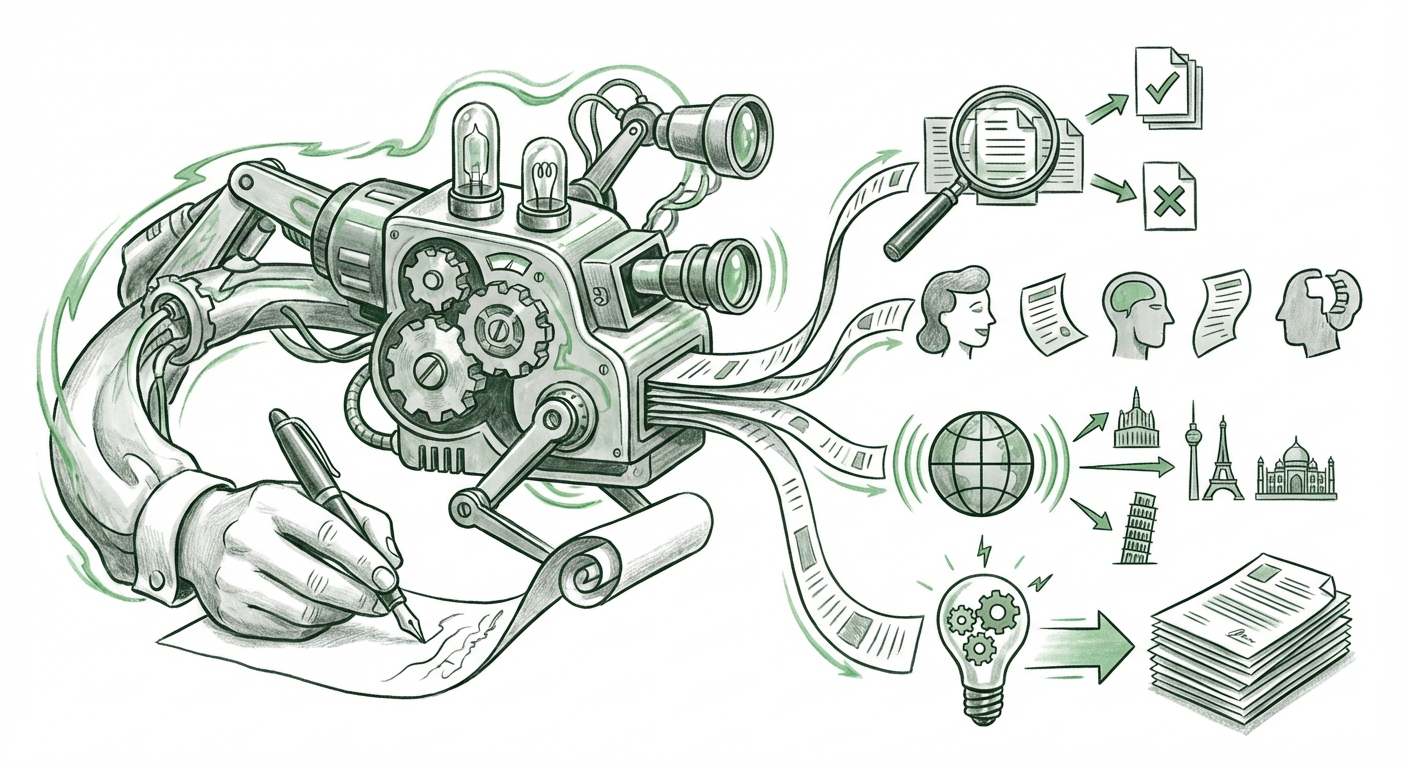
A token-maxer is someone who uses AI models heavily — generating lots of tokens, often far more than they actually need. They might ask the AI to rewrite the same email five times, generate ten versions of a blog post, or have long, meandering conversations with a chatbot just to see what it says. Token-maxers are power users who consume AI at scale, sometimes for practical reasons, sometimes just because they can.
Nadella's confession that he's a token-maxer, too — and that he finds it "addictive" — is striking because it comes from the person whose company profits directly from token consumption. Every token generated by Microsoft's AI products (Copilot, Azure OpenAI, etc.) represents compute usage, and often revenue. If the CEO himself can't resist the urge to max out on tokens, what does that say about the rest of us?
The Psychology of "Addictive" AI
Why is token-maxing so compelling? Nadella's choice of the word "addictive" is revealing. Generative AI taps into something deep in human psychology: the pleasure of instant creation.
When you type a prompt and get a response in seconds, your brain releases a small hit of dopamine — the same neurotransmitter involved in reward and motivation. It feels good. It feels productive. And because the responses are often surprisingly good (but not always perfect), you want to try again, and again, and again.
This is the same loop that makes social media and video games addictive: variable rewards. You don't know exactly what the AI will say next, but it might be brilliant, funny, or insightful. So you keep generating.
Nadella's admission validates something many of us have felt: using AI can feel less like a tool and more like a habit. A very compelling habit.
What Token-Maxing Means for Businesses
If the CEO of Microsoft is a token-maxer, you can bet that many of your employees are, too. And that has real implications for how companies manage AI usage.
1. Costs Can Spiral Out of Control
Most AI services charge based on tokens — so-called consumption pricing. If your team is token-maxing without oversight, your AI bills can balloon. A single heavy user might generate hundreds of thousands of tokens per day, especially if they're using AI for content generation, code writing, or data analysis.
Businesses need to implement AI usage policies that encourage efficient prompting and discourage wasteful generation. This isn't about limiting creativity — it's about being smart with resources. Just as you wouldn't leave the office lights on all night, you shouldn't let AI run wild without monitoring.
2. Quality vs. Quantity: The Token-Maxer Trap
Token-maxing often leads to more output, not better output. Employees who generate ten versions of a document might still pick the first one, but they've spent ten times the compute and ten times the cost. The illusion of productivity can mask real inefficiency.
Smart organizations will train their teams to use AI deliberately. That means thinking before prompting, iterating with purpose, and knowing when to stop. It's the difference between a craftsman and a factory.
3. The Need for Usage Analytics
Just as companies track website traffic and software licenses, they will soon need to track AI token consumption per user, per team, and per use case. Nadella's confession suggests that even within Microsoft, there are power users who consume far more than average. Understanding who they are and why can help optimize both costs and outcomes.
We may soon see the rise of AI management platforms that give organizations visibility into their token usage, similar to how cloud cost management tools work today.
What Token-Maxing Means for Society
Beyond business, Nadella's admission has broader implications for how AI is shaping human behavior at scale.
1. The Environmental Cost of Token Addiction
Every token generated by a large AI model consumes energy. The data centers that run these models require enormous amounts of electricity and water for cooling. If token-maxing becomes the norm — if millions of people generate thousands of tokens per day out of habit — the cumulative environmental footprint could be substantial.
Nadella, as the head of a company that has pledged to be carbon-negative by 2030, must be acutely aware of this tension. Admitting he's a token-maxer is also an admission that even he struggles to balance the benefits of AI with its costs.
2. The Risk of Cognitive Offloading
When we rely on AI to generate ideas, write emails, and solve problems, we risk cognitive offloading — the tendency to let technology do the thinking for us. Token-maxers are especially prone to this because they use AI for everything, even tasks they could easily do themselves.
Over time, this can erode skills like writing, critical thinking, and creativity. If the CEO of Microsoft admits he can't stop using AI, what does that mean for the next generation of workers who are growing up with these tools?
3. The Inequality of Access
Token-maxing is a luxury. Heavy AI usage requires access to powerful models, fast internet, and the ability to pay for compute. If the people who benefit most from AI are those who can afford to use it the most, the gap between AI haves and have-nots could widen.
Nadella's confession highlights a uncomfortable truth: even within organizations, some users will be heavy token-maxers while others barely touch AI. Managing this inequality — and ensuring that AI benefits everyone, not just the power users — will be a key challenge for the coming decade.
How to Be a Responsible Token-Maxer
Is it possible to enjoy the benefits of AI without falling into the token-maxer trap? Absolutely. Here are some actionable strategies for individuals and organizations.
For Individuals
- Set a purpose before you prompt. Ask yourself: What do I actually need from this interaction? A draft? An idea? A summary? Don't just start typing to see what happens.
- Limit iterations. Give yourself a rule: no more than three versions of any output. After that, pick the best one and move on.
- Use AI as a partner, not a crutch. Let AI handle the boring stuff (formatting, summarizing, brainstorming) but do the critical thinking yourself.
- Track your own usage. Many AI tools show your token count. Use it as a reality check: "Did I really need 10,000 tokens for that email?"
For Organizations
- Create an AI usage policy. Set guidelines for appropriate use, budget limits per user, and best practices for efficient prompting.
- Invest in training. Teach employees how to use AI effectively, not just habitually. Good prompting is a skill, not a reflex.
- Monitor usage. Use analytics to spot token-maxers and understand their behavior. Are they being unusually inefficient, or are they power users with legitimate needs?
- Encourage intentionality. Celebrate quality over quantity. A single, well-crafted AI output is worth more than ten mediocre ones.
The Future of Token-Maxing: What's Next?
Nadella's admission is not just a personal confession — it's a signal about where the AI industry is heading.
1. The Rise of "AI Budgets"
Just as companies have IT budgets and cloud budgets, they will soon have AI budgets. Token consumption will become a line item in departmental spending. CFOs will start asking: "How many tokens did marketing use last quarter, and what did we get for it?"
2. Smarter Models, Smarter Users
As models get more efficient (generating better outputs with fewer tokens), the token-maxer problem may ease. Future AI systems may be able to understand intent with shorter prompts and produce concise answers without rambling. But until then, the onus is on users to be disciplined.
3. New Business Models
We may see a shift away from pure consumption pricing toward subscription models that cap token usage, or hybrid models that charge a flat rate for a certain number of tokens. This could make AI costs more predictable and reduce the incentive to token-max.
4. The Cultural Shift
Nadella's candidness may encourage more leaders to talk openly about their own AI habits. When the CEO of the world's largest AI investor admits he's a token-maxer, it normalizes the conversation. It also opens the door for healthier discussions about usage, limits, and responsibility.
Conclusion: The Token-Maxer in All of Us
Satya Nadella's admission that he's a token-maxer — and that he finds it "addictive" — is a moment of rare honesty from one of the most powerful people in technology. It reminds us that AI is not just a tool; it's an experience. And like any compelling experience, it can be hard to put down.
But the future of AI doesn't have to be a story of runaway consumption and cognitive laziness. By understanding what drives token-maxing, and by building better habits, policies, and technologies, we can harness the power of AI without being consumed by it.
Nadella's confession is a wake-up call — not to stop using AI, but to use it more wisely. After all, if the person who profits from your token consumption admits he can't stop, maybe it's time to set some boundaries.
The future of AI is bright, but it works best when we're in control — not the other way around.