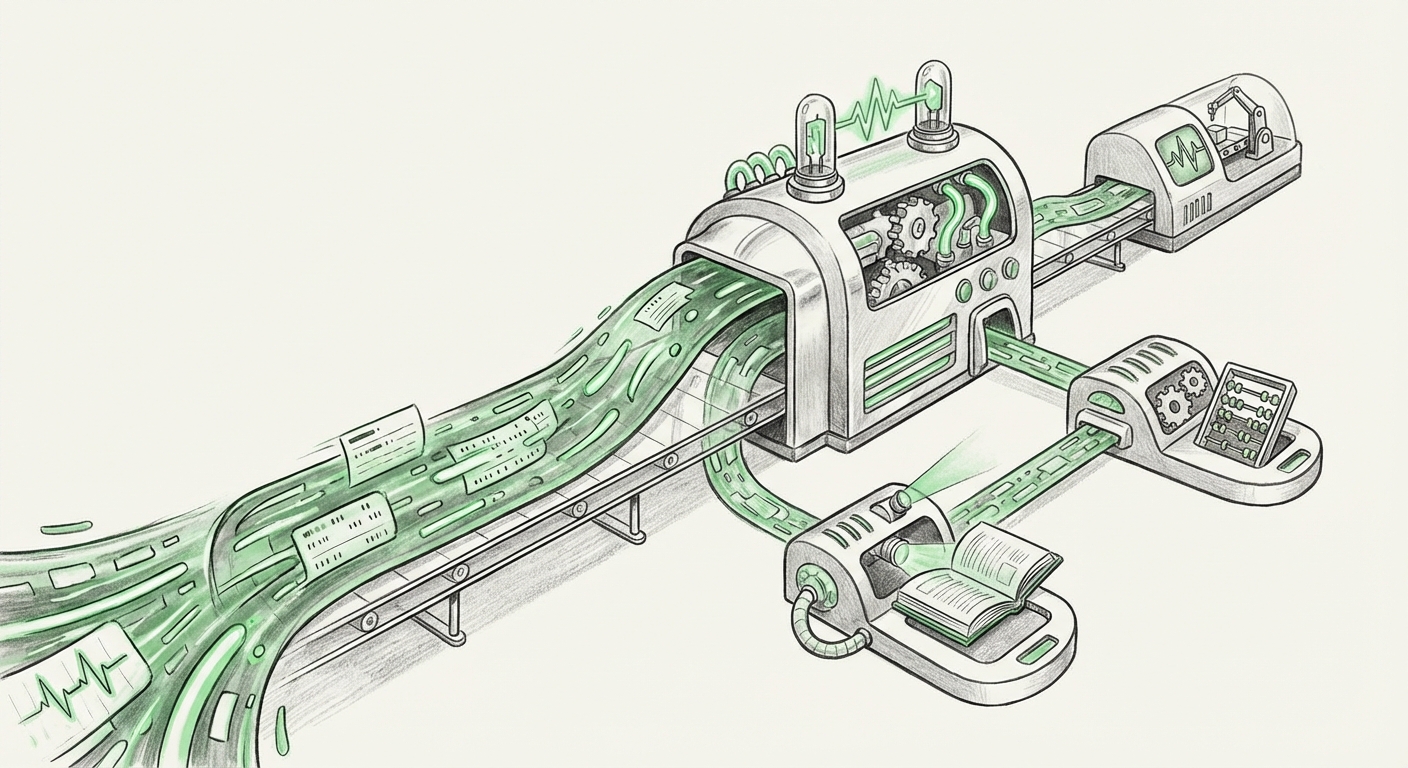
DataRobot Platform as Skills in Claude Code: The Future of AI-Powered Machine Learning
Imagine building, deploying, and managing machine learning models just by telling an AI what you want. No complex coding. No endless debugging. No steep learning curve. That vision just got a whole lot closer to reality. On June 15, 2026, DataRobot announced that its powerful machine learning platform is now available as skills in Claude Code. This partnership between DataRobot and Anthropic's Claude Code represents a major step forward in how humans interact with artificial intelligence. It changes who can build AI models and how quickly they can do it.
This article explores what this integration means for the future of AI, how businesses can use it today, and why this moment matters for everyone — not just data scientists. Let's dive in.
The Big Picture: AI Skills That Actually Work
Claude Code is an AI coding assistant from Anthropic. It helps developers write, test, and fix code by chatting in natural language. But Claude Code isn't limited to just writing code. It can also use "skills" — plug-in capabilities that extend what it can do. Think of skills like apps on a smartphone. Your phone can call and text, but with apps, it can do almost anything. Skills give Claude Code new superpowers.
Now, DataRobot's entire machine learning platform is available as a skill inside Claude Code. This means anyone using Claude Code can tap into DataRobot's automated machine learning tools simply by describing what they want. You don't need to be a machine learning expert. You don't need to know Python or R. You just need to know what problem you want to solve.
This is a massive shift. For years, machine learning has been a specialized skill. It required years of training, deep math knowledge, and expensive tools. DataRobot already made machine learning easier with its automated platform. Now, by making that platform available as a skill inside Claude Code, it becomes accessible to anyone who can describe a problem in plain language.
What DataRobot Brings to Claude Code
DataRobot is a leader in automated machine learning (AutoML). Its platform helps organizations build accurate predictive models faster than traditional methods. It handles data preparation, feature engineering, model selection, hyperparameter tuning, and deployment — all with a focus on speed and accuracy.
By integrating as skills in Claude Code, DataRobot's capabilities become available through natural language conversations. Here are some of the key things this integration enables:
- Natural language model building: Tell Claude Code what you want to predict, and it uses DataRobot skills to build, train, and evaluate models automatically.
- Automated data preparation: Claude Code can clean, transform, and prepare your data using DataRobot's preprocessing tools, all guided by simple instructions.
- Model comparison and selection: The skill can compare dozens of model algorithms and recommend the best one for your specific data and goals.
- Deployment management: Once a model is ready, Claude Code can deploy it to production environments using DataRobot's deployment infrastructure.
- Monitoring and retraining: The skill can set up ongoing model monitoring and trigger automatic retraining when performance drifts.
- Collaboration: Teams can share model artifacts, experiments, and results through Claude Code conversations, making collaboration seamless.
This isn't just a wrapper around existing tools. It's a deep integration that lets Claude Code orchestrate complex machine learning workflows. The AI handles the technical details while you focus on the business problem.
What This Means for the Future of AI
This integration signals several important trends for the future of artificial intelligence. Let's explore each one.
AI Agents Will Do the Heavy Lifting
Claude Code using DataRobot skills is a perfect example of an AI agent in action. An AI agent is a system that can plan, use tools, and execute multi-step tasks on its own. Instead of just answering questions, these agents can actually do work. They can write code, build models, deploy software, and manage infrastructure.
In the future, AI agents will handle more and more of the technical work. Humans will focus on strategy, creativity, and decision-making. The DataRobot integration shows how this future is already taking shape. An AI agent (Claude Code) uses a specialized tool (DataRobot) to accomplish a complex task (building machine learning models) based on simple human instructions.
This pattern will repeat across many industries. Expect to see AI agents that can manage cloud infrastructure, handle customer support, analyze legal documents, conduct scientific research, and more. The agent orchestrates, the tools execute, and humans guide the process.
Machine Learning Becomes a Conversational Skill
One of the biggest barriers to using machine learning has been the complexity of the tools. DataRobot already lowered that bar significantly with its visual interface and automated workflows. But even with AutoML, you still need to understand data science concepts to use the platform effectively.
By putting DataRobot inside Claude Code, that barrier drops even further. Now you can build machine learning models by having a conversation. You say things like, "Help me build a model that predicts customer churn using this CSV file," and Claude Code figures out the rest. It asks clarifying questions, suggests improvements, and delivers results.
This conversational approach will become the new normal. In the future, most people will interact with AI through natural language, not through dashboards or code editors. The DataRobot skill for Claude Code is an early example of this shift. It shows how complex technical platforms can be made accessible through conversation.
Democratization of AI Accelerates
The democratization of AI is about making powerful AI tools available to everyone, not just large companies with big budgets and specialized teams. The DataRobot integration with Claude Code is a powerful step in that direction.
Small businesses, nonprofits, educators, and individual developers can now access enterprise-grade machine learning tools. They don't need to hire data science teams or buy expensive software licenses. They just need access to Claude Code and the DataRobot skill.
This will accelerate innovation across all sectors. More people will be able to build AI solutions for their specific problems. A small retailer can build a demand forecasting model. A local clinic can predict patient no-shows. A teacher can create personalized learning tools. The possibilities are endless when the tools become accessible.
AI Platforms Become Interoperable
The skill-based architecture that Claude Code uses points to a future where AI platforms work together seamlessly. Instead of choosing one AI ecosystem, you can mix and match the best tools from different providers. DataRobot provides machine learning skills. Other providers could offer skills for data visualization, natural language processing, image recognition, or business intelligence.
This interoperability is good for everyone. It means you're not locked into a single vendor. You can build a custom AI stack that fits your exact needs. It also encourages competition and innovation, as providers focus on making the best specialized skills rather than trying to do everything.
In the future, we'll likely see a marketplace of AI skills, similar to app stores today. Claude Code (or other AI agents) will act as the operating system, and skills from various providers will be the apps. This ecosystem approach will drive rapid advancement in AI capabilities.
Practical Implications for Businesses
For business leaders and decision-makers, this integration has practical implications that matter right now. Here are some key takeaways.
Faster Time to Value
Traditional machine learning projects can take months. You need to gather requirements, prepare data, build features, train models, evaluate results, and deploy. With DataRobot as a skill in Claude Code, many of these steps become automated. What used to take weeks can now take hours or even minutes.
For businesses, this means faster return on investment. You can test ideas quickly, iterate based on results, and deploy models before the business opportunity passes. Speed is a competitive advantage, and this integration delivers it.
Lower Barrier to Entry
You don't need to hire a team of data scientists to start using machine learning. With Claude Code and the DataRobot skill, a single analyst or product manager can build and deploy models. This lowers the cost of getting started with AI and makes it accessible to smaller organizations.
For larger organizations, it means data scientists can focus on the most challenging problems instead of spending time on routine modeling tasks. The AI handles the common cases, and humans focus on the edge cases and strategic decisions.
Better Collaboration Between Teams
Machine learning projects often struggle because of communication gaps between business teams and technical teams. Business people understand the problem but not the technology. Data scientists understand the technology but not always the business context.
Conversational AI bridges this gap. Business users can describe problems in their own words, and the AI translates those descriptions into technical workflows. Results come back in plain language, making it easy for everyone to understand and act on them.
Continuous Improvement
Models aren't set-and-forget systems. They need monitoring, maintenance, and retraining as data and conditions change. The DataRobot skill in Claude Code can automate much of this ongoing work. It can monitor model performance, detect drift, and trigger retraining when needed.
This means businesses can maintain high-performing models without dedicating significant human resources to ongoing maintenance. The AI handles the routine work, and humans step in only when decisions are needed.
What Society Should Expect
Beyond business, the DataRobot integration with Claude Code has broader implications for society.
More People Will Build AI
When tools become easier to use, more people use them. We saw this with personal computers, the internet, and smartphones. Each wave of simplification led to an explosion of creativity and innovation. The same will happen with AI.
When anyone can build machine learning models by having a conversation, we'll see AI solutions for problems we haven't even thought of yet. Teachers, nurses, farmers, artists, and small business owners will all become AI creators. This diversity of creators will lead to more inclusive and varied AI applications.
AI Literacy Will Grow
Using AI tools naturally teaches you about AI. As more people interact with Claude Code and DataRobot skills, they'll develop a better understanding of what AI can and cannot do. They'll learn about data quality, model accuracy, bias, and interpretability through hands-on experience.
This growing AI literacy is important for society. It helps people make informed decisions about AI in their lives and work. It also creates a more informed public conversation about AI regulation, ethics, and governance.
New Roles Will Emerge
As AI handles more technical tasks, human roles will shift. We'll see new job categories like AI prompt engineers, AI workflow designers, AI ethics specialists, and AI product managers. These roles focus on guiding AI, not doing the technical work that AI can do itself.
The DataRobot skill for Claude Code is a preview of this shift. Instead of spending time writing code to build models, humans will spend time defining problems, evaluating results, and making strategic decisions. The AI handles the implementation details.
How to Get Started Today
If you're excited about the possibilities of DataRobot as skills in Claude Code, here are some practical steps you can take.
- Try Claude Code: If you haven't already, explore Anthropic's Claude Code assistant. It's available for developers and offers a free tier to get started. Practice using natural language to generate code and solve problems.
- Explore DataRobot skills: Once you're comfortable with Claude Code, look for the DataRobot skill in the skills marketplace. Install it and experiment with simple machine learning tasks. Start with a small dataset and a clear prediction goal.
- Start with a simple problem: Don't try to solve your biggest business challenge first. Pick a small, well-defined problem. Maybe predict next week's sales for one product, or classify customer feedback into categories. Success with a small problem builds confidence and understanding.
- Learn by doing: The best way to understand this technology is to use it. Ask Claude Code to explain what it's doing at each step. Review the models it builds. Look at the code and configurations it generates. You'll learn machine learning concepts through hands-on experience.
- Share with your team: Show your colleagues what's possible. Demonstrate how quickly you can build a model from a simple description. This can spark new ideas and use cases across your organization.
Challenges to Keep in Mind
While the future is exciting, it's important to be realistic about the challenges. AI agents are powerful, but they're not perfect. Here are some considerations.
Data quality still matters. No AI tool can fix bad data. If your data is messy, incomplete, or biased, your models will reflect those issues. The DataRobot skill can help with data preparation, but it's not magic. You still need to understand your data.
Interpretability is important. Automated models can be complex and hard to understand. DataRobot provides interpretability tools, but you should always verify that a model's predictions make sense for your business context. Don't trust blindly.
Security and privacy. When using cloud-based AI tools, you're sending data to external services. Make sure you understand the security and privacy implications, especially if you're working with sensitive or regulated data.
Bias and fairness. Automated systems can amplify biases present in training data. Use the fairness tools available in DataRobot to check for bias, and always review model outcomes for potential fairness issues.
These challenges aren't reasons to avoid the technology. They're reasons to use it thoughtfully. The DataRobot skill in Claude Code gives you powerful tools, but human judgment is still essential.
The Road Ahead
The integration of DataRobot as skills in Claude Code, announced on June 15, 2026, marks a pivotal moment in the evolution of artificial intelligence. It shows that the future of AI isn't about replacing humans. It's about giving humans superpowers.
When you can build machine learning models by having a conversation, you can focus on what matters most: understanding problems, asking the right questions, and making better decisions. The AI handles the technical complexity. You handle the creativity and strategy.
This pattern will define the next decade of AI development. Platforms will become conversational. Tools will become interoperable. AI agents will orchestrate complex workflows across specialized skills. And more people than ever will participate in building and using AI.
The DataRobot platform as skills in Claude Code is not just a product announcement. It's a glimpse into a future where AI is accessible, powerful, and truly useful for everyone. That future is arriving now, one conversation at a time.