Nvidia’s Self-Training Robots: The Dawn of Autonomous AI Coders
Imagine a robot that learns a new task not by hours of human programming, but by writing its own code, testing it in simulation, and improving itself—all without a single line of human input. That vision is now one step closer to reality thanks to new research from Nvidia. The company has demonstrated robots that can train themselves using AI coding agents, a breakthrough that promises to reshape how we think about automation, machine learning, and the future of work.
In this article, we’ll break down what Nvidia’s research actually shows, explore why it matters for businesses and society, and offer practical insights on how to prepare for a world where robots are no longer just tools—they become self-improving collaborators.
What Nvidia’s Self-Training Robots Actually Do
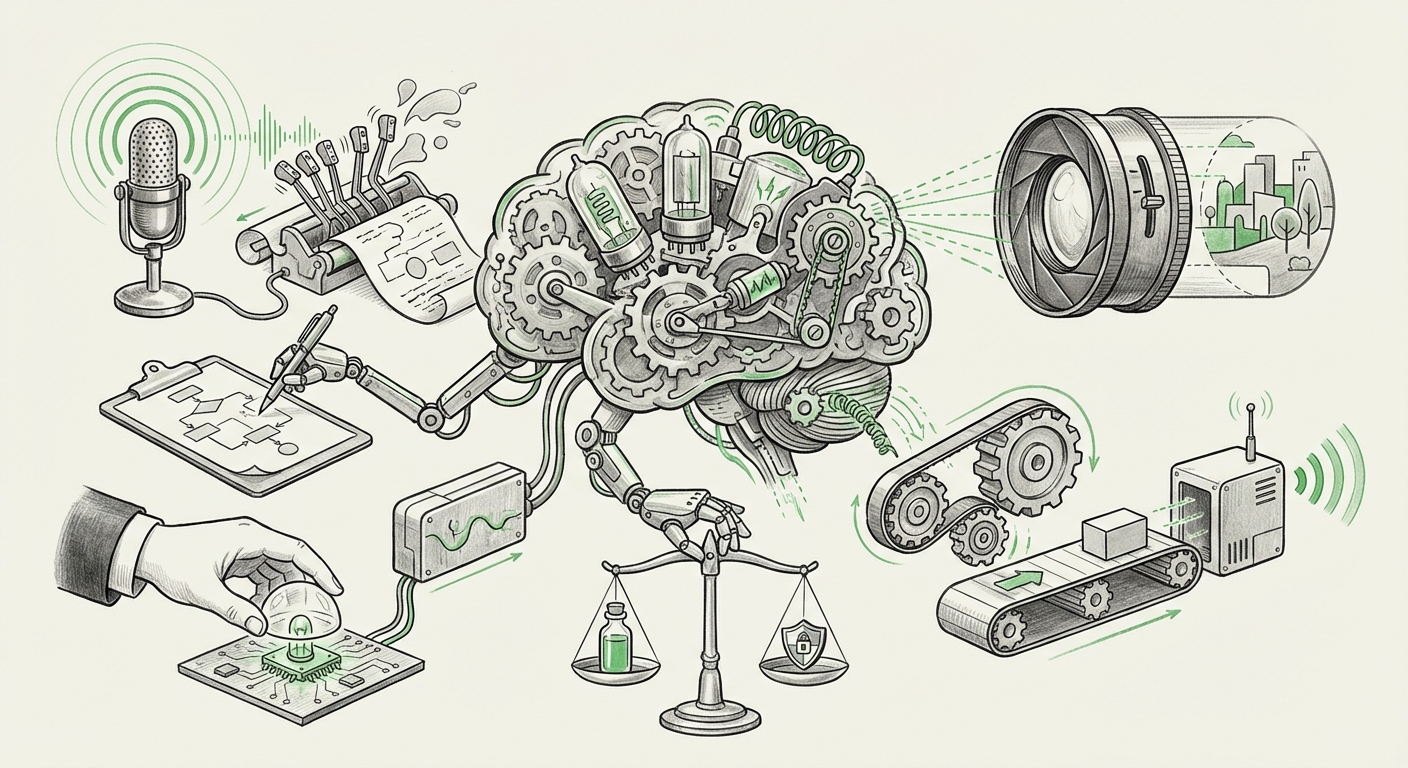
Nvidia’s approach uses large language models and other AI systems as “coding agents.” Instead of a human engineer writing robot control software for every new task, the robot itself uses an AI agent to generate the necessary code. The robot then runs that code in a simulated environment, checks its performance, and feeds the results back to the coding agent to refine the code. Over many cycles, the robot learns to perform the task—whether it’s picking up an object, navigating a cluttered room, or assembling a part—entirely on its own.
This method is a form of automated reinforcement learning, but with a twist: the robot actively writes and rewrites its own programming language instructions. The key enablers are advances in generative AI and simulation platforms (like Nvidia’s Isaac Sim). The robot doesn’t need a perfect simulator because the coding agent can adapt to the differences between simulation and the real world by generating code that works under both conditions.
In the research, Nvidia showed that robots trained with this method learned tasks faster than traditional robot learning approaches—and, more importantly, they could transfer skills from simulation to reality without human intervention. That’s a huge step because one of the biggest bottlenecks in robotics has always been the “sim-to-real gap”: code that works perfectly in a simulator often fails in the messy real world. By using AI coding agents that can generate robust, adaptable code, Nvidia has found a way to bridge that gap.
Why This Is a Game-Changer for AI Development
For years, the AI community has talked about “self-supervised learning”—machines that learn from raw data without human labels. Nvidia’s research extends that concept to the domain of code generation and robotic control. What we are seeing is the beginning of self-improving AI systems that can write their own software.
Here are the core implications for AI development:
- Accelerated training cycles: Instead of a team of engineers spending weeks to months programming a robot for a new task, a robot can now do it overnight. This collapses development time and cost.
- Democratization of robotics: Smaller companies and even individuals could potentially deploy robots that learn tasks on the fly, without needing a staff of Ph.D.-level roboticists. The barrier to entry plummets.
- Continual learning: Robots that can code their own improvements can keep getting better over time. They can adapt to changing environments, new objects, or different users without requiring manual updates.
- Transfer learning at scale: Once a robot learns a skill in simulation, the coding agent can refactor the code to work on different hardware—a wheeled robot moving to a humanoid, for example. This is far more flexible than traditional “one robot, one program” approaches.
Nvidia’s research is not just a incremental step; it signals a paradigm shift. We are moving from robots that are programmed to robots that are mentored—they learn by doing, with AI acting as both the instructor and the student.
What This Means for Businesses
Leaders in manufacturing, logistics, healthcare, and retail should pay close attention. Self-training robots could dramatically reduce the cost and complexity of automation.
1. Faster Deployment in Warehouses and Factories
Currently, deploying a new robotic system—say, for picking and packing–requires months of integration and programming. With self-training robots, a company could simply give the robot a high-level goal (“pick up all blue objects from this bin and place them in that tray”) and let it figure out the rest. The robot uses its AI coding agent to write the control software, trains itself in a digital twin of the workspace, and then runs in the real facility. The entire process could take days instead of months.
2. Reduced Need for Specialized Robotics Engineers
Self-training robots lower the skill barrier. Instead of hiring a team of roboticists, a company might need only a few operators who can set up tasks and monitor the robot’s self-training process. This makes automation accessible to small and medium-sized businesses that previously couldn’t afford robotics expertise.
3. Adaptive Systems for Unpredictable Environments
Businesses that face frequent changes—seasonal inventory, custom manufacturing, or varying customer requests—will benefit enormously. A self-training robot can quickly reprogram itself to handle new products or layouts without expensive downtime. For example, a food processing plant that switches from packing apples to oranges could have its robot learn the new handling rules automatically.
4. Lower Total Cost of Ownership
Because robots that write their own code can also debug and optimize that code, ongoing maintenance costs drop. The robot can monitor its own performance and tweak its programming to become more efficient over time. No more waiting for a software update from the vendor—the robot updates itself.
Societal Implications: Jobs, Skills, and Safety
The rise of self-training robots raises important questions about employment and ethics. While the technology promises economic gains, it also threatens to displace workers in routine manual jobs. However, it may also create new roles: trainers who teach robots high-level tasks, monitors who oversee autonomous learning, and integration specialists who connect self-improving robots with existing infrastructure.
- Job displacement: Tasks like assembly line work, warehouse order picking, and even some maintenance roles could be automated more cheaply and flexibly. As robots learn faster, the economic pressure to replace human labor will intensify.
- New opportunities: On the flip side, we will need people who can define goals for robots, audit their learned behaviors for safety, and handle edge cases the robot can’t solve. The skill set shifts from “how to program a robot” to “how to communicate tasks to an intelligent system.”
- Safety and reliability: When robots write their own code, who ensures that code is safe? Nvidia’s approach uses simulation to test behaviors, but simulation isn’t perfect. Bad code could cause physical damage or harm people. Robust validation frameworks and regulatory standards will be crucial as this technology scales.
- Algorithmic bias: If the coding agent has biases (e.g., from pretrained language models), those biases could seep into robotic behavior. For instance, a robot trained in a simulated warehouse with only right-handed tools might struggle with left-handed tools in reality. Developers must audit both the training data and the generated code.
The Future Outlook: Where We Go From Here
Nvidia’s research is still in an early stage, but it points toward a future where AI agents are not just tools but co-creators of technology. We can expect several developments in the coming years:
- Hybrid human-AI teams: Humans will set the goals and constraints, while robots generate and test the solutions. This collaboration could unlock creative problem-solving in domains like construction, eldercare, and space exploration.
- Generalist robots: Instead of specialized robots for each task, we may see a single robot that can learn dozens of jobs by writing code for each one. This would make robots far more versatile and economically attractive.
- On-device learning: As edge computing gets more powerful, robots could perform the entire self-training loop locally, without cloud dependence. That means faster adaptation and better privacy for sensitive environments.
- Integration with digital twins: Nvidia’s work heavily leverages simulation. As digital twins of factories, hospitals, and cities become more common, self-training robots could prepare for real-world tasks in virtual replicas before ever stepping into the real world.
For businesses, the message is clear: start experimenting with simulation and AI coding agents now. Even if you aren’t ready to deploy autonomous robots, building internal capability to define tasks in simulation and to review AI-generated code will be a competitive advantage within five years.
Conclusion: The Age of the Self-Programming Robot Has Begun
Nvidia’s demonstration of robots that train themselves through AI coding agents is not just a cool science experiment—it’s a preview of a new era. We are entering a world where machines can invent their own software solutions, learn from their mistakes, and adapt to new challenges without human intervention. For businesses, the opportunity is enormous: faster automation, lower costs, and greater flexibility. For society, the challenge is to manage the transition in a way that spreads benefits widely and protects those who are displaced.
One thing is certain: the robots that write their own code will not remain in research labs for long. They are coming to factories, warehouses, and perhaps even our homes. Those who understand and embrace this shift today will be the ones leading tomorrow’s automation revolution.