Amazon, Nvidia, and AMD Bet $310 Million on AI Startup Building 3D World Models
On June 17, 2026, three of the biggest names in technology — Amazon, Nvidia, and AMD — placed a massive bet on the future of artificial intelligence. Together, they invested $310 million in an AI startup that is building something that could change how machines understand and interact with the physical world: 3D world models.
This isn't just another funding round. It's a signal. A very loud one. When Amazon, Nvidia, and AMD all agree to back the same company in a big way, they are telling us where they believe AI is headed next. And that direction is toward spatial intelligence — the ability of AI to understand and navigate three-dimensional space just as naturally as we humans do.
In this article, we'll break down what 3D world models are, why these tech giants are pouring hundreds of millions into them, and what this means for the future of AI — for businesses, for workers, and for society as a whole.
What Are 3D World Models, Exactly?
Most AI today works with two-dimensional data. It looks at images, reads text, listens to audio, and processes video. But the real world is three-dimensional. It has depth, volume, texture, and physical relationships between objects. A chair isn't just a shape in a picture — it has a back, a seat, legs, and it sits on the floor at a certain distance from the table.
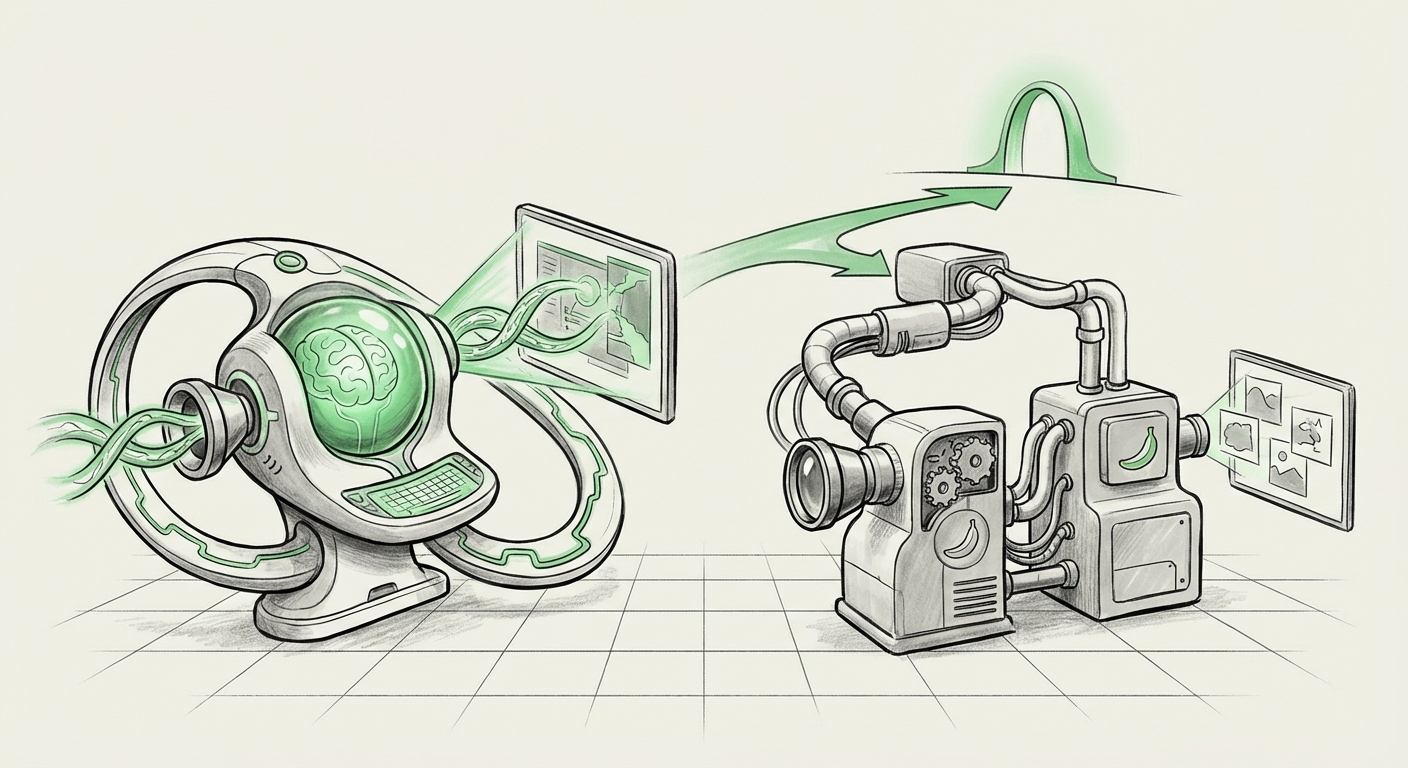
3D world models are AI systems that learn to represent the physical world in three dimensions. They don't just recognize objects; they understand how those objects relate to each other in space, how they move, how they cast shadows, how they interact with light, and how they behave when touched or moved.
Think of it like this: if a standard AI model is a flat photograph, a 3D world model is a fully interactive video game environment. You can walk around it, examine objects from different angles, predict how they'll behave, and simulate actions before taking them in the real world.
The startup that Amazon, Nvidia, and AMD are backing is building exactly these kinds of models. And with $310 million in funding, they now have the resources to push the technology further and faster than ever before.
Why Amazon, Nvidia, and AMD Are All In
Each of these three companies has a different reason for investing, but they all converge on the same underlying belief: 3D world models will be foundational to the next generation of AI applications.
Amazon's Bet: Robotics and Logistics
Amazon runs one of the largest logistics networks on the planet. They have hundreds of warehouses filled with robots that move shelves, pack boxes, and sort packages. But those robots mostly operate in carefully controlled environments. They follow pre-programmed paths and struggle when things change unexpectedly.
3D world models could change that. A robot that understands the 3D layout of a warehouse — where the shelves are, where the boxes are stacked, how to reach an item without knocking something over — would be far more capable than today's robots. Amazon is clearly betting that this startup's technology will help them build the next generation of smarter, more adaptable warehouse robots.
Nvidia's Bet: Simulation and Digital Twins
Nvidia is the world's leading maker of AI chips, but they also build software platforms for simulation. Their Omniverse platform is designed to create digital twins — virtual replicas of real-world environments where companies can simulate manufacturing lines, autonomous vehicle behavior, and even entire cities.
3D world models are a natural fit for Nvidia's strategy. If AI can automatically generate realistic 3D environments from sensor data, it becomes much easier to build digital twins. That means more demand for Nvidia's hardware and software. It's a classic platform play: invest in the technology that makes your ecosystem more valuable.
AMD's Bet: High-Performance Computing
AMD makes chips that compete directly with Nvidia in the AI and graphics markets. Their investment is partly about staying competitive — they don't want Nvidia to own the entire 3D AI ecosystem. But it's also about pushing the boundaries of what's possible with high-performance computing.
Building and running 3D world models requires enormous computational power. Training a model to understand the full complexity of a three-dimensional space takes thousands of hours of GPU time. AMD wants to make sure their hardware is optimized for this new workload, and investing in a leading startup is a smart way to ensure that alignment happens.
What This Means for the Future of AI
This $310 million investment is a clear signal that spatial intelligence is the next major frontier in artificial intelligence. We've already seen AI conquer language (with models like GPT) and images (with models like DALL-E and Stable Diffusion). The next logical step is the physical world.
Here are the key areas where 3D world models will have the biggest impact.
1. Robotics Gets a Brain Upgrade
Today's robots are mostly blind and clumsy. They follow precise instructions but can't adapt to new situations. A robot that understands 3D space can:
- Navigate cluttered rooms without bumping into furniture
- Pick up objects it has never seen before by understanding their shape and orientation
- Work alongside humans safely by predicting where people will move
- Learn new tasks by watching a human demonstrate them once
This is the kind of leap that could finally bring general-purpose robots out of factories and into homes, hospitals, and offices.
2. Autonomous Vehicles Get Smarter
Self-driving cars already use 3D sensors like LiDAR and radar. But they process that data using 2D AI models that treat the world as a series of flat images. A 3D world model would let an autonomous vehicle understand the full geometry of a street scene — the exact shape of a pothole, the way a pedestrian's arm is moving, the distance to a parked car's open door.
This could make autonomous driving safer and more reliable, especially in complex urban environments where today's systems still struggle.
3. Augmented and Virtual Reality Become Realistic
For AR and VR to be truly immersive, the virtual objects need to behave like real objects. They need to cast realistic shadows, reflect light correctly, and sit naturally on real surfaces. 3D world models can generate this kind of physical realism automatically, without a human designer having to tune every detail.
This could accelerate the adoption of AR glasses, virtual meeting spaces, and digital twins for training and education.
4. Simulation Becomes a Business Superpower
Companies already use simulation to test products, train workers, and optimize processes. But building a realistic simulation is expensive and time-consuming. 3D world models could automate much of that work, letting a company create a digital twin of a factory, a store, or a hospital just by feeding in sensor data.
Once you have a digital twin, you can run thousands of experiments in software before making changes in the real world. That means lower costs, fewer mistakes, and faster innovation.
Practical Implications for Businesses
If you run a business, you don't need to invest in a 3D world model startup to benefit from this trend. But you should start thinking about how spatial intelligence could change your industry.
Logistics and Supply Chain
Warehouses, ports, and delivery networks will become more automated and more flexible. If your business depends on moving physical goods, expect to see robots that can handle a wider variety of tasks and adapt to changing conditions without human intervention.
Manufacturing
Factory floors will become smarter. Robots that understand 3D space can work on more complex assembly tasks, handle variation in parts, and collaborate more safely with human workers. Digital twins will let you simulate production changes before investing in new equipment.
Healthcare
Surgical robots could use 3D world models to understand the anatomy of a patient better, leading to more precise procedures. Hospital logistics — moving beds, supplies, and equipment — could be automated more effectively.
Retail and E-commerce
Imagine a warehouse robot that can pick any item from any bin, regardless of how it's stacked. Or a delivery drone that can navigate to your front door without GPS. Or a virtual try-on system that shows you how clothes fit in 3D. All of these become possible with better spatial understanding.
Real Estate and Construction
Digital twins of buildings could be created automatically from drone footage or sensor scans. Architects and construction teams could simulate renovations, energy usage, and structural changes before breaking ground.
What About the Risks?
Whenever a powerful new AI technology emerges, it's important to consider the downsides. 3D world models are no exception.
Privacy concerns are significant. If a system can build a detailed 3D model of a space from camera feeds or sensor data, it could be used for surveillance in ways that feel invasive. A warehouse that tracks every movement of every worker in 3D could cross ethical lines.
Job displacement is another concern. As robots become more capable, they will replace human workers in tasks like warehouse picking, package sorting, and even some construction and maintenance roles. Businesses will need to plan for retraining and workforce transitions.
Safety and reliability are critical too. A robot that misunderstands the 3D layout of a room could cause accidents. If a 3D world model makes a mistake in a digital twin simulation, the real-world decisions based on that simulation could be wrong. Rigorous testing and validation will be essential.
Finally, there is the question of concentration of power. When three giant tech companies invest $310 million in a single startup, they gain influence over the direction of the technology. Smaller companies and public institutions may find it harder to compete or to ensure the technology serves the public good.
Actionable Insights for Leaders
If you want to prepare for the era of 3D world models, here are some concrete steps you can take:
- Start collecting 3D data. If you have cameras, LiDAR sensors, or depth sensors in your operations, start recording and organizing that data. You'll need it to train or fine-tune 3D models in the future.
- Experiment with digital twins. Even simple simulations of your physical space can yield insights. Start small — model one room, one production line, or one warehouse aisle — and expand from there.
- Watch the robotics space. The robots available today are limited, but the combination of 3D world models and better hardware will produce much more capable machines within two to five years. Plan for how they could fit into your operations.
- Invest in AI literacy. Your team doesn't need to be able to build 3D world models, but they should understand what the technology can and cannot do. That understanding will help you spot opportunities and avoid costly mistakes.
- Consider partnerships. You don't have to build this technology yourself. Look for startups, research labs, and technology providers that specialize in spatial AI and 3D simulation. A partnership can give you early access to capabilities that will become standard within a few years.
The Bigger Picture: AI Learns to Live in 3D
The $310 million investment by Amazon, Nvidia, and AMD is more than a financial story. It's a sign that AI is about to take a major step forward — from understanding the world through flat images and text to understanding it as a rich, three-dimensional space full of objects, surfaces, and relationships.
This shift will unlock new capabilities in robotics, simulation, autonomous vehicles, augmented reality, and beyond. It will change how businesses operate, how workers do their jobs, and how we interact with machines in our daily lives.
The startup that received this funding now has the resources to push the boundaries of what's possible. But the real impact will be felt across the entire technology ecosystem, as other companies build on top of these 3D world models and create applications we haven't even imagined yet.
Just as the rise of large language models changed how we think about text and conversation, the rise of 3D world models will change how we think about space, movement, and physical interaction. The future of AI is not just about words and pictures. It's about understanding the world in all its depth.