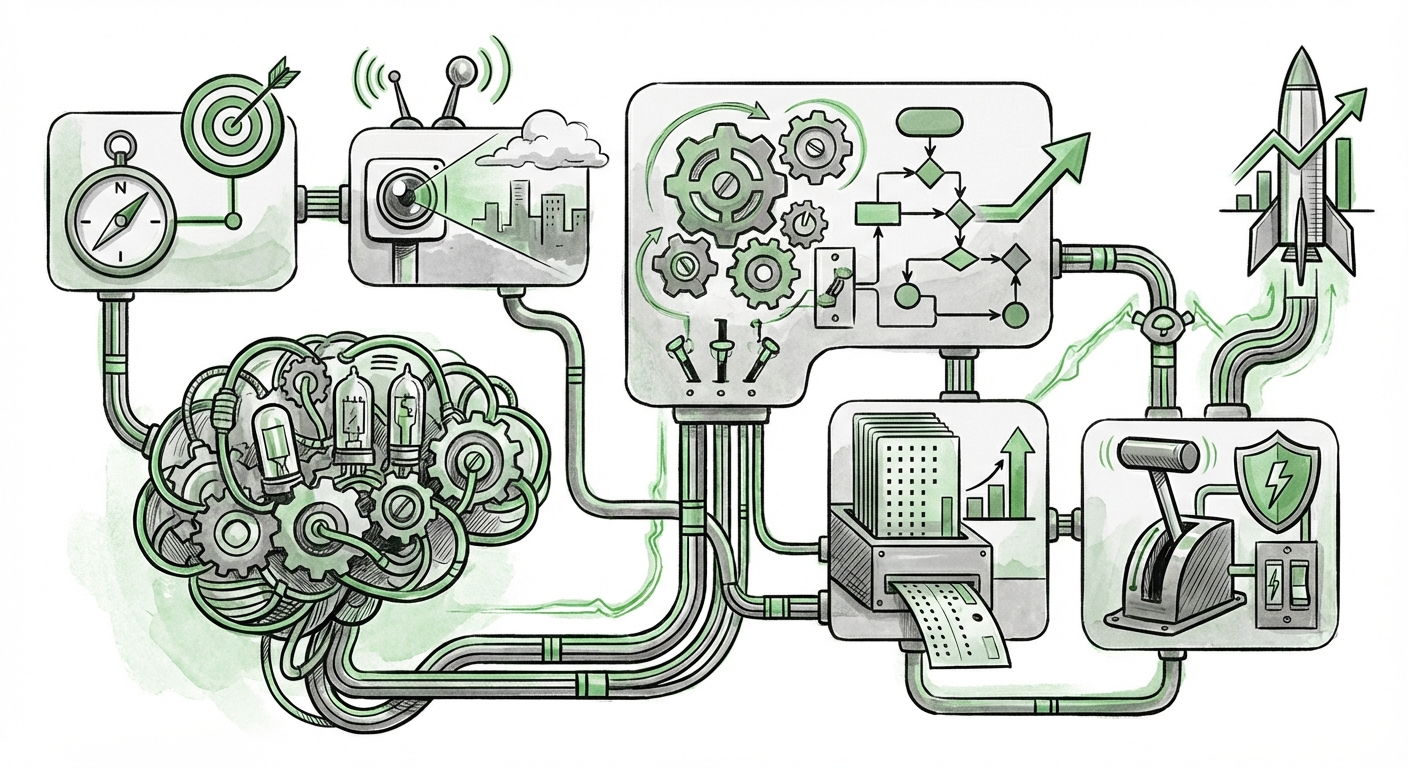
Midjourney Shocks Everyone: How an AI Image Generator Launched a Full-Body Ultrasound Scanner and Spa – What This Means for the Future of AI
In June 2026, the AI world received a curveball. Midjourney – the company best known for its creative image generation tools – unveiled something completely out of left field: a full-body ultrasound scanner and its own spa. This isn’t just a bizarre distraction. It signals a powerful shift in how AI companies think about growth, user experience, and the physical world. Let’s dive into what this move really means for the future of AI, and how it will be used in everyday life.
The Announcement That Turned Heads
According to a report by *the-decoder.com* on June 18, 2026, Midjourney introduced a full-body ultrasound scanner and a dedicated spa. The scanner likely uses advanced AI to analyze ultrasound images of the entire body – a technology usually reserved for medical diagnostics. The spa, on the other hand, is a physical space where people can experience this technology firsthand, probably combined with relaxation or wellness services.
This is a radical departure from Midjourney’s core product: an AI that turns text prompts into stunning visuals. But it’s not as random as it seems. Midjourney has always been about pushing the boundaries of generative AI. Now they are applying those same pattern‑recognition and image‑analysis skills to the human body.
What Is a Full-Body Ultrasound Scanner?
Ultrasound uses sound waves to create images of internal organs, tissues, and blood flow. A full-body scanner would take that concept and expand it to cover the entire human body in a single session. Traditionally, ultrasound is used for specific areas (like the heart or a fetus). A full-body scan could detect early signs of disease, monitor health over time, or simply give people a detailed look inside themselves.
Midjourney’s AI is excellent at understanding complex visual information – it can generate realistic images from text and analyze subtle details. By training its models on massive datasets of medical ultrasound images, it could identify abnormalities faster than human radiologists. The scanner becomes a physical tool for an AI‑powered health assessment.
Why a Spa? The User Experience Angle
The inclusion of a spa is perhaps the most thought‑provoking part. Midjourney isn’t just selling hardware; it’s creating a complete experience. People visiting the spa can get a scan in a calming environment, perhaps receive immediate AI‑generated insights about their health, and then relax. This blurs the line between medical diagnostics and lifestyle wellness.
For AI companies, user experience (UX) is everything. Midjourney knows that people are sometimes nervous about technology, especially when it involves their health. A spa setting makes the scan feel less like a hospital visit and more like a luxury service. This approach could lower resistance and make regular health monitoring appealing.
The Big Trend: AI Moving from Screen to Street
Midjourney’s move is part of a larger trend we call “AI in the physical world.” Until now, most AI products have lived inside apps, websites, and data centers. But the next wave is about embedding AI into real‑world objects and places:
- Smart hardware – AI chips in cameras, sensors, and medical devices.
- Physical experiences – Pop‑up stores, wellness centers, or “AI lounges” where you interact with the technology.
- Service integration – Using AI not just to recommend products, but to provide actual services like health scans or therapy.
Midjourney is pioneering this by building a spa: a physical location where AI directly serves the customer. Other AI companies like OpenAI, Google, and Meta will likely follow by opening experience centers or partnering with existing businesses (gyms, clinics, hotels) to offer AI‑powered services.
What This Means for the Future of AI
Let’s break down the implications into clear areas:
1. AI Expands into Healthcare
Healthcare is ripe for disruption. AI can already read radiology scans, predict diseases, and recommend treatments. With a full-body scanner, Midjourney brings this capability directly to consumers. Instead of waiting for a doctor’s referral, people could walk into a spa and get a comprehensive health check. This could democratize early detection – catching problems like tumors, heart disease, or organ damage before symptoms appear.
But it also raises serious questions. Who interprets the results? How accurate is the AI? Will people self‑diagnose incorrectly? Regulation will be crucial. If Midjourney’s scanner gets medical approval, it could become a standard tool. If not, it might remain a “wellness” novelty. Either way, AI’s role in personal health will grow.
2. Business Models Evolve: From Subscription to Experience
Midjourney originally made money through subscription plans for its image generation tool. An ultrasound scanner and spa represent a new revenue stream: physical services. Customers pay for a scan session, a spa visit, or a membership that includes regular checkups. This is a move from “software as a service” (SaaS) to “physical experience as a service” (PXaaS).
For other AI startups, this is a lesson: think beyond the screen. Can your AI be turned into a tangible product? A language model could power a tutoring center. A music‑generation AI could run a recording studio. The physical world offers higher margins and deeper customer loyalty.
3. Data and Privacy Take Center Stage
A full-body scan produces highly sensitive medical data. Customers will trust Midjourney with images of their internal organs. This is a massive responsibility. The company must guarantee data security, anonymization, and ethical use. A breach could destroy trust overnight.
AI companies entering physical health must adopt strict privacy frameworks. Expect legislation around “body data” to tighten. Midjourney’s spa could become a test case for how AI firms handle biometric information in a consumer setting.
4. Convergence of Generative AI and Medical Imaging
Midjourney’s core strength is generative AI – it can create images from scratch. Now they are applying that same engine to interpret real images. This is a natural fit. Generative AI models are great at recognizing patterns, filling in missing details, and highlighting anomalies. The same technology that generates a picture of a “cyberpunk cat” can be retrained to spot a tumor in a liver.
This convergence will accelerate. We may see image‑generation companies become leaders in medical imaging analysis. They have the infrastructure, the neural network expertise, and the ability to process large visual datasets. Traditional medical device companies will need to partner with AI firms or risk being left behind.
Practical Implications for Businesses and Society
Now, let’s make this concrete. What should business leaders, policymakers, and everyday people take away from Midjourney’s leap?
For Businesses:
- Explore physical AI services. Even if you sell software, think about how you can create a real‑world touchpoint. A pop‑up experience, a kiosk, or a partnership with a wellness brand.
- Invest in medical AI – carefully. The healthcare market is huge but heavily regulated. Approach with compliance in mind. Partner with doctors and hospitals to validate your technology.
- Focus on user trust. When you handle health data, every decision must prioritize patient safety. Transparency about AI accuracy and data usage builds long‑term brand value.
- Reimagine customer journeys. Combine cutting‑edge AI with a luxurious or calming setting. The spa angle shows that emotion matters – people want to feel cared for, not just diagnosed.
For Society:
- Health empowerment vs. anxiety. Instant access to body scans could make people more proactive about health. But it could also cause unnecessary worry over minor findings. Education and professional oversight are essential.
- Workforce changes. Radiologists and ultrasound technicians may find their roles shifting from image reading to AI supervision and patient interaction. New jobs in “AI health concierge” will emerge.
- Ethical questions. Should AI companies own your body images? What if they use the data to train future models (even anonymized)? Clear consent mechanisms are non‑negotiable.
- Access inequality. Spas are often expensive. If Midjourney’s scanner remains a luxury service, it could widen the health gap. The real impact will come when the technology is affordable and available in clinics, not just high‑end retreats.
Actionable Insights for the Next 12 Months
Drawing from Midjourney’s blueprint, here are three steps you can take:
- Monitor the health‑tech crossover. Watch for partnerships between AI companies and medical device manufacturers. If Midjourney’s scanner gets regulatory clearance, expect a flood of similar announcements.
- Experiment with physical experiences. Even a small “AI demo day” in a retail space can build brand buzz. Collect feedback from real users interacting with your AI in person.
- Prepare your data ethics. Whether you handle ultrasound images or customer chat logs, privacy is becoming a competitive advantage. Implement “privacy‑by‑design” now to avoid future scandals.
The Road Ahead: AI That Touches Us – Literally
Midjourney’s ultrasound scanner and spa are more than a gimmick. They represent a new chapter in AI: one where algorithms move from assisting creativity to assisting health, and from digital screens to physical environments. The company is betting that people want a holistic, AI‑driven wellness experience – and that trust in AI will extend to matters of life and death.
If this works, Midjourney will redefine itself from an “AI art tool” into a “health and wellness AI company.” That’s a massive shift in identity. It also opens the door for other AI firms to diversify into unexpected sectors. In the coming years, we may see AI companies running gyms, offering mental health retreats, or even opening AI‑powered restaurants that analyze your metabolism before serving you a meal.
The future of AI isn’t just about smarter code – it’s about smarter places and smarter care. Midjourney just showed us one way to get there.