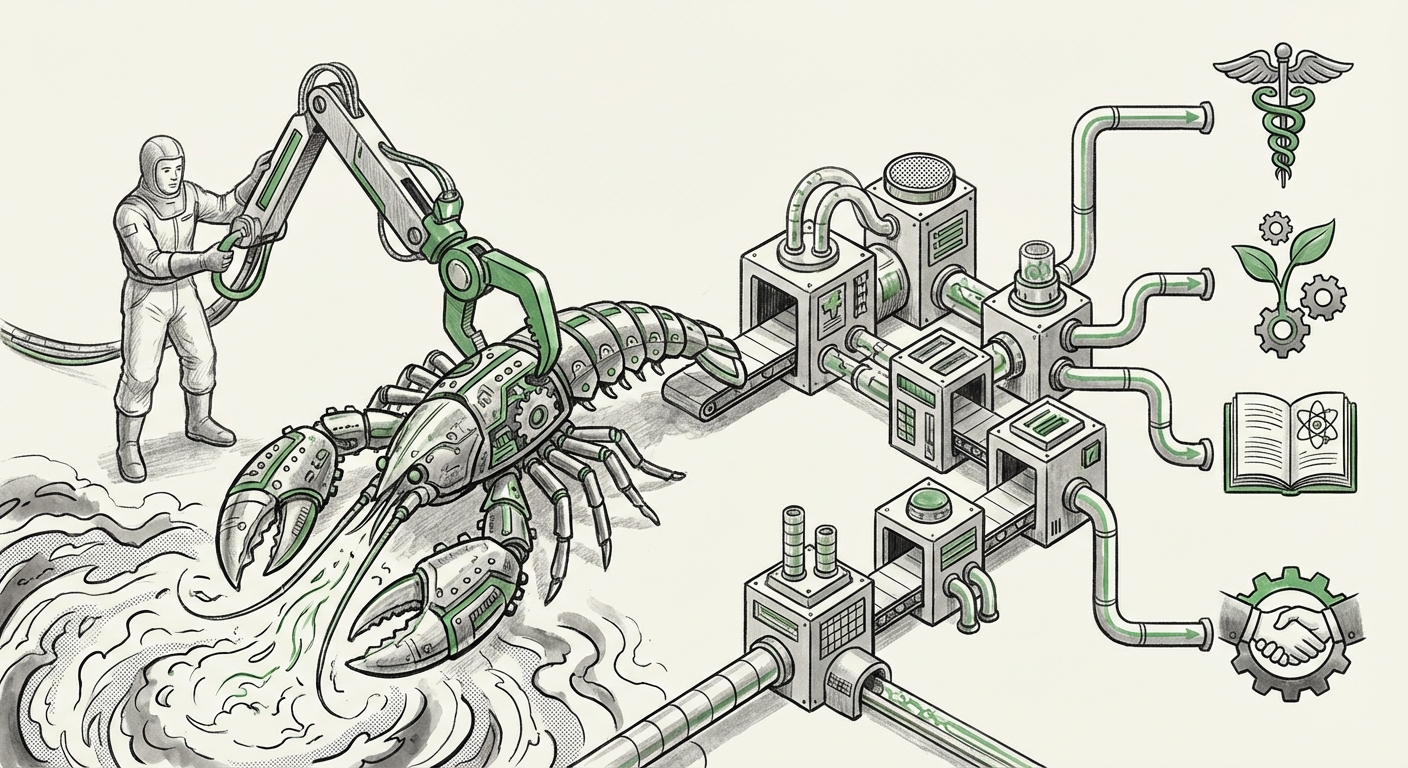
Nobel Laureate John Jumper Leaves DeepMind for Anthropic: What It Means for AI’s Future
On June 19, 2026, the artificial intelligence world was rocked by another high-profile departure from Google DeepMind. John Jumper — a Nobel Prize winner and the visionary behind the revolutionary protein-folding AI AlphaFold — has left DeepMind to join Anthropic. This move isn’t just a change of employer; it signals a tectonic shift in the landscape of AI research, competition, and the very direction of scientific progress.
For anyone following the AI industry, this raises urgent questions: Why are top researchers leaving DeepMind? What does Anthropic gain? And most importantly, what does this mean for the development of AI that could reshape everything from medicine to energy to ethics? Let’s dive into the story and what it means for the future of AI — and for you.
The Man Behind AlphaFold
John Jumper is not just any AI researcher. He led the team that created AlphaFold, an AI system that can predict the 3D structure of proteins with stunning accuracy. This breakthrough, which won him a share of the Nobel Prize, is often called the “Google Maps of biology.” It solved a 50-year-old grand challenge and opened the door to new drug discovery, disease understanding, and synthetic biology. His departure from DeepMind is a massive loss for the company.
According to the report from the-decoder.com, Jumper is the latest in a series of top researchers leaving DeepMind. The trend started earlier, but Jumper’s exit is arguably the most symbolic. When a Nobel laureate chooses to leave, it sends a message about the state of the organization and the magnetic pull of other AI labs.
The Talent Exodus: Why Top Minds Are Leaving DeepMind
DeepMind has been a powerhouse of AI research since its founding. But over the past few years, a stream of senior scientists has moved to competitors — especially Anthropic. The reasons are complex, but several key themes emerge:
- Research Freedom: Anthropic is known for its focus on AI safety and alignment. Researchers who want to explore fundamental questions without the pressure of product deadlines often find more room there.
- Compensation and Culture: Anthropic has raised enormous funding and can offer competitive packages. Moreover, its startup culture appeals to those who want to move fast and have direct impact.
- Vision Mismatch: Some insiders suggest that as Google integrates DeepMind more deeply into its product ecosystem, the long-term scientific goals sometimes get downplayed compared to commercial applications.
- The Anthropic Draw: An AI company founded by former OpenAI employees (including Dario Amodei), Anthropic has positioned itself as the ethical alternative — focused on building safe, beneficial AI. For mission-driven researchers like Jumper, that alignment may be irresistible.
While Jumper has not publicly detailed his reasons, his move is consistent with a larger pattern. It’s not just about money; it’s about the future of AI itself.
Anthropic’s Marvelous Catch
For Anthropic, landing a Nobel-winning scientist is a massive coup. It instantly elevates the company’s credibility in scientific AI — an area where DeepMind once held an unchallenged lead. Anthropic already had strong credentials in language models (like Claude) and safety research. Now it gains expertise in fundamental biological AI.
This signals that Anthropic is not content to be just a “safe AI” company. It wants to build the most capable AI systems on the planet — and solve hard scientific problems too. The combination of safety research and scientific breakthroughs could be a powerful mix. Imagine an AI that is both highly capable and carefully aligned with human values, applied to drug discovery or climate modeling.
What This Means for the Future of AI Research
The migration of top talent from DeepMind to Anthropic has several ripple effects:
1. Competition Will Accelerate Progress
When brilliant minds spread across multiple labs, innovation often speeds up. Anthropic, DeepMind, OpenAI, and others will now push each other harder. We may see faster breakthroughs in protein design, medical AI, and foundational models.
2. AI Safety and Capability Will Become More Intertwined
Jumper’s work is about capability — making AI better at understanding biology. Anthropic’s core mission is safety. Bringing these together suggests that future AI systems will be built with safety baked in from the start, not added as an afterthought. This could lead to more trustworthy AI in high-stakes applications like healthcare.
3. The War for AI Talent Intensifies
Companies will compete even more fiercely for top researchers. Expect higher salaries, more flexible work arrangements, and perhaps even new incentives like equity in AI spin-offs. For businesses, this means that retaining AI talent will be as important as hiring it.
Practical Implications for Businesses and Society
These developments matter far beyond Silicon Valley. Here’s how they affect you:
- For healthcare companies: Biological AI is getting a boost. If Jumper and Anthropic accelerate drug discovery, we could see new treatments for diseases like Alzheimer’s, cancer, and rare genetic disorders. Expect partnerships between pharma and Anthropic to become more common.
- For tech firms: The AI talent war means you need to invest in your own research or risk falling behind. Consider how your organization can use open-source models or collaborate with universities to access top minds.
- For policymakers: The concentration of AI talent in a few companies raises antitrust and security concerns. Governments may push for more transparency and perhaps even public AI research institutes.
- For society: The shift toward safety-focused AI research is good news. Anthropic’s emphasis on alignment could lead to AI that is less likely to be misused. But the power of these AI systems will still require careful governance.
Actionable Insights for Decision-Makers
Based on this trend, here are steps you can take:
- Monitor AI talent flows. Track where top researchers are going. If your industry depends on AI, these moves signal where the next breakthroughs will happen.
- Invest in AI adoption. Even if you can’t hire a Nobel laureate, you can leverage tools built by Anthropic and others. Start piloting AI in your core business processes now.
- Prioritize safety and ethics. As AI becomes more capable, public trust will be critical. Emulate Anthropic’s approach by building transparent, explainable AI systems.
- Prepare for disruption. If biological AI takes off, industries from agriculture to materials science could be transformed. Stay agile.
Conclusion: A New Chapter for AI
John Jumper’s move from Google DeepMind to Anthropic is more than a single hire — it’s a symbol of a changing AI landscape. The gravitational center of AI research is shifting from a single dominant lab to a multipolar world where safety, capability, and scientific ambition coexist. For the future of AI, this means faster progress, more attention to alignment, and a race that benefits humanity if managed wisely.
Whether you’re a business leader, a technologist, or just an observer, the message is clear: the AI revolution is accelerating, and the people who make it happen are on the move. Pay attention — because the next AlphaFold could come from anywhere.