Cisco AI's FAPO: The Prompt Optimization Breakthrough That Fixes AI Pipelines Step by Step
When you ask a large language model (LLM) to do something complex — like write a report, analyze data, or generate code — it often needs to work through a series of steps. Each step uses a different prompt, and the output of one step feeds into the next. These "prompt pipelines" are the backbone of many modern AI applications. But they have a big problem: when something goes wrong, it's incredibly hard to figure out which step caused the error. Worse still, manually tweaking each prompt to fix the pipeline is slow, tedious, and often fails.
That's why Cisco AI recently introduced FAPO: Pipeline-Aware Prompt Optimization. Announced in June 2026, FAPO is a new system that automates the process of improving multi-step prompt pipelines. It uses something called step-level failure attribution to pinpoint exactly where a pipeline breaks, and then relies on Claude Code orchestration to intelligently rewrite the problematic prompts. For anyone building serious AI applications, FAPO could be a game-changer.
What Is a Prompt Pipeline and Why Does It Matter?
Imagine you're building an AI assistant that helps customers troubleshoot internet issues. The assistant might need to:
- Step 1: Ask the customer to describe their problem.
- Step 2: Classify the problem type (connection, hardware, billing).
- Step 3: Generate a list of possible fixes.
- Step 4: Format the answer into a friendly response.
Each of these steps is a separate prompt to an LLM. The output of one step becomes part of the input for the next. This is a prompt pipeline — a sequence of LLM calls designed to accomplish a single goal.
These pipelines are everywhere: in chatbots, data analysis tools, content generators, and software development assistants. They allow AI to handle tasks that are too complex for a single prompt. But as the number of steps grows, the chance of failure increases. A misstep early on can cascade into a useless final output. And because the pipeline is a chain, it's tough to know which link is weak.
Enter FAPO: Pipeline-Aware Optimization
Traditional prompt optimization works on individual prompts in isolation. You test one prompt, see if it gives a good result, and tweak it. That doesn't work well for pipelines because changing one prompt affects the entire chain. FAPO looks at the whole pipeline at once. It is "pipeline-aware" — it understands that the prompts are connected and optimizes them together.
The key innovation is step-level failure attribution. Instead of just saying "the pipeline failed," FAPO can identify which specific step caused the failure. For example, if the final output is wrong because the classification step mislabeled a problem, FAPO will point to that step. This is like having a mechanic for your AI pipeline who can immediately see which part is broken.
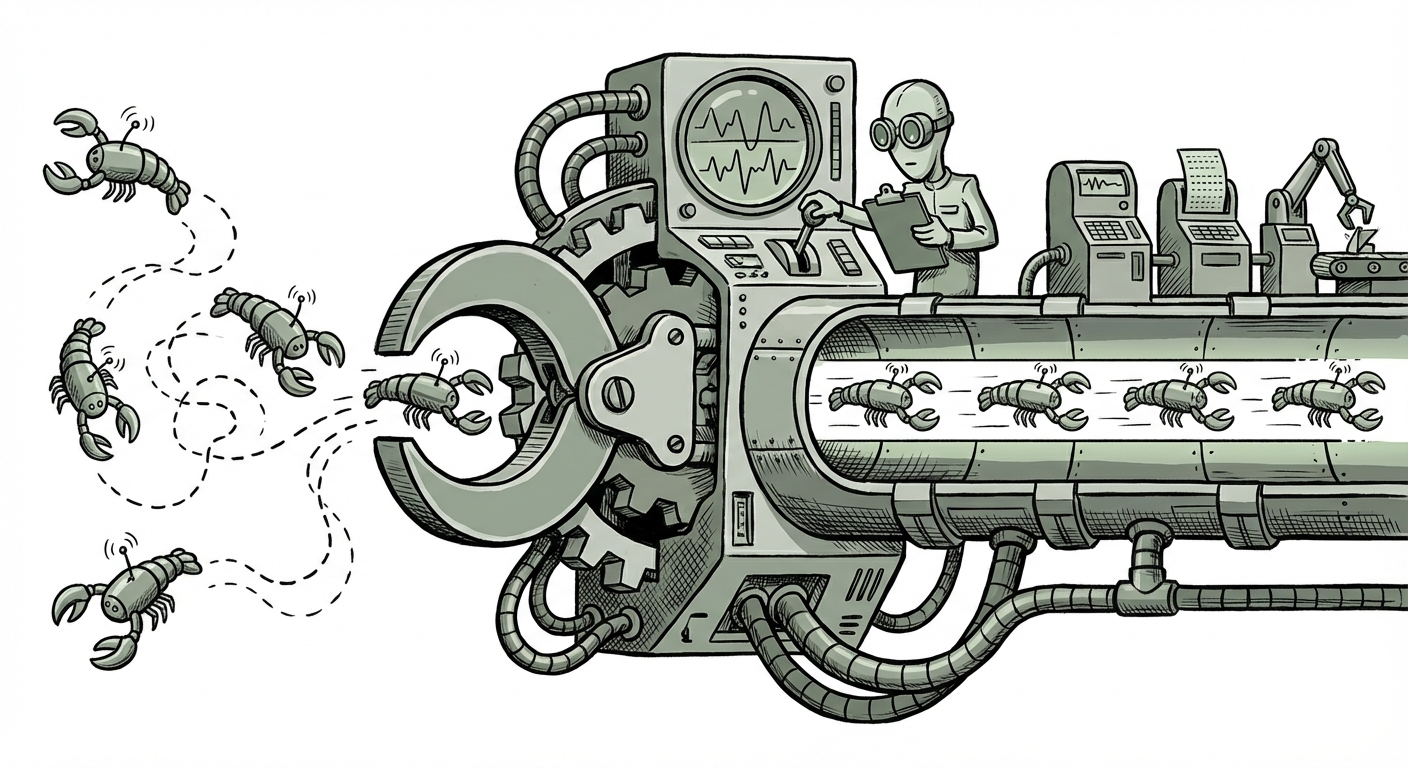
Once the failure is identified, FAPO uses Claude Code orchestration to automatically rewrite the problematic prompt. Claude Code is a tool from Anthropic that allows LLMs to write and edit code (including prompt templates). By orchestrating Claude Code, FAPO can generate new versions of the failing prompt, test them in the full pipeline context, and keep the ones that improve overall performance. The result is a self‑improving pipeline that gets better over time.
How FAPO Works Under the Hood
While the full technical details aren't public, the announcement gives us a clear picture. FAPO treats the pipeline as a system of connected components. It runs the pipeline with many test inputs, collects the outputs, and evaluates success against a defined goal (for example, "the final answer must be correct and polite"). When a failure occurs, FAPO traces backward to find the step where the error originated.
This attribution is done at the step level, meaning each prompt in the chain gets a "failure score." Steps that consistently produce bad outputs are flagged. Then FAPO calls upon Claude Code to modify that specific prompt. Claude Code can rephrase instructions, add examples, adjust formatting, or even change the entire structure of the prompt. Because Claude Code is built on a powerful LLM, it understands context and can write intelligent alternatives.
The optimization is iterative. FAPO generates several candidate prompts, runs the whole pipeline with each one, and compares the overall results. Only the candidates that improve the end‑to‑end performance are kept. Over multiple rounds, the pipeline becomes more reliable and accurate.
What This Means for the Future of AI
FAPO is more than just a tool for developers — it signals a shift in how we think about AI reliability. Here are the key implications:
1. From Single Prompts to Complex Workflows
Most AI applications today are built on single prompts or simple chains. FAPO makes it practical to build pipelines with many steps, because you no longer have to manually debug each one. This opens the door to much more capable AI systems that can handle multi‑stage reasoning, data transformation, and decision‑making.
2. Automated Debugging Becomes Standard
Just as software development benefited from debuggers and automated tests, AI development will now have automated pipeline debugging. Step‑level failure attribution means you don't have to guess where the problem is — the system tells you. This reduces the skill barrier for building reliable AI and lets more people create production‑grade applications.
3. Claude Code Orchestration Shows a New Pattern
Using one LLM to improve prompts for another LLM is a powerful meta‑technique. FAPO uses Claude Code to rewrite prompts, but the same idea could apply to optimizing any part of an AI system — like fine‑tuning parameters, adjusting retrieval strategies, or even designing new architectures. We're entering an era where AI helps build better AI.
4. Enterprise‑Grade Reliability Without Manual Tuning
For businesses, FAPO means they can deploy AI pipelines with confidence. Instead of spending weeks hand‑crafting prompts and testing edge cases, they can let FAPO do the heavy lifting. The result is faster time‑to‑market and lower operational costs. And because the optimization is continuous, the system can adapt to new data or changing requirements without human intervention.
Practical Implications for Businesses and Society
Let's look at how FAPO will change real‑world AI use:
- Customer Service: Pipelines that handle complex queries (technical support, account management) will become more reliable. Fewer misclassifications, fewer wrong answers, and happier customers.
- Content Generation: Multi‑step content pipelines (research → outline → draft → polish) can be optimized automatically, producing higher‑quality output with less editorial review.
- Data Analysis: Pipelines that query databases, analyze results, and generate reports will see fewer errors. FAPO can catch mistakes in the analysis step before they reach the final report.
- Software Development: AI coding assistants that use multiple prompts to write, test, and debug code can benefit from step‑level optimization. The result: more accurate code generation with fewer bugs.
For society, the impact is about trust. As AI becomes more embedded in daily life, people need to rely on it. FAPO helps build that trust by making AI pipelines more robust and explainable (you know exactly which step failed). It also reduces the need for armies of prompt engineers, democratizing access to powerful AI systems.
What Developers Should Do Now
Even though FAPO is a Cisco AI product, the concepts behind it are universal. Here are actionable insights for anyone building AI pipelines:
- Instrument your pipelines. Add logging to every LLM call so you can trace failures back to individual steps. Without data, you can't attribute failures.
- Think in steps. Break your complex tasks into clear, measurable steps. Each step should have a defined input and output, and a way to evaluate success.
- Embrace meta‑optimization. Experiment with using one LLM (like Claude) to critique and improve your prompts. Even without FAPO, you can create a simple loop that generates prompt variants and tests them.
- Watch for pipeline‑aware tools. The industry will likely see many similar offerings. Evaluate tools that treat the entire pipeline as the optimization unit, not just individual prompts.
- Prepare for self‑improving systems. The future is AI that tunes itself. Build your architecture to allow automated modifications — for example, storing prompts in a database that can be edited by an AI agent.
Conclusion: A New Era of Intelligent Orchestration
Cisco AI's FAPO is a significant step forward. By combining pipeline awareness, step‑level failure attribution, and Claude Code orchestration, it solves one of the hardest problems in deploying LLMs: making complex, multi‑step workflows reliable at scale. For businesses, this means less manual labor and more trustworthy AI. For developers, it unlocks the ability to build ambitious AI systems without drowning in prompt tweaking. And for the rest of us, it brings us closer to AI that truly works — not just in isolated tasks, but in the messy, multi‑step processes that define real‑world work.
The age of single‑prompt AI is ending. The age of orchestrated, self‑optimizing pipelines is just beginning. FAPO is a glimpse of what's coming next.