AI Bottleneck Debates and BCI Trials Take Off: What It Means for the Future of AI
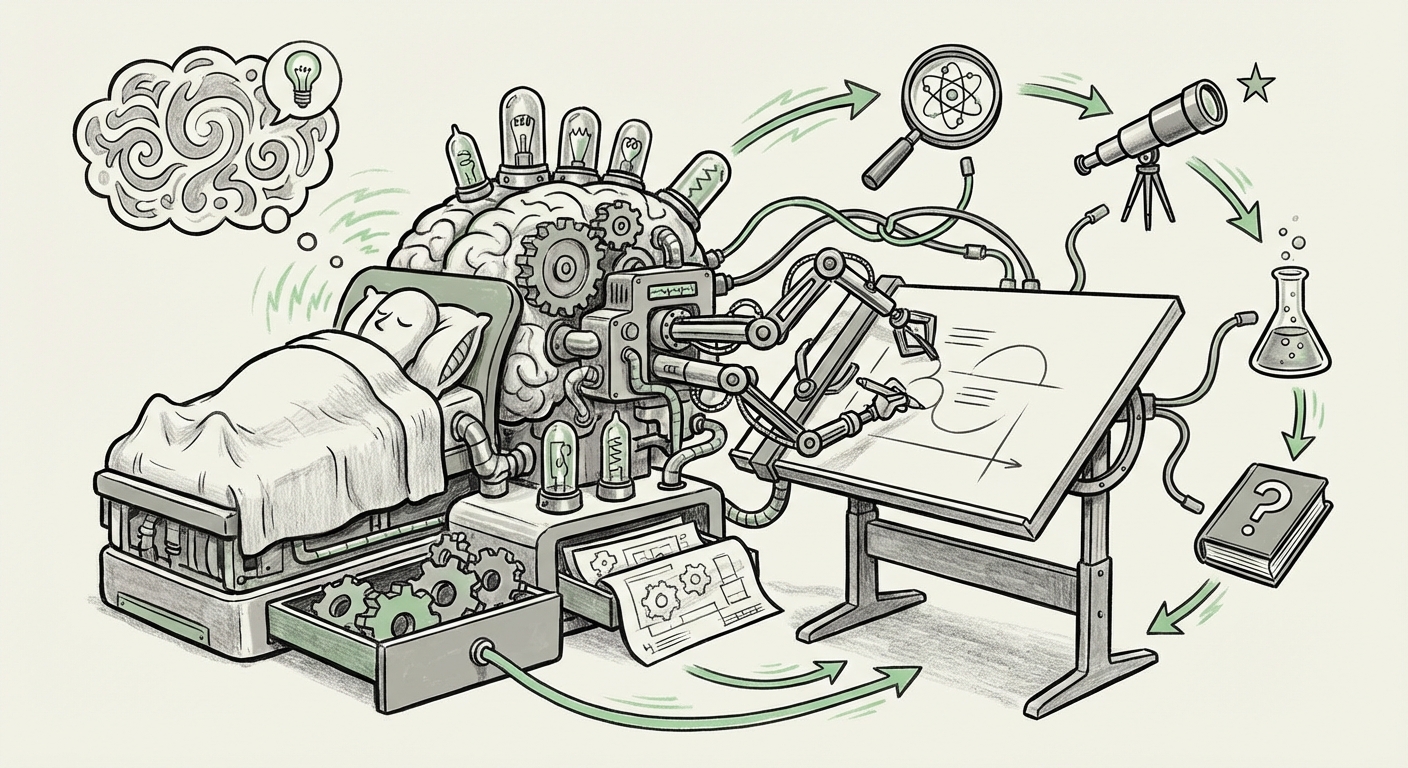
Two powerful narratives are converging in the artificial intelligence world right now. One is a debate about AI bottlenecks — whether the rapid scaling of large language models is hitting fundamental limits. The other is the take-off of brain-computer interface (BCI) trials, signaling that direct neural connections to machines are moving from laboratories into real human tests. Both stories, highlighted in a recent MIT Technology Review article, will shape how AI evolves and how it integrates into our lives.
For business leaders, technologists, and society at large, understanding these twin developments is critical. The bottleneck debate will determine the next generation of AI capabilities — whether we continue to see exponential gains or hit a plateau. The BCI trials represent a frontier where AI meets biology, opening up possibilities that were science fiction just a few years ago.
1. The AI Bottleneck Debate: Are We Running Out of Gas?
The heart of the AI bottleneck debates centers on whether the current paradigm — scaling up model size, data, and compute — can continue to deliver the stunning improvements we’ve seen. For years, the AI community has operated on the assumption that bigger models always lead to better performance. But recent discussions suggest that we may be approaching constraints in three areas: data supply, energy consumption, and hardware limits.
Data is becoming a scarce resource. The internet has been scraped for trillions of tokens, and the next order of magnitude may require synthetic data or new collection methods. Meanwhile, training large models already consumes enormous amounts of electricity and specialized chips. If the costs of scaling outweigh the marginal gains, the entire AI industry may need to pivot toward efficiency instead of brute force.
This debate is not just academic. It directly impacts which companies will lead the next wave of AI. If scaling hits a wall, startups that can innovate in smaller, more efficient models may outpace giants who bet everything on ever-larger systems. It also affects the timeline for breakthroughs like general intelligence. For businesses investing in AI, the bottleneck debate suggests a need for diversified strategies: don’t put all your money on the idea that bigger will always be better.
What the Debate Means for AI Practitioners
For developers and data scientists, the bottleneck debate encourages a rethinking of priorities. Instead of simply adding more layers and parameters, the focus may shift to algorithmic efficiency, better training techniques, and domain-specific models. This is already visible in the rise of mixture-of-experts models and sparse architectures. The debate also underscores the importance of reproducibility and benchmarks — if we can’t reliably measure whether bigger models are actually smarter, the whole scaling narrative weakens.
On the societal side, a potential plateau in AI progress could give regulators and ethicists breathing room. Rapid, unpredictable advancements have often outpaced safety measures. A slowdown might allow for better governance, bias mitigation, and workforce adaptation. However, it could also disappoint investors and slow the delivery of AI-powered solutions to global challenges like climate change and healthcare.
2. BCI Trials Take Off: The Neural Frontier Opens
The take-off of BCI trials marks a pivotal moment in the merger of humans and machines. Brain-computer interfaces — devices that record or stimulate brain activity to control computers or prosthetics — have been in development for decades. But now, multiple clinical trials are moving into human participants, testing devices for paralysis, communication, and even cognitive enhancement.
These trials reflect years of foundational research in neuroscience, materials science, and AI. The AI component is crucial: interpreting neural signals requires powerful machine learning models that can translate thoughts into actions in real time. Conversely, BCIs could provide new streams of rich biological data that train even better AI systems.
The implications are profound. For individuals with severe disabilities, BCIs promise restored mobility and communication — controlling a cursor, typing, or operating a robotic arm with thought alone. But the technology also raises ethical and privacy concerns. If companies can read neural activity, who owns that data? What happens when brain data is used to infer emotions, intentions, or even subconscious thoughts?
Business Opportunities and Risks in BCI
For businesses, the BCI take-off represents a new market that could intersect with healthcare, gaming, productivity, and human enhancement. Early adopters will likely be medical applications where the value is highest — helping paralyzed patients regain function. But consumer applications (e.g., hands-free control of devices, immersive VR, or enhanced learning) could follow if the technology becomes safe, non-invasive, and affordable.
Investors should watch for companies that have robust clinical trial data, regulatory approval pathways, and partnerships with hospitals. Yet risks abound: technical challenges (signal noise, electrode longevity), regulatory hurdles, and public perception. A single high-profile adverse event could set the entire field back years.
3. Where the Two Trends Intersect
At first glance, the AI bottleneck debate and BCI trials might seem unrelated. But they share a common core: the search for new frontiers in computing. If scaling AI using traditional silicon hardware hits a wall, BCIs could offer an alternative — human-in-the-loop computing where the brain augments AI’s limitations, or vice versa. For instance, BCIs could provide a way to input high-level goals directly, bypassing the need for perfect language interfaces.
Conversely, advances in efficient AI could make BCIs more practical. A model that runs on a tiny, low-power chip could process neural signals inside the skull without needing a giant server. So the two trends are mutually reinforcing: progress in one can accelerate the other.
For society, the combination of AI bottlenecks and BCI take-off suggests a future where AI becomes more personal and intimate — not just a cloud service, but a direct extension of our brains. That vision is exciting but also demands careful governance. As we push into these new territories, we need informed public debate, transparent regulation, and inclusive access to ensure that the benefits are shared widely.
4. Practical Implications for Businesses and Society
- Diversify AI investments: Don’t assume scaling will continue forever. Fund research into efficiency, alternative hardware, and neuromorphic computing.
- Monitor BCI regulation: Governments are starting to draft rules for neural data. Stay ahead by adopting strong ethical guidelines and patient consent protocols.
- Explore hybrid interfaces: Combined AI + BCI systems may offer capabilities that neither achieves alone. Early experiments could lead to competitive advantages.
- Prepare workforce for change: If BCI enhances human cognitive abilities, the nature of knowledge work could shift. Reskilling programs should consider human-machine collaboration.
- Engage with the bottleneck debate: Technical teams should analyze whether their model scaling is hitting diminishing returns. Case studies and open discussions will help the whole field.
5. Conclusion: Navigating the Crossroads
The AI world stands at a crossroads. The bottleneck debate challenges a decade of assumptions about how to make AI smarter. The BCI trial take-off opens a entirely new path — building AI that interfaces directly with the human brain. Both trends, highlighted in the MIT Technology Review analysis, demand that we think flexibly about the future.
For innovators, the message is clear: don’t bet everything on a single storyline. The next breakthrough may come from efficiency, not scale. It may come from biology, not silicon. And it will surely bring new questions about ethics, privacy, and what it means to be human in an age of intelligent machines.
Staying informed, probing assumptions, and collaborating across disciplines will be the keys to navigating this transition. The bottleneck debate reminds us to be humble about what we know. The BCI trials remind us to be bold about what we can try.