Anthropic and Micron Partner to Redesign AI Memory Architecture – Here’s Why It Matters
On June 22, 2026, Anthropic and Micron announced a joint effort to co-design AI memory architecture. This partnership brings together one of the world’s leading AI safety companies and a giant in memory and storage solutions. At first glance, it might sound like a niche hardware collaboration. But this move hints at a fundamental shift in how artificial intelligence will be built and deployed in the coming years.
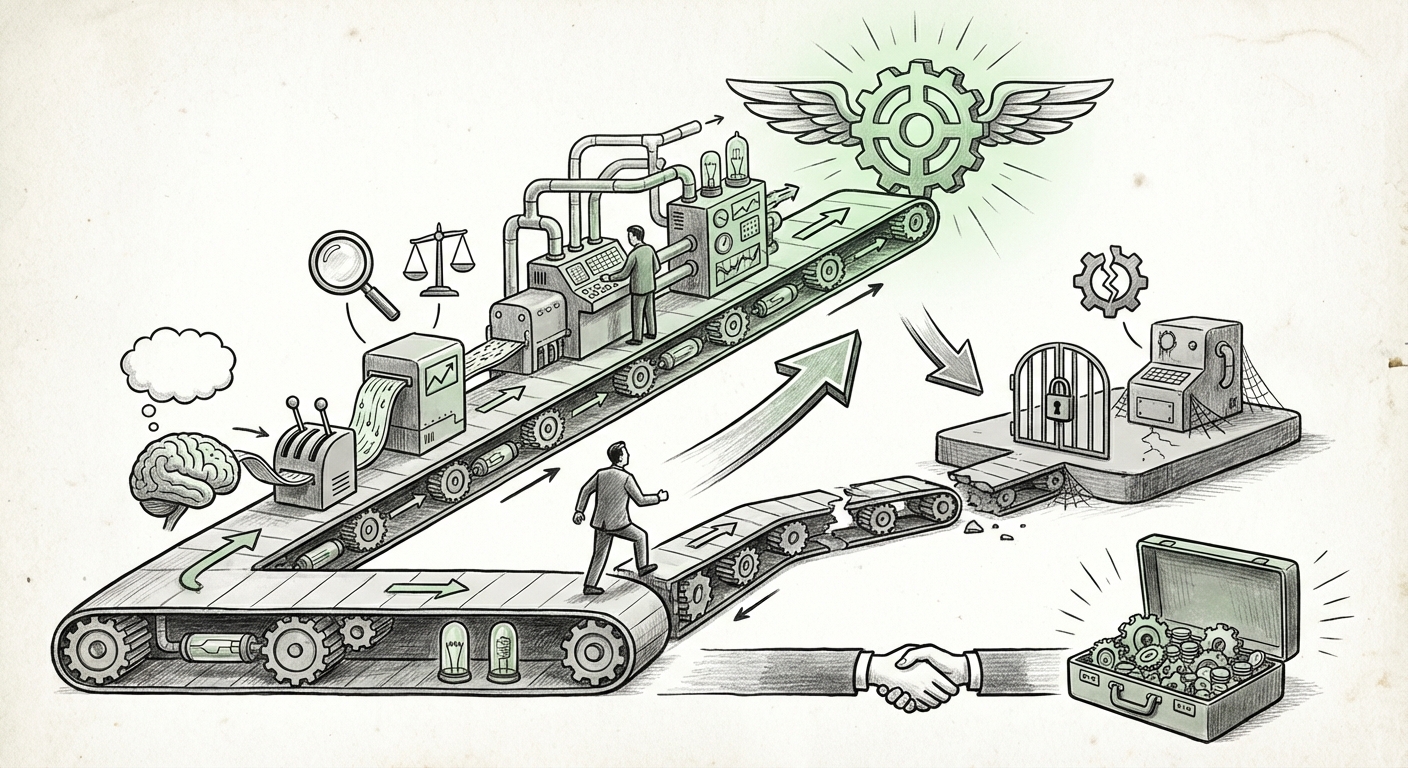
To understand why this matters, we have to look at the biggest bottleneck facing modern AI: memory bandwidth. Large language models (LLMs) and other deep learning systems are hungry for data. They need to move huge amounts of information between compute units (like GPUs) and memory chips as fast as possible. Right now, this data transfer is often the slowest part of running an AI model. Even the most powerful AI accelerator can be left waiting for data to arrive from memory. That’s wasted compute time, higher energy costs, and slower responses for users.
The Memory Bottleneck: Why AI Needs New Thinking
For decades, the semiconductor industry has improved memory performance through a combination of faster clock speeds, wider buses, and more layers of cache. But those gains are slowing down. Meanwhile, the size and complexity of AI models are growing faster than ever. A single inference on a cutting-edge LLM can require tens of gigabytes of model weights to be loaded from memory. If that memory is far away or too slow, the entire operation grinds to a halt.
Anthropic’s focus is on building safe, capable AI systems, which means they care deeply about efficiency and reliability. Micron brings decades of experience in DRAM, NAND flash, and emerging memory technologies. By working together, they can tailor the memory subsystem to the specific needs of future AI models. This isn’t just about making existing memory faster; it’s about rethinking the architecture from the ground up.
What “Co-Design” Actually Means
Co-design means the two companies will collaborate at every stage – from chip logic to memory controller design to the physical layout of memory (like HBM or CXL-attached memory). Instead of building a generic memory chip and then trying to make it work for AI, they will design memory features specifically for the way token generation, attention mechanisms, and model parallelism actually behave.
For example, modern LLMs use a “KV cache” that stores intermediate results during inference. That cache grows with sequence length and can dominate memory usage. A memory architecture co-designed with Anthropic’s models in mind might include special pathways to manage this cache more efficiently, reducing latency and power.
What This Means for the Future of AI
The partnership between Anthropic and Micron signals that the next frontier of AI innovation isn’t just about bigger models – it’s about building the hardware infrastructure that makes those models practical. Here are three key ways this will shape the future:
1. Faster, Cheaper Inference at Scale
If memory bandwidth improves significantly, every AI inference will be faster. That means lower response times for chatbots, real-time translation, and generative image creation. For businesses running AI in production, it also means lower operational costs because you need fewer servers to handle the same workload. Over time, this could make AI affordable for small and medium-sized enterprises that currently find it too expensive.
2. Better AI for Edge Devices
Memory co-design isn’t only for massive data centers. Micron also makes memory for smartphones, laptops, and embedded systems. If Anthropic’s safety-focused models can run efficiently on devices with limited memory bandwidth, we might see powerful AI assistants running locally, without sending data to the cloud. This would improve privacy and enable offline usage – a major step toward ubiquitous AI.
3. Enabling New Model Architectures
Today’s transformer models are memory-hungry. But researchers are exploring alternatives like state-space models (SSMs) or mixture-of-experts (MoE) that have different memory patterns. A flexible memory architecture could support these emerging designs, allowing AI to break free from the transformer paradigm and adopt more efficient forms. Anthropic’s research into novel architectures could directly benefit from hardware that isn’t locked into old assumptions.
Practical Implications for Businesses and Society
This collaboration isn’t just a technical announcement; it has real-world consequences for anyone who builds, uses, or regulates AI.
Implications for AI Developers
- Lower inference costs – With better memory performance, you can serve more users with fewer GPUs. That directly impacts the bottom line.
- Faster iteration cycles – Training and fine-tuning could also benefit from memory optimizations, reducing the time to try new ideas.
- New optimization opportunities – Developers will need to understand the memory hierarchy to fully exploit the gains. Skills in hardware-aware AI will become more valuable.
Implications for Businesses Adopting AI
- More affordable AI services – As infrastructure costs drop, AI-as-a-Service providers can pass savings to customers.
- Reliability improvements – Memory-related crashes and slowdowns should become rarer, making AI more dependable for critical tasks like medical diagnosis or financial trading.
- Greater choice – If memory bottlenecks are removed, companies can run models on a wider variety of hardware, reducing vendor lock-in.
Implications for Society
- Energy efficiency – Memory accesses consume a lot of power. Better memory architecture could reduce the carbon footprint of AI, aligning with sustainability goals.
- Accessibility – Cheaper, faster AI could help bridge the digital divide, bringing intelligent tools to underserved communities.
- Safety and alignment – Anthropic’s involvement means safety considerations will be baked into the hardware. That could lead to more predictable and controllable AI systems.
Actionable Insights: What You Can Do Now
While the co-design work will take years to reach products, there are steps you can take today to prepare for this shift:
- Monitor memory trends – Keep an eye on memory standards like HBM4, CXL 3.0, and compute express link. These are the building blocks of future AI systems.
- Invest in hardware-aware AI training – Encourage your engineering teams to learn about memory bandwidth, data locality, and kernel fusion. These skills will be in high demand.
- Design for flexibility – Build your AI stack with abstractions that allow you to swap in new hardware backends. The cloud providers will likely adopt new memory architectures first.
- Watch Anthropic’s research – Their blog and papers will reveal insights into what memory features matter most for safety and performance.
- Budget for infrastructure upgrades – If you run your own AI hardware, plan for a cycle where memory becomes a bigger differentiator than raw compute.
Conclusion: A Smarter Foundation for Smarter AI
The Anthropic–Micron partnership is a clear sign that the AI industry is maturing. We have passed the era of “just make the model bigger.” Now we must make the entire system – from chip to memory to software – work in harmony. Co-designing memory architecture for AI is not just a technical optimization; it is a strategic move that will define the next generation of artificial intelligence.
For businesses, this means lower costs and higher reliability. For society, it means a more sustainable and accessible AI landscape. And for the future of intelligence itself, it means we are one step closer to building systems that are not only powerful but also efficient and safe. The memory you use matters more than you think.