Figma Bets on Human Judgment at Config 2026 — While the AI on Its Canvas Belongs to Someone Else
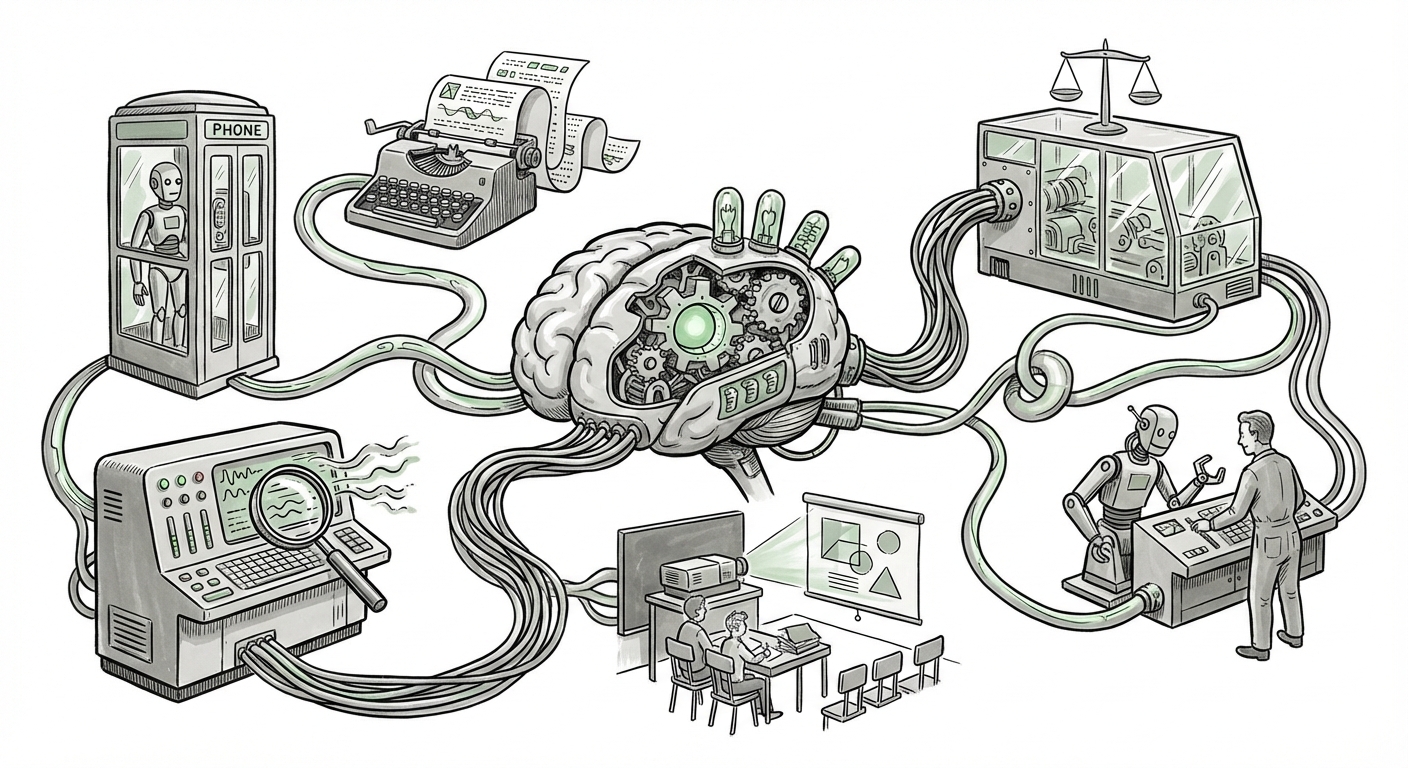
At Figma’s Config 2026 conference, the design world heard a message that might seem strange at first: the company is betting big on human judgment even as it rolls out new AI features on its canvas. But here’s the twist — the AI powering those features isn’t built by Figma. It belongs to someone else. This headline from the-decoder.com (June 24, 2026) captures a shift that goes far beyond one design tool. It speaks to where the entire AI industry is headed: away from owning every model and toward a world where the real value is in how we use AI, not in who made it.
In this article, we’ll unpack what Figma’s decision tells us about the future of AI. We’ll look at why human judgment is becoming the hottest commodity in tech, why companies are letting others build their AI brains, and what all of this means for businesses and society. Whether you’re a designer, a CEO, or just someone curious about AI, this story touches on the most important trend in artificial intelligence today.
The Headline That Says Everything
Let’s start with exactly what we know from the source. Figma’s Config 2026 keynote put human judgment front and center. At the same time, the company made it clear that the AI features on its canvas — the generative designs, the automated layout suggestions, the smart components — are not proprietary. They come from a third party. This is a huge shift from the “build your own AI” arms race we’ve seen over the last few years.
Figma isn’t alone. Many companies are realizing that developing foundation models or even specialized AI models is expensive, risky, and often not their core strength. What matters more is how you integrate AI into your product in a way that amplifies human creativity and decision-making. Figma’s bet is that users — designers, product managers, developers — will trust and love the canvas more if the AI is transparent about its limits and if the human always stays in control.
The phrase “the AI powering its canvas belongs to someone else” is not a weakness; it’s a strategy. It says: We don’t need to own the AI to deliver amazing experiences. The real moat is the judgment of the people using the tool.
Why Human Judgment Matters More Than Ever
For years, the AI conversation has focused on replacing humans. We heard about robots taking jobs, AI writing code, and generative models producing art. But Figma’s message — and the data from many other industries — shows that the most successful AI deployments are collaborative. The machine suggests; the human decides. The machine generates options; the human curates. The machine speeds up tedious work; the human focuses on strategy and taste.
Consider a designer using Figma with AI assistance. The AI can propose a dozen color palettes, layout variations, or icon placements. But the designer brings the context: the brand guidelines, the client’s personality, the emotional response they want to evoke. That judgment — knowing which shade of blue says “trust” versus “cold” — is uniquely human. Figma’s bet says that even as AI gets better, human judgment becomes more valuable, not less.
This has huge implications for education, hiring, and work. Instead of learning to code or use complex tools, the future skill is critical evaluation. Can you look at an AI’s output and spot the flaw? Can you recognize when an AI suggestion is brilliant versus when it’s a dangerous hallucination? That’s the kind of judgment Figma is banking on.
The Rise of AI-as-a-Service (AIaaS)
Figma’s decision to use third-party AI is part of a larger trend: AI commoditization. Just a few years ago, every tech company felt it had to build its own large language model (LLM) or image generator. Now, many are realizing they don’t need to. Powerful AI is available from companies like OpenAI, Google, Anthropic, and a growing ecosystem of specialized providers. You can plug their APIs into your product and get world-class intelligence without spending billions on research and compute.
For a company like Figma, this makes perfect sense. Their strength is design collaboration, user experience, and community. Trying to also become an AI research lab would dilute their focus and slow them down. By buying AI (or partnering for it), they can move faster and stay lean. This is the future for most businesses: AI will be a utility you buy, not a factory you build.
The implications for the market are huge. If AI becomes a commodity, the winners will be the companies that figure out the best ways to apply it to specific problems. That means vertical AI products — tools for lawyers, doctors, architects, or designers — will thrive. And the underlying model providers will compete on price, speed, and reliability, making AI cheaper and more accessible for everyone.
What This Means for the Future of AI in the Workplace
Figma’s emphasis on human judgment at Config 2026 is a signal to every industry: Don’t try to automate everything. The best AI tools are those that augment humans, not replace them. In design specifically, the AI can handle repetitive tasks like resizing screens, generating placeholder text, or creating layout grids. That frees designers to focus on the hard problems: understanding user needs, crafting narratives, and making trade-offs between aesthetics and functionality.
We’ll see this pattern spread. In customer service, AI will suggest replies, but the human agent decides the tone. In finance, AI will detect anomalies, but the analyst investigates. In medicine, AI will flag potential diagnoses, but the doctor makes the final call. The common element is accountability. Figma’s message is that AI is a tool, not a decision-maker. The human holds the responsibility — and the judgment.
This also changes how we train people. Instead of memorizing steps, workers need to learn how to collaborate with AI. They need to recognize when the AI is confident and when it’s guessing, when to override it and when to trust it. That’s a new kind of literacy. Schools and companies that teach this will have a massive advantage.
Practical Implications for Businesses Right Now
If you run a business — small or large — here are some takeaways from the Figma story:
- Don’t build AI unless it’s your core differentiator. If your value is in customer relationships, industry expertise, or brand trust, you probably don’t need a proprietary model. Use existing APIs and focus on integration and user experience.
- Make the human the hero. Your marketing and product design should celebrate how your AI empowers people, not how it replaces them. Figma’s message is that the human’s taste and judgment are the real stars.
- Be transparent about where AI comes from. Figma didn’t hide that the AI is from someone else. That honesty builds trust. Users appreciate knowing when they’re using a third-party model — it sets clear expectations about what the AI can and can’t do.
- Invest in human oversight. If you introduce AI into your workflows, build in checkpoints where humans review the output. This is not just about safety — it’s about quality. The best results come from a human refining an AI suggestion.
- Watch for vendor lock-in. Because Figma uses a third-party AI, they are dependent on that provider’s pricing, reliability, and improvements. Businesses should evaluate multiple AI partners and avoid becoming too attached to one model.
What This Means for Society
At a societal level, Figma’s bet on human judgment is good news. It pushes back against the narrative that AI will make human skills obsolete. Instead, it says that in a world of abundant AI, human wisdom becomes the scarce resource. That means jobs won’t disappear — they’ll change. The roles that involve creativity, empathy, ethics, and complex decision-making will be more valuable than ever.
But there are challenges. If AI is a commodity, who owns the data used to train it? Figma’s use of a third party raises questions about data privacy and control. Does the AI provider see the designs? Do they learn from them? Companies must negotiate contracts that protect user data and prevent the model from being trained on sensitive information.
Another societal issue is the digital divide. As AI becomes cheaper and more powerful, the gap between organizations that can afford premium AI and those that cannot may widen. Small design studios using free AI tools may compete with large agencies using custom models. But commoditization also helps: if AI is cheap, it’s more accessible. Figma’s choice to use an external AI might allow them to offer powerful features even to free users, leveling the playing field.
The Bigger Trend: AI Becomes Invisible
One more insight from the Figma story is that the best AI is often invisible. At Config 2026, the focus was on the design experience, not on the AI itself. Users don’t care whether the model is from OpenAI or DeepMind — they care whether the suggestion helps them work faster and better. The technology fades into the background. That’s the ultimate goal: AI should be like electricity — you don’t think about where it comes from, you just turn it on and trust it works.
This means the future of AI is not about flashy demos or technical specs. It’s about reliability, safety, and seamless integration. Figma’s decision to outsource the AI brain lets them focus on making that integration smooth and delightful. For the rest of the industry, the lesson is clear: spend your energy on the user experience, not on the model.
Conclusion: The AI Canvas Is Just the Start
Figma’s Config 2026 story — betting on human judgment while the AI belongs to someone else — is a perfect snapshot of where the AI industry is headed. The future won’t be about who has the biggest model; it will be about who can best combine human creativity with machine speed. Companies that prioritize judgment, transparency, and partnership over proprietary AI will win the trust of their users.
For anyone following AI trends, this is a reminder: don’t get distracted by the shiny model. Instead, ask: How does this tool make people smarter? How does it respect human decisions? That’s the question Figma answered at Config 2026, and it’s the question every business should answer.
The canvas belongs to Figma. The AI belongs to someone else. But the judgment belongs to the user. That simple truth will shape the next decade of technology.