Knowledge Distillation: The Hidden Engine Powering the Next Wave of AI Innovation
In the rapidly evolving world of artificial intelligence, a quiet revolution is taking place. While the public eye remains fixed on massive models and headline-grabbing breakthroughs, a foundational technique called knowledge distillation is quietly reshaping how AI gets built, deployed, and scaled. A new series from The Sequence, aptly titled "A New Series About Distillation," dives deep into this topic, signaling just how important this method has become.
But what exactly is knowledge distillation, and why does it matter for the future of AI? More importantly, what does it mean for businesses, developers, and society at large? Let's break it down in plain terms and explore why this technique is becoming the hidden engine behind the next wave of AI innovation.
What Is Knowledge Distillation? A Simple Explanation
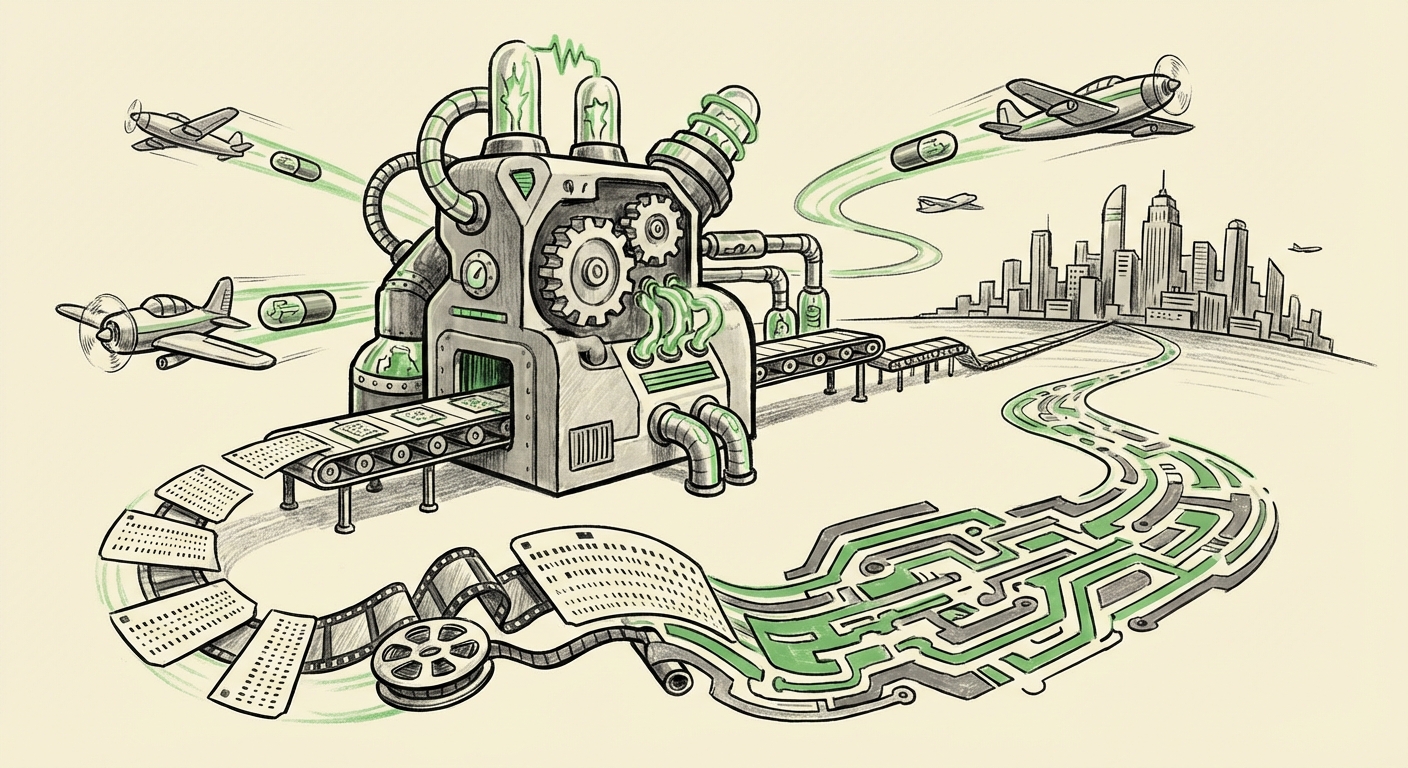
Imagine you have a brilliant professor who knows everything about a subject. That professor can answer any question, but they are slow, expensive, and require a lot of energy to operate. Now imagine you could take all that knowledge and compress it into a small, fast, and cheap booklet that anyone could carry around. That booklet would not be as deep as the professor, but it would be good enough for most everyday questions. That is exactly what knowledge distillation does in the world of AI.
In technical terms, knowledge distillation is a process where a large, complex AI model (called the teacher) teaches a smaller, simpler model (called the student) to mimic its behavior. The student model learns not just the correct answers, but also the patterns and reasoning of the teacher. The result is a model that is much smaller, faster, and cheaper to run, yet retains most of the teacher's accuracy and capability.
This technique has become a cornerstone of modern AI development, and a dedicated series from The Sequence exploring this topic in depth is a clear sign that distillation is moving from a niche research method to a mainstream practice.
Why Distillation Matters More Than Ever
The timing of this new series is no accident. The AI world is at a crossroads. On one hand, we have seen the rise of enormous models — some with hundreds of billions or even trillions of parameters. These models are incredibly powerful, but they come with serious drawbacks. They require massive amounts of computing power, vast amounts of energy, and expensive infrastructure to run. They are also slow, making them impractical for many real-world applications that need quick responses.
On the other hand, there is a growing demand for AI that can run on everyday devices like smartphones, laptops, and even smart home gadgets. People want AI that is fast, private, and works offline. This is where knowledge distillation becomes a game-changer.
By compressing the knowledge of a giant model into a tiny one, distillation makes it possible to bring cutting-edge AI capabilities to devices that have limited computing power. This opens up a world of possibilities that were previously out of reach.
The Big Picture: What This Means for the Future of AI
So, what does the rise of knowledge distillation tell us about where AI is heading? Let's look at the major trends.
1. AI Will Become Smaller and Faster
The era of "bigger is better" is not over, but it is being complemented by a new philosophy: "smaller and smarter." Distillation allows AI developers to create models that are just a fraction of the size of their teachers, yet deliver near-identical performance. This means AI can run in places where it was never possible before. Think of a virtual assistant that works entirely on your phone without sending data to the cloud. Think of real-time language translation that happens instantly on a wearable device. This is the promise of distillation.
2. AI Will Become More Accessible
One of the biggest barriers to using advanced AI is cost. Running a large model in the cloud can be expensive, and smaller companies and developers often cannot afford it. Distillation changes that. By making models smaller and cheaper to run, it democratizes access to advanced AI. More people, more businesses, and more regions of the world can now use AI that was previously reserved for tech giants. This is a huge step toward making AI a universal tool.
3. AI Will Become More Private and Secure
When AI runs on a device rather than in the cloud, your data does not have to leave your phone or computer. This is a massive win for privacy. Distilled models that run locally can handle sensitive tasks like health monitoring, financial analysis, or personal assistance without ever sending personal information to a remote server. As privacy regulations tighten and users become more aware of data security, this local-first approach will become increasingly attractive.
4. AI Will Become Greener
The environmental cost of large AI models is a growing concern. Training and running these models consumes enormous amounts of electricity, which contributes to carbon emissions. Distillation directly addresses this by creating models that need far less energy to operate. A distilled model can achieve similar results with a fraction of the energy consumption, making AI more sustainable in the long run. For companies with environmental goals, this is a compelling reason to adopt distillation.
Practical Implications for Businesses and Society
The shift toward knowledge distillation is not just a technical curiosity — it has real, practical consequences for how AI is built and used. Let's explore what this means for different groups.
For Businesses: Faster Deployment, Lower Costs
Companies that adopt distillation can deploy AI features faster and at a lower cost. A distilled model can be updated and shipped more easily because it is smaller and less resource-intensive. This is especially important for businesses that need to roll out AI features to customers quickly, such as in mobile apps, e-commerce platforms, or customer service tools. Additionally, lower compute costs mean that AI projects become more profitable and scalable.
For example, a retail company could use a distilled model to power a product recommendation engine that runs directly on a customer's phone, rather than in the cloud. This would be faster, cheaper, and more private than a cloud-based solution. Similarly, a healthcare provider could use a distilled model to analyze medical images on a local device, ensuring patient data never leaves the clinic.
For Developers: New Tools and Workflows
Knowledge distillation introduces new workflows for AI developers. Instead of always building models from scratch, developers can now start with a powerful teacher model and then distill it into a student model that meets their specific needs. This changes the development cycle in important ways. It means that developers can focus more on fine-tuning and optimizing the student model, rather than spending time and resources training a large model from the ground up.
The new series from The Sequence is likely to provide practical guidance on how to implement distillation effectively, which will be invaluable for developers looking to stay ahead of the curve. As more tools and frameworks support distillation, it will become a standard part of the AI developer's toolkit.
For Society: Wider Access, Greater Inclusion
Perhaps the most profound impact of distillation is on society at large. When AI becomes cheaper and easier to run, it can reach people who were previously left out. Small businesses in developing countries, schools with limited budgets, and nonprofit organizations working on social good can all benefit from AI that is affordable and runs on basic hardware.
Distillation also enables AI to be embedded in everyday objects — from home appliances to public infrastructure. This could lead to smarter energy grids, more efficient transportation systems, and better public services. However, it also raises important questions about fairness and bias. If a teacher model has biases, the student model will likely inherit them. The distillation process does not magically solve bias — it just makes the model smaller. So, as we embrace distillation, we must also invest in tools and practices that ensure fairness and accountability.
Actionable Insights: How to Prepare for the Distillation Revolution
Knowledge distillation is not just a trend to watch — it is a trend to act on. Here are some practical steps for businesses, developers, and leaders who want to stay ahead.
1. Start Experimenting with Distillation Now
The best way to understand distillation is to try it. Many popular AI frameworks now include tools for distillation. Start with a small project: take a large pre-trained model (like a language model or an image classifier) and try to distill it into a smaller version. Measure the trade-offs between size, speed, and accuracy. This hands-on experience will be invaluable as distillation becomes more common.
2. Evaluate Your Use Cases for Local AI
Think about where your business or organization could benefit from running AI on a local device rather than in the cloud. Do you have applications that need real-time responses? Do you handle sensitive data that should not leave the device? Do you have users with limited internet connectivity? If the answer to any of these is yes, then distilled models could be a perfect fit.
3. Invest in Privacy and Sustainability
As customers and regulators demand more privacy and lower environmental impact, distillation offers a way to deliver on both. Highlighting the use of distilled models in your products can be a powerful differentiator. It shows that you are committed to protecting user data and reducing your carbon footprint. These are values that increasingly matter to consumers.
4. Follow the Research and Stay Informed
The field of knowledge distillation is advancing quickly. New techniques are being developed that make distillation more efficient and more effective. Following resources like The Sequence series on distillation will help you stay up to date with the latest methods and best practices. Being an early adopter of these techniques can give you a competitive advantage.
5. Think About the Teacher-Student Relationship
Not all teacher models are created equal. Choosing the right teacher is critical for successful distillation. Look for models that are not only accurate but also well-understood and well-documented. A good teacher will produce a better student. Also, consider using an ensemble of teachers or iterative distillation methods that can improve the student's performance further.
Challenges and Considerations
Of course, knowledge distillation is not a perfect solution. There are important challenges to keep in mind.
Loss of Fidelity: No matter how good the distillation process is, the student model will never be as capable as the teacher. There is always some loss of performance. The key is to find the right balance between size and accuracy for your specific use case.
Bias and Fairness: As mentioned earlier, biases in the teacher model can transfer to the student. It is essential to audit both models for fairness and to use techniques that mitigate bias during training.
Complexity of Implementation: While tools are improving, distillation still requires careful tuning and experimentation. It is not a one-click solution. Teams need to invest time and resources to get it right.
Security Risks: Small models running on edge devices can be more vulnerable to certain types of attacks, such as adversarial examples. Security needs to be built into the deployment process from the start.
Despite these challenges, the benefits of distillation far outweigh the drawbacks for most applications. As the field matures, many of these issues will be addressed by better tools and practices.
Conclusion: The Quiet Revolution That Will Reshape AI
Knowledge distillation may not be the flashiest topic in AI, but it is one of the most impactful. By making AI smaller, faster, cheaper, and more private, it is unlocking possibilities that were previously out of reach. The new series from The Sequence is a timely and important exploration of this technique, and it signals that distillation is ready for prime time.
For businesses, the message is clear: start exploring distillation now. It can reduce costs, speed up deployment, and open up new product opportunities. For developers, it offers a powerful new tool for building AI that works in the real world. For society, it promises wider access to advanced AI and a more sustainable, privacy-respecting future.
The future of AI is not just about building bigger models — it is about making the intelligence we already have more accessible and more useful. Knowledge distillation is the key to that future. Pay attention to this quiet revolution, because it is quietly changing everything.