A Startup's Bold Claim: Breaking the Bottleneck Holding Back LLMs
For the past few years, the artificial intelligence world has been running at lightning speed. Every few months, a new model comes out that can write better, reason harder, or generate more realistic images. But even with all this progress, there has always been a wall. A limit. A traffic jam that slows everything down.
On June 19, 2026, MIT Technology Review reported on a startup that claims it has finally done something extraordinary: it broke through one of the biggest bottlenecks holding back large language models (LLMs). This is not just another incremental update. If this claim holds up to scrutiny, it could fundamentally reshape how we build, pay for, and use AI in the coming decade.
Let's break down what this bottleneck is, why it matters so much, and what a breakthrough could mean for the future of AI, your business, and society as a whole.
The Core Bottlenecks of Modern Large Language Models
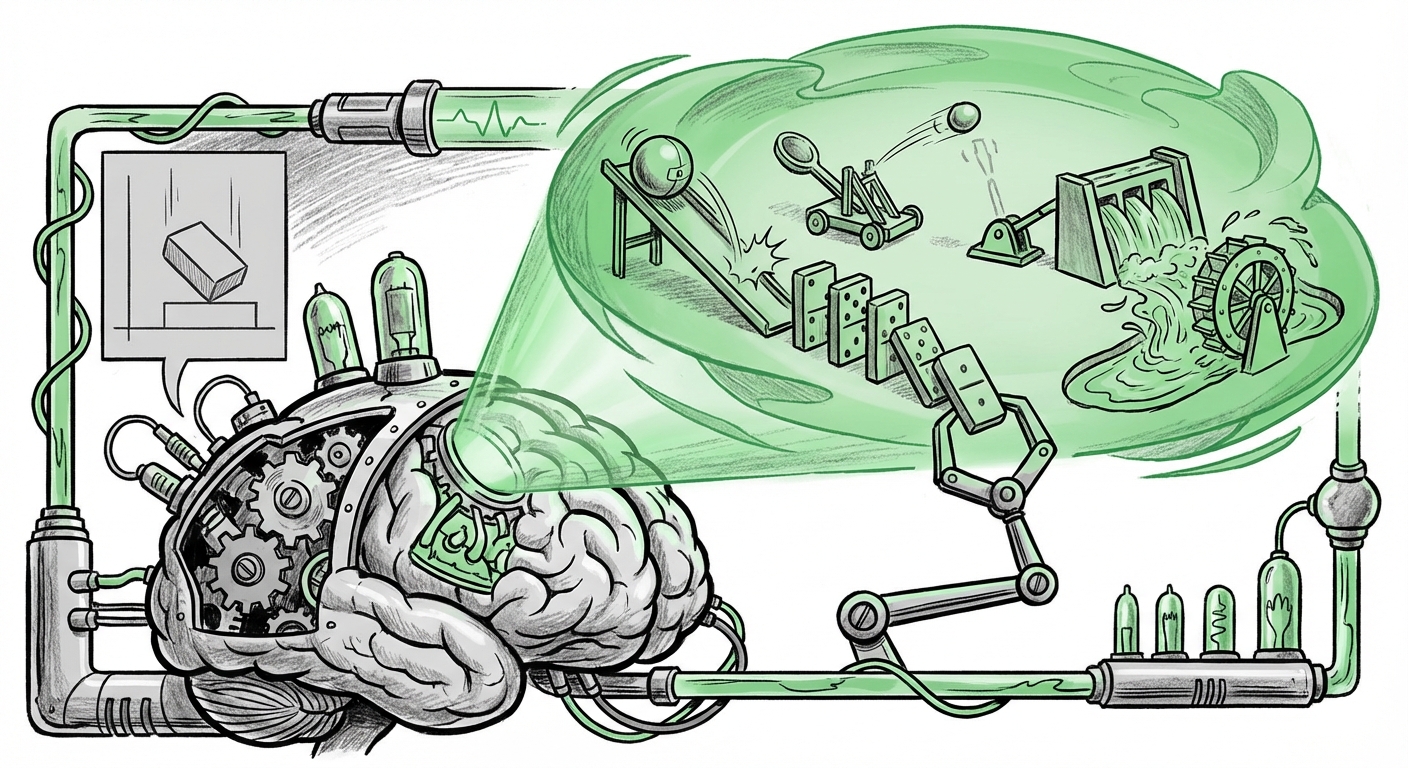
To understand why this claim is so important, we first have to understand what a "bottleneck" is. Imagine a highway with ten lanes of traffic suddenly squeezing into a single lane. No matter how many cars you have, they can only move as fast as that one narrow point allows. That single lane is the bottleneck.
In the world of LLMs, there are several well-known bottlenecks.
The Context Window Constraint
One of the biggest limits is the "context window." Think of this as the model's short-term memory. When you chat with an LLM, it can only remember a certain amount of text. Once you exceed that limit, it starts to forget. Early models could only remember a few thousand words. Modern models have pushed this to hundreds of thousands, but it's still a hard limit. For tasks like analyzing entire books, understanding long legal contracts, or having deep, multi-hour conversations, this is a major wall.
The Inference Cost and Speed Problem
Another massive bottleneck is "inference" — the actual process of the model generating an answer. Running a top-tier LLM is incredibly expensive. It requires massive amounts of energy and expensive computer chips. This cost limits who can use the best AI and where it can be deployed. A cheaper, faster model would open doors that are currently locked for most of the world.
The Reasoning and Hallucination Gap
LLMs are excellent at predicting the next word, but they often struggle with true logical reasoning. They can sound very convincing while being completely wrong — a problem called "hallucination." Solving this requires changes deep inside the model's architecture, not just giving it more data. This is perhaps the hardest bottleneck of all.
Based on the report from MIT Technology Review, the unnamed startup claims to have addressed a fundamental architectural obstacle. While the specific technique remains under wraps, the implication is clear: we may be on the verge of a paradigm shift in how LLMs operate.
Analyzing the Implications of the Breakthrough
When a credible publication like MIT Technology Review reports on a major claim, the AI community pays attention. So, what exactly could "breaking through a bottleneck" mean in practice?
If the startup solved the context window bottleneck, we could see models that never forget. Imagine an AI that can read your entire company's email history, every customer support ticket from the last decade, or the full text of every law ever written, and answer questions about it instantly and accurately. This would be a game-changer for knowledge work.
If the breakthrough is about inference cost or speed, the effects would be felt immediately across the economy. Currently, using the most powerful AI models costs pennies per query. If that cost drops by a factor of ten or a hundred, AI becomes a default part of nearly every digital product. High-end AI would no longer be a luxury for big tech companies — it would be a utility, as cheap and reliable as electricity.
If the startup tackled reasoning or hallucination, we might finally get AI that we can truly trust with critical tasks. Think of AI doctors that never guess, AI financial advisors that never make arithmetic errors, or AI customer service agents that can actually solve complex problems without getting confused. This is the holy grail of AI reliability.
The truth is, we don't know exactly which bottleneck was broken yet. But the very fact that a startup claims to have made such a leap suggests that the current trajectory of "bigger models, more data" might be changing. We may be entering an era of smarter, not just bigger, AI.
Why This Matters for Your Business Right Now
For business leaders and entrepreneurs, this news should be a wake-up call. The rules of the AI game may be about to change.
Reducing Operational Costs
If the bottleneck relates to inference cost, we are about to see a massive drop in the price of AI automation. Tasks that are currently too expensive to automate — like summarizing every single customer interaction or drafting hundreds of personalized marketing emails — will suddenly become financially viable. Businesses that adopt these tools early will gain a significant cost advantage over their slower competitors.
Unlocking New Use Cases
Longer context windows and better reasoning unlock entirely new categories of software. For example, a legal firm could deploy an AI that has read every case file, every piece of evidence, and every relevant statute. It wouldn't just search for keywords; it would understand the full narrative and make connections that a human paralegal might miss. Similarly, a healthcare provider could use an AI that holds a patient's complete medical history in its working memory during a consultation, leading to better diagnoses.
The Speed of Innovation
Historically, when a major bottleneck is removed in tech, innovation explodes. The removal of the "bottleneck of steam power" led to the Industrial Revolution. The removal of the "bottleneck of manual calculation" led to the Computer Age. If the bottleneck of LLM context and cost is removed, we could see the birth of truly autonomous AI agents — AIs that don't just answer questions but perform complex tasks over days or weeks with minimal human supervision.
The Societal Ripple Effects of Faster, Smarter AI
Beyond the business world, this breakthrough has deep implications for society. As always with powerful technology, there is both incredible promise and serious risk.
The Promise: Accessible AI for Everyone
If AI becomes dramatically cheaper and more capable, it can be deployed in areas that were previously underserved. Imagine personalized AI tutors for every student in the world, capable of adapting to their exact learning style. Imagine AI-powered agricultural advisors helping small farmers in developing countries optimize their crops. Imagine medical diagnostics available in rural clinics that lack specialist doctors. A major breakthrough in AI efficiency brings these scenarios much closer to reality.
The Risk: Accelerating Economic Disruption
On the flip side, faster and cheaper AI will accelerate the automation of knowledge work. Jobs in translation, basic coding, copywriting, customer service, data analysis, and legal research will be directly impacted. The transition could be painful for millions of workers if societies do not invest heavily in retraining and education. The "bottleneck" was, in a way, protecting some jobs. Its removal will force us to confront hard questions about the future of work.
The Information Ecosystem
Better AI also means better fake content. If reasoning improves, AI-generated propaganda could become more coherent and harder to detect. If costs drop, generating massive volumes of personalized disinformation becomes trivial. The same technology that can tutor a child can also radicalize an adult. Society's digital immune system will need to get much stronger, very quickly.
The Future of AI Post-Bottleneck
So, what does the future look like if this startup's claim is validated and commercialized?
We are likely looking at a world where AI agents become mainstream. Today, we use AI like a search engine or a smart typewriter. You ask a question, it gives an answer. Tomorrow, you will give an AI agent a goal — "Plan a company retreat for 50 people under a $10,000 budget" — and it will spend hours or days researching venues, comparing prices, sending emails, and presenting you with a finished plan. This is only possible with very long context windows and reliable reasoning.
We will also see the rise of ambient AI. If inference becomes cheap enough, AI won't just live in a chat window. It will be embedded in your phone, your smart glasses, your car, and your home appliances. It will be constantly listening, observing, and ready to help. "Computer, enhance" will become a real command for everything from video calls to scientific simulation.
Finally, this could accelerate scientific discovery. LLMs are already being used to predict protein structures and design new materials. By removing the bottlenecks of memory and cost, AI could help scientists simulate complex chemical reactions, model climate scenarios with incredible detail, or analyze genomic data in real-time during a medical procedure. The bottleneck wasn't just holding back chatbots — it was slowing down the entire pace of human knowledge creation.
Conclusion: The End of One Era, The Start of Another
The claim reported by MIT Technology Review on June 19, 2026, is more than just tech news. It is a potential watershed moment for the field of artificial intelligence. For years, progress has been steady but constrained. We have been pushing against the walls of a very real physical and mathematical limit.
If a startup has truly found a way to break through that wall, the landscape of technology is about to change. The future of AI is not just about building bigger models. It is about building smarter, faster, and more accessible models. It is about unleashing the potential that was always there, waiting for the bottleneck to be removed.
For businesses, the message is clear: stay flexible, stay informed, and be ready to adapt. The cheap, reliable, long-memory AI you have been waiting for may be arriving sooner than anyone expected. The future is not just coming — it is breaking through the bottleneck.