Anthropic Doesn't Need Junior Engineers Anymore Thanks to AI – The Economic Shockwave Headed for Every Industry
The news hit the tech world hard. A leading artificial intelligence company has publicly stated that it no longer needs junior software engineers because AI has advanced enough to handle that work. The same announcement came with a stark warning: when other industries follow suit, the economic shock will be severe. This is not a distant future scenario. This is happening now. And it raises urgent questions about the future of work, the role of AI in business, and what happens to millions of people whose careers are built on tasks that AI can increasingly do better, faster, and cheaper.
This article dives into what this development really means for the future of AI, how it will reshape the way companies operate, and what individuals and businesses can do to prepare for the changes ahead. We'll explore the implications for the job market, the economy, and the very nature of professional growth. And we'll do it all from the perspective of what this means for the future of AI and how it will be used.
The Announcement That Shook the Engineering World
The core claim is simple but profound: a top-tier AI company now finds that junior engineering talent is no longer a necessary part of its workforce. The AI systems they build and use have become good enough to handle the tasks that traditionally belonged to engineers in the early stages of their careers. Writing boilerplate code, debugging common issues, handling routine maintenance, and even designing simple features are all things AI can now manage without direct human oversight.
This represents a massive shift. For decades, the technology industry has relied on a pipeline of junior talent. New graduates would join a company, learn on the job, and gradually take on more responsibility. That apprenticeship model is now being disrupted at its source. If the very companies building AI are the first to stop hiring junior engineers, the message to every other industry is unmistakable: your entry-level roles are about to change forever.
The warning that followed is equally important. The company cautioned that when other industries begin to see the same capability in AI, the economic shock will be enormous. It's one thing for a single AI company to restructure its workforce. It's quite another when manufacturing, finance, healthcare, retail, and logistics all realize they can operate with far fewer entry-level employees in nearly every function.
Why This Time Is Different
There have been predictions about AI replacing jobs for decades. But those predictions rarely came true in the way people expected. Usually, automation replaced specific tasks, not entire roles. When ATMs were introduced, bank tellers didn't disappear — they moved into customer service and sales. When spreadsheets arrived, bookkeepers didn't vanish — they became data analysts. The pattern has always been that technology augments human work rather than replacing the human altogether.
This time feels different. The scale of capability is broader. AI can now reason, generate code, write coherent text, analyze data, and even create software architecture. The junior engineer role is just the first domino. The same reasoning applies to junior accountants, junior paralegals, junior graphic designers, junior analysts, and junior writers. If a job consists largely of well-defined tasks that can be learned and executed by an AI, that role is now vulnerable.
What makes this moment especially significant is that the warning comes from inside the industry. The AI company isn't guessing about what might happen — it's already living the reality. They have seen the results firsthand. Their own hiring practices have changed. And they are telling the rest of the world to pay attention.
The Future of Junior Roles Across Industries
To understand the coming shift, it helps to imagine how different industries will be affected. Let's walk through a few examples.
In software development, junior engineers typically spend their first year or two writing simple features, fixing bugs, and learning the codebase. AI models can now do all of those things with a high degree of accuracy. A senior engineer can describe what needs to be built, and the AI can generate the code, write tests, and even deploy it. The junior role becomes unnecessary because the senior engineer can work directly with the AI to get the same results.
In finance, junior analysts spend their time building spreadsheets, pulling data, running standard models, and preparing reports. AI can ingest raw data, clean it, run analysis, and generate reports in minutes. The senior analyst can then review and interpret the results rather than spending days on the mechanics. Again, the junior role is compressed or eliminated.
In law, junior associates spend countless hours on document review, contract analysis, and legal research. AI tools already read and summarize thousands of documents faster and more accurately than any human. The junior associate's work is getting automated from the bottom up.
In healthcare, medical scribes, junior coders, and even some diagnostic support roles are increasingly handled by AI. The pattern repeats across every knowledge-work sector. If the job involves following clear rules, processing known formats, or generating standard outputs, AI can do it today or will be able to within the next few years.
The Economic Shock: What It Looks Like
The warning of an economic shock is not hyperbole. Consider the sheer number of people employed in entry-level knowledge work around the world. Millions of people start their careers in these roles. They use them to learn skills, build networks, and move up the ladder. If those roles disappear, the entire career pipeline is disrupted.
Here's what that shock might look like in practical terms:
- Rising unemployment among new graduates. If companies stop hiring junior employees, recent graduates will struggle to find any entry point into their chosen fields. This could lead to a generation of people with degrees but no relevant work experience.
- Stagnation of middle-skilled careers. Many mid-career professionals rely on junior staff to handle the lower-level tasks. Without that support, senior employees become bottlenecks. They must either work longer hours, take on more junior-level tasks themselves, or rely on AI to fill the gap. Each option has downsides.
- Increased income inequality. The value of high-level expertise and creativity will skyrocket while the value of routine knowledge work plummets. People who already have deep expertise will earn more. Everyone else will struggle.
- Education system disruption. Universities and training programs that prepare students for entry-level roles will need to completely rethink their curricula. If the jobs those degrees lead to no longer exist, what should students study instead?
- Social and political pressure. Widespread job displacement among educated, young workers tends to create social unrest. Governments will face enormous pressure to implement new policies around universal basic income, retraining programs, and safety nets.
The company that made this announcement warns that these changes could come faster than most people expect. When the first wave hits, the response will be reactive rather than proactive.
How AI Will Be Used in This New Era
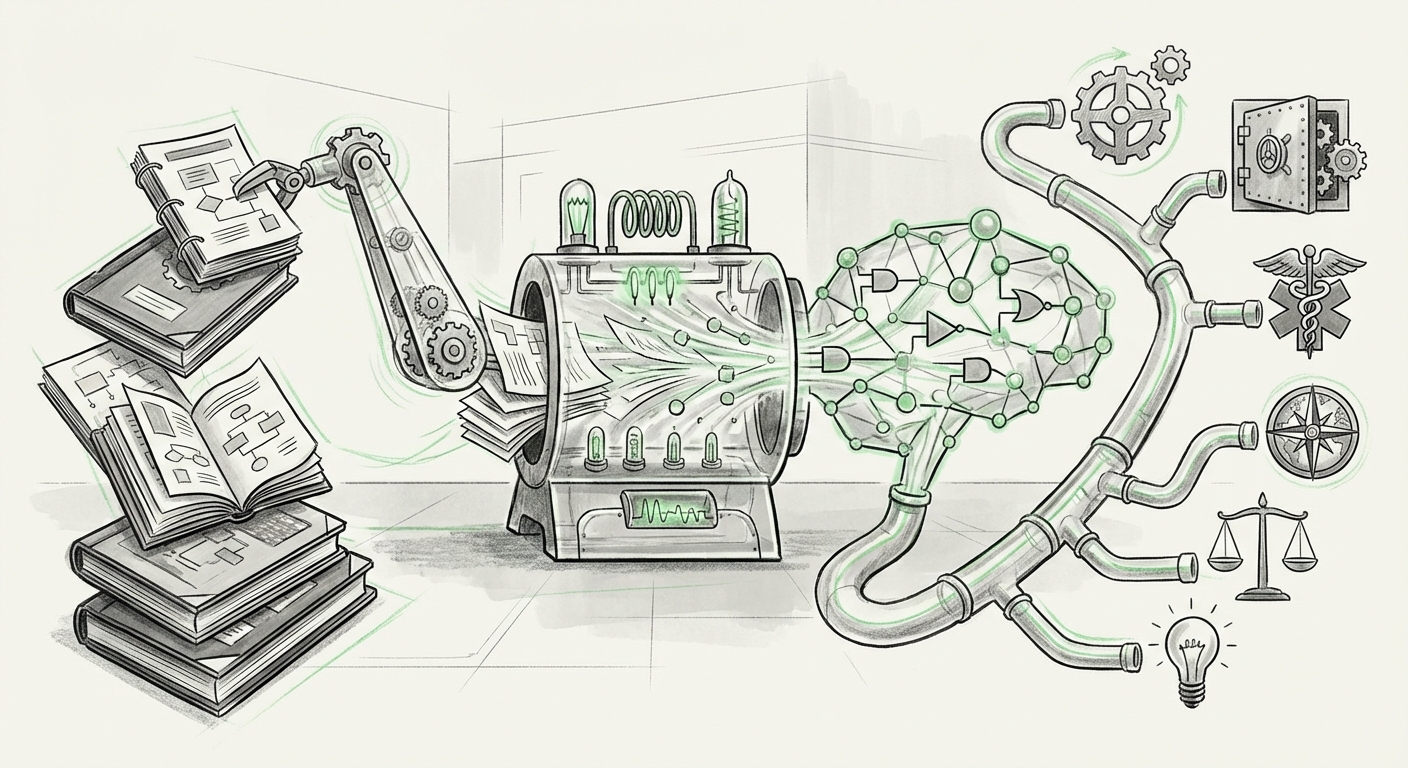
If junior engineers are no longer needed, how will companies use AI instead? The answer lies in a fundamental shift in how work gets organized. Instead of a human team with a hierarchy of junior, mid-level, and senior roles, companies will build teams that combine senior human experts with powerful AI systems. The AI handles the bulk of execution work. The human provides strategy, judgment, creativity, and oversight.
This has several implications for the future of AI usage:
- AI as a direct tool for senior staff. Rather than asking a junior person to research something, a senior person will ask the AI. The output will be faster and often more accurate. The senior staff member's role shifts from managing people to managing AI outputs.
- AI as a force multiplier for small teams. A single highly experienced engineer or analyst working with AI can produce the output of an entire team of junior staff. This means companies can do more with fewer people.
- AI in training and mentorship. Interestingly, AI can also serve as a training tool. Junior employees who do exist (perhaps in smaller numbers) can use AI as a tutor and assistant to accelerate their learning. The path from beginner to expert could be much faster.
- AI for rapid prototyping and iteration. Instead of spending weeks building a first draft, teams can use AI to generate multiple versions of a product, report, or design in hours. The human role becomes one of selecting, refining, and improving rather than building from scratch.
The key insight is that AI will not be used to automate the way we work today while keeping the same structure. Instead, the entire structure of work will shift. The roles that survive will be those that involve high-level thinking, human interaction, strategic decisions, and creative problem-solving. Everything else will be done by AI.
What Businesses Must Do Now
For business leaders, the message is clear: start planning for this shift immediately. The companies that adapt earliest will have a major competitive advantage. Those that wait until the shock hits will scramble.
Here are actionable steps for businesses:
- Audit your entry-level roles. Go through every position in your company that involves routine, well-defined tasks. Ask yourself: Could an AI system do this today? If not, when? Make a timeline.
- Invest in AI integration now. Start experimenting with AI tools in a structured way. Give your senior staff access to powerful AI systems and see what they can accomplish. Measure productivity gains and learn what works.
- Redesign career paths. If junior roles disappear, how will people enter your industry and grow? You need to create new career paths that combine AI fluency with human expertise from day one.
- Focus on uniquely human skills. Train your workforce in skills that AI cannot replicate: emotional intelligence, negotiation, complex problem-solving, strategic thinking, and creativity. These are the skills that will command a premium.
- Plan for a smaller workforce. If you can produce the same output with fewer people, you need to be honest about what that means for your head count. Plan for this gradually rather than being forced into sudden cuts.
What Individuals Must Do Now
For individuals, the advice is equally urgent. Whether you are a student just starting your education or a seasoned professional, the rules of career success are changing.
- Become AI-literate. No matter what field you are in, you need to understand how AI works and what it can do. This does not mean you have to become a programmer. It means you need to know how to use AI tools effectively in your work.
- Develop deep expertise. General knowledge is becoming less valuable because AI can handle general tasks. The premium is shifting toward deep, specific, expert-level knowledge in a niche area. Become the best in the world at something specific.
- Cultivate skills that cannot be automated. Leadership, communication, empathy, ethical judgment, creativity, and human connection are all areas where AI remains weak. Invest heavily in these skills.
- Think like an entrepreneur. If large companies stop hiring junior staff, more people will need to create their own opportunities. Freelancing, consulting, and starting your own business may become the norm rather than the exception.
- Stay adaptable. The pace of change will only accelerate. The job you have today may look completely different in five years. Embrace lifelong learning and stay open to reinventing your career multiple times.
The Societal Challenge Ahead
Beyond individual and business responses, there is a broader societal challenge. The economic shock that this AI company warned about will not be solved by each person alone. It requires collective action.
Governments will need to rethink education from the ground up. The current system is designed to produce workers for an economy that is disappearing. Schools and universities must teach AI literacy, critical thinking, creativity, and adaptability as core subjects. Rote memorization and standardised testing will become even less relevant than they already are.
Safety nets will also need to be modernised. If millions of people lose their jobs to AI, traditional unemployment insurance and retraining programs may not be enough. Concepts like universal basic income, portable benefits, and lifelong learning accounts will move from theoretical debates to urgent policy needs.
And there is a deeper question: what do we want people to do in a world where AI handles most of the routine work? This is not just an economic question. It is a philosophical one about purpose, meaning, and the value of human contribution.
The company that made the original announcement did not just deliver a warning. They also pointed toward an opportunity. If AI can handle the drudgery of junior work, then humans can focus on the higher-level challenges that really matter. The danger is that we stumble into this future unprepared. The opportunity is that we can shape it intentionally.
Conclusion: The New Landscape of Work
The news that AI has eliminated the need for junior engineers at a top company is a watershed moment. It confirms what many have suspected but few have been willing to say publicly: AI is not coming for our jobs in some distant future. It is already here. And it is changing the fundamental structure of the workforce.
The warning of an economic shock when other industries follow is not alarmism. It is a realistic assessment based on what is already happening inside the AI industry itself. The same forces that made junior engineers unnecessary in software development will soon make junior roles unnecessary in finance, law, healthcare, media, and beyond.
But this is also a moment of opportunity. By understanding the trend now, businesses and individuals can prepare. They can invest in the skills and strategies that will matter in the new landscape. They can redesign their organizations and careers to thrive in an AI-augmented world rather than being crushed by it.
The future belongs to those who are willing to adapt, learn, and embrace the changes that AI brings. The era of routine knowledge work is ending. The era of AI-augmented creativity and expertise is just beginning. The question is not whether this shift will happen. It is whether we will be ready when it does.