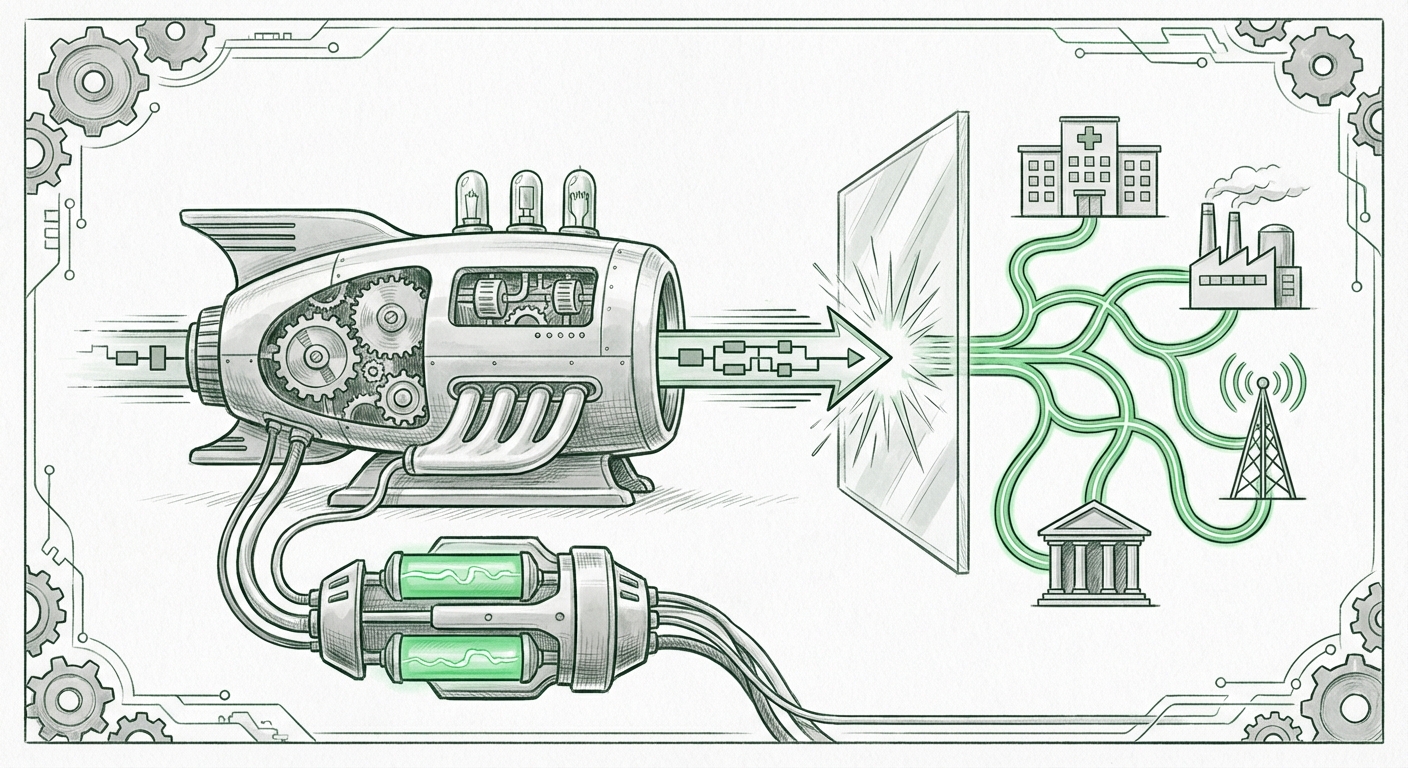
Qwen Makes a Bold Move Into Robotics: What This Means for the Future of AI and Intelligent Machines
In a development that signals a major shift in the artificial intelligence landscape, the team behind Qwen is now stepping into the world of robotics. This move, which captures the attention of both the AI research community and business leaders, marks a pivotal moment where language models and physical machines are beginning to converge. For anyone watching the AI space, this is not just another product announcement — it is a signal that the boundaries between digital intelligence and the physical world are rapidly dissolving.
This article breaks down what this move means, why it matters for the future of AI, and how businesses and society should prepare for a world where AI doesn't just think — it also acts.
The Big Picture: Why Language Models Are Moving Into Robotics
For the past several years, the most visible progress in AI has been in the realm of language. Models and systems have become incredibly good at understanding and generating human text, enabling chatbots, coding assistants, and content creation tools. But intelligence, as humans experience it, is not limited to words. It involves perception, movement, and interaction with the physical environment. That is exactly where robotics comes in.
The decision to get into robotics reflects a growing recognition that the next frontier for AI is not more text or better images — it is embodiment. An AI that can only process language is like a brain without a body. It can think, but it cannot do. By moving into robotics, Qwen is essentially saying that the future of AI must include machines that can manipulate the world around them.
This trend is not happening in isolation. Across the industry, we are seeing language models being integrated into robotic systems to help robots understand commands, plan tasks, and adapt to new situations. What makes this particular move so noteworthy is the scale and the timing. The team behind Qwen has already demonstrated strong capabilities in language understanding. Now, they are applying that expertise to give robots a brain that can reason, plan, and communicate.
Key Insight
The convergence of language AI and robotics creates machines that can understand human instructions in natural language and then carry out physical tasks. This is a fundamental shift from pre-programmed robots to truly intelligent assistants.
What This Move Actually Means for the Technology
When a language AI company enters robotics, it is not simply building mechanical arms and wheels. The real innovation is in the intelligence layer that controls those machines. Traditional robots are programmed with explicit instructions for every movement. They work well in controlled environments like factories, but they struggle in dynamic, unpredictable settings like homes, hospitals, or outdoor spaces.
By bringing language model capabilities into robotics, the goal is to create robots that can understand context, follow natural language commands, and learn from experience. Imagine telling a robot, "Fetch me a glass of water from the kitchen," and having it understand not just the words but also the layout of the kitchen, the location of glasses, and the safest path to take. That level of understanding requires more than programming — it requires genuine intelligence.
The entry into robotics suggests that the focus is on building exactly this kind of intelligent, adaptable machine. The expertise in language processing gives the team a head start. They already know how to build systems that understand meaning. Now they are working on giving those systems hands and eyes.
How This Changes the Robotics Landscape
For years, robotics has been dominated by companies that specialize in hardware and control systems. The software side has often been purpose-built for specific tasks. What language models bring to the table is a general-purpose reasoning engine. Instead of writing a new program for every task, you can simply tell the robot what you want in plain language. This dramatically reduces the cost and complexity of deploying robots in new situations.
Here are some of the most important technical changes this shift brings:
- Natural communication: Operators no longer need to learn programming languages or command syntax. They can speak or type instructions in everyday language.
- Task planning: The AI can break down a high-level goal into a sequence of smaller steps and adjust the plan if something goes wrong.
- Adaptation: Robots can handle variations in their environment, such as different lighting conditions, object positions, or unexpected obstacles.
- Learning from feedback: When a robot makes a mistake, it can understand the correction and improve its behavior without a full reprogramming cycle.
Practical Implications for Businesses
For business leaders, the move into robotics represents both an opportunity and a challenge. The opportunity lies in the potential to automate physical tasks that have so far resisted automation. The challenge is that the technology is still maturing, and early adoption requires careful strategy.
Industries that are likely to be transformed first include logistics, warehousing, manufacturing, healthcare, and agriculture. In logistics, for example, AI-powered robots could sort packages, load trucks, and navigate warehouse aisles with minimal human oversight. In healthcare, they could assist with patient transport, deliver supplies, or help with repetitive tasks like stocking medicine cabinets. In agriculture, they could identify ripe fruit and pick it without bruising the crop.
The key advantage that language models bring to these settings is flexibility. A traditional warehouse robot can be programmed to pick up one type of box. An AI-powered robot can be told to pick up whatever is on the conveyor belt, place it in the correct bin, and notify the system if anything looks damaged. That kind of adaptability is extremely valuable in fast-paced, variable environments.
What Business Leaders Should Watch For
If you are responsible for technology strategy in your organization, here are some practical steps to consider:
- Start with narrow use cases: Identify a specific, repetitive physical task that is currently done by people and evaluate whether an AI-driven robot could handle it.
- Invest in integration skills: The hardware is only part of the equation. You need people who can connect the AI system to your existing workflows and data.
- Plan for data requirements: These systems learn from data. Having clean, well-organized information about your processes will give you a head start.
- Consider safety and compliance: Physical robots introduce new risks. Make sure you understand the safety standards and regulatory requirements for your industry.
Quick Take for Decision Makers
The arrival of language-model-powered robotics means that automation is no longer limited to repetitive, predictable tasks. Any physical job that involves decision-making, adaptation, or communication is now in scope. Businesses that start experimenting now will be better positioned to scale when the technology matures.
Societal Implications: How This Could Change Daily Life
Beyond the factory floor and the warehouse, the combination of language AI and robotics has the potential to reshape everyday life. As these systems become more capable and affordable, they could enter homes, schools, and public spaces. The vision of a household robot that can clean, cook, and assist elderly family members has been a science fiction staple for decades. With language model intelligence, that vision is moving closer to reality.
However, this also raises important societal questions. The most immediate concern is around jobs. Physical work has been one of the last refuges of human employment in an increasingly automated economy. If robots become truly intelligent and adaptable, many roles in logistics, manufacturing, and even services could be displaced. Policymakers and business leaders need to think seriously about retraining programs and social safety nets.
Another concern is safety and reliability. A chatbot that makes a mistake can be annoying. A robot that makes a mistake can cause physical harm. Ensuring that these systems are robust, fail-safe, and aligned with human values is a critical challenge. The decision to enter robotics brings with it a responsibility to prioritize safety from day one.
Privacy is also a factor. Robots that navigate homes and workplaces will capture vast amounts of sensor data, including video, audio, and movement patterns. How that data is stored, used, and protected will be a major topic of public debate.
Opportunities for Positive Impact
Despite these challenges, the potential benefits are immense. Intelligent robots could help care for an aging population, assist people with disabilities, perform dangerous jobs in construction and mining, and respond to disasters in environments that are too risky for humans. They could also take over tedious and repetitive tasks, freeing people to focus on creative, social, and strategic work.
The key to realizing these benefits is thoughtful deployment. The technology itself is neutral — what matters is how we choose to use it. By getting into robotics now, the Qwen team is positioning themselves to help shape that future. The decisions they make about capabilities, safety features, and business models will have ripple effects across the entire industry.
What Comes Next: The Road Ahead for AI-Powered Robotics
The entry into robotics is not an isolated event. It is part of a larger trend in which the boundaries between digital AI and physical systems are blurring. In the coming years, we can expect to see more language model companies making similar moves. The question is no longer whether AI will power robots, but how quickly and in what form.
One area to watch is the development of standardized platforms. Just as operating systems like Windows and Android created ecosystems for software applications, we may see the emergence of AI operating systems for robots. These platforms would allow developers to build applications that run on many different hardware configurations, dramatically accelerating innovation.
Another trend is the increasing use of simulation for training. Instead of teaching a robot by moving it through thousands of real-world trials, AI systems can be trained in virtual environments where they can practice millions of times in a matter of hours. This simulation-based learning is already being used in self-driving cars and could become standard for general-purpose robots.
Finally, we should expect to see more partnerships between AI companies and hardware manufacturers. Building good robots requires expertise in motors, sensors, batteries, and materials. Most AI companies will not want to build all of that from scratch. Instead, they will focus on the intelligence layer and partner with established robotics firms for the physical components.
Three Trends to Watch
- AI operating systems for robots: Standardized platforms that separate intelligence from hardware, enabling faster innovation.
- Simulation-based training: Virtual environments where robots can practice millions of scenarios before touching the real world.
- Hardware partnerships: AI companies teaming up with robotics manufacturers to combine brains and bodies efficiently.
Conclusion: The Physical World Is the Next Frontier
The move into robotics represents a natural and exciting evolution. Language models have proven that they can understand and generate human language with remarkable skill. The next step is to give that intelligence a body — to let it reach out and touch the world.
For businesses, this means preparing for a future where automation extends from the digital realm into the physical one. The companies that start experimenting with AI-powered robotics now will have a significant advantage as the technology improves and costs come down.
For society, the challenge is to manage the transition wisely. The same technology that could displace some jobs will also create new ones and enable entirely new services. The outcome depends on the choices we make today about regulation, education, and investment.
For the AI industry itself, this is a milestone. It signals that the era of pure digital intelligence is giving way to something broader: intelligent systems that can perceive, move, and act. The future of AI is not just about thinking better — it is about doing more. And with this move into robotics, that future is starting to take shape.