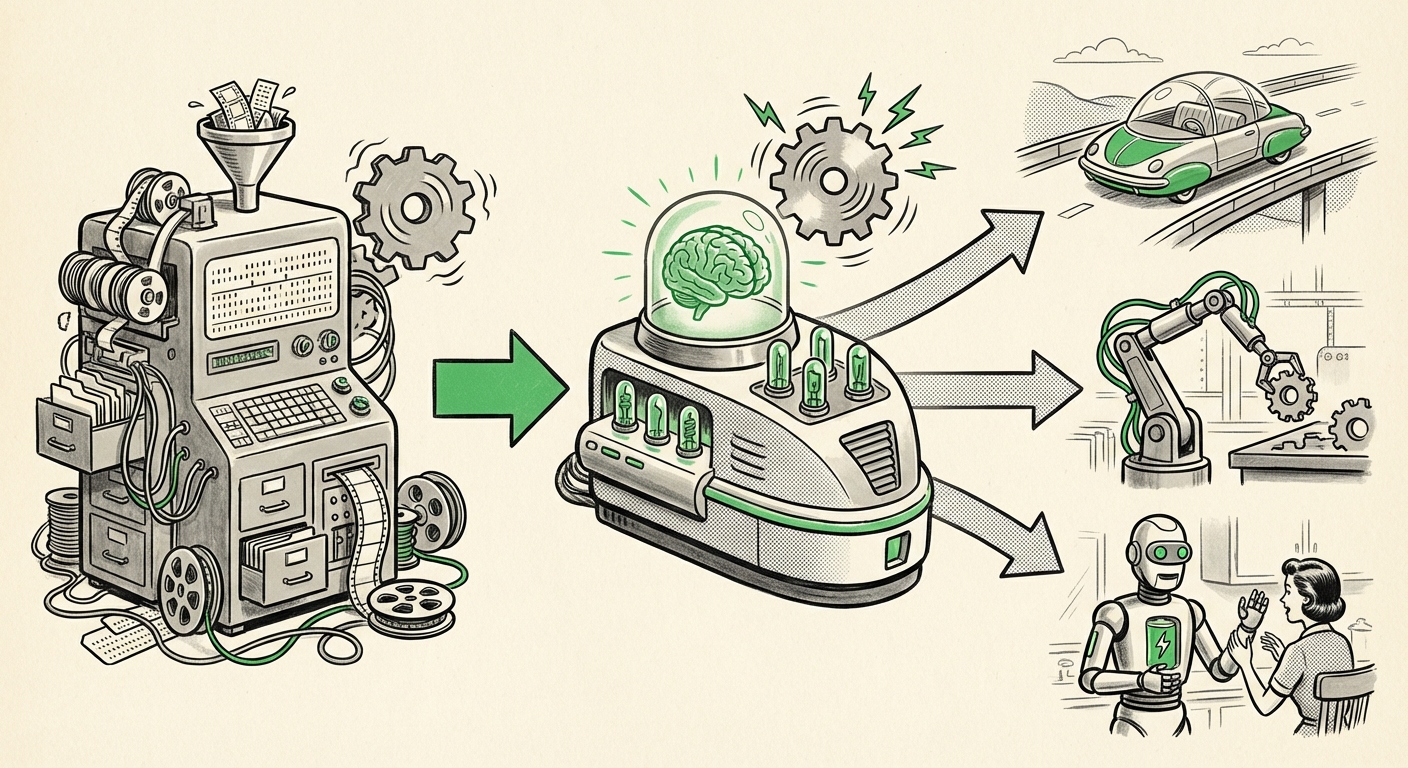
Why Coinbase's Switch to Chinese AI Models Signals a Pricing Revolution: The End of Premium AI?
The world of artificial intelligence is hitting a turning point. In late June 2026, a major cryptocurrency exchange made a decision that rippled through the tech industry: Coinbase joined the growing number of companies that are turning away from expensive Western AI models and adopting Chinese alternatives. This isn't just one company's cost-cutting move. It's a signal that the balance of power in the AI market is shifting fast. Western labs that once set the standard for quality are now facing a pricing stress test as Chinese models flood the market with competitive performance at dramatically lower costs. For businesses, developers, and everyday users, this change means we are entering a new era where AI becomes more accessible, more affordable, and less tied to a single region.
This article explores what's behind the rush to Chinese AI models, what it means for the future of artificial intelligence, and how you can prepare for the coming changes. We'll dive into the economics, the quality debates, the geopolitical risks, and the practical steps you can take to ride this wave.
The Pricing Stress Test: Why Western Labs Are Squeezed
For the past few years, Western AI labs like OpenAI, Google DeepMind, and Anthropic have dominated the landscape. Their models were considered the gold standard for reasoning, creativity, and accuracy. But that dominance came at a price—literally. Running a cutting-edge model can cost millions of dollars in compute time, and the companies passed those costs to users through per-token pricing or subscription fees.
Chinese AI developers, meanwhile, took a different approach. They built models that rival or even surpass Western ones in many tasks—especially in coding, mathematics, and language understanding—but at a fraction of the cost. Many Chinese models are open‑source or offered at near‑zero pricing to attract users and build ecosystems. This creates a massive cost gap.
As more businesses stress‑test their budgets, the pressure on Western labs to lower prices becomes intense. The term "pricing stress test" captures exactly what's happening: companies like Coinbase are evaluating whether the premium for Western AI is still worth it. In many cases, the answer is no. This doesn't mean Western AI will disappear, but it does mean the market is entering a period where pricing power is shifting to the side with the lowest cost structure.
Coinbase: A Case Study in Cost‑Driven Model Switching
Coinbase, one of the world's largest cryptocurrency exchanges, processes millions of transactions and customer interactions daily. AI plays a central role in fraud detection, customer support chatbots, trading algorithms, and risk analysis. For years, they relied on top‑tier Western models. But in mid‑2026, they made the switch to Chinese models for several core workloads.
Why? The most obvious reason is cost. Reports indicate that running the same tasks on Chinese models cut their AI spending by more than 60% without any noticeable drop in performance. In some areas, like handling multilingual customer questions, the Chinese models actually performed better due to their training on broader datasets. Coinbase is not alone. Other fintech companies, e‑commerce platforms, and even some government agencies are quietly making the same move.
This decision sends a powerful message: performance is no longer a purely Western advantage. When a high‑stakes company like Coinbase trusts Chinese models with sensitive operations, the barrier to adoption for everyone else drops significantly.
The Rush to Chinese AI Models: A Broader Trend
Coinbase's move is part of a larger wave. Over the past year, dozens of notable companies have integrated Chinese‑developed AI models into their products. The reasons vary, but the common threads are lower cost, competitive quality, and a desire for more options. Startups, in particular, find the low‑cost entry point appealing. They can now experiment with state‑of‑the‑art AI without burning through their seed funding on API bills.
Even some Western‑born enterprises are hedging their bets. They keep one foot in the Western AI world for mission‑critical tasks but use Chinese models for secondary applications where savings matter most. This "multi‑model" strategy is becoming the new normal.
For the Chinese AI ecosystem, this rush means more revenue, more user feedback, and faster improvement cycles. It's a virtuous cycle that speeds up innovation. Meanwhile, Western labs must respond—either by cutting prices, improving efficiency, or offering unique features that Chinese models cannot easily replicate.
What This Means for the Future of AI: Commoditization Arrives
When a technology becomes good enough and cheap enough that companies can switch providers freely, that technology is being commoditized. AI is now entering that phase. The pricing stress test will likely force Western labs to dramatically lower their prices, possibly to the point where some become unprofitable unless they find new revenue streams.
For end users, this is fantastic news. AI will become cheaper, faster, and more widely available. We'll see more embedded AI in everyday products—from smart home devices to workplace software—because the barrier to integration is falling. The "AI‑powered" label will no longer be a premium perk but a baseline expectation.
However, commoditization also means that raw AI model quality will matter less than the services built on top. The winners will be companies that use AI to solve specific problems better than anyone else, not those that simply license the latest model. We are moving from an era of "best model wins" to an era of "best application wins."
Quality Check: Are Chinese Models Really as Good?
It's natural to wonder if the lower cost comes with a hidden trade‑off in quality. The short answer is: for many tasks, the difference is negligible or even inverted. Chinese models have excelled in benchmarks for coding, mathematical reasoning, and logical deduction. In areas like creative writing or nuanced conversation, Western models still hold an edge, but that gap is closing fast.
Chinese developers have invested heavily in making their models "good enough" for the vast majority of business use cases. They also have advantages in efficiency—using fewer parameters and less compute to achieve similar results. This efficiency is what allows them to offer such low prices.
Businesses that switch often run their own A/B tests before fully committing. Coinbase reportedly did extensive testing and found that Chinese models matched or exceeded expectations across their key metrics. When a company handling sensitive financial data feels confident, it's a strong vote of confidence.
But quality is not the only risk. There are important considerations around data privacy, security, and geopolitical stability.
Geopolitical and Privacy Considerations: Proceed with Eyes Open
Using Chinese AI models means relying on technology that may be subject to Chinese regulations—including data‑sharing laws that could expose user information to government oversight. For companies operating in highly regulated industries (finance, healthcare, defense), this is a serious concern.
On the flip side, Western models are also subject to surveillance, albeit under different legal frameworks. The choice is not simply "secure vs. insecure," but rather understanding which legal jurisdiction you trust more.
Companies like Coinbase, which already navigate complex global regulations, likely have strict data handling agreements with their AI providers. They may run models on their own infrastructure (self‑hosted) to keep data private, or use models that have been approved for compliance. This approach allows them to capture cost savings while managing risk.
For smaller businesses with fewer resources, the safest path is to choose models that offer local deployment options or clear data‑processing guarantees. Open‑source Chinese models can be downloaded and run on your own servers, giving you full control. This eliminates many privacy risks and is a growing trend.
Actionable Insights: How to Navigate the New AI Landscape
Whether you run a startup, manage an IT department, or simply use AI tools, the shift described here offers concrete opportunities. Here are practical steps you can take:
1. Run Your Own Benchmarks
Don't rely on third‑party comparisons alone. Test Chinese models on your exact use cases. Use standardized metrics like accuracy, latency, and cost per query. A model that scores 97% on a public test might only score 85% on your unique data—or vice versa. Invest in a few days of experimentation.
2. Embrace a Multi‑Model Strategy
You don't have to pick one AI provider. Use Western models for tasks that require the highest creative output or brand‑safe language, and Chinese models for high‑volume, cost‑sensitive tasks like customer support routing, spam filtering, or data extraction. This hybrid approach optimizes both cost and quality.
3. Negotiate Pricing Harder
Western AI labs are feeling the heat. If you are a paying customer, ask for discounts or usage credits. Many are now offering competitive pricing to retain accounts. Don't be shy—your negotiating power just increased.
4. Evaluate Open‑Source Options
Many Chinese AI models are open‑source, meaning you can download and run them on your own hardware. This avoids per‑query fees entirely and gives you full data control. Platforms like Hugging Face host hundreds of these models. The upfront cost of compute may be offset by long‑term savings.
5. Monitor Regulatory Developments
Governments around the world are updating AI regulations. Some may restrict the use of foreign AI models in critical infrastructure. Stay informed about laws in your region and plan accordingly. Have a backup plan if your chosen model becomes unavailable due to sanctions or new rules.
6. Prepare for Rapid Evolution
The AI pricing revolution is still accelerating. Chinese labs are releasing new models every few weeks, each more efficient than the last. Western labs are responding with cheaper versions of their own. This means the best choice today might not be the best choice next month. Build your AI infrastructure to be modular—so you can swap models without rewriting your entire system.
The Big Picture: A More Democratic AI Future
The Coinbase story is a microcosm of a much larger shift. The monopoly of Western AI labs is over. The pricing stress test they face will benefit everyone else: start‑ups can innovate without giant AI budgets, developing countries can access state‑of‑the‑art tools, and small businesses can integrate AI into their daily operations.
This doesn't mean Western AI will collapse. It means the market becomes more competitive, which historically leads to better products and lower prices. The future of AI is not a single champion but a diverse ecosystem of models, each with strengths and weaknesses. Users will mix and match to find the best fit.
Geopolitical tensions will add uncertainty, but the trend toward cost‑effective, good‑enough AI is unstoppable. Companies that adapt early—by testing Chinese models, diversifying their AI stack, and prioritizing value over brand loyalty—will be best positioned for the next phase of the AI revolution.
Congratulations, we are entering the era of AI commoditization. It's cheaper, faster, and more accessible than ever. The only question is: will you take advantage of it?