Why the Way We Measure AI Is About to Change Forever — Models, Games, and the Future of Evaluation
The field of artificial intelligence is moving faster than most people realise. Every week, new models appear, benchmarks are broken, and the line between human and machine capability blurs a little more. But there is a quieter revolution happening beneath the surface of all these flashy announcements. It is about how we evaluate AI in the first place. The old ways of testing intelligence — static question sets, one-off accuracy scores, controlled lab tasks — are cracking under the pressure of modern systems. The future of evaluation is not just about harder tests. It is about games, continuous adaptation, and fundamentally rethinking what it means for a machine to truly understand something.
This shift has enormous implications for businesses building AI products, for researchers trying to push the frontier, and for society as a whole. If you do not understand why evaluation is changing — and how it will be done in the coming years — you will be caught off guard by what AI can and cannot do. This article breaks down the key trends driving this transformation and what they mean for how AI will be built, deployed, and trusted.
The Limits of Static Benchmarks
For the better part of a decade, the AI community has relied on fixed datasets and leaderboards to measure progress. A model trains on a set of questions or tasks, then gets tested on a held-out portion of the same data. Whoever scores highest wins. This approach drove incredible advances in image recognition, language translation, and question answering. But it has run into a fundamental problem: the tests themselves become part of the training. When a model can memorise patterns from the internet, and those patterns include the test questions, a high score no longer means genuine understanding.
Researchers have documented this phenomenon for years. Models can achieve near-perfect scores on common benchmarks like SuperGLUE or SQuAD while still making basic reasoning errors that a human would never make. The evaluation has become a game of pattern matching rather than a genuine test of ability. This is not the fault of the models — it is the fault of the evaluation paradigm. When the test is static and the training data includes the test, the measurement loses meaning.
The solution is not simply to create harder static tests. That is like building a taller wall when the opponent has learned to fly. Instead, the field is moving toward evaluation environments that are dynamic, interactive, and adaptive. This is where games come in.
Games as the Ultimate Playing Field
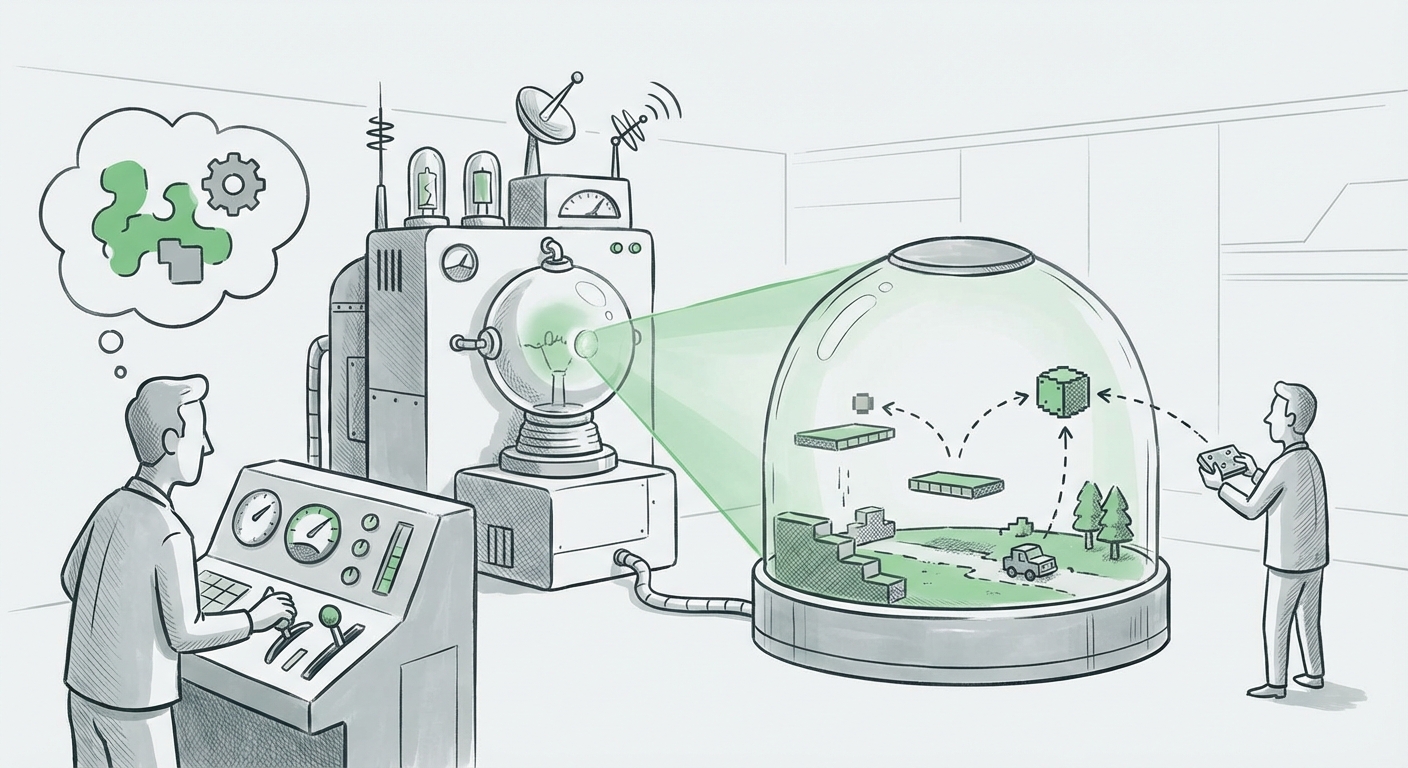
Games have always been a proving ground for AI. From chess to Go to StarCraft, games offer a controlled but complex environment where success requires strategy, adaptation, and long-term planning. But the new wave of game-based evaluation goes far beyond beating a world champion in a single title. The focus is shifting to how a model learns to play a game it has never seen before, how it transfers knowledge between games, and how it improvises when the rules change mid-play.
This is a fundamentally different kind of test. Instead of asking "Can this model answer a multiple-choice question about physics?" it asks "Can this model figure out the physics of a completely new environment through trial and error, and then use that understanding to achieve a goal?" That is much closer to what we actually want from intelligent systems — the ability to handle novelty, to learn on the fly, and to apply past experience in genuinely new situations.
Game environments also allow for continuous evaluation. Instead of a single score that gets outdated the moment a new model is released, game-based evaluation can produce a running profile of a model's strengths and weaknesses. It can measure how quickly a model adapts to rule changes, how robust its strategies are to random noise, and how its performance degrades as the environment becomes more complex. This kind of multi-dimensional evaluation is far more informative than a single number on a leaderboard.
The Rise of Adversarial and Procedural Evaluation
Another major trend is adversarial evaluation. Instead of using a fixed set of test cases, evaluators actively try to break the model. They generate inputs designed to expose weaknesses — confusing language, edge cases, ambiguous scenarios, or deliberate traps. This is closer to how we test human experts: we do not just ask them to recite facts; we ask them to handle curveballs. For AI, this means evaluation becomes an arms race. As models get better at handling one class of adversarial inputs, evaluators develop more sophisticated ones.
Procedural generation takes this a step further. Instead of hand-crafting test cases, the evaluation environment itself is generated algorithmically, creating an infinite variety of scenarios. This prevents models from memorising solutions and forces them to generalise. A model that can handle a procedurally generated maze or puzzle has demonstrated a form of understanding that a model trained on a static dataset cannot match.
These techniques are already being used in cutting-edge research. Models are being tested on procedurally generated game levels, on adversarial text prompts, and on visual scenes that are assembled on the fly. The goal is not to create a single test that all models must pass, but to create a testing infrastructure that can probe models in ways that are impossible to game.
What This Means for Businesses
If you are building or buying AI systems, the shift in evaluation has direct practical implications. The first is that benchmark scores on static datasets are becoming a less reliable signal of real-world performance. A model that scores 99% on a popular language benchmark might still fail catastrophically when deployed in a customer-facing chatbot that encounters novel phrasing or unexpected user behaviour. Relying on published scores alone is a recipe for unpleasant surprises.
Instead, businesses should demand to see evaluation results from more dynamic and adversarial settings. Ask the vendor or the open-source provider: "How does your model perform on procedurally generated tasks? How does it handle adversarial inputs? Can you show me its learning curve on a novel environment?" If they cannot answer these questions, your due diligence is incomplete. The companies that will succeed with AI are those that go beyond surface-level metrics and stress-test their models in realistic, unpredictable conditions.
Second, the rise of game-based evaluation points to a broader trend in how AI capabilities are being measured — and it suggests that the next generation of AI products will be judged not on what they know, but on how well they learn. This has implications for product design. An AI assistant that can adapt to a user's unique workflow over time, learning their preferences and anticipating their needs, will outperform a static model that simply retrieves information. Evaluation methods that prioritise adaptability and continuous improvement will drive the creation of AI systems that get better with use, rather than staying frozen at the moment of deployment.
The Implications for Research and Open Source
For researchers, the shift in evaluation is both a challenge and an opportunity. The challenge is that the old yardsticks are becoming obsolete. Publishing a new model with a slightly higher score on an established benchmark no longer carries the same weight. The community is hungry for evaluations that reveal genuine progress toward robust, general intelligence. This means that new evaluation frameworks — especially those that are open, reproducible, and procedurally generated — will become valuable contributions in their own right.
The opportunity is that evaluation itself is becoming a rich area for innovation. Designing better evaluation environments, building tools for adversarial testing, and creating metrics that capture learning speed and transfer ability are all problems worth solving. The researchers and teams that invest in this infrastructure will shape how the entire field measures progress for years to come.
Open-source communities have a particularly important role to play. Because adversarial and procedural evaluation can be computationally expensive and require constant updating, open collaboration can distribute the cost and ensure that evaluation tools remain independent of any single corporate agenda. The future of AI evaluation should not be controlled by the same companies that are building the models being tested. Independent, peer-reviewed evaluation platforms will be essential for maintaining trust in the field.
Societal and Ethical Dimensions
How we evaluate AI has deep societal consequences. If evaluation methods are static and narrow, they will produce models that excel on those narrow dimensions but fail in unexpected ways when deployed in the messy, dynamic world of human society. We saw this with early content moderation systems that could detect obvious hate speech but could not understand sarcasm, context, or nuance. The harm came not from the model's failure on the test set — it passed its tests — but from the gap between the test and reality.
Moving to more dynamic, adversarial, and game-based evaluation is not just a technical improvement. It is a safety measure. Models that have been stress-tested in varied environments are less likely to surprise us with dangerous behaviour when they are let loose in the wild. They are also harder to exploit. Adversarial evaluation, in particular, helps identify vulnerabilities before bad actors can exploit them.
There is also an equity dimension. If evaluation becomes more sophisticated, the resources required to participate in cutting-edge AI development may increase. Smaller labs and academic groups may struggle to run the kind of large-scale, procedural evaluation environments that become the new standard. The community will need to invest in shared infrastructure and accessible evaluation platforms to ensure that the field does not become even more concentrated in a handful of well-funded organisations.
A Practical Roadmap for the Next Three Years
What does this mean for someone who needs to make decisions about AI today? Here is a practical roadmap for the next three years, based on the trends in evaluation.
Year one: Start treating static benchmark scores with caution. Begin asking vendors for evidence of robustness — adversarial test results, performance on held-out novel tasks, and learning curves over time. If you are developing AI capabilities internally, invest in building your own evaluation environments that mimic the real-world conditions your model will face. Even a simple set of adversarial inputs can reveal issues that a standard validation set will miss.
Year two: Adopt or build game-based evaluation platforms for domains where adaptation and strategy matter. This could be as simple as using existing game environments to test a language model's ability to follow changing instructions, or as complex as building a simulated environment that mirrors your business domain. The key is to move from static measurement to continuous, interactive assessment. Also, begin tracking not just final performance but the rate of improvement — how quickly does your model adapt when the rules change?
Year three: Expect that the standard for claiming AI capability will include scores on procedurally generated tests, adversarial robustness metrics, and evidence of transfer learning. Static benchmarks will still be used for basic sanity checks, but they will no longer be sufficient for claims of state-of-the-art performance. The organisations that have built the infrastructure for this kind of evaluation will have a significant advantage — both in building better models and in convincing customers and regulators that their systems are trustworthy.
Why This Matters More Than You Think
It is tempting to view changes in evaluation as a niche concern for researchers. But evaluation is how we decide what works. It is the mechanism by which the entire field decides what to build next, which ideas to fund, and which models to deploy. If evaluation is broken, the entire pipeline of AI development is building on a shaky foundation. Fixing evaluation is not a side project. It is the most important infrastructure project in AI today.
The shift toward models, games, and the future of evaluation represents a maturation of the field. We are moving away from the era of simple pattern matching and into an era where intelligent systems are judged by their ability to handle novelty, adapt to change, and perform reliably under pressure. This is good for everyone. It means the AI systems we build will be more capable, more robust, and more worthy of our trust. But it also means that the old rules of how to measure progress no longer apply. The sooner we embrace that, the better off we will be.