Meta Blocks Claude Code and Codex from Its Training Data: What This Means for the Future of AI Development
In late June of this year, Meta quietly tightened its grip on how it builds its artificial intelligence models. The company decided to restrict the use of two popular AI coding tools—Claude Code and Codex—in the data it uses to train its own AI. This move signals a major shift in the way big tech companies think about where their training data comes from and who gets to use it.
At first glance, this might look like just another internal policy change at one of the world’s largest tech firms. But look closer, and you’ll see a trend that will shape the entire AI industry for years to come. Companies are now actively working to keep their AI models from being “contaminated” by the outputs of their rivals. And the decisions they make about training data will affect everything from the quality of future AI to the cost of building new systems.
What Exactly Did Meta Do?
According to the original report, Meta updated its internal rules about what kind of code and data can be fed into its training pipelines. Specifically, the company now forbids using code generated by Claude Code (a coding assistant from Anthropic) and Codex (a code generation model from OpenAI) as part of its training data. In other words, if Meta’s data scrapers come across a piece of code that was written by one of these rival AI tools, that code must be excluded from the datasets used to train Meta’s next-generation models.
This is a big deal because for years, AI companies have been scooping up huge amounts of text and code from the internet without worrying too much about whether that code was originally human-written or AI-generated. But now, the competitive landscape is shifting. Each company wants its own models to learn from the purest, most original sources—and they want to avoid accidentally teaching their AI to mimic a competitor’s style of thinking.
Why Does This Matter for the Future of AI?
1. The Rise of “Data Protectionism”
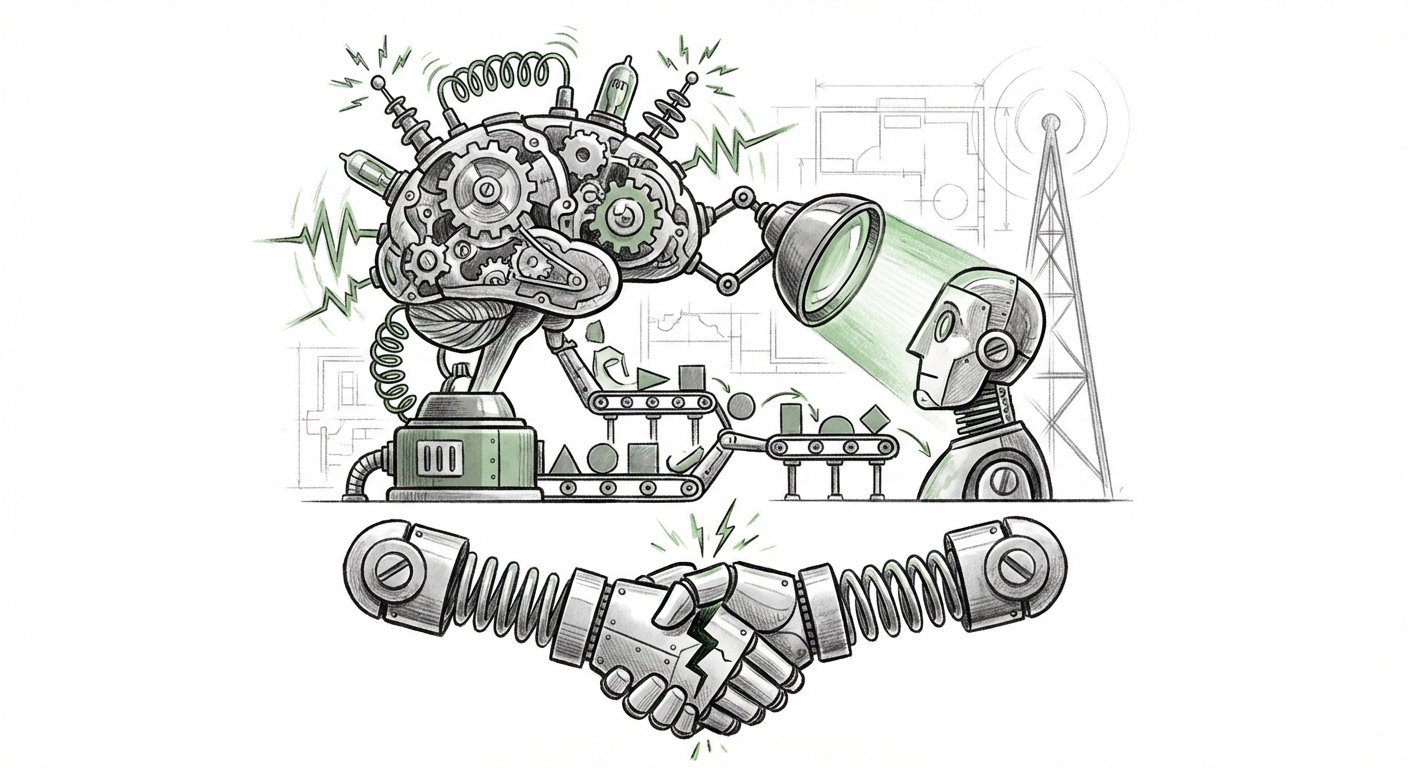
We are entering an era of data protectionism in AI. Just as countries protect their natural resources, AI companies are now protecting their most valuable resource: high-quality training data. Meta’s move is a clear signal that it sees the output of rival AI models as something it must keep out of its own systems. This is more than just a technical issue—it’s a strategic play to maintain a competitive advantage.
Imagine two AI models being trained on the same internet. If one model (like Claude or GPT) generates a lot of code that gets posted on the web, and then another model (like Meta’s future AI) learns from that same code, the second model will indirectly absorb some of the first model’s “knowledge.” Over time, all AI models could begin to converge, thinking alike and making the same mistakes. That’s the last thing big companies want. They want their AI to be unique, to have its own “voice,” and to outperform the competition.
2. Quality vs. Quantity in Training Data
For years, the mantra in AI was “more data, better model.” But now, the focus is shifting from quantity to quality—and also to the provenance of that data. Training on data that itself was generated by another AI can lead to “model collapse,” where over time the AI loses diversity and becomes less creative. By blocking Claude Code and Codex outputs, Meta is trying to keep its training data as “pure” as possible.
This has huge implications for open-source AI projects. If every company starts blocking each other’s outputs, the pool of available training data shrinks. Smaller players that rely on publicly available data may find that much of it is now off-limits because it was generated by a competitor’s tool. This could widen the gap between the tech giants and everyone else.
3. Legal and Ethical Considerations
When an AI writes code, who owns that code? And can a different company use it to train its own AI? These are legal questions that are still being worked out in courts and legislatures around the world. Meta’s policy is a proactive step to avoid potential copyright or licensing issues. By explicitly banning the use of rival AI outputs, Meta reduces its exposure to legal challenges. But it also acknowledges that AI-generated content is different from human-created content—and that difference matters.
Other companies are likely to follow suit. We may soon see a world where each AI model is trained only on data that comes from “verified human sources” or from its own ecosystem. That would be a complete reversal of the early 2020s approach where everything on the internet was fair game.
What Does This Mean for Businesses and Society?
For Businesses That Build AI
- You need to audit your training data now. If your models are learning from code or text that was generated by a competitor’s AI, you could be building a model that is legally risky or that performs poorly in the long run. Start labeling the source of every piece of data in your pipeline.
- Consider building proprietary data sources. The companies that will win in the next generation of AI are those that have exclusive access to high-quality data that their rivals cannot get. Partnering with content creators, running your own generation pipelines, or buying curated datasets are all ways to stay ahead.
- Watch for policy changes from other big players. Google, Amazon, Apple, and Microsoft are all likely watching Meta’s policy. Expect similar restrictions from them in the near future. Plan your data strategy accordingly.
For Businesses That Use AI
- Be aware that the AI you use may have blind spots. If companies are restricting their training data to avoid rival outputs, your AI might not be exposed to the full range of ideas and code styles that exist in the wild. Test for diversity of output.
- Demand transparency. When you buy an AI service, ask the provider what data it was trained on and whether any competitor AI outputs were included. This information may become a key part of vendor evaluation.
- Prepare for rising costs. As the pool of allowed training data shrinks, the cost of curating high-quality data will go up. This could lead to higher prices for AI services in the next year or two.
For Society
The most important effect of this trend is on innovation and competition. If the largest AI companies can wall themselves off from each other’s data, they may create monopolies on certain capabilities. A model trained only on its own data might be less creative and more prone to repeating its own mistakes. At the same time, open-source AI could suffer because the data that was once free to use now becomes laced with legal uncertainty.
There is also a risk of feedback loops in the AI ecosystem. If all major models are trained only on human-produced content and their own outputs, the internet itself will become more synthetic. The amount of human-created content may not be enough to sustain continued progress. We could hit a kind of “data ceiling” where AI stops improving because there is no new raw material to learn from.
Actionable Insights for the Next 12 Months
- Start a data provenance initiative. If you’re training AI models, create a clear policy about which data sources are allowed. Explicitly exclude outputs from rival AI tools. Document everything so you can defend your training data if challenged.
- Invest in synthetic data generation—but responsibly. Rather than using someone else’s AI outputs, generate your own synthetic data using internal models. This gives you full ownership and avoids the contamination problem. Just be careful to avoid model collapse by injecting real human examples periodically.
- Watch for regulatory signals. Governments are beginning to regulate AI training data. The European Union’s AI Act and similar laws in other jurisdictions may require companies to disclose the origin of their training data. Align your practices now to stay ahead of compliance.
- Collaborate or compete? Decide whether you want to lock down your data ecosystem or participate in open consortia that share data under fair rules. Some industries (like healthcare or finance) may benefit from shared non-compete data pools.
- Educate your teams. Every engineer and data scientist should understand that “training on training data” is no longer just a technical choice—it’s a strategic and legal one. Make sure your hiring and training processes reflect this new reality.
Looking Ahead: The New Normal for AI Training
Meta’s restriction on Claude Code and Codex is not a one-off decision. It is the opening move in a game of data chess that will define the next decade of AI development. Expect to see more companies building virtual walls around their training pipelines. Expect to see new tools that help detect whether a piece of code was written by a human or a particular AI model. Expect to see legal battles over who has the right to use AI-generated data.
The future will not be one where all AI models are trained on the same internet. Instead, the internet will be partitioned into different “data territories,” each claimed by a major player. Smaller actors will have to adapt: either by joining a territory, by specializing in niche data that the giants ignore, or by developing methods to train effectively on less data.
For the average user, the changes may be invisible. Your AI assistant might still answer your questions and write your code. But it will be subtly different depending on which company’s ecosystem it belongs to. The content it generates will reflect only what its owner decided was “pure” enough to include. That could be a good thing—if it means higher quality and less noise. Or it could be a bad thing—if it means less diversity and more groupthink.
One thing is certain: the days of the open, shared data commons for AI training are ending. The future belongs to those who can cultivate their own private data gardens.