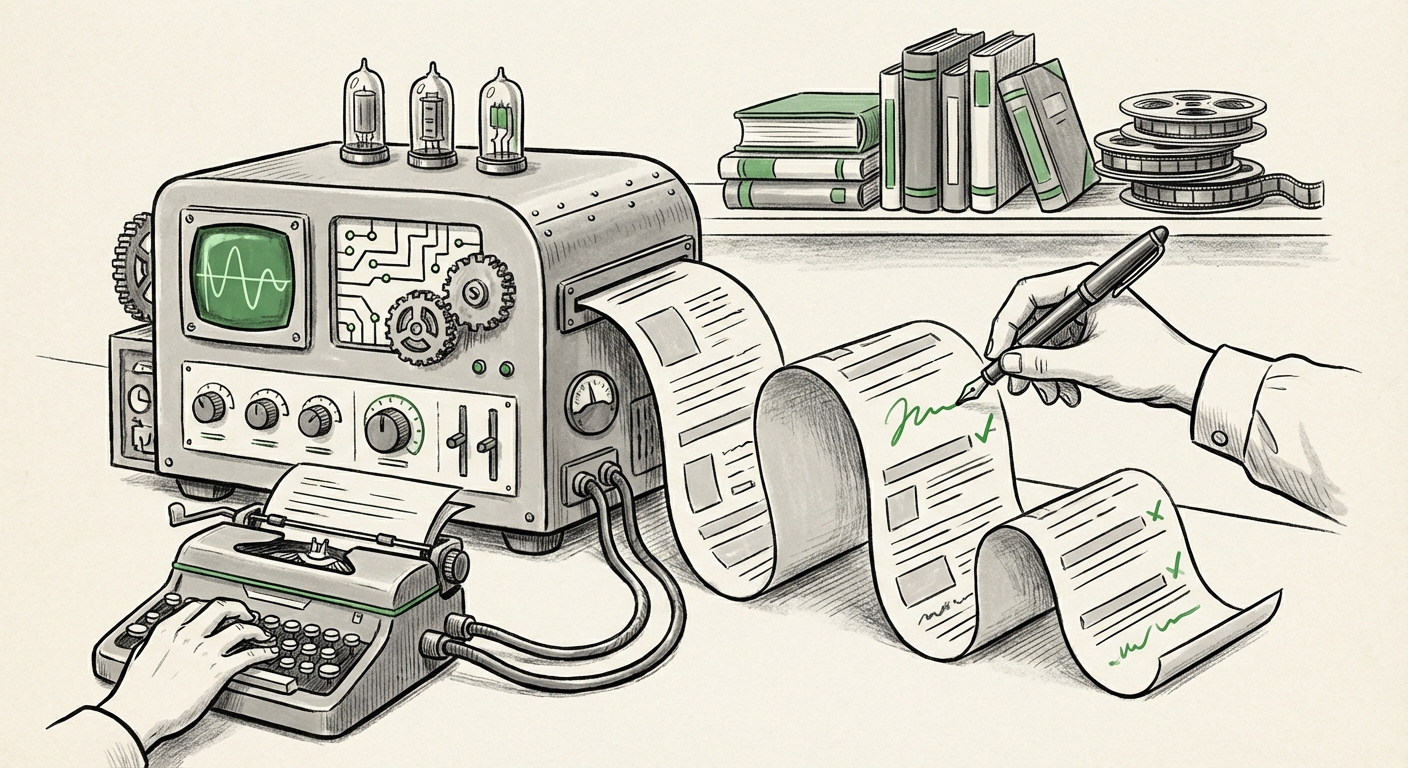
Anthropic Launches Claude Science – A Dedicated AI Workspace for Researchers
The world of scientific research is about to get a powerful new ally. On June 30, 2026, Anthropic announced the launch of Claude Science, an AI workspace built specifically for researchers. This is not just another chatbot – it is a tailored environment designed to support the entire research lifecycle, from literature review to data analysis to hypothesis generation. For anyone involved in science, from doctoral candidates to lab directors, this development signals a major shift in how artificial intelligence will be integrated into the discovery process.
Claude Science arrives at a time when the boundaries between general‑purpose AI and domain‑specific tools are blurring. Large language models have already shown remarkable abilities in summarizing papers, writing code, and even suggesting experiments. But researchers have unique needs: they deal with complex datasets, require reproducible workflows, and must adhere to strict citation standards. A one‑size‑fits‑all approach often falls short. Anthropic’s move directly addresses this gap by creating a workspace that understands the language and logic of science.
What Makes Claude Science Different?
While the full feature set is still emerging, the core idea is clear: Claude Science is an AI workspace that is aware of the scientific method. Instead of requiring researchers to adapt their workflows to a generic chat interface, this tool is built from the ground up to handle tasks like:
- Literature synthesis: Rapidly scanning thousands of papers, extracting key findings, and presenting them in a structured, citation‑aware format.
- Data interpretation: Analyzing spreadsheets, experimental results, and even raw instrument outputs with the ability to ask follow‑up questions.
- Hypothesis generation: Using pattern recognition and logical reasoning to suggest novel research directions based on existing knowledge.
- Collaboration: Sharing workspaces with colleagues, version‑controlling analyses, and maintaining a clear audit trail of AI‑assisted decisions.
- Code and computation: Writing, debugging, and executing scripts for simulation, statistics, or machine learning within the same environment.
Anthropic has long emphasized safety and reliability in its AI models. By wrapping those capabilities in a purpose‑built workspace for researchers, the company is betting that scientists will embrace AI not as a black box, but as a transparent partner that can be audited, challenged, and trusted.
Why This Matters for the Future of AI
Claude Science is a bellwether for the next wave of AI deployment. We are moving away from “one AI to rule them all” toward a world of specialized AI agents that operate in specific domains. This is similar to how we moved from mainframes to personal computers to smartphones – each new form factor unlocked different use cases. In the same way, a workspace tailored for researchers opens possibilities that a general assistant could never achieve.
First, it validates the idea that vertical AI solutions can coexist with, and sometimes outperform, horizontal giants. Researchers do not need a model that can write poetry and plan vacations – they need one that understands statistical significance, chemical nomenclature, and experimental design. By specializing, Claude Science can deliver higher accuracy and more relevant outputs.
Second, it shows a path toward human‑AI collaboration that respects the scientific process. Good science is iterative, transparent, and falsifiable. A workspace that logs every interaction, allows for manual overrides, and can explain its reasoning aligns perfectly with these principles. This is a crucial step in convincing the academic community, which is rightly skeptical about black‑box tools, that AI can be a trustworthy collaborator.
Third, it accelerates the trend of AI‑first research. We are already seeing AI models that design new proteins, predict materials properties, and identify drug candidates. But those successes often require deep technical expertise to use. Claude Science lowers the barrier, allowing bench scientists without machine learning backgrounds to harness AI’s power. This democratization of advanced analytics could supercharge discoveries across biology, chemistry, physics, and beyond.
Implications for Businesses and Society
The launch of Claude Science is not just an academic event. Its ripple effects will be felt across industries that depend on research and development.
Pharmaceutical and Biotech
Drug discovery is notorious for its high cost and low success rate. A tool that can synthesize decades of published literature, suggest novel targets, and even propose experimental protocols could shave years off the pipeline. For a mid‑size biotech, adopting Claude Science might mean the difference between a breakthrough and a dead end. We can expect R&D budgets to be reallocated – less spending on manual data gathering, more on creative hypothesis testing.
Materials Science and Engineering
Designing new alloys, polymers, or semiconductors often involves combing through vast databases of existing properties. Claude Science can help researchers spot correlations that are invisible to the human eye, accelerating the creation of stronger, lighter, or more conductive materials. This has direct implications for everything from electric vehicle batteries to aerospace components.
Academic Institutions and Funding Agencies
Universities will need to rethink how they train the next generation of scientists. A researcher who cannot leverage an AI workspace will be at a significant disadvantage. Meanwhile, grant reviewers may start expecting proposals that include an AI‑assisted component. Libraries and departmental IT will have to support and manage these new tools, raising questions about access, costs, and equity.
Society at Large
Faster scientific progress means faster solutions to global challenges – climate change, disease, energy storage. But it also brings risks. The same AI workspace that helps discover a cure could, in theory, be misused to design harmful substances or bioweapons. Anthropic’s strong safety culture is reassuring, but the broader ecosystem must develop guardrails. And there is the perennial issue of reproducibility: if AI models are used to generate results that cannot be independently verified, the integrity of science suffers. Claude Science’s transparency features are a step in the right direction, but the scientific community must remain vigilant.
Actionable Insights for Researchers and Leaders
Claude Science is not just a product to watch – it is a tool to adopt. Here are concrete steps for different audiences.
- For individual researchers: Start exploring Claude Science as soon as it becomes available. Use it as a second pair of eyes on your literature review or as a sounding board for experimental design. Keep a log of where the AI helps and where it makes mistakes – this feedback will improve both your own judgment and the model itself.
- For lab heads and principal investigators: Encourage your team members to experiment with the workspace in low‑stakes tasks first. Develop a shared protocol for documenting AI‑assisted steps so that the research remains reproducible. Consider setting up a dedicated server or workspace to protect sensitive data.
- For university administrators: Prepare for a surge in demand for AI tools. Create guidelines for ethical use, data privacy, and attribution. Invest in training programs so that faculty and students are comfortable using workspaces like Claude Science. Also, consider negotiating site licenses to ensure equitable access.
- For business leaders in R&D‑intensive sectors: Evaluate Claude Science as a potential force multiplier. Pilot it on a specific project – perhaps a literature review or a small data analysis – and measure the time saved. Then scale up. Remember that cultural adoption is key; scientists need to trust the tool, so provide ample training and a safe environment to experiment.
- For policymakers and funding bodies: Recognize that AI workspaces are becoming infrastructure for science. Include provisions for their use in grant guidelines, and fund research into best practices, reproducibility, and safety. Encourage open‑source alternatives to avoid vendor lock‑in, but do not discourage private sector innovation.
Looking Ahead: The Road to AI‑Powered Discovery
Claude Science is just the beginning. As Anthropic and other players refine domain‑specific workspaces, we will likely see versions tailored for medicine, law, engineering, and even the humanities. The key is that each version will embed the values and methods of that field. For science, that means a rigorous, transparent, and collaborative partner.
In the next five years, the research landscape could look very different. Imagine a PhD student who starts their project by “conversing” with Claude Science to map out the existing literature, identify gaps, and design experiments – all within the first week, instead of the first semester. Imagine a senior researcher who uses the workspace to teach junior colleagues how to interpret complex data, with the AI providing real‑time explanations. Imagine a global collaboration where researchers in different time zones share a living, evolving workspace that learns from every interaction.
None of this is guaranteed. Challenges remain: data privacy, algorithmic bias, and the risk of over‑reliance. But the launch of Claude Science is a bold statement that the future of research is not just faster computing, but smarter collaboration between humans and artificial intelligence. The scientists who embrace this change will be the ones who make the next great leaps.