Anthropic's Claude Sonnet 5 Is Catching Up to Opus – What This Means for the Future of AI and How It Will Be Used
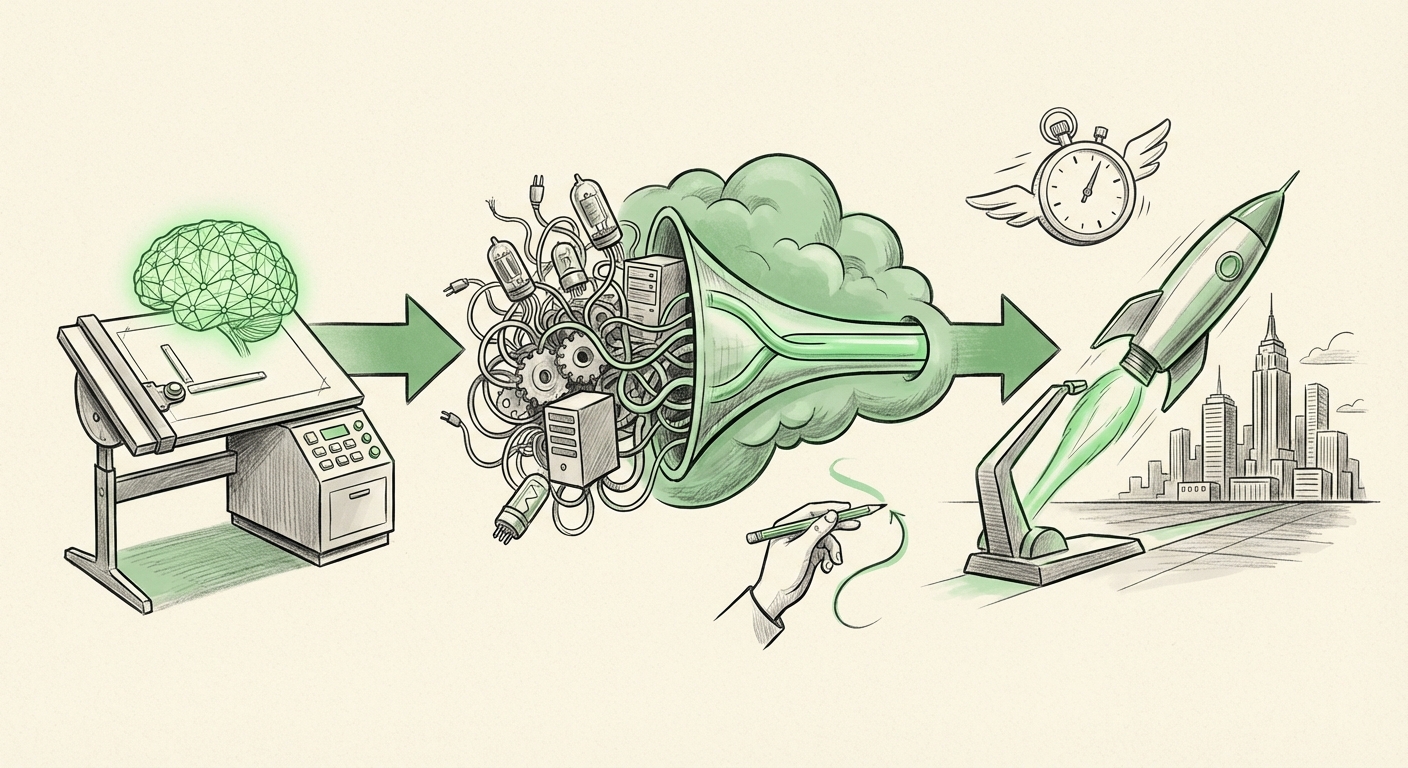
For years, the rule in artificial intelligence has been simple: you get what you pay for. The most powerful models have come with premium price tags, while more affordable options offered noticeably lower performance. But that gap is now narrowing in a dramatic way. The release of Anthropic's new Claude Sonnet 5 marks a turning point. This mid-range model is closing the distance to the company's pricier Opus series, and that shift carries huge implications for everyone building with AI or relying on it in their daily work.
This article explores why this matters, how it changes the economics of AI, and what businesses and everyday users should expect as high-quality intelligence becomes more accessible than ever before.
The Big Picture: A Model Series in Transition
Anthropic's lineup has long been built around two tiers. The Opus series represents the company's most capable and most expensive models, designed for complex reasoning, nuanced analysis, and tasks that demand the highest fidelity. The Sonnet series, by contrast, has been positioned as a more cost-effective alternative, offering strong performance at a fraction of the cost. Historically, the trade-off was clear: choose Opus for maximum quality or choose Sonnet for better economics.
With Claude Sonnet 5, that trade-off has blurred. The new model is not just incrementally better than its predecessors — it is closing the performance gap to Opus in a way that makes the premium tier harder to justify for many use cases. This isn't a full replacement, but it is a major compression of the distance between the two lines.
This pattern is not unique to Anthropic. Across the entire AI industry, we are seeing a trend where mid-range and even small models are approaching the capabilities of their larger, more expensive siblings. The reasons include better training techniques, more efficient architectures, and the growing availability of high-quality training data that helps smaller models learn more effectively. But the outcome is the same: the cost of intelligence is falling, and the floor is rising.
Why This Shift Matters for the Future of AI
The closing gap between Sonnet and Opus signals a broader evolution in how AI models are designed and deployed. For the longest time, the industry's focus was on raw capability — making models bigger, smarter, and more powerful, often with little regard for cost or efficiency. The race was about who could achieve the highest benchmark scores. But that era is giving way to a new set of priorities.
Intelligence Is Becoming a Commodity
When a mid-range model can deliver results that are nearly indistinguishable from a premium model for many tasks, intelligence itself starts to look like a commodity. That is a profound shift. It means that the barrier to entry for using advanced AI is dropping rapidly. Small businesses, startups, and even individual developers can now access capabilities that were previously available only to large enterprises with deep pockets.
This commoditization will accelerate adoption across sectors. Healthcare providers, educators, legal firms, and local governments will find it easier to integrate AI into their workflows without needing to justify premium budgets. The question shifts from "Can we afford AI?" to "What is the best way to apply this capability to our specific problems?"
Specialization Becomes the Differentiator
As general-purpose intelligence becomes more evenly distributed across model tiers, the real competitive advantage will come from specialization. Companies that build tailored solutions on top of capable base models — fine-tuning them for specific industries, workflows, or regulatory environments — will create the most value. The model itself becomes less of a differentiator than the system built around it.
This is good news for businesses that have deep domain expertise but limited AI resources. They no longer need to build their own large language model from scratch. Instead, they can take a model like Claude Sonnet 5, which already performs at a high level, and layer their own knowledge and data on top. The result is a customized solution that is both powerful and cost-effective.
Trust and Reliability Take Center Stage
When models at different price points perform similarly, users will naturally start to evaluate them on dimensions other than raw capability. Factors like consistency, safety, transparency, and alignment with human values become more important. Anthropic has long emphasized its focus on building models that are helpful, honest, and harmless. As the performance gap narrows, those qualities could become the deciding factors for many users.
In a world where multiple models offer comparable intelligence, the one you trust becomes the one you choose. This puts pressure on every AI provider to invest not just in capability but in reliability and ethical design. The winners will be those who can deliver both high performance and high trustworthiness.
Practical Implications for Businesses
The arrival of Claude Sonnet 5 and the narrowing of the gap to Opus is not just a technical milestone. It has real, tangible consequences for how companies operate, innovate, and compete. Let's break down some of the most important implications.
Cost Structures Will Change
For organizations that have been running large volumes of AI queries, the cost savings from switching to a model like Sonnet 5 — without sacrificing much quality — can be substantial. Even a small improvement in cost per token adds up quickly when you are processing millions of requests per month. This changes the ROI calculations for many AI initiatives, making projects viable that would have been too expensive just a year ago.
Businesses that have been using Opus for tasks that do not actually require its full capability may find that they can achieve comparable results with Sonnet 5 at a fraction of the cost. The key is to carefully evaluate which use cases genuinely benefit from the premium model and which can be served just as well by the more affordable option.
New Use Cases Become Feasible
Lower cost combined with high capability opens the door to applications that were previously uneconomical. Real-time language translation for customer support, automated document review for small legal practices, personalized tutoring for students — these are all use cases that require both quality and affordability. With a model that delivers near-premium performance at a mid-range price, these applications become viable at scale.
We are likely to see a surge in AI-powered tools and services aimed at small and medium-sized businesses, as the economics finally make sense. This will democratize access to AI in a way that has not been possible before, spreading the benefits beyond the Fortune 500.
Internal AI Adoption Will Accelerate
Many organizations have been cautious about deploying AI internally, partly because of cost concerns and partly because of the complexity of managing multiple models. A capable, cost-effective model that can handle a wide range of tasks simplifies the decision-making process. Companies can standardize on a single model for many internal use cases, reducing overhead and making it easier to train employees on how to work with AI.
This could lead to faster adoption of AI across departments like marketing, HR, finance, and operations, where the need for intelligence is high but the budgets are often constrained.
What This Means for Society
Beyond the business implications, the trend toward affordable high-performance AI has broader social consequences. Some of these are positive; others require careful attention.
Bridging the Digital Divide
One of the most promising aspects of cheaper, capable AI is its potential to bridge the digital divide. Educational tools, healthcare diagnostics, agricultural advice, and government services can all be enhanced with AI, and lower costs mean these enhancements can reach underserved communities. A school district with limited funding can now deploy AI tutoring tools that were previously out of reach. A rural clinic can access diagnostic support that once required a major hospital budget.
The closing gap between premium and mid-range models is, in effect, a leveling force. It reduces the advantage that wealthy institutions have long held in accessing cutting-edge technology.
Job Market and Skills Evolution
As AI becomes more capable and more affordable, its impact on the job market will intensify. Tasks that require moderate reasoning and language skills — such as drafting reports, analyzing data sets, and summarizing information — will increasingly be automated or augmented. This does not necessarily mean mass job loss, but it does mean that the nature of many jobs will change. Workers will need to shift toward tasks that require human judgment, creativity, and interpersonal skills that AI cannot easily replicate.
The good news is that cheaper AI also lowers the barrier for workers to learn how to use these tools. Online training programs, small business workshops, and self-paced learning materials can all be enhanced with AI, making it easier for people to upskill and adapt.
Risks of Misuse and Disinformation
There is also a darker side to more accessible intelligence. The same capabilities that empower educators and doctors can also be used by bad actors to generate disinformation, impersonate individuals, or automate scams. As high-quality language generation becomes cheaper, the volume and sophistication of harmful content could increase.
This puts a premium on safety features and responsible deployment. Models like Claude Sonnet 5 benefit from the alignment work that Anthropic has invested in, which helps reduce — though not eliminate — the risk of misuse. But the broader industry needs to continue developing robust safeguards, and regulators need to keep pace with the technology.
Actionable Insights for Decision Makers
Given all of this, what should business leaders, developers, and policymakers do right now? Here are some practical steps to consider.
Audit Your AI Usage
If your organization is currently using a premium model for a wide range of tasks, take the time to evaluate which of those tasks actually require that level of capability. Test whether a mid-range model like Claude Sonnet 5 meets your quality bar for each use case. You may find that 80% or more of your workloads can be handled by the more affordable option, freeing up budget for other initiatives.
Invest in Integration, Not Just Models
The value of AI comes not just from the model itself but from how it is integrated into your workflows, data systems, and user experiences. As models become more commoditized, the competitive edge will come from how well you embed AI into your specific context. Invest in building robust pipelines, feedback loops, and custom fine-tuning that make the model work for your unique needs.
Plan for a Multi-Model Future
Even as Sonnet catches up to Opus, there will still be situations where the premium model is the right choice. The smartest approach is to build your systems to be model-agnostic, allowing you to route different tasks to different models based on cost and capability requirements. This gives you flexibility and protects you from being locked into any single provider or tier.
Prioritize Safety and Ethics
With cheaper AI comes a broader distribution of its use, both good and bad. As a decision maker, make sure you are choosing models that prioritize safety, transparency, and alignment. This is not just about avoiding bad press — it is about building trust with your customers, employees, and the public. Responsible AI use is becoming a competitive advantage in its own right.
The Road Ahead: What to Watch For
The release of Claude Sonnet 5 is one milestone in a longer journey. In the coming months and years, we can expect several developments to accelerate.
First, the gap between model tiers will continue to shrink. Each new generation of mid-range models will push closer to the performance of the premium tier, and eventually, the distinction may become more about specialization and latency than about raw capability. Second, pricing pressure will increase across the industry, benefiting consumers and driving further adoption. And third, the focus of AI competition will shift from "who has the smartest model" to "who has the most useful and trustworthy system."
For Anthropic, the challenge will be to continue differentiating Opus in ways that justify its higher price — perhaps through better reasoning on extremely complex tasks, stronger safety guarantees, or deeper integration with enterprise tools. For the rest of us, the takeaway is clear: the era of exclusive, expensive, high-end AI is giving way to a world where powerful intelligence is a widely available tool, not a luxury.
Conclusion
Anthropic's new Claude Sonnet 5 is more than just an incremental update. It represents a structural shift in the AI landscape — one where the gap between what you pay and what you get is narrowing fast. For businesses, this means lower costs, faster adoption, and the ability to serve more users with high-quality AI. For society, it means broader access to intelligence that can enhance education, healthcare, and public services. And for the industry, it means that the race is no longer just about raw power but about trust, integration, and impact.
The future of AI is not just about building smarter models. It is about making those models accessible, reliable, and useful for everyone. Claude Sonnet 5 is a strong step in that direction, and it points the way toward a future where the best AI is not the most expensive AI, but the one that works best for you.