Google Nano Banana 2 Lite and Gemini Omni Flash: What These Launches Mean for the Future of Fast AI Images and Video via API
The artificial intelligence landscape is shifting at a breathtaking pace. Every few weeks, a new model, tool, or platform emerges that changes what we think is possible. The latest development centers on two powerful new offerings: Nano Banana 2 Lite for rapid AI image generation and Gemini Omni Flash for video processing delivered through an API. These launches signal a clear direction for the industry — one where speed, efficiency, and seamless integration take center stage. In this article, we will break down what these technologies are, why they matter, and what they mean for businesses, developers, and everyday users.
The Big Picture: Why Speed and Specialization Matter Now More Than Ever
For years, the AI world has been obsessed with building bigger and bigger models. The thinking was simple: more parameters, more data, more compute power equals better results. And for a while, that approach worked. Models grew from millions to billions to trillions of parameters. They became incredibly capable, but they also became slow, expensive, and difficult to deploy.
That era is ending. We are entering a new phase where the focus is shifting toward specialized, lightweight models that can do one thing exceptionally well — and do it fast. This is exactly what we see with Nano Banana 2 Lite and Gemini Omni Flash. These are not generalist behemoths. They are purpose-built tools designed for specific tasks: generating images at lightning speed and processing video content through a simple API call.
The implications are huge. When AI becomes fast and cheap enough to use for every task, it stops being a novelty and starts being a utility — as invisible and essential as electricity or cloud storage. That transition is what makes these launches so significant.
Inside Nano Banana 2 Lite: AI Image Generation at Breakneck Speed
Image generation has been one of the most visible and exciting areas of AI progress. From the earliest GANs to today's diffusion models, we have watched machines learn to create photorealistic images, stunning artwork, and convincing synthetic media. But until recently, generating a high-quality image took time — often tens of seconds or even minutes.
Nano Banana 2 Lite changes that equation. Built for speed, this model is designed to produce AI images almost instantly. The "Lite" designation is a deliberate choice. It signals that this is a streamlined, efficient version of a larger capability — optimized for rapid inference rather than maximum creative range. The trade-off is clear: you get less variety and perhaps less complexity, but you get it fast.
This is a perfect fit for a huge range of real-world applications. E-commerce platforms need to generate product images on the fly. Social media tools need to create custom visuals for every user. Advertisers need to iterate through dozens of design variations in seconds, not hours. In all of these cases, speed is the most important feature. A model that takes two seconds is infinitely more useful than one that takes twenty seconds, even if the slower model produces slightly more detailed results.
Nano Banana 2 Lite represents a bet that the future of AI image generation is real-time and embedded. It is not meant to be a standalone tool for artists and designers. It is meant to be a component in larger systems — a drop-in module that adds image generation capability to any app, website, or workflow.
Gemini Omni Flash: Video AI That You Can Call Like Any Other Function
If image generation is moving toward speed and simplicity, video AI is following close behind. Video has always been harder for AI than images. It involves more data, more complexity, and more compute. Processing a video — understanding what is happening in it, editing it, generating new footage — has traditionally required specialized infrastructure and significant expertise.
Gemini Omni Flash aims to change that by delivering video AI capabilities through a straightforward API. The "Flash" in its name is a clear nod to speed. The "Omni" suggests that it can handle a wide variety of video tasks — analysis, editing, generation, and more — all through a single unified interface. And the "Gemini" lineage ties it to one of the most advanced model families available.
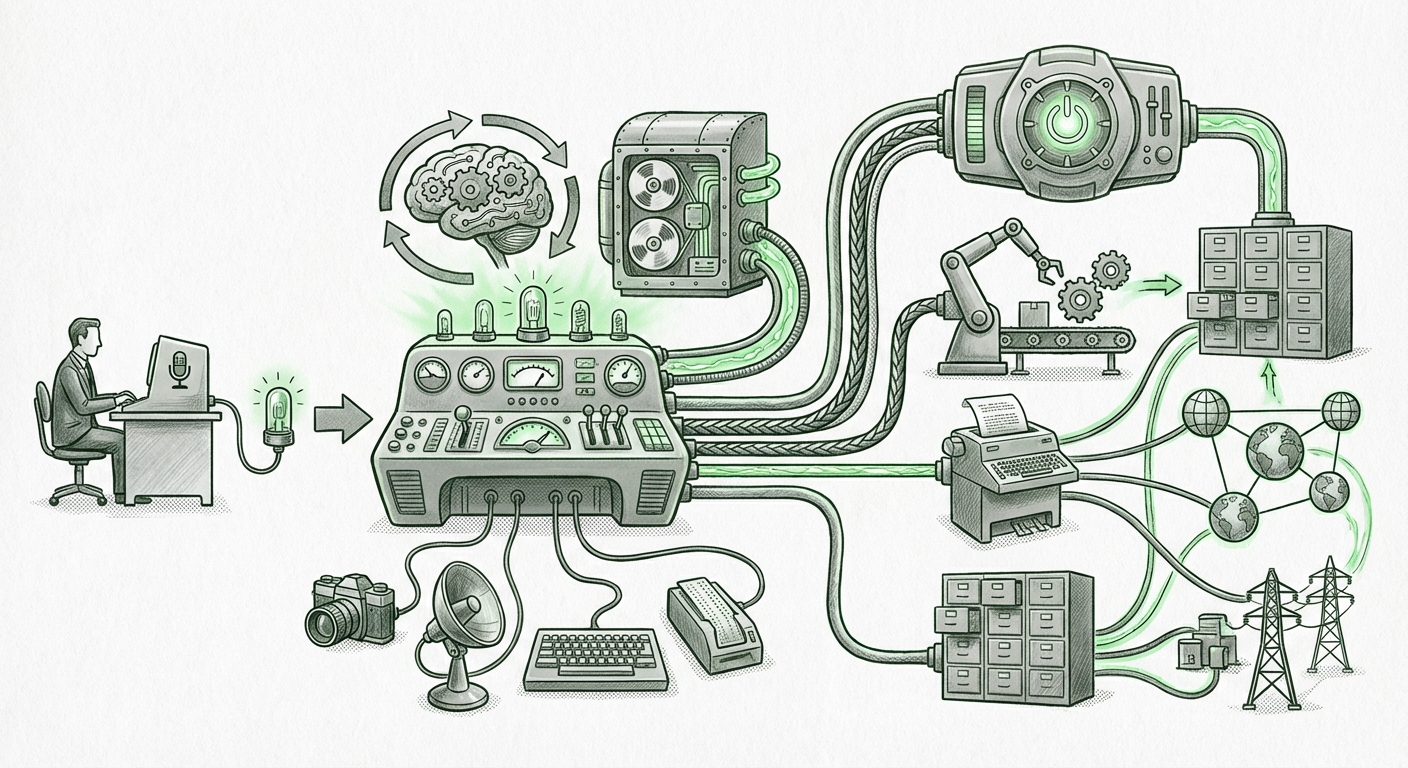
What makes this so important is the delivery mechanism: an API. APIs are the plumbing of the modern internet. They allow developers to add complex functionality to their applications without building it from scratch. When video AI becomes available as an API, it means any developer — not just AI researchers — can integrate powerful video understanding and generation into their products.
Think about what that unlocks. A video conferencing app can automatically generate summaries and highlight reels. A security camera system can analyze footage in real time and send alerts. A marketing platform can create short video ads from a few text prompts. A content moderation service can scan thousands of hours of uploaded video per day. All of these become simple API calls.
Gemini Omni Flash is a sign that video AI is maturing from a research curiosity into a practical, deployable technology. It is following the same path that text AI took a few years ago — from big, slow, experimental models to fast, reliable, API-accessible services that anyone can use.
The Convergence: What These Two Launches Tell Us About the Future
When you step back and look at Nano Banana 2 Lite and Gemini Omni Flash together, a clear pattern emerges. These are not just two random product releases. They are examples of a broader trend toward democratization and commoditization of AI capabilities.
Here are the key trends these launches point to:
- Speed over size: The industry is realizing that a smaller, faster model that you can actually use is often more valuable than a giant model that is too slow or expensive to deploy at scale.
- Task-specific specialization: Instead of one model that does everything okay, we are getting models that do one thing great. Nano Banana 2 Lite is for fast images. Gemini Omni Flash is for video. Expect to see many more such specialized models.
- API-first delivery: The easiest way to get AI into the hands of developers is through clean, simple APIs. Both of these launches emphasize API access, making it trivial to integrate AI into existing workflows.
- Multimodal expansion: First text, then images, now video. AI is gradually learning to handle every type of media. Each new modality opens up fresh application areas.
Practical Implications for Businesses
If you run a business — whether a startup, a mid-sized company, or a large enterprise — these developments should be on your radar. Here is why:
Lower Barriers to Entry
Previously, adding AI image or video capabilities to your product required hiring specialized talent, training custom models, and managing expensive infrastructure. That is no longer the case. With offerings like Nano Banana 2 Lite and Gemini Omni Flash, you can add these capabilities with a few lines of code and a modest budget. This levels the playing field between large companies with deep pockets and smaller players who are more agile.
New Product Opportunities
Fast, cheap image generation opens up product categories that were not possible before. Imagine a travel app that generates a custom postcard image for every user based on their trip itinerary. Or a fitness app that creates a unique workout illustration for each exercise. Or a news app that illustrates every article with an AI-generated image. These are not futuristic concepts — they are things you can build today.
Similarly, video AI via API enables a new generation of video-first products. Automated video editing for social media creators. Real-time video translation and dubbing. Intelligent video search and summarization. The list goes on.
Operational Efficiency
For internal business processes, these models can drive significant cost savings. Marketing teams can generate hundreds of image variations for A/B testing without a designer. Training departments can create custom video content from slide decks and scripts. Customer support teams can analyze call recordings and identify common issues. The efficiency gains are real and measurable.
Societal and Ethical Considerations
As with any powerful technology, the ability to generate images and video quickly and cheaply comes with responsibilities. We need to talk about the risks.
Misinformation and Deepfakes: The easier it becomes to generate realistic images and video, the harder it becomes to tell what is real. While these models have safeguards, determined users will always find ways around them. We need better detection tools, stronger watermarking standards, and public education about media literacy.
Job Displacement: Graphic designers, video editors, illustrators, and animators are among the creative professionals who may see their roles change significantly. Some tasks will be automated. But new roles will also emerge — prompt engineers, AI content strategists, and quality assurance specialists. The key is to focus on upskilling and adaptation rather than resistance.
Bias and Representation: If the training data for these models contains biases — and it almost certainly does — those biases will be reflected in the output. Companies deploying these models need to invest in fairness testing and mitigation strategies.
Copyright and Ownership: Who owns an image generated by AI? The user who wrote the prompt? The company that trained the model? The artists whose work was used in training? These legal questions are still being worked out. Businesses should be cautious about using AI-generated content in ways that could create legal exposure.
None of these risks are unique to Nano Banana 2 Lite or Gemini Omni Flash. They are broad challenges facing the entire AI industry. But as these capabilities become more accessible and widely used, the urgency of addressing them grows.
Actionable Insights for Developers and Decision Makers
If you want to take advantage of these developments, here are some practical steps you can take:
- Start experimenting now. Get access to the APIs and try them out. Build small prototypes. Learn what works and what does not. The cost of experimentation is low, but the cost of falling behind is high.
- Think about integration points. Where in your current product could fast image generation or video AI add value? Look for places where users are waiting, where manual work is required, or where content needs to be created at scale.
- Plan for governance. Establish policies around how your team will use AI-generated content. Set guidelines for transparency, quality control, and ethical use. This will save you headaches later.
- Invest in prompt engineering skills. The quality of output from these models depends heavily on the quality of the input. Learning to write effective prompts is a valuable skill that will only become more important.
- Monitor the landscape. The AI field moves incredibly fast. What is state-of-the-art today may be obsolete in six months. Stay informed, stay flexible, and be ready to adapt.
What Comes Next: The Trajectory of AI Media Generation
Looking ahead, it is clear that we are only at the beginning of this journey. The trajectory points toward even faster, cheaper, and more capable models. Here is what we can expect in the next few years:
Real-time video generation: Currently, generating a short video clip still takes noticeable time. But the same pattern we saw with images — initial slowness giving way to near-instant generation — is about to play out for video. The combination of models like Gemini Omni Flash and optimized hardware will eventually make real-time video generation possible.
Multimodal fusion: Models that can seamlessly combine text, image, video, and audio in a single coherent output are on the horizon. Imagine describing a scene and having the AI generate a full video with sound effects and dialogue. That is the direction we are heading.
Personalization at scale: When content generation is cheap enough, every user can get a unique experience. Websites, ads, learning materials, and entertainment can all be personalized in real time based on user preferences and behavior.
Embedded intelligence: AI image and video capabilities will become standard features in every major software platform — design tools, office suites, social media apps, and operating systems. Users will not need to think about "using AI" any more than they think about "using electricity."
Conclusion: The Age of Accessible, High-Speed AI Media Is Here
The launch of Nano Banana 2 Lite for fast AI images and Gemini Omni Flash for video via API marks a real turning point. These tools are not about pushing the boundaries of what AI can do in a research lab. They are about bringing those capabilities into the real world, where speed, cost, and ease of use matter more than theoretical performance.
For businesses, this means new opportunities to innovate, compete, and create value. For developers, it means powerful new building blocks to work with. For society, it means we need to grapple seriously with the implications of widely accessible synthetic media.
The technology is ready. The APIs are open. The question now is not whether these capabilities will be used — it is how creatively, responsibly, and wisely we will put them to work. The future of fast AI images and video is not just about what the models can do. It is about what we choose to do with them.