NotebookLM Gets TikTok-Style Short Videos: How AI Is Rewriting the Rules of Learning and Content
When Google first launched NotebookLM, it felt like a quiet revolution. Here was an AI-powered notebook that could absorb your documents, lecture notes, and research papers, then have a smart conversation with you about them. It could even generate podcast-style discussions. But now, something unexpectedly big has arrived: NotebookLM is adding TikTok-style video shorts.
This shift isn't just a cosmetic feature. It signals a fundamental change in how AI tools will help us learn, create, and share information. By blending the addictive, bite-sized format of short-form video with the deep, personalized knowledge of an AI notebook, Google is essentially creating a new medium — one that marries the best of social media engagement with the power of generative AI. In this article, we’ll break down what this move means for the future of AI, how it will change the way we work and learn, and what businesses and individuals should start preparing for right now.
The Evolution of NotebookLM: From Text Notes to Video Narratives
NotebookLM originally stood out because it was grounded: it only answered questions based on the documents you uploaded, not from the entire internet. That made it incredibly trustworthy for students, researchers, and professionals. Later, Google added Audio Overviews, letting you turn your notes into a podcast-like discussion between two AI hosts. That feature went viral for a reason — it made information feel alive and conversational.
Now, with the introduction of TikTok-style video shorts, NotebookLM takes that one step further. Instead of just listening to a deep dive, users will be able to generate and watch short, visually engaging video clips that summarize key points, explain concepts, or even act as quick study aids. The format mimics the addictive scrolling feeds of TikTok, Instagram Reels, and YouTube Shorts — but with content drawn exclusively from your personal knowledge base.
For the first time, an AI notebook is moving beyond words and audio into a full visual medium. This is a logical progression. If AI can already write, summarize, and speak, why not let it show you? The implications are enormous, especially for how we process and retain information.
Why TikTok-Style Shorts? The Psychology and Tech Behind the Move
Short-form video is the dominant content format of the decade. Platforms like TikTok have conditioned billions of brains to learn, laugh, and shop in 30-second bursts. The format is sticky because it combines fast-paced storytelling, visual cues, and emotional hooks. Studies show that short videos improve recall compared to reading text or even listening to audio, especially for complex topics.
By bringing this format into NotebookLM, Google is acknowledging that the future of AI-assisted learning isn't just about getting answers — it's about getting them in the most digestible format possible. The AI will analyze your uploaded materials — whether they are dense research papers, meeting transcripts, or class notes — and automatically produce a series of short videos. Each video might cover a single concept, a key statistic, or a step-by-step explanation. Users can then swipe through these videos like they would on a social media feed, building understanding piece by piece.
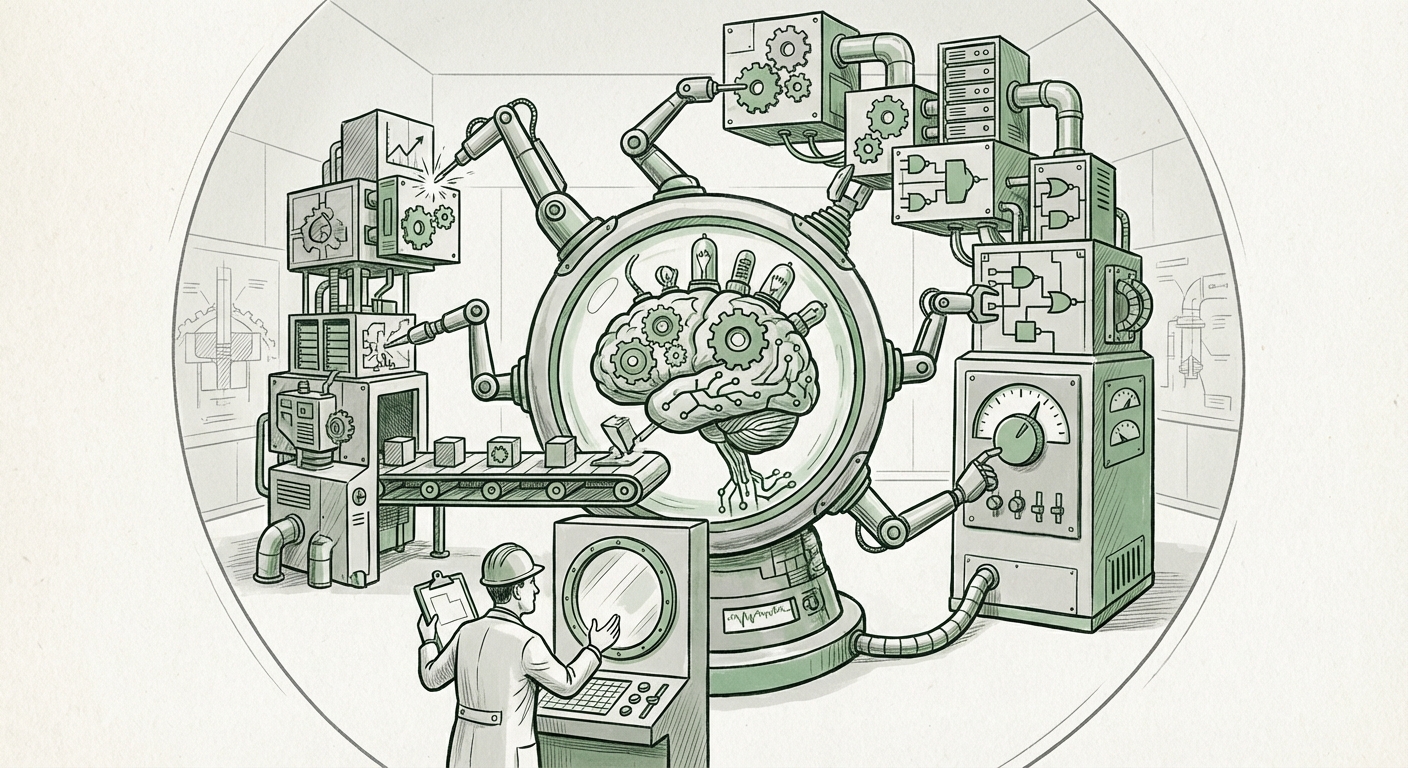
Under the hood, this requires a sophisticated pipeline. The AI must first extract the most important ideas from your source documents (using something like a large language model), then generate a script for each short video, then use text-to-speech to voice it, and finally pair it with relevant visuals — perhaps automatically generated graphics, animation, or stock footage. Google has been investing heavily in multimodal AI (models that can handle text, images, and video), so this feature taps directly into that technology.
What This Means for the Future of AI: Three Big Shifts
This isn’t just a feature update. It’s a signal of where AI is heading. Here are three major shifts we can expect.
1. AI Moves from Answering Questions to Curating Experiences
For years, the focus in AI has been on answering queries: type a question, get a text reply. Chatbots, search engines, and even NotebookLM’s original interface followed that pattern. But short-form video is inherently different. It’s not about asking a question and waiting for a block of text — it’s about being fed a stream of curated snippets designed to teach or entertain. By adopting this format, AI is shifting from a reactive tool (you ask, it answers) to a proactive one (it creates a narrative for you to consume).
In the future, we’ll see AI tools that automatically package complex information into engaging formats without being prompted. Your AI assistant might, for example, turn your weekly project updates into a 2-minute video summary, highlight the top three failures in a research project as short explainers, or turn your to-do list into a motivational vlog-style clip. The AI becomes a content producer, not just a librarian.
2. Learning Becomes Addictive and Personal
TikTok’s famous recommendation algorithm keeps users hooked by feeding them exactly what they want. When that same addictive engine is applied to a personal knowledge base, the potential for accelerated learning is immense. Imagine an AI that not only understands your study materials but also knows which concept you always forget — and then creates a short, funny video to drill that concept into your memory.
Personalization will go beyond the content itself. The AI could adapt the tone, style, and even humor level of each short based on your past interactions. If it notices you learn best with analogies, it will generate more analogy-heavy clips. If you are a visual learner, it will emphasize diagrams. This is the holy grail of educational technology: a tutor that adapts its teaching style to each student, now delivered in the most engaging format available.
3. The Blur Between Productivity and Entertainment Vanishes
One of the biggest challenges for productivity apps is user engagement. People hate studying complex documents. But they love scrolling through short videos. By merging the two, Google is effectively gamifying productivity. Suddenly, reviewing your notes feels like watching your own personal TikTok feed — except it's all about work or school.
This blurring of lines will have ripple effects across the entire tech industry. Expect to see other AI tools — from grammar assistants to project management apps — add similar mini-video features. In fact, any AI that can access your data might soon be expected to produce a "video digest" of that data. The format will become as standard as the email summary or the bullet-point list.
Practical Implications for Businesses and Society
This feature may seem like a niche addition to a relatively obscure Google product, but its impact will be felt broadly. Here’s how different sectors should start thinking about it.
Education and Online Learning
Students using NotebookLM can now turn their lecture notes into a TikTok-like feed of educational shorts. This could be a game-changer for revision and exam preparation. Instead of re-reading pages of notes, students can quickly swipe through the key points, with visuals and voiceovers reinforcing the material. Teachers could also use the tool to create supplementary video materials for their classes, without needing any video editing skills.
However, there is a risk: the format favors simplification over depth. A 30-second video can explain a concept, but it may lack nuance. Educators will need to ensure that the AI-generated shorts are accurate and don't omit critical context. Grounding — the AI only using the uploaded documents — helps, but teachers must still audit the output, especially for complex subjects.
Corporate Training and Onboarding
For businesses, onboarding new employees often involves stacks of manuals, policy documents, and training presentations. NotebookLM’s video shorts could transform that into a series of quick, engaging modules. New hires can swipe through "Know Your Compliance" clips or "How to Use the CRM" shorts. The AI can even tailor the content to each employee’s role or department.
Corporate training departments should start experimenting with building their knowledge bases inside NotebookLM or similar tools. By structuring documents so that key points are clearly defined, the AI will generate better shorts. Also, companies should consider the "scrollability" factor — employees might actually enjoy training for the first time.
Content Creators and Marketers
This feature is a goldmine for content creators who repurpose their own research. A writer who has collected dozens of interviews for a book could instantly generate short promotional videos highlighting the most surprising quotes. A marketer could turn a lengthy competitor analysis into a series of digestible clips for the sales team. The ability to transform text into video with a single click will dramatically speed up content production.
But there is a catch: the videos generated by NotebookLM are likely to be simple, with basic animations and stock-style visuals. For high-production-value content, human editors will still be needed. However, for internal communications, training, and quick social media posts, it might be more than enough.
Information Overload and Attention Management
One potential downside: if every document in your life turns into a video feed, you might feel constant pressure to keep swiping. There’s a fine line between efficient learning and compulsive consumption. The AI’s ability to generate endless shorts could contribute to information overload instead of reducing it. Users will need to set boundaries — decide when to watch shorts and when to read the full text. NotebookLM’s existing strengths (like source grounding and citation) remain vital; the video shorts should complement, not replace, deep reading.
How to Prepare for This New AI Capability
Whether you’re a student, professional, or business owner, here are actionable steps to get ready.
- Start organizing your digital notes and documents. NotebookLM works best when you have clean, well-structured files. Group related materials, use clear headings, and avoid clutter. The AI will use your organization to decide what deserves a video.
- Think in short-form when writing. If you want the AI to generate good shorts, your source material should contain punchy statements, bullet points, and strong headings. A dense paragraph of academic prose is harder to turn into a compelling 30-second video than a set of key takeaways.
- Experiment with existing NotebookLM features. If you haven’t tried Audio Overviews, start there to understand how the AI interprets your documents. The video shorts will build on that same understanding engine.
- Train your team or class. Let people know that a new, more engaging learning format is coming. Encourage them to think of video shorts as a supplement, not a shortcut. Retain the habit of checking AI-generated content for accuracy.
- Stay alert for privacy implications. Because NotebookLM is grounded in your personal data, adding video generation means more processing of that data. Review Google’s privacy policy and ensure your sensitive documents are not uploaded unless necessary.
The Bigger Picture: AI as a Universal Content Transformer
NotebookLM’s video shorts are part of a broader trend: AI is becoming a universal content transformer. It can take any input — text, audio, video, code — and convert it into nearly any output format. Today it’s PDFs to podcasts to shorts. Tomorrow it might be spreadsheets to animated infographics or legal contracts to interactive stories.
This capability will reshape knowledge work. Instead of manually reformatting information for different audiences, we will simply tell the AI: “Take this annual report and give me a 90-second video for investors, a 3-minute narrated presentation for the team, and a one-page executive summary in bullet points.” The AI will handle all three. The concept of "multimodal output" will become as standard as "copy and paste."
For society, the risk is that we become reliant on AI for comprehension itself. If every difficult text can be turned into a short, breezy video, will anyone still have the patience to read deeply? The answer likely depends on intent. For checking facts, gaining a surface understanding, or reviewing known material, shorts are perfect. For original research, critical thinking, and nuance, the original text remains essential. The wise user will treat the video shorts as an appetizer, not the whole meal.
Conclusion: The Era of AI-Powered Micro-Learning Has Begun
Google bringing TikTok-style video shorts to NotebookLM is more than a product update — it is a declaration that the future of AI is visual, personal, and addictive. By merging the engagement mechanics of social media with the deep contextual knowledge of a grounded AI notebook, the tool offers a new way to learn: fast, fun, and always at your fingertips.
For businesses, this means rethinking how training and communication are done. For educators, it opens the door to automated, personalized study aids. For everyday users, it promises to make the chore of reviewing notes feel almost as enjoyable as scrolling through your favorite feed.
The key takeaway is that AI is no longer just about getting answers — it’s about experiencing information. NotebookLM’s video shorts are an early glimpse of a world where every piece of knowledge can be instantly turned into a captivating story. The challenge for us is to harness that power without losing the depth and understanding that only focused attention can bring.