Claude Code's Dual Ban: How US-China Tensions Are Rewriting the Rules for AI Coding Tools
In the world of artificial intelligence, nothing stays simple for long. A recent development has brought this reality into sharp focus: an advanced AI coding tool called Claude Code is now caught in a complicated crossfire between the world's two largest technology superpowers. Bans on both sides of the Pacific have created a tangled situation that affects developers, businesses, and the way AI tools will be used in the future.
This isn't just one more regulation or a minor technical hurdle. It's a clear signal that the global AI landscape is fragmenting, and the era of a single, open market for AI tools is coming to an end. Understanding what happened with Claude Code, why it matters, and what it means for the future of AI is essential for anyone who builds software, runs a company, or cares about technology policy.
What Is Claude Code, and Why the Attention?
Claude Code is a next-generation AI coding assistant designed to help developers write, debug, and optimize code faster. It fits into the same broad category as tools like GitHub Copilot or Amazon CodeWhisperer, but with its own unique strengths in understanding complex codebases, suggesting architecture-level changes, and generating whole project structures from natural language prompts.
The tool quickly became popular among professional developers and large engineering teams for its ability to boost productivity and reduce repetitive work. Its rise, however, did not go unnoticed by regulators and security agencies on both continents. And suddenly, Claude Code found itself in the middle of a geopolitical storm.
The China Ban: Data Sovereignty and Domestic Champions
On the Chinese side, the ban on Claude Code reflects a longer trend of tightening control over foreign AI services. Chinese authorities have cited concerns about data sovereignty — since Claude Code processes code on cloud servers that may be located outside China, sensitive intellectual property could leave the country. Additionally, there are fears that foreign AI models could be used to introduce backdoors or malicious code.
But the ban is also about promoting homegrown alternatives. China has invested heavily in its own AI coding tools, such as Baidu Comate and Alibaba Cloud's Coding Assistant. By blocking a powerful Western competitor, the government gives local companies room to grow and capture the developer market. This is a classic playbook used in many tech sectors, and AI is no exception.
For developers inside China, the ban means losing access to a tool some considered state-of-the-art. They must now migrate to domestic options or rely on open-source workarounds — neither of which may offer the same level of polish or integration. The fragmentation of tooling increases costs and complexity, especially for multinational teams that previously used a single code assistant across offices in multiple countries.
The US Ban: National Security and Export Controls
Meanwhile, on the other side of the Pacific, the United States has also moved to restrict Claude Code. But the reasoning here is quite different. The US ban is rooted in national security concerns and export control regulations that aim to prevent advanced AI capabilities from flowing to foreign adversaries.
Specifically, US authorities have identified that Claude Code's underlying AI model — which is extremely powerful and capable of generating sophisticated code — could be used by foreign governments to accelerate their own weapons development, cyber warfare tools, or surveillance systems. Even if the tool itself is sold by an American company (Anthropic), the concern is that it might be accessed from sanctioned countries or used in ways that threaten US strategic interests.
The US ban effectively prevents Claude Code from being distributed or used in certain countries and also imposes restrictions on how the tool can be shared, exported, or even discussed in open-source contexts. This creates a compliance headache for the company behind Claude Code and forces it to build geographic restrictions into its licensing and software distribution.
The Impact on Developers and Businesses
For the average software developer or engineering leader, the dual ban on Claude Code is a wake-up call. It means that the choice of an AI coding tool is no longer just a technical decision — it's a geopolitical one. A team with members in both the US and China can no longer assume they will have access to the same set of tools. Collaboration becomes harder.
Businesses that rely heavily on AI-assisted coding must now plan for a fragmented software supply chain. They might need to maintain two separate stacks: one for the US market and one for China (and possibly other regions). This duplication increases development costs, slows down innovation, and raises the risk of inconsistencies between codebases.
Small startups, in particular, are hit hard. They often depend on the best available AI tools to compete with larger companies. When those tools become unavailable due to bans, the playing field tilts even more. In contrast, large corporations with in-house AI teams may be better positioned to develop their own coding assistants or negotiate special access.
What This Means for the Future of AI and How It Will Be Used
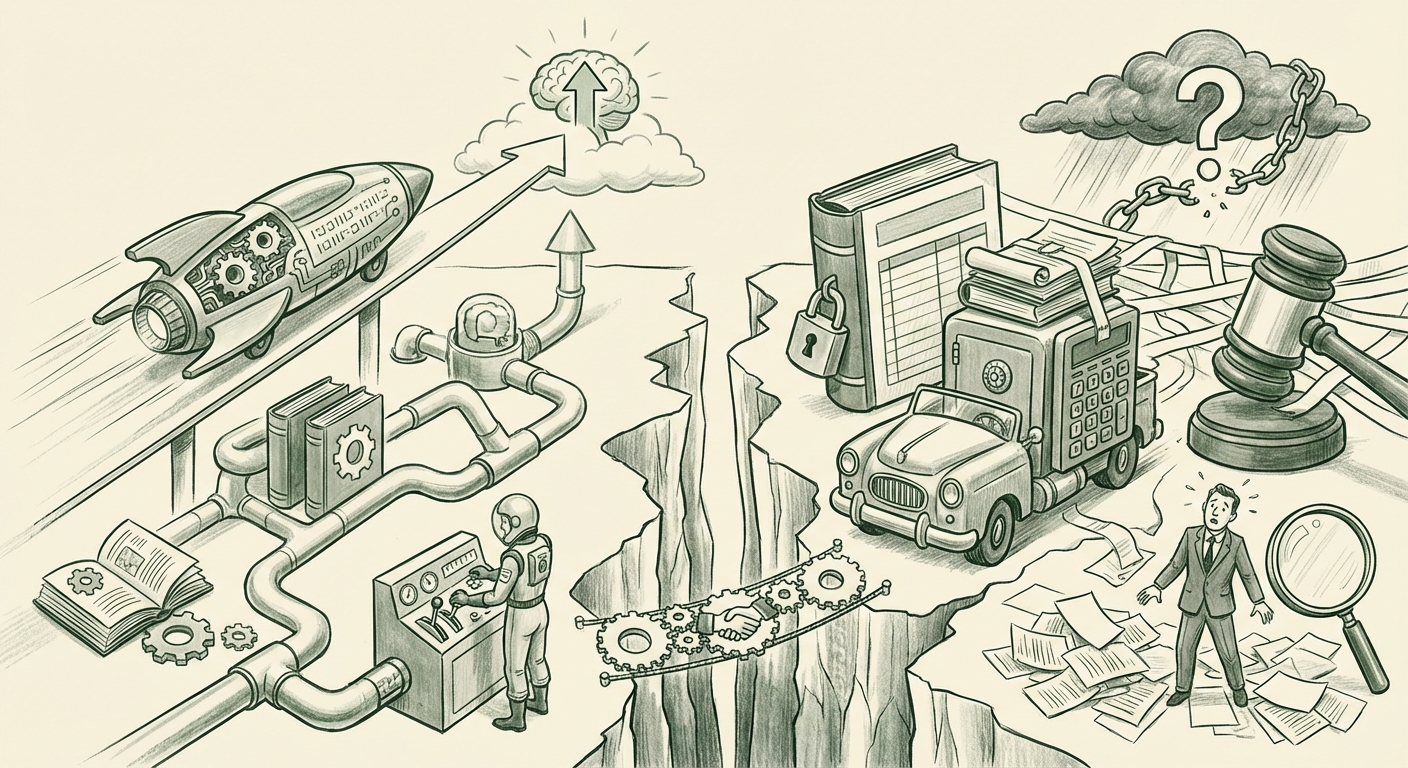
The Claude Code situation is not an isolated incident. It is a preview of what is likely to become the new normal for many AI products. The future of AI will be shaped by balkanization — the division of the global technology landscape into distinct, sometimes incompatible, regional ecosystems.
Here are the key implications:
- AI tools will be regionalized. Companies will launch different versions of their products for different markets, with varying features, data practices, and pricing. This will increase development overhead but may be the only way to operate legally in both the US and China.
- Open-source alternatives will gain importance. When proprietary tools are blocked, developers will turn to open-source AI models and assistants that can be self-hosted. We might see a surge in projects like Ollama, LocalAI, and self-contained coding assistants that run entirely on the user's hardware.
- Regulation will accelerate. Other countries — including the EU, India, and Japan — will likely follow suit with their own bans or restrictions based on their specific interests. AI companies will face a patchwork of rules that require dedicated legal and compliance teams.
- Data localization will become a major trend. To operate in China (and to some extent in the US), AI tools will need to store and process data within the country's borders. This changes the architecture of AI services and increases costs for cloud infrastructure.
How Will Businesses Adapt?
Businesses that want to thrive in this divided AI landscape need to take concrete steps:
- Audit your toolchain. Identify every AI tool your team uses, where it hosts data, and whether it is subject to bans. Map out which regions each tool can serve legally.
- Diversify your AI stack. Don't rely on a single coding assistant. Have backups — possibly open-source or from vendors with a global footprint and local data centers.
- Invest in internal AI capabilities. Developing in-house fine-tuning or even custom models for specific tasks can reduce dependence on external tools that may be banned.
- Engage with policy. Join industry groups, talk to regulators, and advocate for harmonized international rules that allow innovation while respecting security concerns.
Lessons for Policymakers and Technology Leaders
The Claude Code case should serve as a cautionary tale for both governments and tech executives. Banning a tool outright can have unintended consequences: it drives developers to less regulated or less secure alternatives, it hinders collaboration across borders, and it can slow down the very innovation that AI promises.
Instead of blanket bans, more nuanced policies are possible. For example, governments could require transparency about how AI tools process code, audit for security, and use data. They could form international agreements on minimum standards for AI coding assistants, so that tools that meet those standards are allowed to operate globally. Trusted environments, such as secure clouds run by companies with strong compliance records, could be part of the solution.
On the business side, leaders must recognize that the future of AI will not be frictionless. The era of a single global internet for AI tools is over. But that does not mean progress is impossible. It means that companies that are agile, well-prepared, and willing to navigate complexity will have a distinct advantage.
Conclusion: The New Frontier Is Regulatory as Well as Technical
Claude Code's complicated China problem is a clear warning: the future of AI will be shaped as much by geopolitics as by technology. Bans on both sides of the Pacific are just the beginning. Developers, entrepreneurs, and executives must now think about AI tooling through the lens of international trade, security, and data sovereignty.
The most successful organizations will be those that can operate across different regulatory environments without being paralyzed by them. They will invest in flexible architectures, open-source foundations, and global compliance from the start. They will also push for a future where AI tools can be shared responsibly, with protections that satisfy national concerns without locking out the people who need them most.
One thing is certain: the days of assuming any AI tool will be available everywhere, all the time, are over. Embracing that reality, and planning for it, is the smartest move anyone can make today.