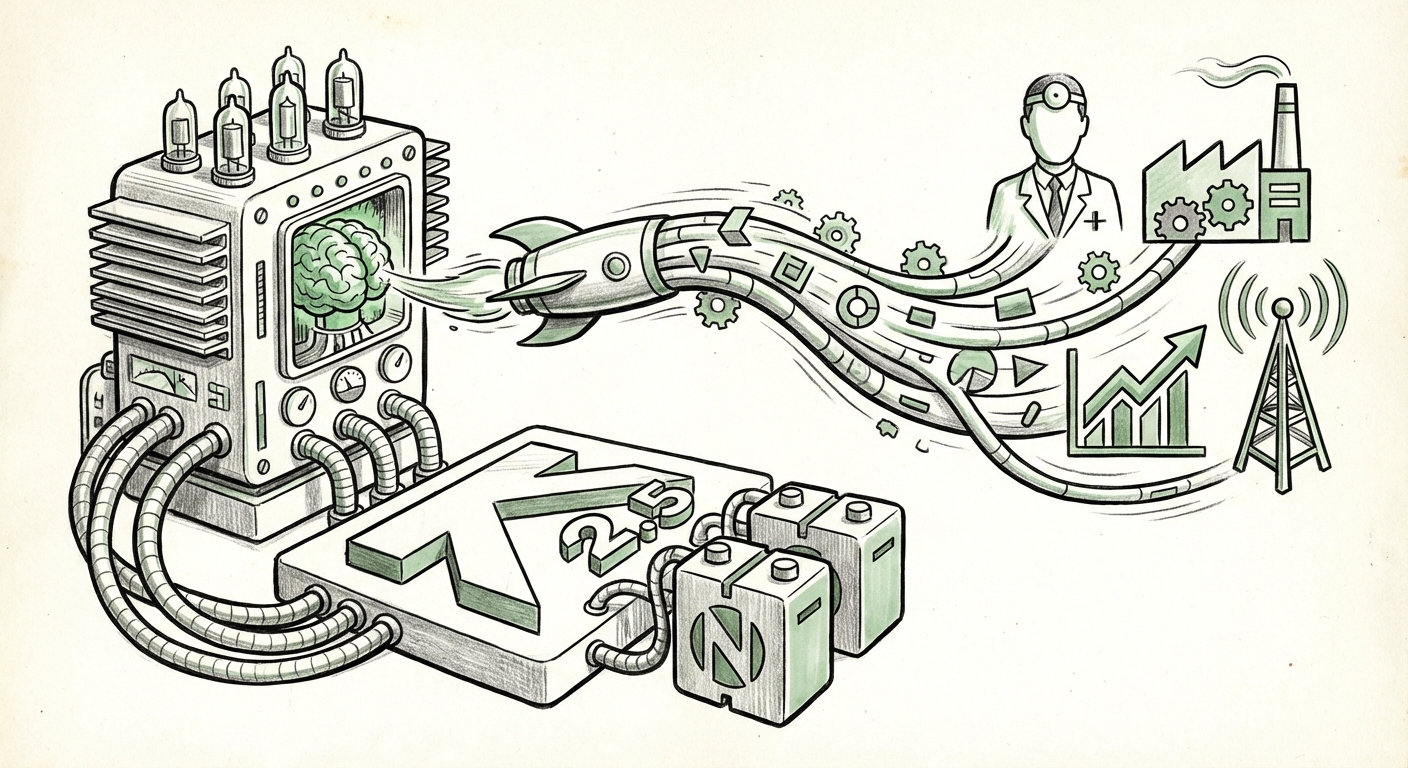
Chinese AI Video Maker Kling Raises $2 Billion — A New Era for Video Creation Is Here
The world of video creation is about to change in a big way. Kling, a Chinese company that builds artificial intelligence tools for making videos, just raised an eye-popping $2 billion. That is not a typo — two billion dollars. And the company is getting ready for an initial public offering (IPO) in Hong Kong. This is one of the largest funding rounds for an AI video company ever, and it sends a clear signal: the race to dominate AI-generated video is heating up fast.
For anyone who creates video content — whether you are a marketer, a filmmaker, a small business owner, or just someone who posts on social media — this news matters. It tells us where the technology is heading, how much money is flowing into it, and what we can expect in the very near future. Let us break down what happened, why it matters, and what it means for the future of AI and how we will all use it.
The Big Picture: What Just Happened?
Kling is not a household name yet — at least not outside of China. But inside the AI world, it is a major player. The company builds AI models that can generate realistic video clips from text prompts, images, or other video inputs. Think of it like ChatGPT for video — you type a description, and the AI creates a short video that matches your words. The quality has improved dramatically in the past year, and Kling is one of the leaders in this space.
Raising $2 billion is a massive vote of confidence. It means investors believe that AI-generated video is not just a cool demo — it is the future of the entire video production industry. The fact that Kling is also preparing for a Hong Kong IPO means the company is thinking about long-term growth and public market validation. This is not a small startup anymore. It is a serious contender in the global AI race.
The timing is also important. We are seeing an explosion of AI video tools — from companies like OpenAI with Sora, to startups like Runway and Pika, and now Kling. The competition is fierce, and the money is pouring in. This $2 billion round is one of the largest in the AI space, and it tells us that video is the next big frontier after text and images.
What Does Kling Actually Do?
To understand why this matters, it helps to know what Kling's technology can do. The company's AI models are designed to create high-quality, realistic video clips from simple text descriptions. For example, you could type "a cat walking through a sunny park in the autumn" and the AI would generate a short video that looks like it was filmed with a real camera. The models understand motion, lighting, perspective, and even some aspects of storytelling.
Unlike older video generation tools that produced choppy, cartoon-like results, modern AI video models — including Kling's — can create footage that is often hard to distinguish from real video. The technology uses something called diffusion models, similar to how image generators like DALL·E and Stable Diffusion work, but adapted for the much harder task of generating consistent, moving visuals over time.
One of the key challenges in AI video is keeping things consistent from frame to frame. Early models would often produce weird glitches — objects changing shape, colors shifting, backgrounds warping. Kling has made big strides in solving these problems, and that is why investors are willing to bet billions on the company. The technology is getting good enough to be useful for real-world applications.
Why $2 Billion? The Market Is Huge
So why are investors putting so much money into Kling? Because the market for video content is enormous, and AI is about to transform it completely.
Think about how much video is created every single day. YouTube, TikTok, Instagram, Facebook, Netflix, corporate training videos, advertisements, news clips, social media posts, educational content — the list goes on. Video is the most engaging form of media, and businesses and creators are constantly looking for faster, cheaper ways to produce it.
Right now, making a high-quality video requires cameras, lighting, actors, editors, animators, and a lot of time. AI video generation promises to cut that down dramatically. Instead of spending thousands of dollars and days of work, you could generate a professional-looking video in minutes with just a few text prompts. That is a massive value proposition, and companies are racing to capture that market.
The potential applications are huge:
- Marketing and advertising: Brands could generate countless video ads tailored to different audiences without filming anything.
- Film and entertainment: Filmmakers could storyboard scenes, create visual effects, or even generate entire short films using AI.
- Education and training: Companies could produce training videos on demand, customized for different roles or languages.
- Social media: Creators could pump out engaging video content faster than ever before.
- Gaming and virtual worlds: AI video could be used to generate cutscenes, backgrounds, and interactive environments.
The total addressable market is in the hundreds of billions of dollars. That is why $2 billion is not crazy — it is a bet on capturing a piece of that future.
What This Means for the Future of AI
This news tells us several important things about where AI is heading overall.
Video Is the Next Big Thing After Text and Images
We have seen AI master text (ChatGPT, Claude, Gemini) and images (DALL·E, Midjourney, Stable Diffusion). Video is the obvious next step, and it is much harder. Video requires consistency across time, realistic motion, sound synchronization, and often storytelling logic. The fact that Kling is raising this much money shows that investors believe video generation will become a core capability for AI, as important as text and images are today.
Chinese AI Companies Are Major Contenders
It is easy to focus on US-based companies like OpenAI and Google when thinking about AI progress. But Kling's massive funding round reminds us that Chinese AI companies are also advancing quickly. They have access to huge amounts of capital, a massive domestic market, and strong engineering talent. The global AI race is not just US versus China — it is a multipolar competition, and Kling is positioning itself as a leader in one of the most important subfields.
The Cost of Video Production Is About to Plummet
When AI video tools become widely available and reliable, the cost of producing video content will drop dramatically. This will democratize video creation — small businesses, educators, and individual creators will be able to make videos that look like they were produced by a professional studio. This could shift power away from traditional media companies and toward smaller, more agile players.
New Business Models Will Emerge
With AI video, we will see entirely new ways of making money. Imagine subscription services where you pay for a certain number of generated minutes per month. Or platforms where users share and remix AI-generated clips. Or marketplaces for AI video models fine-tuned for specific styles or industries. The IPO in Hong Kong suggests that Kling is thinking about how to build a lasting business around this technology, not just a research project.
Challenges and Concerns
Of course, all this progress comes with serious challenges. It would not be responsible to talk about the future of AI video without addressing the risks.
Deepfakes and Misinformation
The ability to generate realistic video from text raises obvious concerns about deepfakes and misinformation. Bad actors could create convincing videos of people saying or doing things they never did. This could be used for political manipulation, fraud, or harassment. As the technology gets better, the tools to detect fake video also need to improve. Companies like Kling have a responsibility to build safeguards — watermarks, content provenance tracking, and usage restrictions — to prevent abuse.
Job Displacement
Professional video editors, animators, cinematographers, and production crews may find their skills in less demand if AI can generate high-quality video automatically. This does not mean all those jobs disappear overnight, but the industry will change. Some roles will shift toward supervising and fine-tuning AI outputs rather than creating everything from scratch. Reskilling and adaptation will be necessary.
Copyright and Ownership
If an AI generates a video based on a text prompt, who owns the copyright? Is it the person who wrote the prompt? The company that built the AI? This is a legal gray area that courts and regulators are still figuring out. It will be especially complicated when AI models are trained on enormous datasets of existing video content, some of which may be copyrighted. These legal questions will need to be resolved for the market to mature.
Quality and Reliability
Even with Kling's advances, AI video generation is not perfect. The models can still produce glitches, unrealistic motion, or nonsensical scenes. For many commercial uses, the output needs to be reliable and consistent. The technology is good enough for some applications today, but it is not yet at the point where you would trust it for mission-critical video production without human oversight.
Practical Implications for Businesses and Creators
If you are a business leader, marketer, or content creator, here is what you should be thinking about right now.
Start Experimenting Now
If you have not tried AI video tools yet, now is the time. Even if the quality is not perfect, using these tools will help you understand their strengths and limitations. You will be better prepared when the technology improves and becomes more integrated into your workflow. Experiment with generating short clips for social media, product demos, or internal communications. Learn what works and what does not.
Think About Your Video Strategy
AI video will change how much video you can produce and at what cost. Start thinking about how you could use AI-generated video to augment your current production. Could you create personalized video messages for customers? Generate explainer videos for dozens of products instead of just a few? Produce video content in multiple languages without hiring voice actors? The possibilities are expanding fast.
Watch for the IPO
Kling's planned Hong Kong IPO will give the company access to even more capital and public market scrutiny. It will also make Kling more transparent — we will see financial results, user numbers, and growth metrics. For anyone following the AI video space, this will be a key event to watch. It could also signal that other AI video companies will pursue public listings, creating a new sector for investors.
Prepare for Ethical and Legal Questions
As AI video becomes more common, your organization will need policies around its use. When is it acceptable to use AI-generated video? How will you label it? What about consent from people whose likeness might appear in generated clips? These questions will only become more pressing as the technology spreads. Getting ahead of them now will save headaches later.
What Comes Next?
The $2 billion investment in Kling is a landmark moment. It shows that the world is betting big on AI-generated video. But this is still early days. The technology will improve rapidly over the next few years, and the companies that move quickly to adopt it will have a competitive advantage.
We can expect to see more funding rounds, more product launches, and more competition. The IPO in Hong Kong could be one of the most watched tech listings of the year. And as the tools become more accessible, the way we think about video production will change fundamentally.
For the average person, this means more video content, more personalized content, and more tools to create your own videos. For businesses, it means lower costs, faster production, and new opportunities to engage audiences. For society, it means grappling with the same questions we face with all powerful AI — how to use it responsibly, how to prevent misuse, and how to ensure the benefits are widely shared.
Final Thoughts
Kling raising $2 billion is not just a story about one company. It is a signal that the AI video revolution is real and accelerating. The technology is moving from research labs into the real world, and the money is following. Whether you are excited, worried, or just curious, this is a trend worth paying attention to.
The future of video is being written right now — and it is being written by AI.