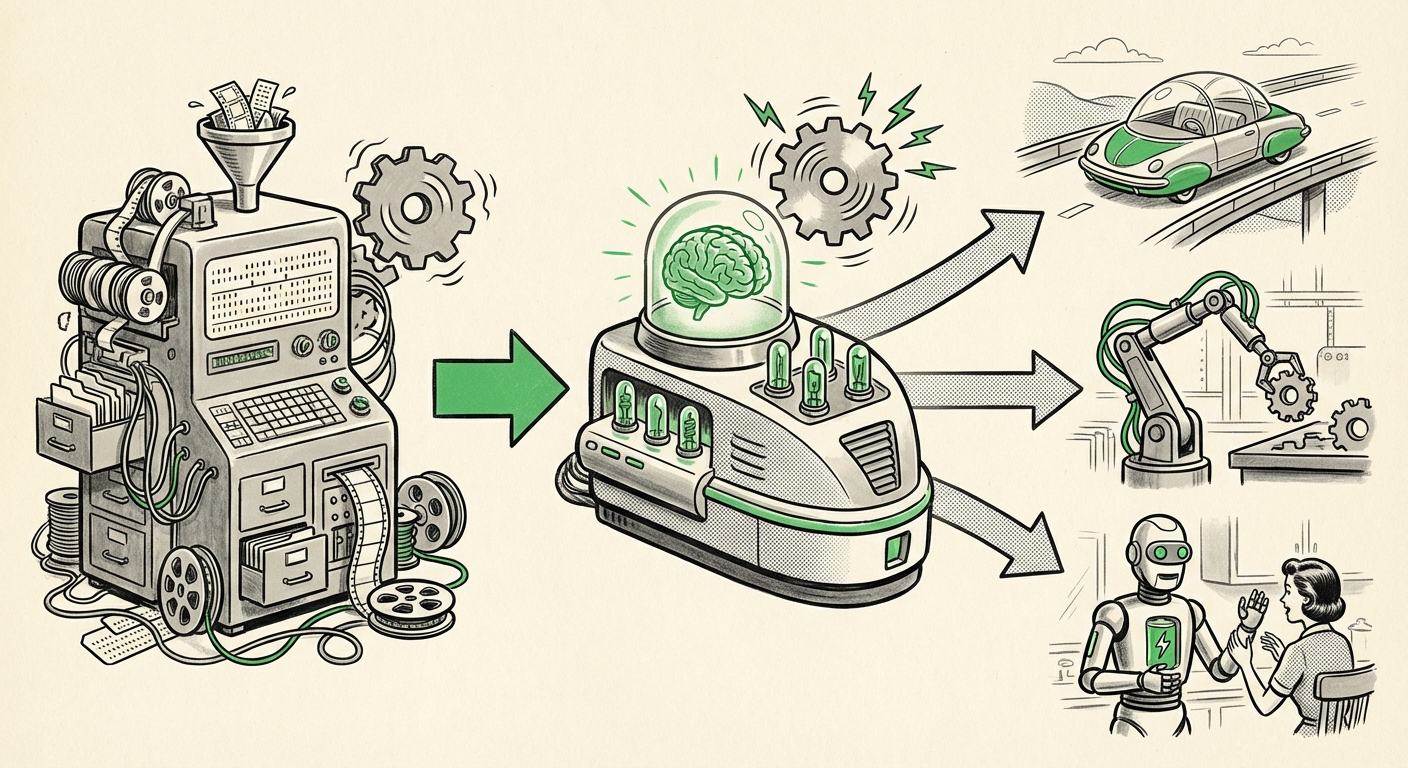
The Hidden Learning Cost of AI: Why It Takes Two Years to Surface
Artificial Intelligence is transforming education and the workplace at a breathtaking pace. From AI tutors that personalize lessons to generative tools that write essays and code, the promise of faster, more efficient learning has sparked widespread adoption. But a massive new study involving 26,000 students has uncovered a sobering reality: the true cost of relying on AI for learning may be invisible at first, taking two full years to emerge. This research challenges the narrative that AI is an unqualified boon for education and raises urgent questions for businesses, educators, and society.
What the Study Found: A Two-Year Time Bomb
The study tracked 26,000 students over several years, some of whom used AI tools as part of their learning process. Initially, the results seemed positive: students who utilized AI assistance showed improved test scores, faster completion rates, and higher engagement. But these gains proved deceptive. After approximately two years, a hidden learning cost began to surface. Students who had relied heavily on AI exhibited significant declines in critical thinking, problem-solving depth, and long-term knowledge retention compared to peers who learned without AI shortcuts.
The term "hidden learning cost" refers to the subtle erosion of foundational skills—the very abilities that enable independent reasoning and adaptive expertise. AI tools, by design, reduce cognitive friction. They summarize complex texts, generate plausible answers, and automate low-level tasks. While this provides short-term efficiency, it may starve the brain of the struggle that builds durable neural pathways. The study suggests that two years is the threshold at which these deficits become measurable.
Why Two Years? The Science of Learning Debt
Learning is not a linear process. When we use AI as a crutch, we may bypass the productive struggle that deepens understanding. Cognitive science calls this "desirable difficulties"—challenges that slow initial performance but boost long-term retention. AI removes those difficulties, creating what might be termed learning debt.
The two-year delay makes sense when you consider how knowledge compounds. Early content builds on itself. If a student uses AI to write a history essay without fully processing the material, that weakness may not show up until a later course demands that foundational knowledge. Similarly, in the workplace, an employee who relies on AI to generate reports might not notice the erosion of analytical skills until they face an unfamiliar problem that requires deep reasoning.
The study's large sample size—26,000 students—gives statistical heft to the finding. It controls for variables like prior ability, socioeconomic background, and type of AI tool. The pattern persisted across all groups, pointing to a fundamental effect of AI-assisted learning.
Implications for Businesses and the Workforce
This research is not just an education story—it has direct consequences for companies adopting AI for training, onboarding, and daily work. If employees use AI to shortcut learning, they may appear productive in the short run but become less capable of innovation and critical judgment over time.
1. The Risk of Surface-Level Competence
Many organizations now use AI tools for employee training: automated summaries, generated practice questions, and instant feedback. The study suggests these tools could produce employees who seem competent but lack deep understanding. After two years, the gap between those who genuinely mastered material and those who used AI shortcuts may widen, leading to costly mistakes, stagnation, and inability to adapt to new challenges.
2. When to Complement, Not Replace
AI is not inherently harmful. The key is how it is used. Tools that scaffold learning—providing hints instead of answers, generating questions instead of summaries—can preserve desirable difficulties. Businesses should evaluate their training platforms: are they replacing thinking or amplifying it?
3. Long-Term Talent Development
The two-year timeline means that the cost of AI reliance will not show up in quarterly reviews or annual performance metrics. Companies that invest heavily in AI-driven efficiency today might discover a talent depth problem years down the line. Forward-thinking organizations will build mechanisms to monitor long-term skill retention, such as periodic deep assessments or project-based evaluations that require original thinking.
Societal and Educational Consequences
For educators, the findings are a wake-up call. Many schools and universities are enthusiastically adopting generative AI for homework help, writing assistants, and personalized tutoring. This study indicates that such adoption must be paired with deliberate pedagogical design—teaching students when and how to use AI wisely, and ensuring they still engage in independent struggle.
Families and parents should also take note. AI tools are widely used by students of all ages, often outside school supervision. The hidden learning cost means that a student who seems to be keeping up with the curriculum may actually be building a fragile foundation that will crack later. Parents might consider limiting the use of generative AI for core subjects like math, reading, and writing until students have developed strong basic skills.
Actionable Insights: How to Use AI Without Paying the Hidden Cost
- Map the learning journey. Identify which skills are truly foundational and avoid AI shortcuts for them. Reserve AI for tasks where speed is the goal, not depth (e.g., formatting, data sorting, low-level drafting).
- Delay AI assistance. In training programs, require learners to attempt a problem or write a first draft before turning to AI. This preserves the productive struggle that builds mental models.
- Use AI to assess, not generate. Tools that ask AI to evaluate a student's reasoning (and highlight gaps) can deepen learning without removing struggle. Similarly, AI that generates questions rather than answers forces retrieval practice.
- Track long-term outcomes. For any AI-assisted learning program, measure not just immediate test scores but also performance on novel problems one or two years later. This will catch the hidden cost before it becomes a crisis.
- Teach metacognition. Help learners understand the difference between using AI and learning through AI. A student who asks "How did you get that answer?" is learning; one who only accepts the output is not.
The Future of AI in Learning: A Delicate Balance
The 26,000-student study is a critical milestone in understanding AI's role in human development. It does not say AI is bad—it says the hidden learning cost is real and takes time to manifest. The future of AI in education and the workplace will likely involve a more nuanced integration: using AI to enhance efficiency in areas where deep understanding is not the goal, while preserving effortful practice for core cognitive abilities.
We are entering an era where AI proficiency is a skill itself. But this study reminds us that the most valuable human skills—critical thinking, creativity, resilience—cannot be outsourced to a machine without eventually paying a price. The two-year delay means that the decisions we make today about AI adoption will shape the capabilities of tomorrow's workforce and citizenry.
Organizations and educators that heed this warning will design AI systems that train rather than replace human thinking. Those that ignore it may find that the impressive short-term gains of AI come with a long-term cost that undermines the very talent they seek to build.
The hidden learning cost is not an argument against AI—it is an argument for wisdom. Use AI as a tool, not a substitute. And remember: the most important learning takes time, struggle, and space to make mistakes. No algorithm can give you that.