Anthropic Targets Neglected Diseases: How AI Drug Discovery Could Reshape Medicine
Imagine a world where the most devastating diseases — the ones big drug companies often ignore because they aren't profitable enough — finally get the attention they deserve. That world moved a step closer to reality recently when a leading AI company announced it would launch its own drug discovery programs aimed specifically at tackling diseases that Big Pharma considers unprofitable. This move marks a pivotal shift in how artificial intelligence is being applied to healthcare, and it carries huge implications for the future of medicine, business, and society.
The initiative, announced in early July 2026, sees a major player in the AI space formally stepping into the pharmaceutical arena with internal research programs. Instead of merely licensing its technology to traditional drugmakers or partnering with existing firms, this company is taking on the risk and reward of drug development itself — and it's doing so for conditions that have long been neglected by the industry because the return on investment is too low.
This is not just a story about one company’s strategic pivot. It is a signal that AI has reached a maturity point where it can fundamentally alter the economics of drug discovery. When the technology is powerful enough to make researching a "non-profitable" disease financially viable, the entire landscape of global health stands to change.
What the Announcement Really Means
According to the details released, the company's drug discovery programs will focus on diseases that the pharmaceutical industry has largely abandoned due to limited market size, high development risk, or low pricing potential. These could include rare genetic disorders, infections primarily affecting low-income populations, and conditions that affect small patient groups — all areas where traditional drug development costs far outweigh potential revenues.
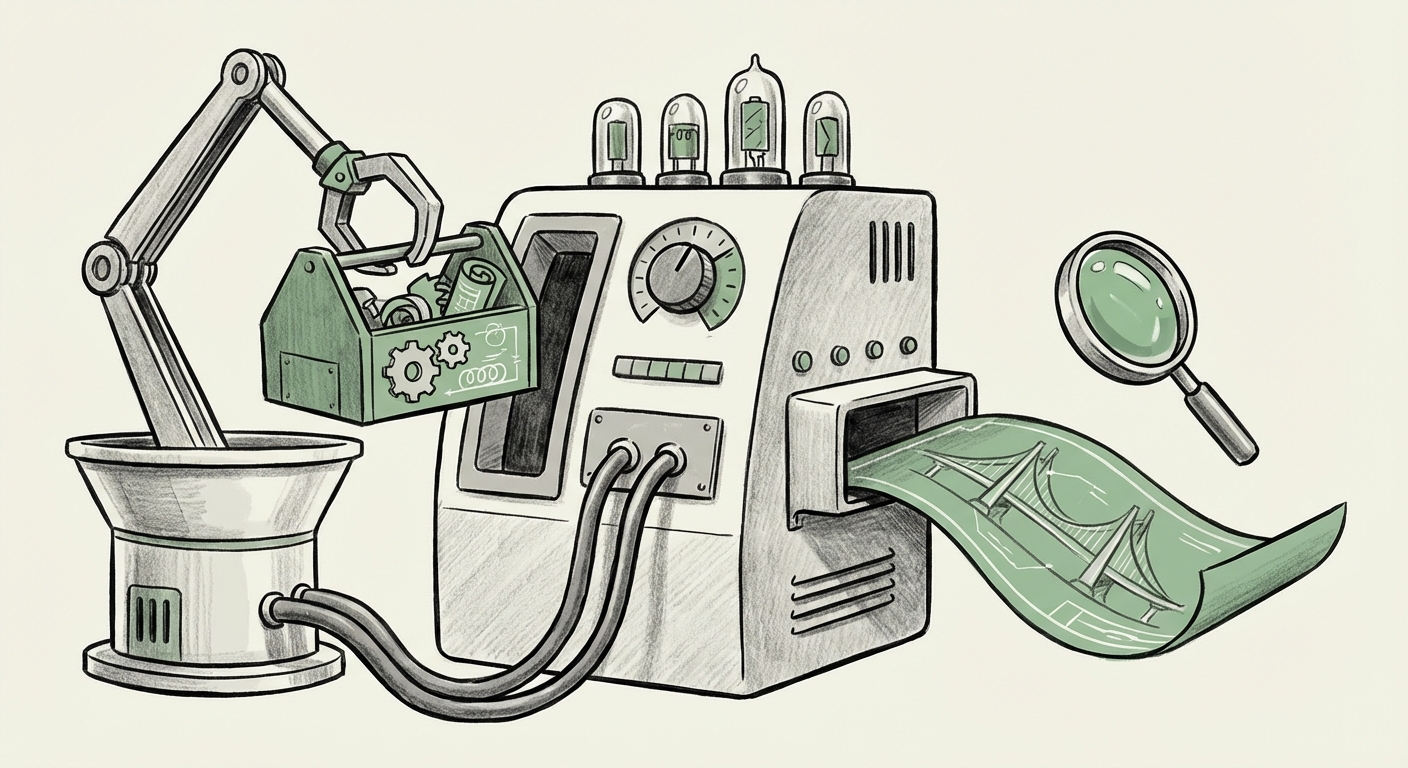
The key weapon in this effort is AI. The company plans to use its advanced machine learning models to dramatically speed up and lower the cost of identifying promising drug candidates, predicting their safety and efficacy, and optimizing chemical structures. By automating steps that traditionally take years and hundreds of millions of dollars, AI can compress the timeline and reduce the financial barrier that keeps many treatments from ever reaching patients.
What is especially noteworthy is the decision to pursue in-house drug programs rather than just selling software or services. This vertical integration means the AI firm is prepared to take on the full responsibility of regulatory approval, clinical trials, and eventual manufacturing — a complex and expensive undertaking that few technology companies have ever attempted alone.
Why This Matters for the Future of AI
For years, AI in drug discovery has been promising to revolutionize the way we find new medicines. Many startups and big pharma partners have used machine learning to screen molecules, predict toxicity, and design new compounds. But most of those efforts remained tied to commercial incentives — they were applied to blockbuster drugs where the payoff was highest.
This announcement changes the narrative. It demonstrates that AI can be powerful enough to make previously impossible economics possible. When a company voluntarily takes on the challenge of diseases that the market has failed, it proves that AI’s cost-reduction potential is real and significant. This will likely encourage other AI firms and even nonprofit organizations to follow suit, creating a new wave of drug development aimed at underserved patients.
Additionally, this move puts AI squarely in the driver's seat of life-or-death decisions. Instead of being a support tool for pharmaceutical executives, AI becomes the core engine of discovery. The models themselves will prioritize which diseases to target, which molecules to test, and which hypotheses to pursue. This represents a leap in autonomy for AI systems — and with it comes the need for careful oversight and ethical guardrails.
The technology behind this is not magic. It builds on years of progress in generative models, reinforcement learning, and large-scale biological data analysis. The same underlying architectures that power language models and image generators are now being retrained to understand protein structures, chemical interactions, and clinical outcomes. As these models become more accurate and data-rich, they can propose novel drug candidates that human researchers might never have considered.
Implications for Business and the Pharmaceutical Industry
The entry of a major AI company into direct drug development sends ripples across the pharmaceutical landscape. Traditional drugmakers must now recognize that their most promising technology partners might become competitors. AI firms that previously offered just software could pivot to become biotechs themselves, capturing more of the value chain. This could accelerate consolidation, partnerships, or even new business models where AI companies license their discoveries to bigger pharma firms for late-stage development and distribution.
For investors, this opens up a new asset class: AI-native drug developers that focus on neglected diseases. These ventures may carry lower revenue expectations but also lower competition and the potential for breakthrough outcomes. Venture capital and government funding agencies may see this as a high-impact investment opportunity with strong social returns.
For patients, the most direct benefit is hope. Thousands of diseases — many of them fatal or severely debilitating — have no approved treatments because the market couldn't justify the cost of development. AI may now be able to fill that gap. Conditions like Niemann-Pick disease, certain parasitic infections, and ultra-rare genetic syndromes could finally see active research programs.
Society as a whole stands to gain from a more equitable distribution of medical research. When profit alone determines which diseases receive attention, we end up with a system that over-treats common ailments in wealthy countries while ignoring rare or tropical diseases that cause immense suffering elsewhere. AI-driven economics can help correct that imbalance by slashing the cost of discovery to the point where smaller patient populations become viable.
Challenges and Risks Ahead
No major shift comes without challenges. Drug development is notoriously difficult and failure rates remain high even with advanced AI. The models may propose molecules that look good on paper but fail in human trials due to unforeseen side effects or biological complexity. Also, the regulatory pathway for AI-designed drugs is still evolving — agencies like the FDA are developing frameworks to evaluate clinical data generated by machine learning, but clear guidelines are not yet fully in place.
There are also ethical questions about who gets to decide which neglected diseases are prioritized. An AI model trained on available data may have biases: it might favor diseases with more published research (often those in wealthy countries) over conditions that lack basic biological understanding. Ensuring that AI addresses true unmet needs requires deliberate human oversight, diverse input, and a commitment to equity.
Moreover, the cost of running clinical trials and scaling up manufacturing remains substantial even after AI-driven discovery. While AI can reduce early-stage costs, the later stages still require tens or hundreds of millions of dollars. The AI company behind this initiative will need strong financial backing, strategic partnerships, or dedicated funding to see its programs through to approval.
Actionable Insights for Businesses and Professionals
For pharmaceutical executives, the message is clear: now is the time to invest deeply in AI capabilities — not just as a partner but as a core competency. Those who treat AI as a mere tool risk being disrupted by AI-native companies that can bring drugs to market faster and cheaper, especially in underserved areas.
For technology leaders, this example shows the potential of vertical integration. If your AI model excels in a domain, consider moving beyond selling subscriptions to building your own products. The rewards — both financial and societal — can be enormous, but the risks require strong domain expertise and patient capital.
For policymakers and philanthropists, this development offers a chance to catalyze a new era of public-interest drug development. Funding initiatives that support AI research into neglected diseases, creating regulatory "fast lanes" for treatments addressing high unmet need, and establishing public-private partnerships can accelerate this trend and ensure its benefits reach the most vulnerable.
For healthcare professionals, staying informed about AI-driven discoveries will become increasingly important. In the next five to ten years, entirely new classes of drugs — designed by algorithms — may enter the clinic. Understanding how these treatments were created, what data supports them, and how they differ from traditional drugs will be essential for responsible patient care.
Conclusion: A New Frontier for AI and Medicine
The decision to launch in-house drug discovery programs targeting diseases Big Pharma considers unprofitable is more than a corporate strategy. It is a proof point that AI has matured to a stage where it can rewrite the economics of one of the most expensive and high-stakes industries in the world. By demonstrating that even "unprofitable" diseases can be tackled with machine learning, this company is opening a door that has been closed for decades.
We are likely to see a cascade of similar announcements in the coming months and years. Other AI firms will realize that they too can become biotech companies. Nonprofits will leverage open-source models to attack neglected tropical diseases. Governments will realize that funding AI-driven drug discovery is among the most cost-effective ways to improve public health.
The future of AI is not just about chatbots or image generators. It is about using intelligence — artificial and human — to solve the hardest problems we face. And right now, one of the hardest problems is the silent suffering of millions of people who have no treatment because the market didn't care. AI is about to make the market care.