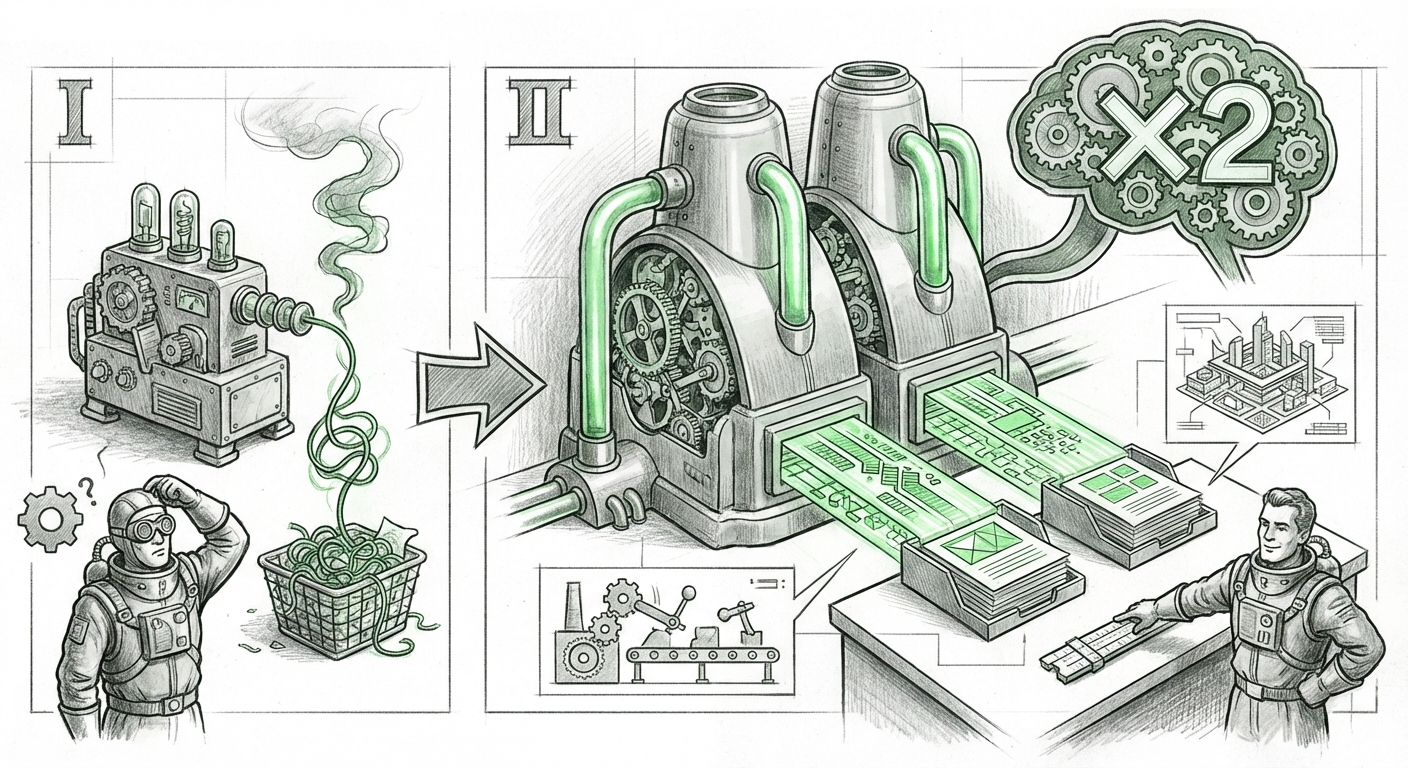
The Hidden Skill That Makes AI Work Better: Why Finding Your Own Blind Spots Comes First
For years, the conversation around using large language models has focused on one thing: how to write better prompts. People want the magic phrase, the perfect template, the secret syntax that unlocks AI's full potential. But a fundamental shift is happening in how the most advanced AI developers and power users approach this problem. The latest thinking, emerging directly from those who build and train these systems, points to a surprising truth: the most important part of prompting isn't about the AI at all. It is about finding your own blind spots first.
This insight is not just a clever productivity hack. It represents a deep change in how we think about working with AI. Instead of treating the model as a tool we command, the new paradigm treats it as a partner we must learn to communicate with honestly. And that starts with radical self-awareness about what we do not know, what we assume, and where our own thinking is incomplete.
The Old Way vs. The New Way
To understand why this shift matters, it helps to look at how most people have been using AI. The typical approach goes something like this: a person has a task, writes a prompt, gets a response, and either accepts it or tweaks the prompt until the answer looks right. The feedback loop is entirely about what the AI produced. If the answer was wrong, the user assumes the AI misunderstood. So they add more detail, rephrase the request, or escalate to a more specific command.
This works in simple cases. But for complex, high-stakes work where quality really matters, this approach has a hidden flaw. The AI can only respond to what you give it. If your question is built on a shaky assumption, the AI will produce a confident answer that fits that assumption. It will not correct you. It will not ask if you are sure. It will simply dance in the direction you push it. The result is an answer that sounds perfect but is built on a foundation you did not check.
The new approach flips this entirely. Before you even open a chat window, you pause and examine your own thinking. What facts am I assuming here? Where might I be wrong? What context am I leaving out because it feels obvious to me? Only after you have uncovered your own blind spots do you begin crafting the prompt. The AI becomes a mirror for your own thinking, not just a machine that spits out answers.
Why Blind Spots Are So Dangerous with AI
Human beings are naturally bad at seeing their own blind spots. It is a well-known psychological bias called the blind spot bias — the tendency to see flaws in others more easily than in ourselves. When we apply this to AI use, the problem becomes multiplied. The AI is so fluent, so confident in its language, that it makes our assumptions look correct. It fills in gaps we did not know existed with plausible-sounding text that is often wrong.
Consider a common business scenario. A product manager asks an AI to write a competitive analysis for a new feature. The manager knows the market well and assumes certain competitors are the biggest threats. The AI produces a polished report confirming those assumptions. The manager feels validated. But the AI never pointed out that the biggest competitor actually comes from a different industry altogether, or that a key trend the manager missed changes everything. The blind spot stayed hidden. The report was convincing but incomplete.
This is the real danger of AI in professional settings. The technology is so good at making things sound right that it can actually make us more confident in our own errors. The antidote is to deliberately surface those blind spots before the AI ever generates a word.
The Practical Method: How to Find Your Blind Spots
The new prompting philosophy breaks down into a few concrete steps that anyone can use. These are not theoretical — they are being applied by the teams building AI systems to get better results from their own models.
Step one: Write down everything you assume. Before you ask the AI anything, take five minutes and list what you already believe about the topic. What facts are you taking for granted? What conclusions have you already reached? What sources do you trust? Write it all down. This becomes your raw material for the next step.
Step two: Challenge each assumption. Go through your list and actively argue against each point. For every "I know this is true," ask yourself "what if it is not?" This is uncomfortable. It feels unnatural to doubt your own knowledge. But that is exactly the point. The things you are most sure about are often the biggest blind spots because you never question them.
Step three: Ask the AI to help you find what you missed. Instead of asking for the final answer first, start with a meta-prompt. Something like: "I am about to ask you about X. Here is what I believe to be true. Can you point out any assumptions I might be making that could be wrong? Can you suggest areas where my knowledge might be incomplete?" Let the AI play the role of a critical friend who challenges you, not a yes-man who agrees with everything.
Step four: Build your final prompt from the corrected foundation. Now that you have surfaced some blind spots, you can craft a prompt that explicitly accounts for them. You can ask the AI to consider alternatives, to explain where it is uncertain, and to highlight what it does not know. The resulting output will be far more robust because the input was honest about its own limits.
What This Means for Businesses
For companies adopting AI, this insight has immediate practical implications. Most organizations are investing in prompt libraries, training programs, and guidelines that teach employees how to write better requests. That is useful, but it misses the deeper leverage point. The real skill that delivers the highest return is not prompt engineering. It is critical thinking about one's own knowledge.
Businesses that train their teams to identify blind spots before engaging with AI will get dramatically better results than those that focus on syntax alone. This is true across every function — from marketing and strategy to engineering and customer support. A marketer who surfaces their own biases about a target audience will get more accurate personas. A strategist who acknowledges what they do not know about a market will get more useful competitive analysis. A developer who questions their own assumptions about a system architecture will get better code suggestions.
The economic impact is significant. Companies waste enormous resources on bad decisions that feel right because the data and analysis supporting them look polished. When AI makes bad ideas look good, the cost of those mistakes multiplies. Investing in blind-spot awareness is, in effect, an insurance policy against confident but wrong decisions.
The Future of Human-AI Collaboration
Looking ahead, this shift points to a broader evolution in how humans and AI work together. The early phase of AI adoption was about learning to command the machine. The next phase is about learning to collaborate with it. And collaboration requires honesty. You cannot collaborate with a tool if you are hiding your own doubts from yourself.
Future AI systems will likely become better at detecting blind spots on their own. They may ask probing questions before answering. They may flag inconsistencies in the user's assumptions. They may even refuse to answer until the user provides more context. Some of this capability already exists in research systems. But even with smarter AI, the human side of the equation remains critical. The AI can suggest you might have a blind spot, but only you can do the work of examining your own thinking.
This also changes how we think about AI literacy. Right now, most definitions of AI literacy focus on technical skills: how models work, how to write prompts, how to evaluate outputs. Those are important. But the deeper literacy is psychological. It is the ability to recognize your own cognitive biases, to tolerate the discomfort of not knowing, and to actively seek out what you are missing. These are human skills, not technical ones. And they will become more valuable, not less, as AI gets smarter.
Actionable Insights for Individuals
For anyone who uses AI regularly, the practical takeaways from this are clear. Start every interaction by asking yourself what you are taking for granted. Make it a habit to list your assumptions in a separate document or note before prompting. Develop the discipline of playing devil's advocate against your own position. And use the AI as a partner in that process, not just as an answer machine.
Try this experiment. The next time you have an important question for an AI, spend five minutes writing down your assumptions. Then prompt the AI to critique them. Then compare what you get to what you would have gotten with your usual direct question. The difference will surprise you. The answer will be more nuanced, more complete, and more honest about its own limits. That is the power of leading with your blind spots.
Where This Is Headed
The teams building cutting-edge AI systems are increasingly focused on what they call "alignment" — making sure AI understands what humans actually want. But alignment is a two-way street. Humans also need to understand what they want and what they do not know. The prompting tips coming out of the most advanced development groups are not about clever tricks. They are about this fundamental truth: the quality of what you get from AI is capped by the quality of what you put in, and what you put in starts with honest self-assessment.
As AI becomes more integrated into every aspect of work and life, the ability to surface blind spots will become a core professional skill. It will be taught in schools, practiced in teams, and valued in leaders. The people who master it will not just get better answers from AI. They will make better decisions overall, because they will have built the habit of questioning their own thinking.
This is, in a way, the opposite of what many people fear about AI. There is a widespread worry that AI will make us lazy thinkers, that we will outsource our judgment to machines and lose our critical faculties. But the new prompting philosophy suggests the opposite. The best use of AI does not let us think less. It forces us to think more, and more carefully, about the things we take for granted. It holds up a mirror to our own assumptions. And in that mirror, we have the chance to see ourselves more clearly than we ever could alone.