Claude Code and Fable 5 Just Ported a 2003 PC Game to Native iOS in "a Few Hours" — Here's What That Means for the Future of Software
Imagine taking a twenty-year-old PC game, built for a completely different operating system, and turning it into a fully native iPhone app — in the time it takes to watch a movie trilogy. That's exactly what just happened, and it's not a publicity stunt. It's a signal that the way we build software is about to change forever.
Using Claude Code and Fable 5, a team ported the 2003 PC game Command & Conquer to native iOS in just a few hours. The 2003 version of Command & Conquer was written in C++, designed for Windows, and ran on hardware that most people today would call a museum piece. Turning that into a touch-friendly, modern iOS app used to take weeks or months of painstaking manual work. Now, with the right AI tools, it's an afternoon project.
This isn't just a cool demo for retro gamers. It's a powerful demonstration of where AI-powered software development is heading, and every business leader, developer, and tech strategist should be paying attention.
The "A Few Hours" Revolution
The key phrase here is "a few hours." That's the headline. To understand why this is such a big deal, you have to understand what porting a game actually involves.
When you port a game from one platform to another, you're not just copy-pasting files. You have to:
- Translate the code: The original game is written in C++ for Windows. iOS apps are built with Swift, Objective-C, or C++ compiled for ARM. The graphics, sound, input, and file systems are all different.
- Redesign the interface: A mouse-and-keyboard game like Command & Conquer uses right-click menus, keyboard shortcuts, and a cursor. On iOS, everything needs to work with touch gestures, a virtual keyboard, and a much smaller screen. The interface has to be completely rethought.
- Adapt the engine: The game's rendering engine, audio system, and memory management all expect Windows APIs. On iOS, those don't exist. You'd normally need to rewrite large sections to use Apple's Metal graphics API, Core Audio, and iOS memory management.
- Test and debug: A port that compiles but crashes on the second level isn't a port. Testing on real devices, catching edge cases, and fixing bugs usually takes as long as the initial port itself.
In the hands of a skilled developer without AI, this kind of project would take at least a couple of weeks — and that's if they already had experience with both platforms. For most teams, it would be a month-long project, easily. Doing it in a few hours changes the economics entirely. It means a project that would have cost tens of thousands of dollars in developer time just got done for the price of a few hours of cloud compute and some prompt engineering.
How Claude Code and Fable 5 Made It Possible
To understand the breakthrough, you need to know what each tool brings to the table.
Claude Code is an AI coding assistant from Anthropic. It's not just an autocomplete or a chat bot that writes snippets. Claude Code can understand entire codebases, reason about their architecture, and make complex, cross-file changes. It can read a 2003 C++ codebase, figure out what each function does, and then generate equivalent code for iOS frameworks. It handles the kind of deep, structural work that earlier AI coding tools struggled with — like understanding the difference between a DirectX graphics call and a Metal graphics call, or translating Windows file I/O operations to iOS equivalents.
Fable 5 is a modern game development framework and engine that emphasizes rapid iteration and cross-platform deployment. It's designed to work seamlessly with AI-assisted workflows, meaning the AI can generate code that fits naturally into Fable's architecture. Fable 5 handles a lot of the boilerplate and platform-specific plumbing, so the AI can focus on the actual game logic and user interface.
When you combine them, you get a workflow that looks like this:
- The team feeds the original C++ source code into Claude Code.
- Claude Code analyzes the code structure, identifies platform-specific calls, and generates replacements using Fable 5's APIs.
- The AI handles the graphics rendering, audio playback, file management, and user input translation.
- The team iterates, testing the output on iOS devices and asking Claude Code to fix bugs or polish the interface.
- In a few hours, the 2003 PC game is running natively on an iPhone.
This is a fundamentally different workflow from traditional software development. Instead of a human writing every line of code, the human acts as an architect and quality controller. They describe what needs to happen, the AI generates the implementation, and the human reviews, tests, and refines.
What This Means for the Future of Software Development
This single demo points to several bigger shifts that are coming, and coming fast.
Legacy Code Modernization Goes from "Impossible" to "Afternoon Project"
Every major company has mountains of legacy code — old C++ applications, COBOL mainframe systems, Java 1.4 enterprise apps — that are expensive to maintain and nearly impossible to modernize. The business case for rewriting them rarely made sense. Why spend six months and a million dollars to port a system that works?
When AI can take that legacy codebase and generate a modern, platform-native equivalent in hours, the math changes completely. Companies will be able to drag their oldest, creakiest systems into the modern era without the usual cost and risk. This isn't just about games. Every industry with aging software infrastructure — banking, insurance, logistics, government — could benefit from this capability.
Cross-Platform Porting Becomes a Commodity
If you can port a complex C++ game from Windows to iOS in hours, the same approach applies to going from Windows to Android, macOS to Linux, or even from desktop to web. The platform-specific code is exactly the kind of mechanical, well-defined translation problem that AI excels at.
Software vendors who used to maintain separate teams for each platform will start to consolidate. The AI handles the translation; the human team focuses on the unique value of the software. This could dramatically reduce development costs and speed up time-to-market for multi-platform releases.
Indie and Retro Gaming Renaissance
For the gaming industry specifically, this is huge. Thousands of classic PC games from the 1990s and 2000s are locked on old platforms. They're abandonware, trapped on Windows XP or older systems, because no publisher was willing to pay for a modern port. Now, a two-person team with an AI assistant could port a dozen classic games in a week.
This could unlock a massive library of retro content for modern mobile and console platforms. Publishers and rights holders will face a new question: if porting is this cheap and fast, are you leaving money on the table by not bringing your back catalog to current devices?
What This Means for Business Leaders
If you're a CTO, VP of Engineering, or product leader, there are several implications you should be thinking about today.
Your cost to deliver software is about to drop — but so is your competitor's. The same AI tools that let your team port a game in hours are available to everyone. The barrier to entry for building cross-platform applications is falling. The competitive advantage will come not from who can write the most lines of code, but from who can best describe what the code should do and how to validate it works.
Your legacy systems are no longer stranded assets. If you have old software that you've been planning to rewrite for years, now is the time to explore what AI-assisted porting can do. The cost of not modernizing is the same as it always was, but the cost of modernizing just got a lot lower.
The skills you need are changing. You don't need a team of 10 platform-specific developers to maintain four different versions of your product. You need a smaller team of strong architects who understand the product deeply and can guide AI tools to generate high-quality, platform-specific code. The best developers of the future won't be the ones who know every API by heart. They'll be the ones who can ask the right questions and spot when the AI's output needs correction.
Speed to market becomes a different game. When a project that takes a month can be compressed into an afternoon, your product cycles change. You can experiment more. You can pivot faster. You can test a new platform in a day and decide whether to invest further. The rhythm of software development is speeding up.
The Challenges That Remain
For all the promise, there are still real limitations. The Command & Conquer port was a demo, not a polished commercial release. The AI could handle the mechanical translation, but there are likely still rough edges — performance tuning, touch interface refinements, edge-case bugs — that require human attention. A "few hours" gets you a working build, not necessarily a shipping product.
There's also the question of code quality and maintainability. Code generated by an AI tends to work, but it may not be written in the style or structure a human team would choose. If you need to modify that code six months later, will it be readable? Will it be well-architected? These are open questions that will need to be addressed as the technology matures.
And finally, there's the licensing and intellectual property angle. Taking a 2003 game and porting it with AI raises questions about who owns the generated code, whether the original license terms cover AI-driven translation, and how rights holders should approach this new capability. The technology is ahead of the legal framework, and that's likely to create complexity in the short term.
Practical Actionable Insights
Here's what you can do right now, based on this development:
- Start experimenting with AI-assisted porting on a small, non-critical project. Pick a legacy application or a simple game, use Claude Code or a similar tool, and see what happens. The learning curve is real, and you want to climb it before you have a high-stakes project.
- Audit your legacy codebase with an eye for AI translation. Which of your old systems would be most valuable if they could run on modern platforms? Prioritize them for an AI-assisted porting trial.
- Invest in training your developers to work with AI tools. The skills of prompt engineering, code review for AI-generated output, and architectural guidance are becoming just as important as traditional coding skills. Make sure your team has time to learn them.
- Rethink your cross-platform strategy. If you currently maintain separate codebases for different platforms, consider whether an AI-mediated approach could let you consolidate. The cost savings could be significant.
- Watch the legal landscape. The copyright and licensing questions around AI-generated derivative works are unresolved. Stay informed and consult legal counsel before porting any commercial product that you don't fully own.
The Bigger Picture: AI as a Translation Layer
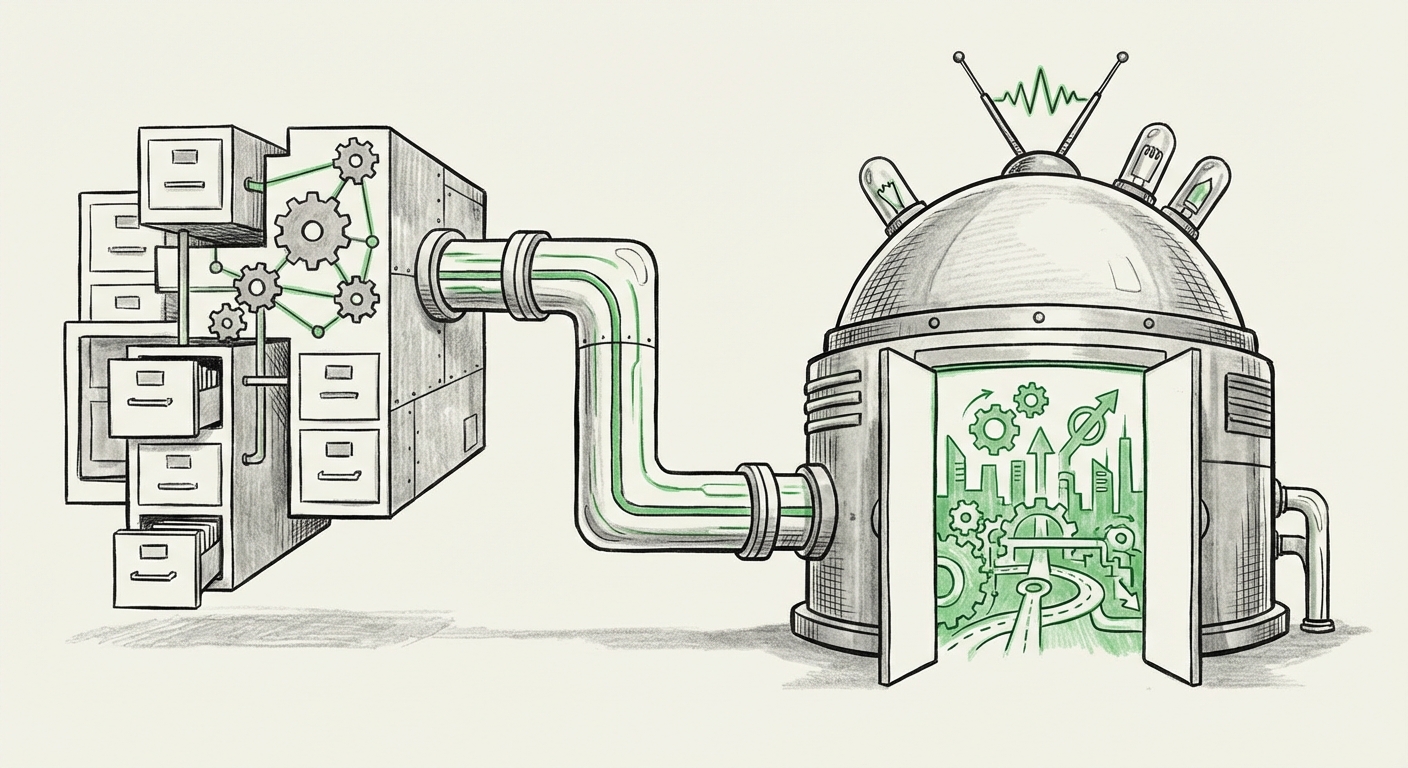
What makes the Command & Conquer port so striking is that it's part of a larger pattern. AI is becoming a universal translation layer — not just for human languages, but for code, for logic, for entire software ecosystems. It can read a program written in one language, for one platform, with one set of assumptions, and produce an equivalent program for a completely different environment.
Think about what that means for software preservation alone. Thousands of games, business applications, and creative tools are stuck on obsolete platforms. As platforms like Windows, macOS, iOS, and Android continue to evolve, our ability to keep old software alive has always depended on expensive, manual porting. AI changes that. It turns software archaeology into a repeatable, automated process.
For the broader AI landscape, this demonstration proves that we're past the point of AI being useful only for generating boilerplate or answering coding questions. AI can now reason about entire architectures, understand dependencies, and make cross-system translations that used to require deep expertise in both the source and target platforms. That's a qualitative leap.
The "a few hours" port of Command & Conquer is a bellwether. It shows us a future where the speed of software development is limited not by how fast humans can type or debug, but by how quickly they can describe what they want and verify what they get. The role of the developer shifts from writing every line to designing the system and validating the output. The role of the business shifts from funding long development cycles to making faster, more frequent bets on what to build.
This future is not five years away. It's here. The tools exist. They worked. A 2003 PC game is running on an iPhone thanks to a few hours of work with Claude Code and Fable 5. The question is no longer whether AI can do this kind of work. It's whether you're ready to take advantage of it.