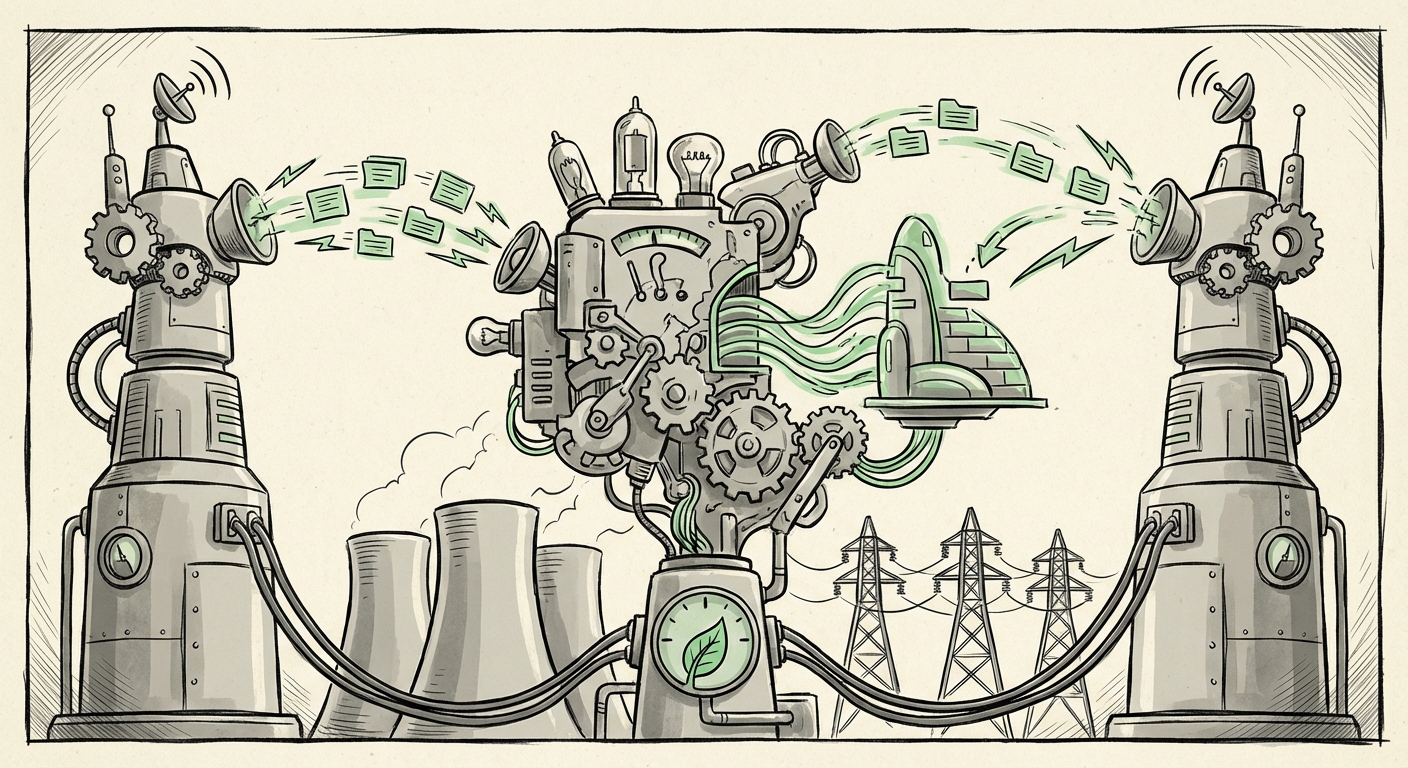
What the Sunset of Amazon Mechanical Turk Means for the Future of AI
In a quiet but seismic shift for the artificial intelligence industry, Amazon has officially sunset its groundbreaking platform, Amazon Mechanical Turk (often called MTurk). Launched in 2005, MTurk was the original "artificial artificial intelligence" — a marketplace where humans performed small, repetitive tasks that computers couldn't yet handle. For two decades, it powered the training data for countless AI models, enabled academic research, and provided a source of income for thousands of "Turkers" around the world. With its closure now official, the AI community must grapple with what this means for the future of machine learning, data annotation, and the evolving relationship between humans and machines.
The Legacy of Mechanical Turk: From Humans-as-AI to AI-Replacing-Humans
When Amazon launched Mechanical Turk, the concept was novel: break down complex tasks into micro-tasks that human workers could complete in seconds. Requesters would post batches of work — from image tagging and text transcription to sentiment analysis — and workers would pick them up for small payments. The name itself came from an 18th-century chess-playing "automaton" that was secretly operated by a human inside the cabinet. It was the perfect metaphor: AI that was actually human.
MTurk became the backbone of early commercial AI. Companies used it to build labeled datasets for image recognition, natural language processing, and recommendation systems. Without MTurk, many of today's AI breakthroughs would have taken much longer. It democratized access to human intelligence for startups and researchers who couldn't afford large annotation teams.
But as the saying goes, "what got you here won't get you there." Over the past five years, advances in self-supervised learning, synthetic data generation, and foundation models reduced the need for human-labeled data. At the same time, concerns about worker pay, ethical treatment, and data quality grew louder. The sunset of MTurk is not just the end of a platform — it's a symbolic milestone in AI's transition from a human-assisted infancy to a fully autonomous adolescence.
What Drove the Shutdown?
While Amazon has not released detailed public statements, the timing of the sunset — mid-2026 — aligns with several converging trends. First, the rise of large language models and vision transformers means that many tasks once sent to MTurk — like rewriting sentences or identifying objects — can now be handled by AI itself with near-human accuracy. Companies like OpenAI, Google, and Meta have demonstrated that with enough compute and data, models can learn from vast unlabeled datasets, drastically reducing the need for manual annotation.
Second, the gig economy has seen increasing regulatory scrutiny. MTurk workers have long complained about low wages, lack of benefits, and opaque rejection policies. Some estimates put the median hourly pay at less than $3. As governments worldwide enact stricter labor protections for platform workers, maintaining a low-cost, unregulated workforce becomes legally risky.
Third, Amazon's own focus has shifted. The company is investing heavily in warehouse automation, cloud AI services (Bedrock, SageMaker), and autonomous everything. A legacy platform that relies on human "turking" no longer fits the brand narrative of cutting-edge technology. Sunsetting MTurk sends a clear signal: the future of AI does not involve humans doing the drudge work — at least not the way we've known it.
The Immediate Impact: Who Gets Affected?
The shutdown has ripple effects across three main groups: requesters, workers, and the broader AI ecosystem.
Requesters — the researchers, startups, and enterprises that used MTurk for data annotation — now need alternative solutions. Some have already migrated to specialized platforms like Appen, Scale AI, or TaskRabbit. Others are exploring automated annotation tools or synthetic data. For many, the transition is costly and disruptive. Academic researchers, in particular, lose a cheap and quick way to conduct human-subject studies.
Workers — the thousands of people worldwide who earned income through MTurk — face immediate financial hardship. Many relied on Turking as a primary source of income due to geographic location or limited job options. The gig economy has few safety nets, and the loss of a major platform leaves a gap that not all will be able to fill.
The AI community loses a benchmark for human intelligence in the loop. MTurk was frequently used to evaluate model performance through human judgment, A/B testing, and establishing ground truth. With its closure, new methodologies for human evaluation will need to emerge — possibly using smaller, trusted pools of experts or fully automated metrics.
What This Means for the Future of AI: Five Key Trends
1. The End of Human-in-the-Loop at Scale
MTurk pioneered the concept of "human-in-the-loop" at massive scale — thousands of unknown humans performing micro-tasks to train AI. Its sunset signals a shift toward "model-in-the-loop" where AI systems refine other AI systems. We're already seeing this with techniques like constitutional AI, self-play, and adversarial training. The loop is closing: AI increasingly trains itself, and humans step back to a quality assurance or oversight role.
2. Automation of Data Annotation
Data annotation was the biggest use case for MTurk. Now, automated tools using pre-trained models can tag images, transcribe speech, and moderate content with high accuracy. Companies like Scale AI use a combination of ML and selective human review. The MTurk shutdown accelerates the move toward fully automated pipelines — faster, cheaper, and more consistent. But it also introduces risks of bias cascading from unchecked errors.
3. Rise of Synthetic Data
One of the most exciting developments in AI is synthetic data — artificially generated data that mimics real-world distributions. It is easier to generate in infinite quantities, can be precisely labeled, and avoids privacy concerns. The closure of MTurk will push even more organizations to adopt synthetic data for training, especially in domains like autonomous driving and healthcare where labeled real data is scarce or expensive.
4. Ethical and Regulatory Reckoning
MTurk's legacy includes a long history of ethical debates about fairness, transparency, and labor rights. The shutdown is partly a recognition that the old model is unsustainable. In the future, AI companies will need to ensure that any human work involved in AI development meets higher standards of pay, dignity, and transparency. This could mean more regulated crowdsourcing, or a pivot to in-house teams with proper employment protections.
5. Reshaping the Gig Economy for AI Work
While MTurk is gone, the need for human intelligence in AI hasn't disappeared entirely. High-stakes tasks like medical annotation, safe content moderation for social media, and complex reasoning still require human judgment. New platforms are emerging that focus on quality over quantity, paying higher wages for specialized skills. The future of AI work may look more like a freelance marketplace for experts than an assembly line of micro-tasks.
Actionable Insights for Businesses
If your organization relied on MTurk — or any form of external crowdsourced annotation — it's time to rethink your strategy. Here’s what you can do:
- Audit your data pipeline. Identify all tasks currently sent to human workers. Which can be automated with off-the-shelf models? Which require human judgment? Prioritize automation where possible but keep a human safety net for edge cases.
- Invest in synthetic data generation. Tools like Mostly AI, Gretel, or open-source libraries can create realistic, labeled data for training. This can reduce dependency on human annotation by 50-80%.
- Build a quality-focused annotation team. Instead of large crowds, hire a smaller group of domain experts (e.g., doctors for medical data, lawyers for legal text) and give them better tools and fair compensation. This improves data quality and reduces legal risks.
- Explore model-assisted labeling. Use your existing AI to pre-label data, then have humans verify or correct only the hardest cases. This is faster and cheaper than full human annotation.
- Stay informed on regulations. New laws in the EU and US are targeting platform worker protections. If you rely on gig workers for AI training, ensure compliance with minimum wage, transparency, and right-to-appeal requirements.
What About the Workers? A Shadow That Won't Disappear
The sunset of MTurk is a stark reminder that the AI industry has built its success partly on the backs of underpaid, invisible workers. While the platform had many flaws, it also provided an entry point to the digital economy for people in marginalized communities. The AI community has a moral responsibility to not simply automate away these jobs without offering alternative pathways. Retraining programs, basic income experiments, and cooperative-owned data annotation platforms are potential solutions. The future of AI must be inclusive, not just efficient.
Conclusion: The End of an Era, the Start of a New One
Amazon sunsetting Mechanical Turk marks a turning point in the history of artificial intelligence. For two decades, it served as the invisible engine behind many of AI's greatest achievements. Now, as the technology matures, the need for that kind of human scaffolding is fading. But the lessons of MTurk — about the value of human judgment, the importance of ethical labor practices, and the beauty of the "artificial artificial intelligence" concept — should not be forgotten.
For businesses, the path forward is clear: embrace automation where it works, but never lose sight of the human element that makes AI truly intelligent. The next generation of AI will be less reliant on crowdsourced human labor — but it will still need human guidance, creativity, and oversight, now more than ever.