Microsoft Ditches OpenAI and Anthropic: What This Means for the Future of AI
The world of artificial intelligence is moving at lightning speed, and recent news shows that even the biggest players are making hard choices to stay competitive. In a surprising shift, one of the largest AI companies has decided to phase out models from OpenAI and Anthropic. Instead of sticking with these well-known names, the company is looking for cheaper alternatives. This move is not just about saving money — it signals big changes in how AI will be built, sold, and used. Let’s break down what happened, why it matters, and what this means for businesses and everyday people.
The Big Decision: Why Go Cheap?
At the heart of this story is a simple fact: running AI models costs a lot of money. When a company like Microsoft builds AI features into products like Office or Windows, every user interaction with an AI assistant requires computing power. That power comes from huge data centers full of expensive chips. For years, the strategy was to use the best models available, even if they were pricey. But now, as AI becomes a commodity feature, costs matter more than ever.
The decision to phase out OpenAI and Anthropic models is a direct response to that pressure. Instead of paying top dollar for premium models, the company is switching to cheaper alternatives — likely its own in-house models or smaller, less expensive third-party options. This is a huge shift. It means the era of using the most advanced AI for everything is ending. Companies are now asking: “Does this task really need a $500-per-hour super-brain, or could a $5-per-hour smart-enough model do the job?”
Key Trends: What Is Really Happening?
This move is part of a larger trend that everyone in AI should understand. Here are the key developments:
1. Cost Optimization Becomes King
For a long time, the AI industry focused on making models bigger and smarter. The goal was to create the best LLM (large language model) possible. But that race is slowing down. The new priority is efficiency. Companies want models that are “good enough” for most tasks and cost very little to run. This is like moving from using a delivery truck for every small package to having a fleet of bicycles and scooters. It changes the entire economics of AI.
2. The Rise of In-House Models
Many tech giants are realizing that relying on external providers like OpenAI or Anthropic gives away too much control and profit. By building their own smaller models, they can keep the technology in-house, customize it fully, and avoid paying per-use fees. This also lets them integrate AI deeper into their products without sharing data with a third party. Expect more companies to follow this path, reducing dependence on the big names.
3. Commoditization of AI
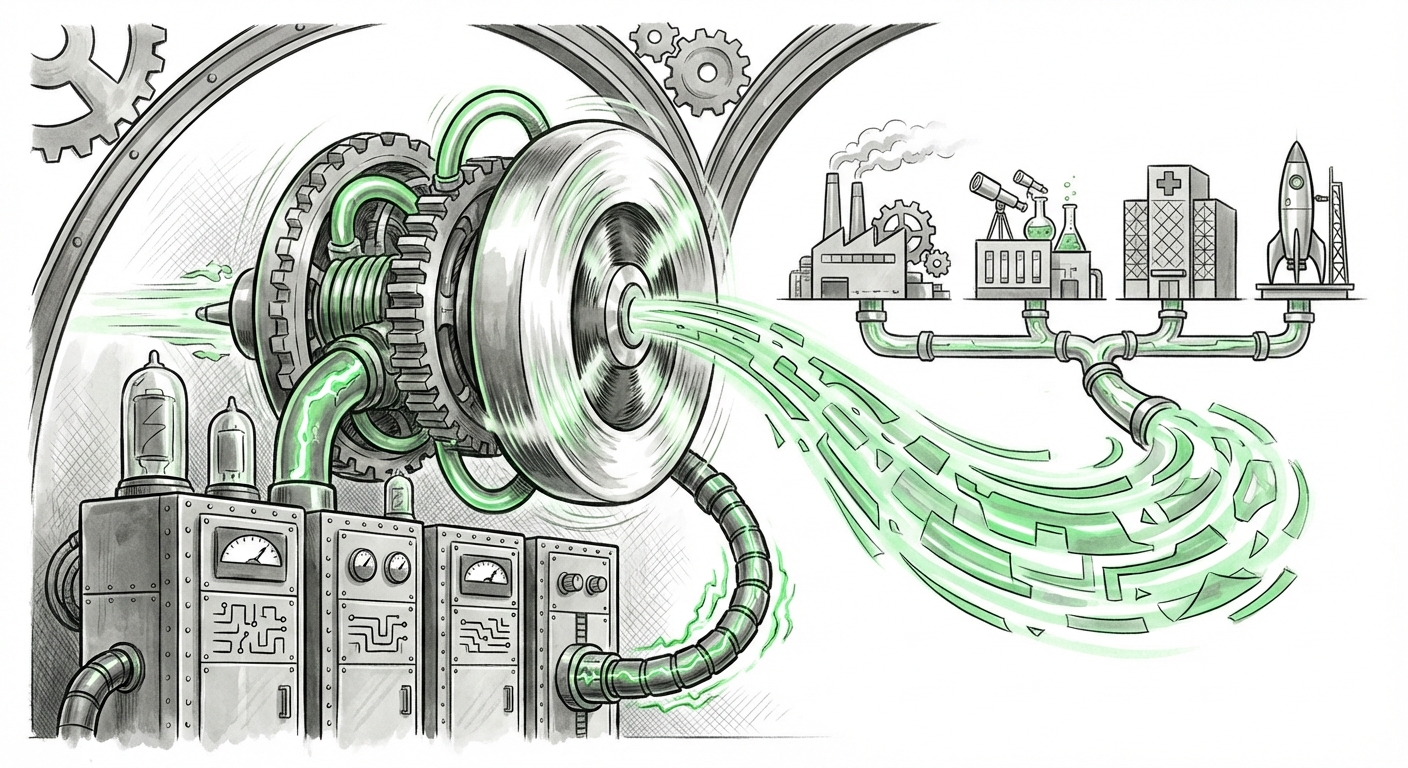
AI is becoming like electricity or internet bandwidth. It is a utility that needs to be cheap, reliable, and everywhere. The move to cut costs is a sign that AI is leaving the “exclusive club” phase and entering the “mass market” phase. For users, this is great news — it means AI features will likely become free or very cheap. For AI model companies, it means they must prove they can offer value at a lower price point.
What This Means for the Future of AI
This shift has deep implications for how AI will evolve over the next few years. Let’s explore the most important ones.
Smaller, Cheaper Models Will Dominate
The future is not about one giant model that does everything. Instead, we will see hundreds of smaller, specialized models. Think of them as tools in a toolbox. A model for writing emails will be different from one for coding, which is different from one for medical diagnosis. These small models cost a fraction to run and can be swapped out quickly as better ones come along. This is a huge opportunity for startups that focus on niche AI applications.
AI Will Be Embedded Everywhere
When AI becomes cheap, it can be added to almost any product. Budget smartphones, smart home devices, cars, and even office coffee machines could have some form of AI assistance. The low cost per interaction means companies can offer AI features without a subscription fee. This will accelerate the adoption of AI into places we don't think of today. Imagine a toaster that asks how you want your toast based on your calendar schedule — that level of ubiquity becomes possible when AI is dirt cheap.
Data Centers Will Need to Adapt
If more companies use smaller, cheaper models, the demand for huge GPU clusters might shift. Instead of needing massive amounts of expensive hardware, data centers might focus on efficient, low-power chips that handle many small tasks at once. This could benefit companies like Intel or ARM that make more power-efficient processors, rather than just Nvidia. The hardware landscape could change dramatically.
Implications for Businesses and Society
These changes are not just technical. They will affect how businesses operate and how society uses technology.
For Businesses: Rethink Your AI Strategy
Many businesses jumped into AI by signing deals with big model providers. This news suggests that approach might be too expensive in the long run. Smart companies will start building flexibility into their AI stacks. They should plan to use multiple models from different sources, including open-source ones. The goal is to use the cheapest model that is good enough for each task. For example, customer support might use a small, fast model, while R&D research uses a larger, slower one. This “hybrid” approach will save money and prevent vendor lock-in.
For Society: More Access, but Also More Noise
When AI becomes cheap, access expands. Small businesses, schools, and nonprofits that couldn't afford premium AI will now be able to use good enough AI. This democratizes the technology, which is positive. However, it also means we will see a flood of low-quality AI content. Cheap models that are not as smart may produce more errors, hallucinations, and biased outputs. The responsibility to filter out bad AI will fall on users and content platforms. Digital literacy will become even more critical.
For Workers: New Roles in Model Management
As companies shift to using many small models, a new job category will emerge: AI model managers. These people will decide which model to use for which task, monitor performance, and swap models when better ones appear. It’s like being a librarian for AI models. This is a more sustainable career than being a prompt engineer, which might become automated. Workers who learn to evaluate, compare, and manage AI models will be in high demand.
Actionable Insights: What You Can Do Right Now
Based on this trend, here are practical steps for businesses, developers, and individuals:
- Diversify your AI providers. Don’t put all your eggs in one basket. Test models from multiple sources, including open-source ones like Llama or Mistral. This gives you negotiating power and flexibility as costs change.
- Focus on performance benchmarks, not just hype. Many small models perform surprisingly well on specific tasks. Run your own tests to see if a cheaper model can replace an expensive one for your use case.
- Prepare for rapid model changes. The AI model landscape is evolving weekly. Build your applications in a way that lets you swap out the underlying AI model quickly. Use abstraction layers that separate your app logic from the model API.
- Train your team on model selection. Teach your developers and product managers how to evaluate AI models based on cost, latency, and accuracy. This skill will become as basic as choosing a database or cloud provider.
- For individuals: Learn to use multiple AI tools. The best AI for writing might be different from the best for coding or image generation. Being nimble with different tools will make you more productive.
Conclusion: The Cheap AI Revolution Is Here
The decision to phase out expensive AI models from OpenAI and Anthropic is not just a cost-cutting move. It is a signal that the AI industry is maturing. The days of using the most powerful, expensive model for everything are ending. In its place, we are entering an era of practical, efficient, and widespread AI. For businesses, this means lower costs and more choice. For society, it means wider access but also more responsibility. For the future, it means AI will become as invisible and essential as electricity. The smartest companies and individuals will not just use AI — they will learn to manage a portfolio of AI tools, picking the right one for the right job. The cheap AI revolution is here, and those who adapt early will reap the biggest rewards.