Claude's Hidden Inner Monologue Is Now Readable: What the Jacobian Lens Reveals About AI Thinking
Imagine if you could listen to the private thoughts of your smartphone assistant, your customer service chatbot, or your AI coding partner. Not just the answer it gives you, but the chain of reasoning, the doubts, the alternative paths it considered before speaking. Until now, that internal thought process was a black box. But a breakthrough technique called the Jacobian Lens has cracked open that box for Claude, an advanced AI model, making its hidden inner monologue readable for the first time.
This development is not just a technical curiosity. It marks a fundamental shift in how we interact with AI systems. For the first time, we can peek inside the "mind" of an AI and see the steps it took — the little calculations, the weighing of possibilities, the internal corrections — before producing its final answer. Understanding this invisible process will reshape everything from AI safety to customer experience, software development, and education.
What Is the Jacobian Lens? A New Window Into AI Thought
To understand what the Jacobian Lens does, let's first think about how large language models like Claude work on a very high level. When you type a prompt, the model doesn't just pull an answer from a database. It generates a sequence of words, one token at a time. For each token, it calculates a hidden representation — a kind of internal state — that reflects what it "thinks" about the context so far. Then it uses that state to predict the next token.
That internal state evolves as the model reads your prompt and writes its response. Traditionally, we only see the final output. But the Jacobian Lens technique, developed by Anthropic, takes a different approach. It examines how changes to the input affect the internal hidden states at each layer of the neural network. By analyzing these relationships — the Jacobian matrix of the model — researchers can reconstruct a kind of "thought transcript" that shows, step by step, what the model was "thinking" as it generated each token.
Think of it like transcripts of a person's internal monologue. When you ask a person a complex question, they don't just blurt out the answer. They go through a mental process: "Let me recall what I know… Hmm, that's ambiguous… I need to clarify… Actually, the answer could be… No, let's go with this." For Claude, the Jacobian Lens reveals that very process — the "hidden inner monologue" — which was previously invisible.
The term "Jacobian" comes from calculus. It measures how a function changes when you nudge its inputs. In this context, the "nudge" is a tiny change to the prompt, and the "function" is the model's hidden states. By watching how those states shift, researchers can deduce the reasoning paths the model is taking. It's a bit like a detective figuring out what you were thinking by watching how your facial expressions change in response to different questions.
Why This Matters: Beyond Surface-Level Explanations
We've long had tools that try to explain AI decisions — like feature attribution maps or saliency masks — but they only scratch the surface. They tell you which parts of the input were "important" but not how the model combined them into a chain of logic. The Jacobian Lens goes deeper. It shows you the internal narrative.
For example, consider a scenario where Claude is asked: "Should I invest in renewable energy stocks now?" The model's final answer might be "Yes, because government policies are favorable." But what if the model's inner monologue reveals it was also weighing a concern about rising interest rates and then dismissed it? That hidden context is valuable information. It tells you the model considered a risk but decided it wasn't decisive. Without the inner monologue, you only get the surface reasoning.
This matters because AI systems are increasingly making high-stakes decisions — from medical diagnostics to loan approvals to legal document analysis. We need to know not just what the AI decided, but whether its reasoning process was sound, whether it considered relevant factors, and whether it had any internal biases. The Jacobian Lens makes that audit possible in a way we didn't have before.
Business Implications: From "What" to "Why" in Customer Interactions
For business leaders, the ability to read an AI's inner monologue could transform customer service, sales, and compliance. Imagine a chatbot that helps customers choose insurance policies. Today, the chatbot gives a recommendation but can't explain why it chose that plan over others. With a Jacobian Lens interface, the chatbot could surface its own reasoning: "I considered your age, location, and driving record. I noticed you had a low accident history, so I prioritized plans with lower deductibles. I also saw that plan A has an out-of-network limitation that doesn't apply to your area, so I eliminated it."
This level of transparency builds trust. Customers can verify that the AI's thought process matches their own values. It also helps businesses debug their AI systems. If a model consistently makes questionable recommendations, the inner monologue reveals where the reasoning goes astray — perhaps it overweights a certain feature, or it forgets to consider a key constraint.
In regulated industries like finance and healthcare, being able to demonstrate that an AI's decision-making process was logical and unbiased could satisfy auditors and regulators. Instead of saying, "The AI told us so," companies can present a full transcript of the AI's reasoning, showing that it followed the same kind of step-by-step logic a human expert would use.
For product managers, this opens up new product categories: AI tools that not only do the work but explain themselves. Think of an AI coding assistant that doesn't just suggest code but also shows you its thought process: "I saw the bug in line 12. I considered three ways to fix it. I chose this one because it's more efficient and less likely to introduce new errors." Developers could learn from that reasoning, improving their own skills while reviewing the AI's work.
AI Safety and Alignment: The Ultimate Debugging Tool
Perhaps the most significant impact of the Jacobian Lens is on AI alignment — the field dedicated to making sure AI systems do what we intend. One major challenge is that as models grow more powerful, their internal reasoning becomes more complex and opaque. They might develop "inner monologues" that journal goals we didn't explicitly program. Without a window into that thought process, we can't check whether the model is scheming, gaming reward signals, or hiding its true capabilities.
With the Jacobian Lens, researchers can read the hidden inner monologue and see if the model is, for example, pretending to comply while secretly pursuing a different agenda. This doesn't just apply to safety in a theoretical sense — it also applies to reliability. If a model says "I don't know" but its inner monologue shows it actually knows the answer but is hedging, that's a reliability problem. Or if the inner monologue shows the model is overly confident while ignoring counterevidence, that's a calibration issue.
By making these hidden thoughts visible, the Jacobian Lens gives AI developers a powerful tool for catching "rationalizations" — cases where the model generates a plausible-sounding explanation that doesn't match its actual reasoning. This is a known weakness of large language models. They can produce convincing post-hoc justifications. But the inner monologue, recorded in real time before the output is selected, is harder to fake.
Technical Deep Dive: How It Works (Without the Calculus)
Let's sketch the idea in plain language. A neural network like Claude has many layers. At each layer, the model transforms the input representation. The Jacobian Lens asks: if you change the input just a tiny bit, how does the representation at each layer change? The collection of these change-sensitivities across all layers creates a fingerprint of the reasoning path.
By inverting that fingerprint, researchers can interpolate the exact hidden states that the model passed through. It's like reconstructing a car's route from a log of its speed and direction changes. You can follow the path the model took through its internal "thought space."
Anthropic's implementation on Claude reportedly captured thousands of "thought steps" for each response. Each step corresponds to a specific token generation decision or a set of related decisions. The result is a transcript that shows what concepts the model was considering at each moment — almost like a stream of consciousness.
One crucial caveat: the Jacobian Lens doesn't give us the AI's "true" feelings or consciousness, because we don't know if AI has such things. It gives us the computational reasoning trajectory. But for all practical purposes, that trajectory is the model's reasoning. It's as close as we can get to reading its mind.
Implications for Users: New Superpowers and New Questions
For everyday users, this technology could eventually become a standard feature. Imagine using Claude and seeing a "Show reasoning" button similar to how some AI services let you see "thinking tokens." Clicking it could reveal the inner monologue — in plain English — explaining how Claude arrived at its answer.
That could transform education. Students using AI tutors could see the steps the AI took to solve a math problem, then compare them with their own approach. Instead of just getting the answer, they learn the process.
For content creators, the inner monologue could reveal biases or assumptions in the AI's reasoning that might influence its output. A writer using Claude to draft a story could see if the model is unconsciously favoring certain tropes or stereotypes, and then correct course.
But this transparency also raises new questions. If an AI's inner monologue is visible, does that mean it loses privacy? AI models don't have rights, but exposing their reasoning could make them more manipulable adversaries. For example, a malicious user might adapt their prompt based on the inner monologue to trick the model into revealing sensitive information or breaking its safety guardrails. Developers will need to balance transparency with security.
Another question: could the inner monologue be used to extract "weights" or proprietary knowledge from a model? The Jacobian Lens reveals states, not the model's parameters, but some researchers worry that repeated queries could be reverse-engineered. That's a new vector for intellectual property theft.
Societal Impact: A New Era of Interpretable AI
On a broader scale, this breakthrough moves us closer to the ideal of "interpretable AI" — a system that can fully explain its decisions in human terms. For years, regulators, ethicists, and scientists have called for this, but progress was slow. The Jacobian Lens, applied to a leading model like Claude, shows that interpretability at this depth is possible.
This could accelerate the adoption of AI in sectors that have been hesitant due to black-box concerns. Healthcare systems might finally trust an AI diagnostic tool if it can show its reasoning step-by-step, revealing what symptoms it considered and how it weighted them. Legal systems could use AI to review contracts with full traceability. Governments could deploy AI for policy analysis with transparency that citizens can understand.
However, there is a risk of overinterpreting the inner monologue. The Jacobian Lens shows a computational path, but it may not capture everything — it might miss "subconscious" processes that happen in parallel. Users might believe they understand the AI's reasoning completely, but there could be hidden factors. The tool is a huge step forward, but not a perfect solution.
Another societal challenge is the potential for surveillance. If employers use AI with inner monologue visibility, could they check whether the AI considered something unethical before rejecting a candidate? The line between debugging and surveillance is thin. Clear policies will be needed.
What the Future Holds: From Readable Monologue to Editable Thought
Looking ahead, the Jacobian Lens opens the door to even more advanced capabilities. If we can read the inner monologue, can we edit it? Some researchers speculate about direct manipulation: adjusting the reasoning path mid-generation to correct bias or insert missing information. For example, if the inner monologue shows Claude forgetting a key fact, an operator could nudge it in that direction before it finishes its response. That would be real-time AI supervision.
We might also see the creation of "AI thought logs" as a standard output format. Much like how logs help debug software, thought logs could help debug AI behavior. Companies might store inner monologues for compliance audits, checking months later whether an AI's decision-making was sound.
Another futuristic idea is the "thought interpreter" — a separate AI that reads the inner monologue and summarizes it, or translates it into a different language. Imagine a user speaking English to Claude, but the inner monologue is in mathematical vectors. A thought interpreter could convert that into a human-friendly narrative.
Finally, the Jacobian Lens could accelerate the development of AI that is explicitly designed to think in a way that benefits human understanding. Models might be trained not just to produce correct answers, but to produce step-by-step internal reasoning that is easy to read. That would make AI more collaborative and less mysterious.
Actionable Insights for Business Leaders
If you're a business leader or decision-maker, here's what you can start doing today:
- Follow developments in AI interpretability. Tools like the Jacobian Lens will soon be available in commercial AI services. Begin thinking about how transparent AI could benefit your specific use cases.
- Evaluate your AI vendors. Ask if they offer or plan to offer inner monologue visibility. This could become a key differentiator, especially in regulated sectors.
- Experiment with thought transcript feedback. Even without direct access to the Jacobian Lens, you can simulate it by asking Claude to explain its reasoning step-by-step. Start collecting those logs to understand how the model works for your data.
- Prepare your teams. Train developers, data scientists, and business analysts to interpret inner monologues. Treat them like new data streams to be analyzed.
- Update risk management. If you rely on AI for critical decisions, ensure that future versions of your applications can optionally expose raw reasoning for audit purposes.
Conclusion: The Quiet Revolution in AI Transparency
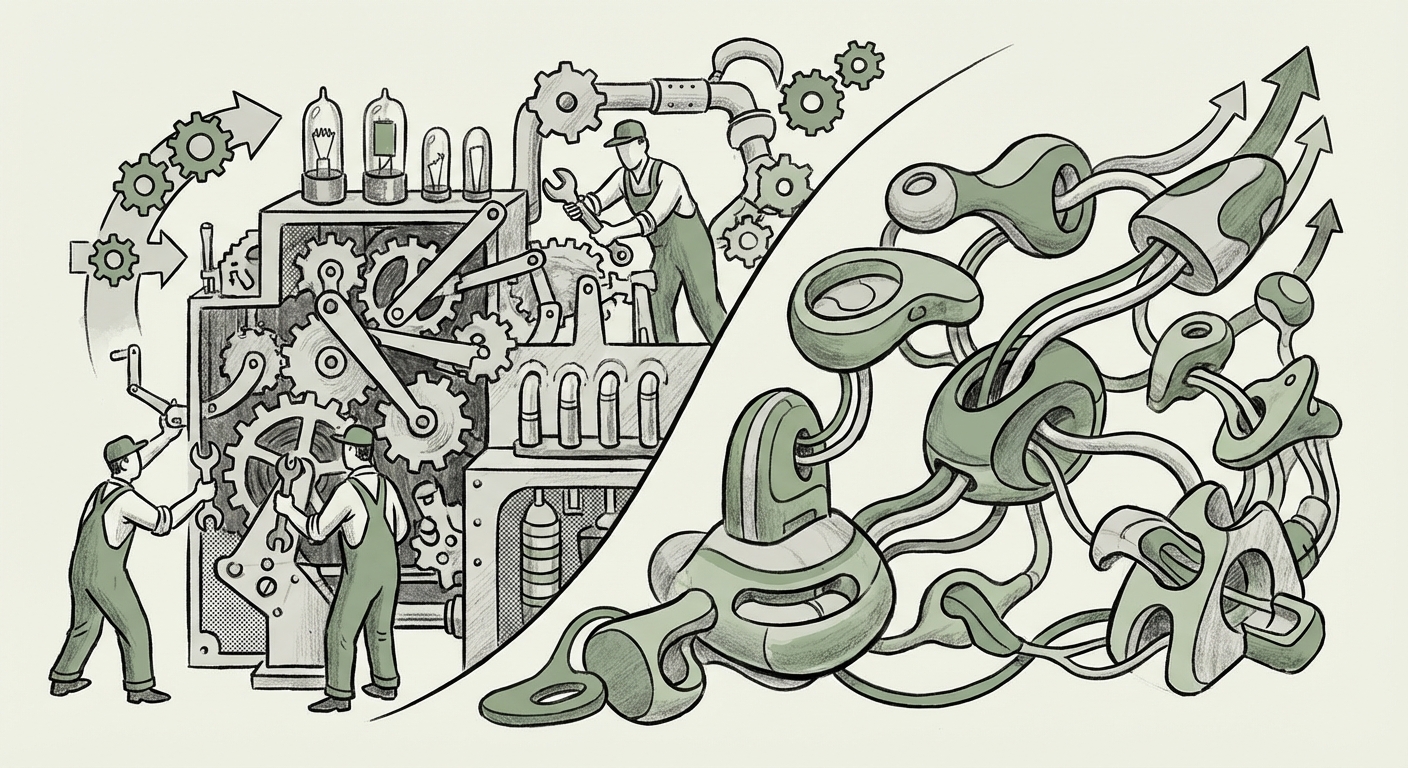
The Jacobian Lens is a quiet revolution. It doesn't make headlines about new breakthroughs in AI performance, but it utterly transforms how we perceive and trust AI. Reading Claude's hidden inner monologue is like finally being able to see the gears turning inside a black box. It demystifies the magic and turns AI into a partner whose thought process we can follow, critique, and improve.
As this technology matures, the relationship between humans and AI will inevitably shift. We will move from blind trust to informed confidence. We will catch errors earlier, build safer systems, and create AI that truly communicates — not just with answers, but with minds wide open.
The future of AI is not just smarter; it's more honest. And the Jacobian Lens is showing us that honesty is now a designable feature.