The End of the Single Super-Model Era: Why Your Most Expensive AI Is About to Become a Manager
The race to build ever-larger and more capable AI models has defined the last few years. Companies have poured billions into training behemoths that can reason, write code, and generate creative content with astonishing fluency. But a quiet revolution is now underway—one that shifts the focus from raw power to smart orchestration.
A key signal of this shift comes from a major development: a high-cost, state-of-the-art model previously used for end-to-end tasks is being restructured into a manager that delegates work to a more efficient, smaller model. This move directly addresses the soaring operational costs that have plagued large-scale AI deployment. Instead of asking one massive model to do everything—and paying a premium for every single request—the approach splits labor: the big, expensive model handles planning and oversight, while the smaller, cheaper model executes the heavy lifting.
Let's unpack what this means for the future of AI, how businesses can adopt this strategy today, and why this may be the most important trend in practical AI deployment since the invention of the transformer.
The Cost Crisis That Demanded a New Architecture
Anyone who has deployed a cutting-edge AI model at scale knows the pain. The most capable models carry price tags that make them prohibitive for high-volume, real-time applications. A single complex query can cost cents or even dollars to run, and when you multiply that by millions of transactions, the numbers become staggering.
The specific model that underwent this transformation had simply become too expensive to remain viable as a direct worker. Its capabilities were undeniable—it could reason through intricate problems, maintain context over long conversations, and produce deeply nuanced output. But using it for every task, including routine or straightforward ones, was financially unsustainable.
This isn't a problem unique to any single provider. Entire industries that want to adopt AI face the same calculus: the best models deliver the best results, but they also consume enormous compute resources. The conventional response has been to accept the cost as a trade-off for quality. But the new managerial architecture offers a way out.
How the Manager Model Works
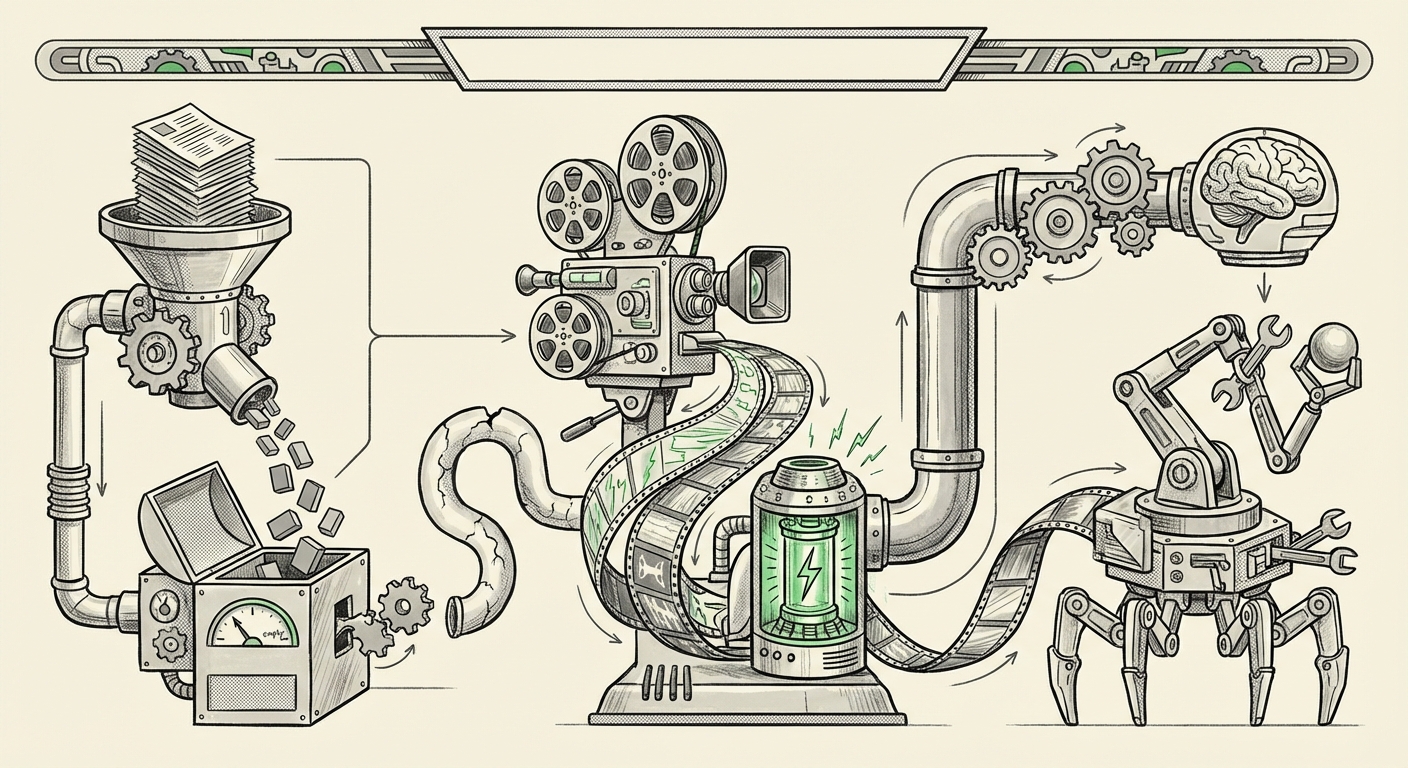
Instead of treating the expensive model like a sole worker, it is repositioned as a manager. Its role becomes strategic rather than operational. Here's how the delegation loop typically functions:
- Planning and decomposition: When a complex request arrives, the manager model (the expensive one) analyzes the task and breaks it into smaller, well-defined subtasks. It determines what needs to happen, in what order, and what resources each subtask requires.
- Delegation to specialists: Each subtask is sent to a smaller, more economical model. In this case, that model is a capable, lower-cost system designed for efficient execution. The smaller model handles the actual work—drafting code, generating text, retrieving data, running calculations.
- Quality control and assembly: The manager collects the outputs from the smaller model, checks them for consistency and accuracy, resolves any conflicts, and assembles them into a final coherent result. If a subtask fails or produces subpar work, the manager can re-delegate or step in directly.
The result is a system where the expensive model is used only for the 10–20% of work that truly requires its advanced reasoning, while the bulk of the work is done at a fraction of the cost. Early reports indicate that this approach can reduce overall operational expenses by an order of magnitude while maintaining—or even improving—final output quality.
Why Smaller Models Are Ready for Prime Time
This entire strategy would not be possible without the rapid maturation of smaller, specialized models. Over the past year, we have seen an explosion of capable models that achieve remarkable performance on specific tasks while requiring far less compute. They are not general-purpose geniuses, but they are excellent workers that can follow instructions precisely, execute reliably, and do so at scale.
The smaller model at the center of this transition, Sonnet 5, represents a new class of efficient AI. It has been trained to be fast, cost-effective, and obedient—qualities that make it ideal for delegated execution. Much like how a skilled junior engineer can handle the bulk of coding work under the supervision of a senior architect, Sonnet 5 can handle the detailed, repetitive, and well-scoped tasks that used to burden the more expensive model.
This trend toward model specialization is accelerating. We are moving away from the idea that one model should rule them all. Instead, the future belongs to multi-model systems where different AI agents collaborate, each playing to its strengths.
What This Means for AI Costs and Accessibility
The most immediate implication is a dramatic reduction in the cost of running high-quality AI services. For businesses that have been priced out of using top-tier models for customer-facing applications, this managerial architecture opens the door. You no longer need to choose between capability and affordability.
Consider a customer support system. Previously, you might have routed every inquiry to a powerful model to ensure accurate and empathetic responses. The cost would be prohibitive at scale. With the manager approach, the expensive model handles only the most complex or sensitive cases—say, an escalated complaint or a nuanced policy question—while the smaller model handles routine inquiries like password resets, order status checks, and simple FAQs.
The same principle applies to content generation, code review, data analysis, and legal document drafting. In every case, the expensive model acts as a quality gate and orchestrator, not a frontline worker.
This shift also democratizes access to high-quality AI. Smaller companies and startups that could never afford to run a massive model 24/7 can now use a manager-delegate architecture, paying only a small premium for the orchestration layer while benefiting from cheap, capable execution for the bulk of their workload.
Business Strategy Lessons from the Manager Model
For organizations building or buying AI solutions, the rise of the manager model suggests several strategic moves:
- Audit your AI workflows: Identify which tasks truly require the reasoning power of your most expensive model and which can be handled by a cheaper alternative. You may be surprised at how much of your workload is routine.
- Design for delegation from day one: Instead of building monolithic AI pipelines that assume a single model, architect your systems to support a manager-delegate pattern. This gives you the flexibility to swap models in and out as costs and capabilities evolve.
- Invest in monitoring and quality control: When you delegate work to a smaller model, you need robust oversight. The manager model must be able to detect errors, assess confidence, and intervene when necessary. Building good feedback loops is essential.
- Negotiate model access strategically: As more providers offer tiered models, negotiate pricing based on your usage patterns. If you can commit to high volumes of cheaper model calls with occasional premium model calls, you may get better rates.
Why This Trend Will Accelerate
Several forces are converging to make the manager model the default architecture for serious AI deployments:
The economic pressure is relentless. AI compute costs, while falling per unit, are rising in aggregate as usage explodes. Every company deploying AI at scale is looking for ways to optimize spend. The manager model directly addresses the largest line item: inference cost.
Model specialization is improving. We are only at the beginning of the specialist model era. As smaller models become more capable and more reliable, the fraction of work that requires a top-tier model will shrink. Managers will delegate more and intervene less, driving costs even lower.
The orchestration tooling is maturing. Frameworks for building multi-agent systems are becoming more sophisticated and easier to use. What once required custom engineering can now be done with off-the-shelf libraries and APIs. The barrier to adopting a manager-delegate pattern is dropping rapidly.
Users are becoming more tolerant of tiered service. Just as we accept that a human customer service agent escalates to a supervisor for complex issues, users are learning to accept that AI-assisted services may route some queries to a faster, cheaper model and others to a slower, smarter one—as long as the overall experience remains good.
What This Means for the Future of Work and Society
On a broader level, the manager model reflects a deeper truth about intelligence—both human and artificial. Not every problem needs a genius. The most effective systems, whether biological or mechanical, are those that match resources to the demands of the task at hand. A brain doesn't use its entire cortex to twitch a finger; it delegates motor control to specialized regions. Similarly, AI will increasingly use a hierarchy of models, each calibrated to the difficulty of the subtask.
For workers, this trend suggests that AI will not replace jobs wholesale but will instead restructure them. Just as the expensive model becomes a manager, human workers may find themselves overseeing teams of AI agents, handling exceptions, and focusing on the creative and strategic work that machines cannot yet do well. The human-AI partnership becomes more nuanced, with humans moving up the value chain into supervisory and integrative roles.
For society, the implications are largely positive. Cheaper, more accessible AI means that more organizations—including nonprofits, educators, and governments—can leverage advanced capabilities without breaking their budgets. The gap between what the richest companies can do with AI and what everyone else can do will narrow.
However, there are risks. If the manager model becomes dominant, we may see a concentration of power among the few organizations that can afford to train and run the top-tier manager models. The smaller models, while cheap to run, still need to be trained by someone. The ecosystem could become more stratified, with a small number of frontier model providers at the top and a long tail of commoditized specialist models below.
Actionable Insights for Technical and Business Leaders
Whether you are a CTO evaluating AI infrastructure or a product manager thinking about user experience, here are the concrete takeaways:
- Start experimenting with a two-tier model system today. Take one of your existing AI workflows and split it: use a cheap model for the bulk of the work and route only the high-complexity cases to your best model. Measure the cost savings and the change in output quality.
- Adopt a model-agnostic orchestration layer. Build your AI pipeline so that the "manager" is a configurable component. You should be able to swap in a different expensive model or a different cheap model without rewriting your entire system. This future-proofs your investment.
- Develop internal benchmarks for delegation. Not all tasks benefit equally from the manager approach. Create tests that help you decide which subtasks can be safely delegated and which require the full reasoning power of the expensive model.
- Educate your team on prompt engineering for delegation. Writing good instructions for a manager model is different from writing prompts for a direct worker. Your prompts need to be structured around task decomposition, delegation criteria, and quality verification.
- Monitor the model ecosystem closely. The landscape of smaller, cheap models is evolving fast. A model that is too weak for delegation today might be ready next quarter. Build a practice of regularly evaluating new models against your delegation benchmarks.
The Bottom Line: Efficiency Is the Next Frontier
The era of using one massive model for everything is ending. The high cost of running top-tier AI has forced a fundamental rethinking of how we deploy intelligence at scale. By turning the expensive model into a manager that delegates to a cheaper, capable worker, the industry has found a path to sustainable, cost-effective AI operations.
This is not a niche optimization. It represents a new architectural paradigm that will define how AI is built and used for years to come. The companies that adopt this pattern early will gain a significant competitive advantage: they will be able to deliver high-quality AI services at a fraction of the cost of their rivals, freeing up capital for innovation and growth.
The message is clear. If you are running an expensive model as a direct worker, you are probably wasting money. It is time to promote it to management.