Tabular AI Revolution: How Google’s TabFM Turns Spreadsheets into Intelligent Assistants
Spreadsheets are the backbone of business. Every day, millions of rows and columns hold the data that drives decisions—sales figures, inventory lists, customer records, financial forecasts. Yet for all their power, traditional spreadsheets remain stubbornly passive. You have to know exactly what formula to write, which pivot table to create, or how to clean messy data. What if you could simply ask your spreadsheet a question and get an instant, accurate answer? That’s precisely what Google’s TabFM (Tabular Foundation Model) promises to deliver, and it marks a turning point for how we interact with structured data.
This “AI of the Week” spotlight on TabFM isn’t just another incremental update. It represents a fundamental shift: the emergence of a foundation model purpose-built for the world’s most common data format—the table. In this article, we’ll break down what TabFM is, how it works (think “prompting a spreadsheet”), and what this means for the future of AI, business intelligence, and everyday data work.
What Is TabFM? A Foundation Model for Tables
You’ve probably heard of large language models (LLMs) like GPT-4 that understand text, or image models like DALL·E that create pictures. TabFM is the same foundational idea but trained on tabular data—the kind you see in spreadsheets and databases. Instead of words or pixels, it learns the patterns, relationships, and statistical properties of rows and columns.
The key innovation? You can prompt TabFM just like you prompt a language model. But instead of writing a sentence, you provide a spreadsheet (or a portion of it) along with a natural language question or instruction. The model then performs tasks like filling in missing values, predicting future outcomes, grouping data, or even generating formulas—all without needing a single line of code.
This “prompting a spreadsheet” approach is revolutionary because it bridges the gap between human intuition and machine computation. A business analyst can say, “Show me which product categories had the highest growth last quarter,” and TabFM instantly processes the underlying table to return the answer—complete with reasoning.
How It Works Under the Hood
TabFM is built on a transformer architecture similar to LLMs, but its training data consists of millions (or billions) of tabular records from diverse domains: finance, healthcare, retail, logistics, and more. It learns the semantics of column headers, data types (numbers, dates, categories), and typical relationships (e.g., “revenue typically increases with advertising spend”).
When you prompt TabFM, you essentially give it a partial table and a request. The model “reads” the structure and content, then generates an output that respects the table’s schema. For example, if you have a sales table missing some “region” labels, TabFM can infer them based on other columns like “city” or “zip code.” If you ask for a forecast, it can extend time-series data with predictions.
Critically, TabFM is designed to work zero-shot or few-shot. You don’t need to train custom models for each new spreadsheet. Just provide a few examples of what you want (if needed), and the model generalizes. That’s a huge leap from the old approach where a data scientist had to build separate models for each prediction task.
Why This Matters for the Future of AI
TabFM signals a broader trend: AI is moving away from narrow, task-specific tools toward general-purpose “operating systems” for data. Just as GPT-4 became a “brain” for text tasks, TabFM aims to be the brain for tables. This has profound implications:
- Democratization of Data Analysis: Anyone who can work a spreadsheet—marketers, operations managers, small business owners—can now perform advanced analytics without a data science team.
- Blurring the Line Between Humans and AI: The “prompt” becomes the new user interface. You don’t click buttons; you just say what you need. Spreadsheets become conversational.
- Accelerating Business Intelligence: Traditional BI tools require weeks of dashboard setup. With TabFM, ad-hoc queries become instant, enabling real-time decision-making.
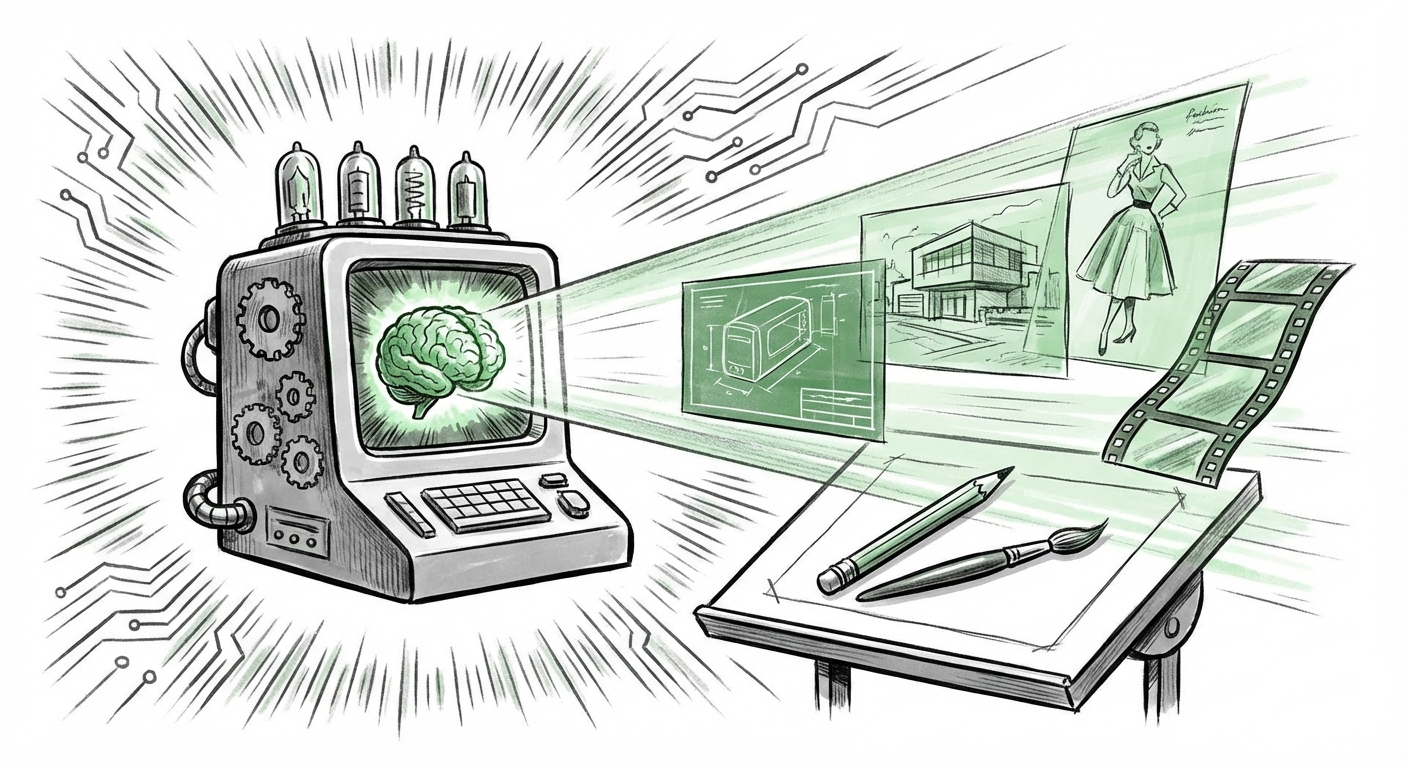
- Foundation Models for Every Data Type: We now have models for text, images, audio, video, code, and—with TabFM—tables. The next frontier may be multi-modal models that combine all of them.
This also changes how we think about artificial general intelligence (AGI). The ability to handle structured data is a core human skill. Giving AI a native understanding of tables brings it one step closer to reasoning about real-world systems—supply chains, economies, scientific experiments—that are fundamentally organized in tabular form.
Practical Implications for Businesses and Society
If TabFM lives up to its promise, the impact on daily business operations will be immediate and widespread. Let’s explore the most concrete changes.
1. No More “Spreadsheet Hell”
Every organization has someone manually copying, pasting, and cleaning data. TabFM can automate data wrangling tasks like deduplication, standardizing formats, and merging datasets. Imagine uploading two messy spreadsheets and asking, “Combine these using the employee ID column and fix any mismatched names.” TabFM handles it.
2. Self-Service Analytics for Everyone
Departments that once waited weeks for IT to build a report can now generate insights on the fly. A sales manager can ask, “Which regions are underperforming in the current quarter compared to last year?” and get a table with highlighted anomalies. This flips the traditional BI model: instead of dashboards for executives, everyone becomes a data analyst.
3. Intelligent Automation in Finance and Accounting
Finance teams deal with endless spreadsheets for budgeting, forecasting, and close processes. TabFM can automate variance analysis, flag unusual transactions, and even suggest journal entries based on patterns. Auditors can use natural language to probe datasets: “Show me all payments above $10,000 that were approved by a single person.”
4. Better Scientific Research
Researchers in biology, epidemiology, and social sciences often work with tabular datasets. TabFM can help them quickly test hypotheses, find correlations, or clean experimental data. Instead of writing custom R or Python scripts, a scientist could say, “Check if there is a significant difference between the control and treatment groups for this metric.”
5. Ethical and Governance Challenges
With great power comes the risk of misuse. TabFM could be used to draw false correlations, invade privacy (by inferring sensitive information from public data), or automate biased decision-making. Organizations will need to implement governance frameworks: audit trails for prompts, transparency in model outputs, and safeguards against hallucination in tabular contexts. Unlike text, where a wrong answer might be obvious, a wrong number in a spreadsheet could lead to serious financial mistakes.
Actionable Insights for Your Organization
TabFM is not science fiction—it’s being deployed now. Here’s how to prepare and capitalize on this shift:
- Start Cleaning Your Data: Foundation models work best with well-structured, consistent data. Invest in data quality initiatives now so you can reap the benefits later.
- Train Your Teams on Prompting: Just as we learned to search the web effectively, we need to learn how to “prompt” tabular AI. Encourage your employees to experiment with natural language queries on sample spreadsheets.
- Redesign Workflows Around AI: Don’t just automate existing manual processes—rethink them. For example, instead of monthly reports, consider real-time intelligent alerts driven by TabFM.
- Establish Guardrails: Create guidelines for what data can be sent to AI models (especially sensitive or personal data). Use access controls and versioning to track changes made by AI.
- Monitor the Ecosystem: TabFM is just one entry in a fast-growing field. Keep an eye on open-source alternatives and competing products. The landscape will evolve quickly.
What’s Next? The Evolution of Tabular AI
The “AI of the Week” hype around TabFM reflects a deeper pattern: we are entering an era where every type of data becomes promptable. The logical next step is a unified interface that combines spreadsheets with text, images, and live web data. Imagine a single prompt that says, “Take this sales spreadsheet, overlay it with economic indicators from the internet, and predict next quarter’s revenue—then summarize the key risks in a paragraph.” Such multi-modal models are already on the horizon.
Another frontier is collaborative tabular AI. Multiple users could simultaneously prompt the same table, with the model tracking context and maintaining consistency. Think Google Docs meets ChatGPT meets Excel—all in real time.
Finally, we will likely see a wave of specialized TabFM fine-tuned for verticals like healthcare (patient records), finance (transaction tables), or logistics (inventory databases). These will bring even higher accuracy and domain-specific understanding.
Conclusion: The Spreadsheet Gets a Brain
Google’s TabFM is more than a new product—it is a glimpse into the future of human-AI interaction. By turning the humble spreadsheet into an intelligent assistant, it removes the biggest barrier to data-driven decision-making: the need for technical expertise. For the first time, the spreadsheet truly becomes a “thinking” tool that understands context, answers questions, and even anticipates needs.
Businesses that embrace this shift will gain a competitive edge: faster insights, lower analytics costs, and empowered employees. Those that ignore it risk being left behind as the world of data becomes conversational and instantaneous.
Whether you’re a CEO scanning quarterly reports or a farmer tracking crop yields, TabFM represents a new relationship with data—one where you don’t have to know the formulas, just ask the right questions. And that’s a future worth preparing for.