AI Agents Master Slay the Spire 2: How Structured Memory Unlocks Smarter Gameplay and Real-World Potential
What happens when you replace an AI agent's messy, endless chat log with a clean, structured memory system? It turns out, the agent gets a lot smarter — smart enough to beat one of the most challenging deck-building roguelikes ever made: Slay the Spire 2. This isn’t just a gaming milestone; it’s a breakthrough with huge implications for how we build AI systems in business, healthcare, logistics, and beyond.
In the original game, Slay the Spire, players climb a tower, battling monsters by carefully choosing cards for their deck. It requires planning, adaptation, and memory of past encounters. Slay the Spire 2 cranks up that complexity with new enemies, more nuanced card synergies, and longer runs. Until now, AI agents struggled to perform well because their memory systems were all wrong.
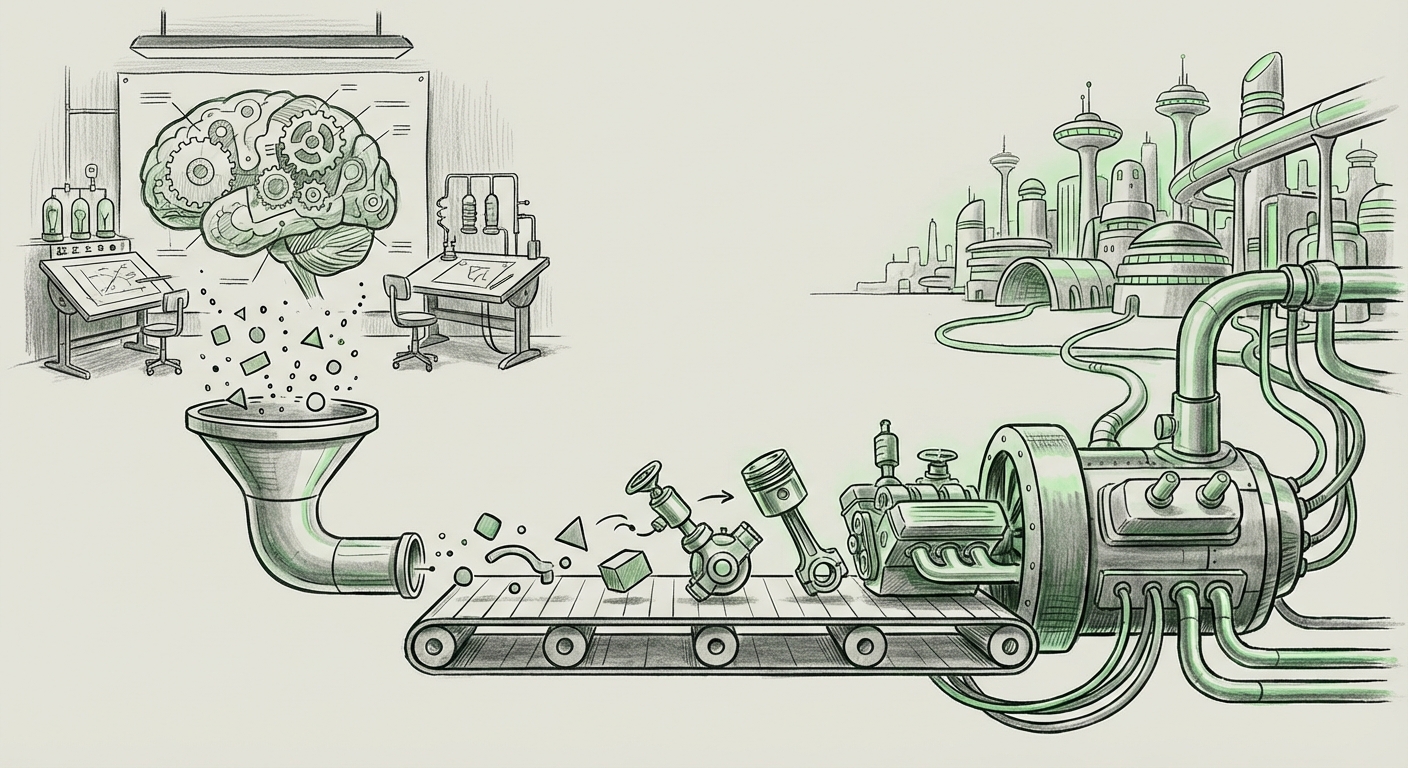
Researchers tried something different. Instead of letting the AI build a huge, ever-growing text log of everything it said and did — like a transcript of its thoughts — they gave it a structured memory. Think of it like a well-organized filing cabinet instead of a junk drawer. The agent could store key facts, strategies, and observations in clear categories: “current health,” “cards in deck,” “enemy attack patterns,” “what worked last time,” and so on. The result? The AI started winning, and not just at trivial levels. It earned top scores and completed difficult challenges, outplaying many human players.
This success is a powerful signal about the future of AI agents. Let’s unpack what happened, why it matters, and how you can apply these lessons today.
The Problem with Growing Chat Logs
Most modern AI agents, including those built on large language models, use a “conversation history” to remember past actions. Every prompt, every AI response, every intermediate thought gets appended to a giant string of text. For short tasks, it works fine. But as the task gets longer — like a multi-hour gaming session — the chat log becomes enormous. The AI has to sift through thousands of tokens just to find the current situation. It gets lost. It repeats mistakes. It forgets early important details. This is especially fatal in a game like Slay the Spire 2, where decisions made in the early acts affect your chances much later.
The researchers recognized that a human player doesn’t remember every single move. They remember high-level goals — “I need to build a poison deck” — and key facts — “the next boss is weak to area damage.” The growing chat log was the AI equivalent of trying to remember a whole movie by memorizing every frame, rather than the plot summary.
By replacing the growing chat log with a structured memory, the AI could quickly retrieve relevant information without wading through noise. It used a short-term memory for immediate decisions (like “which card to play this turn”) and a long-term structured memory for strategy (“which boss I face in Act 3, and what cards I need”). This is closer to how the human brain works — we have working memory and long-term memory, and both are organized, not a single flat list.
How Structured Memory Works in Practice
The exact implementation details are fascinating but not overly complex. The AI’s memory had a fixed set of slots, like a database table. Each slot stored a specific type of information: current game state, planned route, enemy abilities, card synergies discovered, notes about what failed before, and so on. The agent could write to these slots when it learned something new, and read from them when making decisions.
Critically, the structured memory was not allowed to grow endlessly. When a slot needed updating, the old information was overwritten. This forced the AI to prioritize what mattered. For example, if the AI fought a new enemy and learned its attack pattern, it would update the “enemy notes” slot, discarding outdated info about earlier rooms. This kept the memory lean and relevant.
This is a stark contrast to the growing chat log approach, where old information remains buried and can cause confusion. The structured memory also allowed the AI to reason more effectively: it could compare current state against stored strategies, detect patterns over multiple runs, and even experiment with different tactics without losing the big picture.
The improvement was dramatic. AI agents with structured memory consistently achieved higher scores, completed ascension levels (difficulty modifiers) that had stymied earlier agents, and showed better adaptability to unexpected events. They didn’t just brute-force the game; they played intelligently, planning six moves ahead and adjusting their deck based on what was coming.
Beyond Gaming: Why This Matters for the Real World
Gaming is a perfect testbed for AI, but the underlying lesson isn’t about beating a video game. It’s about building AI agents that can handle long-running, complex tasks in the real world. Consider these scenarios:
- Customer service chatbots: Today’s bots often forget context after a few turns. A structured memory could store customer details, issue history, and resolution steps, enabling much more helpful interactions.
- Automated financial trading: Trades involve analyzing months of market data, news events, and past decisions. A growing chat log would be useless. But a structured memory that tracks key indicators, risk levels, and lessons from previous trades could make agents far more profitable.
- Robotic process automation (RPA): Bots that handle multi-step business processes (like onboarding a new employee) need to remember where they are, what documents have been collected, and what approvals are pending. Structured memory makes this reliable.
- Healthcare diagnostic assistants: An AI helping a doctor review a patient’s history over many years could store structured records: allergies, past medications, test results, family history. No chat log could handle that without becoming unwieldy.
- Personal AI assistants: Imagine an assistant that remembers your preferences, your ongoing projects, and your short-term goals — all in an organized way, not by scrolling through months of conversation history. That’s the promise of structured memory.
In each of these cases, the key insight from Slay the Spire 2 applies: less can be more. By forcing the AI to be selective about what it remembers and to organize that memory logically, we get smarter, more efficient, and more trustworthy agents.
The Business Implications: Efficiency, Cost, and Trust
For businesses deploying AI agents, the shift to structured memory offers three concrete benefits:
1. Lower Cost and Faster Performance
Growing chat logs consume massive amounts of token processing. Every time the AI reads or writes to the history, it costs compute and time. Structured memories are smaller and more efficient. In the Slay the Spire 2 tests, agents with structured memory needed significantly fewer tokens per decision, which translates directly to lower API costs and faster response times. For enterprise deployments at scale, this can mean thousands of dollars saved per month.
2. Better Accuracy and Reliability
When an AI has a clean, organized memory, it makes fewer mistakes. It doesn’t confuse old context with new. It doesn’t hallucinate details from irrelevant past conversations. This leads to more consistent performance, which is critical for tasks like handling customer support tickets or managing inventory. In the game, structured memory agents made fewer blunders, such as playing a card that was useless against the current enemy. In business, that translates to fewer errors and less need for human oversight.
3. Easier Debugging and Transparency
If an AI agent fails, you need to understand why. With a growing chat log, finding the root cause is like searching for a needle in a haystack. With structured memory, each slot can be inspected: “What did the agent think the customer’s issue was? What solution did it try? What was the outcome?” This makes debugging much easier and builds trust with users who demand explanations.
The Future: Structured Memory as a Standard Building Block
The success in Slay the Spire 2 signals that structured memory will become a standard component in the design of AI agents. We’re moving away from monolithic models that try to remember everything, toward modular architectures where memory is a separate, specialized component. This is reminiscent of how computer systems evolved from single-process monolithic systems to modern microservices. Each piece does one thing well, and they communicate efficiently.
In the near future, you might see AI agent frameworks that come with predefined memory structures for common domains: a retail agent might have slots for customer ID, cart contents, order history, and support escalation level; a logistics agent might track shipment ID, current location, estimated delivery time, and delay reasons. Developers won’t have to reinvent the wheel — they’ll pick a template and customize it.
Moreover, the principle extends beyond memory. The structured memory approach also encourages agents to summarize and abstract rather than store raw data. In the game, the AI didn’t log every card drawn; it logged the strategic conclusion — “I have too many expensive cards.” This ability to form high-level representations is a step toward more human-like reasoning.
What This Means for You: Actionable Insights
Whether you’re a developer, a product manager, or a business leader, here’s what you can take away from this breakthrough:
- Audit your AI agents’ memory. If you’re using AI chatbots or process automation, check how they store context. Is it a flat text log? Consider redesigning it to use structured memory. Even a simple key-value store can dramatically improve performance.
- Embrace constraints. It might feel counterintuitive to limit what an AI can remember, but constraints force prioritization and reduce noise. Define exactly what information is critical for your agent’s decisions.
- Test in simulation first. Games like Slay the Spire 2 provide a safe, repeatable environment to experiment. You can simulate your own domain with simpler models before moving to production.
- Plan for long-horizon tasks. If your AI agent needs to operate over days or weeks (e.g., a project management assistant), structured memory is not optional — it’s mandatory. Start designing with that in mind.
- Monitor token usage. A switch to structured memory can cut costs. Calculate your current per-conversation token count and compare with a structured approach. The savings may fund further improvements.
The Road Ahead: Smarter, More Human-Like AI
The achievement of AI agents in Slay the Spire 2 isn’t just a cool demo. It’s a proof point that the way we manage memory can make or break an AI’s ability to handle complexity. As we push AI into more ambitious roles — autonomous driving, medical diagnosis, scientific research — the lessons from this game will become foundational. The era of the growing chat log is ending. The era of structured, intelligent memory is here.
We’re still early. The researchers’ approach will be refined, new memory schemas will emerge, and we’ll learn how to balance short-term and long-term memory even better. But one thing is clear: if you want AI agents that don’t just survive but thrive in complex, changing environments, give them a clean, organized memory. Let them forget what doesn’t matter and remember what does. That’s the path to unlocking their full potential.