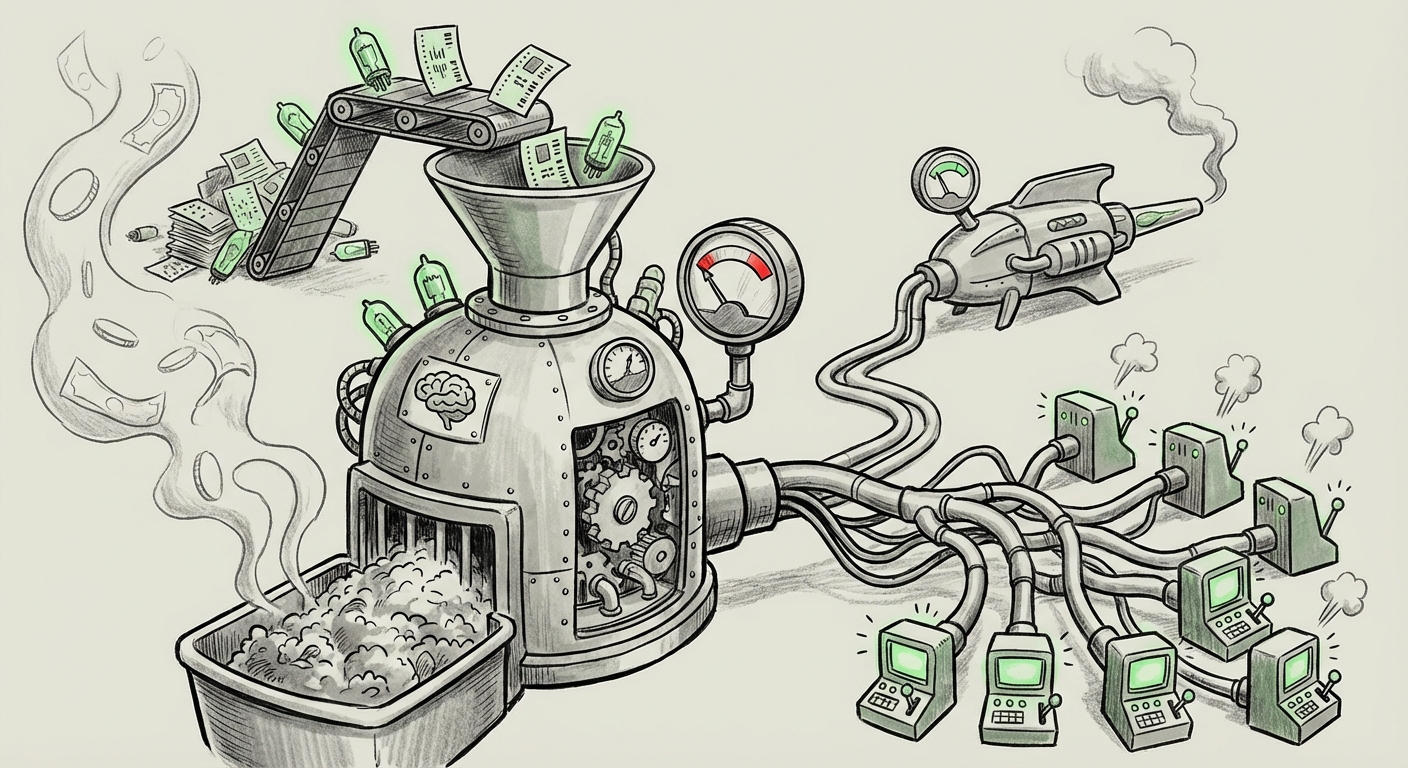
The AI Upgrade Firehose: Why the Latest Rapid-Fire Releases Will Change Everything
Artificial intelligence is moving at a speed that feels both exhilarating and exhausting. In a span of just weeks, a torrent of major upgrades has hit the market — each one pushing the boundaries of what machines can do. From language models that reason more deeply to systems that generate photorealistic video and code that writes itself, the pace of improvement is not just fast. It is furious.
This wave of releases — part of what we can call a "fast and furious" era of AI upgrades — signals a fundamental shift. We are no longer in a phase of slow, predictable iteration. Instead, we are in a race where the finish line keeps moving. For businesses, creators, and everyday users, understanding the direction of this storm is more important than trying to catch every update.
The Speed of Change Is Reshaping the AI Landscape
The sheer volume of upgrades arriving in quick succession tells us something important about the industry. The underlying models are getting better at an accelerating rate. Each upgrade builds on the last, and improvements compound. What used to take years now takes months — sometimes weeks.
This rapid acceleration is not accidental. Competition among AI labs has intensified. Those who hesitate risk being left behind. But the speed also creates a challenge for users. How do you keep up when the tool you just learned to use is already obsolete? The answer lies not in chasing every version, but in understanding the trajectory.
What Makes This Wave Different from Previous AI Booms?
Earlier AI advancements often focused on a single domain — beating humans at games, recognizing images, or translating languages. The current wave is different. These upgrades are general purpose. They improve reasoning, creativity, and accuracy across hundreds of tasks simultaneously. A better language model means better customer service bots, better coding assistants, better content generators, and better data analysis tools — all at once.
Another key difference is accessibility. These upgrades are not locked in research papers. They are being deployed directly into products that millions of people use every day. The gap between "research breakthrough" and "real world impact" has shrunk to nearly zero.
Why the "Furious" Pace Is a Double-Edged Sword
On the positive side, faster upgrades mean that AI is becoming more capable, more reliable, and more useful with every passing month. Businesses that adopt early can gain a significant competitive edge. They can automate more tasks, deliver better customer experiences, and reduce costs faster than competitors who wait for the "stable" version.
But there is a downside. The furious pace creates integration fatigue. Companies that just finished retraining their teams on one model must immediately prepare for the next. The half-life of AI knowledge is shrinking. What you knew six months ago about best practices may now be outdated or even counterproductive.
There is also a risk of over-reliance. When upgrades come fast, it is tempting to assume that every new version is better in every way. That is not always true. Some upgrades trade stability for speed, or prioritize creative output over factual accuracy. Every upgrade needs to be evaluated on its own merits within the specific context of how it will be used.
Practical Implications for Businesses
For business leaders, the message is clear: adaptability is the new competitive advantage. The specific AI tool you choose today matters less than your ability to integrate new tools quickly as they emerge.
Build a Flexible AI Strategy
Do not lock yourself into a single vendor or a single model. Build systems that allow you to swap out AI components as upgrades arrive. Use APIs and modular architectures that isolate the AI layer from your core business logic. That way, when a new model outperforms the old one, you can switch without rebuilding your entire application.
Invest in Continuous Learning
The most valuable skill in the age of fast AI upgrades is the ability to learn continuously. Encourage your teams to experiment with each new release. Set aside time for training and exploration. The cost of falling behind is far greater than the cost of staying current.
Focus on outcomes, not features
When a new upgrade arrives, it is easy to get distracted by flashy new features. Instead, ask: What does this version do better for my specific use case? If the new model improves speed but reduces accuracy, that may not be a net positive for a legal document review tool. Evaluate upgrades based on real-world outcomes, not spec sheets.
Societal Impact: The Ripple Effects of Rapid AI Progress
Beyond business, the fast-and-furious pace of AI upgrades has profound implications for society as a whole. These systems are increasingly mediating how we work, learn, create, and communicate. When they improve rapidly, society must adapt rapidly too.
Employment and the Skills Gap
As AI becomes more capable, certain jobs will be automated faster than many anticipate. But automation is not the only story. The furious pace of upgrades means that even jobs that remain will see their day-to-day tasks transformed. Workers will need to reskill continuously. The concept of "lifetime learning" is shifting from a nice ideal to an urgent necessity.
Governments, educational institutions, and companies must work together to create accessible training programs. The window for workers to adapt is narrowing. Those who cannot keep up risk being left behind in a economy that increasingly rewards AI literacy.
Information Quality and Trust
Faster, more fluent AI models produce outputs that are increasingly indistinguishable from human writing. This has a dark side: the spread of misinformation, deepfakes, and automated propaganda can accelerate just as quickly as beneficial applications. The same models that help doctors diagnose diseases can also help scammers craft more convincing phishing emails.
Society needs new verification tools and digital literacy standards. Being able to distinguish AI-generated content from human-created content will become a basic skill, much like reading and writing.
Regulation in a Fast-Moving Landscape
Regulators face a near-impossible task. By the time a law is drafted, debated, and passed, the AI landscape has shifted multiple times. This creates a tension between the need for safety and the desire for innovation. The most effective approach may be adaptive regulation — rules that set broad principles and adjust automatically based on measurable benchmarks, rather than trying to prescribe specific technical requirements.
How AI Will Be Used in the Near Future
Given the trajectory of these upgrades, we can make some educated predictions about how AI will be used in the coming months and years.
Hyper-Personalized Assistants
The next generation of AI assistants will not just answer questions — they will anticipate needs, remember context across sessions, and adapt their communication style to each user. These assistants will manage schedules, draft emails, research topics, and even negotiate on behalf of their users. The furious pace of upgrades means that the "dumb" assistants of today will seem primitive within a year.
Autonomous Coding and Software Development
AI coding assistants are getting dramatically better. Soon, they will not just autocomplete lines of code — they will write entire functions, debug errors, and even design architecture. Junior developers will be able to produce senior-level work with AI assistance. This will accelerate software development cycles and lower the barrier to entry for creating digital products.
Democratized Content Creation
Video generation, music composition, graphic design, and writing are all being transformed. With each upgrade, the quality gap between professional creators and amateurs narrows. This democratization is a double-edged sword: it empowers millions of new creators, but also floods markets with content, making it harder to stand out.
Scientific and Medical Breakthroughs
AI upgrades that improve reasoning and data analysis are accelerating research in drug discovery, materials science, and climate modeling. Each new version can simulate more variables, identify more patterns, and propose more candidate solutions. The furious pace of AI progress means that the next major medical breakthrough could come from a model that did not exist six months ago.
Actionable Insights for Right Now
Reading about rapid-change is one thing. Applying that understanding is another. Here are actionable steps you can take today to prepare for the fast-and-furious AI future.
- Audit your AI tools monthly. Set a recurring calendar reminder to review your AI tool stack. Check whether newer versions or alternative models have been released that better fit your needs.
- Create a simple evaluation framework. Define three to five metrics that matter most for your use case — such as accuracy, speed, cost, or creativity. Test each new upgrade against that framework.
- Stay curious but skeptical. Try every new upgrade, but do not trust it blindly. Test its limits. Understand where it fails, not just where it shines.
- Invest in human-AI collaboration skills. The most effective workers will not be those who know all the AI features, but those who know how to ask the right questions, interpret outputs critically, and combine machine speed with human judgment.
- Plan for version churn. If you build a product or service that relies on AI, assume that the underlying model will change multiple times a year. Design your user experience to gracefully handle behavior changes in the AI layer.
The Bigger Picture: Speed as the New Normal
The fast-and-furious era of AI upgrades is not a temporary sprint. It is the new baseline. The organizations and individuals that thrive will be those that embrace change as a constant rather than an interruption.
This requires a shift in mindset. Instead of trying to "keep up" — which is exhausting and ultimately impossible — focus on building resilience and adaptability. Learn the principles that transcend any single model: prompt engineering, evaluation techniques, ethical considerations, and the art of human-AI collaboration.
The specific tools will keep changing. But the ability to learn, adapt, and apply critical thinking will only become more valuable. The furious pace is not something to fear. It is something to ride — with open eyes and a steady hand.