The AI Data Hypocrisy War: Satya Nadella Calls Out OpenAI and Anthropic Over Distillation Ban
In a moment that perfectly encapsulates the growing tension in the artificial intelligence industry, Microsoft CEO Satya Nadella has fired a critical shot directly at the heart of the AI establishment.
Nadella recently called out leading AI labs like OpenAI and Anthropic for a practice that many in the tech world have been quietly fuming about for months. He highlighted the glaring double standard: these companies actively prohibit model distillation and reverse engineering in their terms of service, yet they built their empires by training their models on the collective data of the entire internet—often without asking permission.
This isn't just a minor squabble between tech giants. It is a fundamental battle over the soul of the AI revolution. It raises a critical question: Who gets to decide how AI knowledge is shared and used?
Let's break down what this argument really means for the future of artificial intelligence, your business, and the broader society.
The Great Distillation Debate: What is Everyone Fighting About?
To understand the controversy, we need to understand the technology at the center of it: Model Distillation.
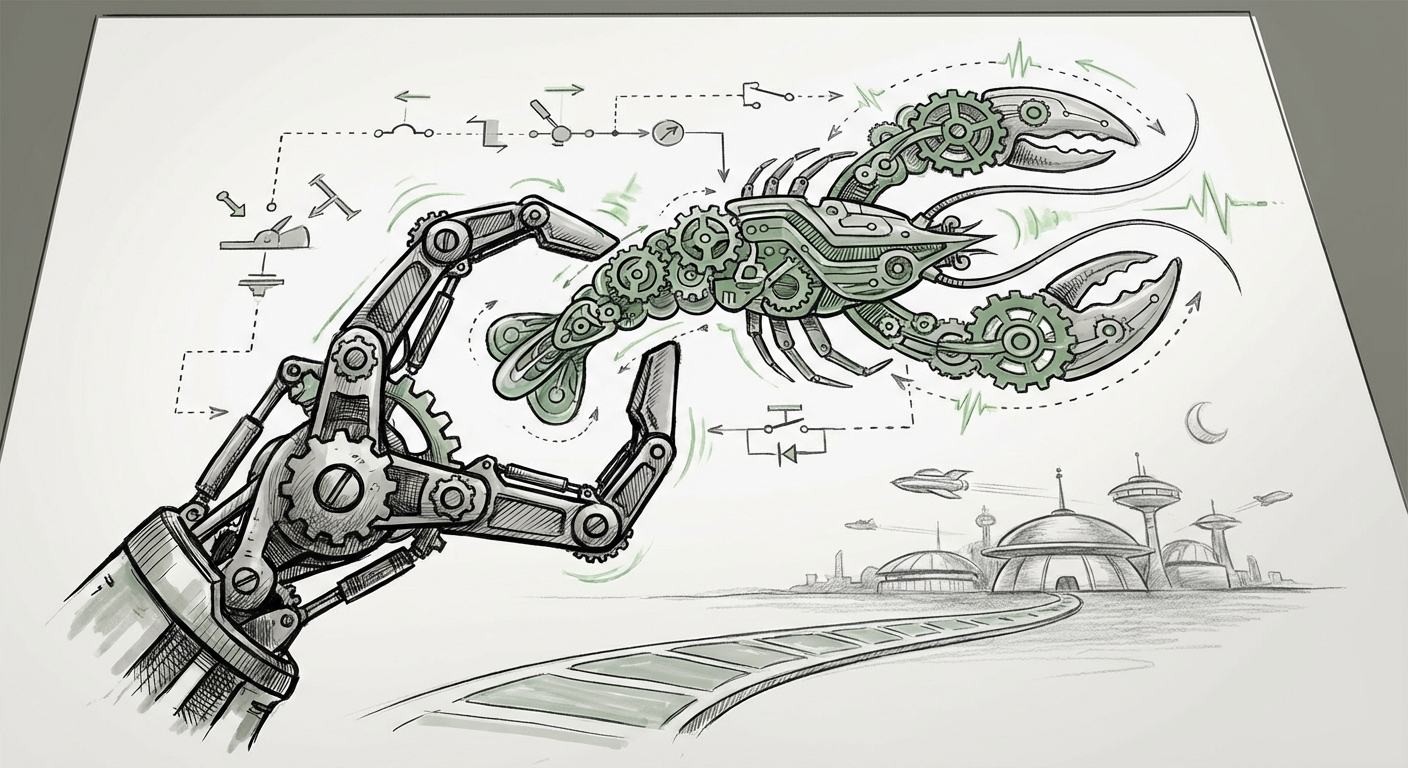
Think of distillation like a student learning from a master. A massive, powerful AI model (the "teacher") is used to generate patterns and data. A smaller, cheaper, and faster model (the "student") then trains on that data to mimic the teacher's abilities.
This process is incredibly valuable for several reasons:
- Cost Reduction: Running GPT-4 or Claude 3 is expensive. A distilled model can perform similar tasks for a fraction of the computing cost.
- Speed: Smaller models run faster, enabling real-time applications like chatbots and local assistants.
- Accessibility: It allows smaller companies and developers to create powerful AI tools without needing billions of dollars in compute.
The Case for the Ban (Why the Labs are Doing It)
From the perspective of the AI labs, banning distillation is about control and revenue. Their business model depends on charging users for API calls to their largest models. If a competitor or a customer can simply distill that model into their own private version, the lab loses a paying customer.
They also argue safety and alignment. They fear that distillation could strip away safety guardrails, leading to "jailbroken" or uncensored versions of their AI. In their view, they are protecting the integrity of their technology.
The Case Against the Ban (Why Nadella is Right)
Nadella’s critique cuts to the core of the issue. The same labs that ban distillation trained their foundational models on everyone else's data. They scraped websites, books, articles, code repositories, and private communications to build their knowledge base. They rarely paid for this data.
The hypocrisy is stark. They tell the world: "Your data is free for us to use, but the knowledge our AI creates is locked behind a wall of legal restrictions."
This creates a feudal system where a handful of companies act as gatekeepers. They absorb the world's information and then sell it back to us, while prohibiting us from building our own independent tools based on that knowledge.
The Future of AI: Walled Gardens vs. Open Ecosystems
This debate is forcing the industry to pick a side. The path we choose will define the next decade of AI development.
Scenario 1: The Walled Garden Future
If the distillation bans hold and become standard, we can expect an AI landscape dominated by a few powerful API-First oligopolies.
- Higher Costs: Without competition from smaller, distilled models, API prices remain high.
- Vendor Lock-In: Businesses become completely dependent on a single provider (OpenAI, Anthropic, Google). Changing providers means rebuilding your entire workflow.
- Regulatory Nightmare: A handful of companies in San Francisco hold the keys to the world's most powerful cognitive technology. This concentration of power will inevitably trigger massive antitrust and regulatory battles.
- Stifled Innovation: The next great AI breakthrough might come from a startup in Brazil or a student in Nigeria. Under a strict distillation ban, they can never hope to compete. They can only rent access on the labs' terms.
This scenario benefits shareholders of the big labs. It does not benefit the global economy or the pace of scientific discovery.
Scenario 2: The Open Ecosystem Future
Nadella's critique is a powerful argument for the open-source AI movement. We are already seeing a massive push towards models like Llama 3, Mistral, Gemma, and Phi.
- Portability: Open models can be downloaded, fine-tuned, and distilled. They run on local laptops, on-premises servers, or any cloud provider. There is no vendor lock-in.
- Democratization: Distillation becomes a superpower for developing nations and small businesses. They can take a state-of-the-art open model and distill it into a specialized tool for their specific language, culture, or industry.
- Transparency: We can audit the model. We know what it was trained on (ideally), and we can verify its safety rather than just trusting a company's PR.
- Innovation at the Edge: Distillation allows AI to run on your phone, your car, or your medical device. This enables a new class of applications that don't need an internet connection to function.
This scenario is messier and harder to control, but it is faster and more resilient.
What This Means for Businesses and Society
This is not an abstract philosophy debate. It has direct implications for how you will use AI tomorrow.
For Business Leaders: Beware the Single Point of Failure
If you are building your entire product strategy on the API of a lab that bans distillation, you are taking a massive risk. You have no negotiating power. If they raise prices by 10x tomorrow, you have to pay. If they change their safety policies and your application breaks, you have no recourse.
The Smart Move: Diversify. Use APIs for rapid prototyping, but always have a path towards using open-weight models. Invest in internal data and fine-tuning. The ability to distill a model gives you optionality. It is your insurance policy against vendor lock-in.
For Developers: The Skill of the Future
Prompt engineering is a hot skill today. Distillation engineering will be the hot skill tomorrow. The ability to take a massive model and compress it into an efficient, specialized local model will be highly valued. Learn frameworks like LlamaCpp, vLLM, and Hugging Face Transformers.
For Regulators: A Clear Antitrust Problem
Nadella has handed regulators a weapon. The argument is simple: "These companies built an essential infrastructure using public assets (our data). Now they are using contractual terms to prevent others from using that infrastructure to compete." This is textbook anti-competitive behavior. We can expect to see new laws that limit the ability of AI companies to restrict reverse engineering and non-commercial distillation.
For Society: Who Owns the Common Knowledge?
We have a collective information commons—the sum of human knowledge on the internet. AI labs have already ingested this commons. The question is whether the outputs of that ingestion become private property or a public utility.
If distillation is banned, the commons becomes private. If distillation is protected, the commons continues to grow. Everyone benefits from sharing knowledge. A farmer in India distilling an agricultural model from a general AI creates value that didn't exist before. Restricting that restricts human potential.
Actionable Insights for a Post-Hypocrisy World
We are at a fork in the road. Here is how you can navigate the coming storm:
- Demand Transparency in TOS: When choosing an AI provider, read the fine print. Does the TOS explicitly allow distillation? If not, consider it a red flag.
- Invest in Data, Not Just Models: The true moat for companies will be their proprietary data. The models themselves are becoming commodities. If you own your data and can apply it to an open model (via fine-tuning or distillation), you are building a defensible asset.
- Support Open Standards: Push for standardized formats like ONNX and OpenAI Gym. The more the ecosystem standardizes, the harder it is for any single company to hold the industry hostage.
- Prepare for Regulatory Change: The EU AI Act and potential US regulations are starting to look at "fair access" provisions. Companies that rely on restrictive TOS should have a contingency plan.
Conclusion: The Genie is Out of the Bottle
Satya Nadella’s critique is more than a competitor's jab. It is a fundamental truth that the industry must face. You cannot build a castle on land you stole and then charge everyone for entry.
The future of AI will not be built solely in the data centers of San Francisco. It will be built on factory floors, in hospital labs, in school classrooms, and on farms around the world. For that vision to become a reality, we need a model that allows for adaptation, customization, and distribution—not just consumption.
Distillation is the key to that future. The battle over whether it is allowed is the single most important issue facing the AI industry today. The winners of this war won't be the ones with the biggest model, but the ones who build the most open, accessible, and useful ecosystem.