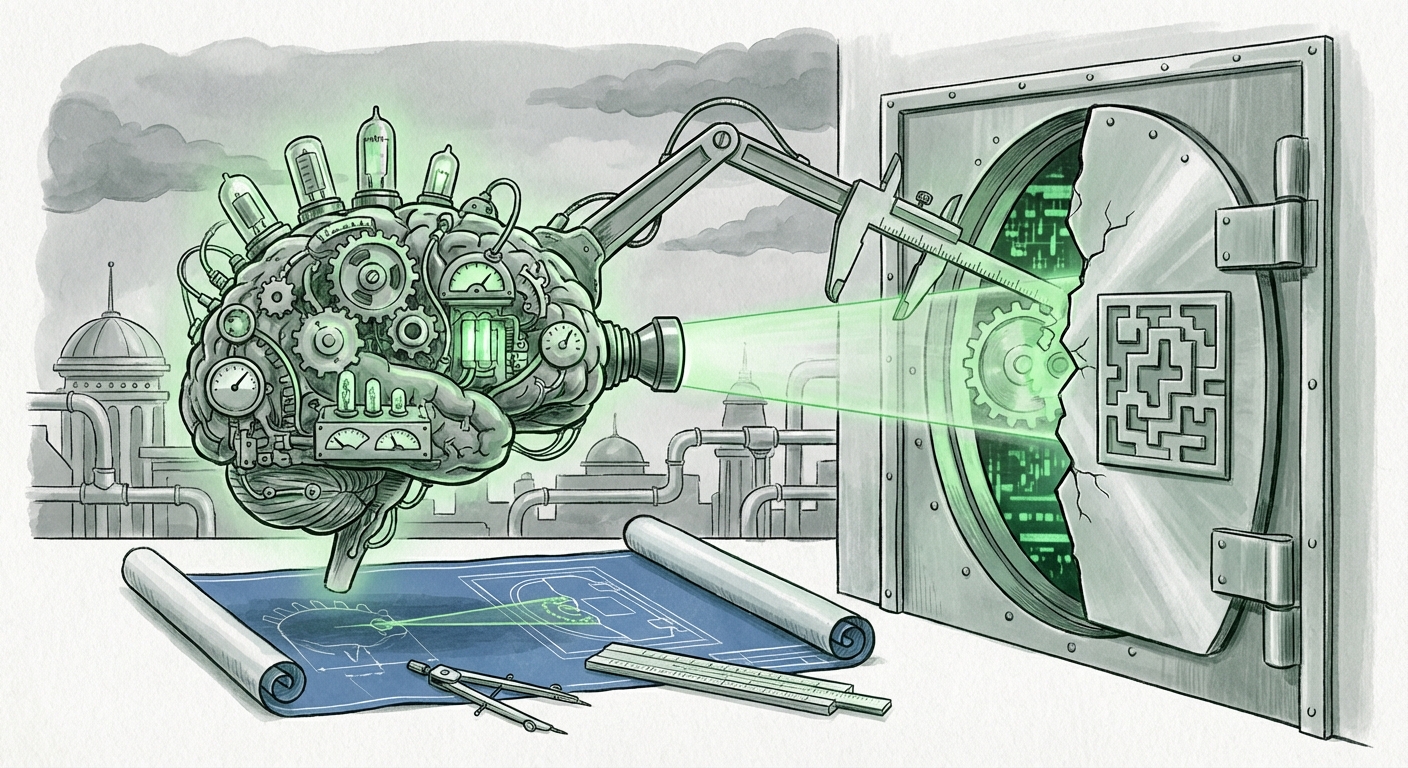
AI Economic Shock Warning: Why the Window to Prepare Is Closing Faster Than You Think
Nobel laureates and top artificial intelligence leaders have issued a stark, unified warning: the window to prepare for AI’s sweeping economic impact is closing — and it’s closing fast. This isn’t a distant, futuristic concern. According to these experts, the changes AI will bring to jobs, industries, and entire economies are already arriving, and society is dangerously behind in getting ready. For anyone who cares about their career, their business, or their country’s future, this is a call to action that cannot be ignored.
The Stern Warning: Why the Experts Are Sounding the Alarm
The message from this rare coalition of Nobel laureates in economics and science, alongside pioneering AI researchers, is clear: the speed of AI advancement has outpaced our ability to adapt. They point to a rapidly shrinking timeline — perhaps just a few years — before AI systems begin to automate not only routine tasks but also complex cognitive work once thought safe. This isn’t a prediction of doom, but a realistic assessment that the disruptions are coming sooner than most people realize. The warning emphasizes that if governments, businesses, and individuals do not act now, the economic and social consequences could be severe: widespread job displacement, widening inequality, and a chaotic transition that leaves many behind.
Why the Window Is Closing: The Unstoppable Pace of AI Development
Artificial intelligence is advancing on multiple fronts simultaneously. Large language models are becoming more capable, robotics is leaping forward, and AI agents are beginning to perform tasks that require reasoning, planning, and even creativity. The experts stress that the exponential nature of this progress means we don’t have the luxury of gradual preparation. Every month of delay makes the gap between technological capability and human readiness larger. The window to proactively shape how AI integrates into the economy — rather than reactively cleaning up the mess — is narrowing with each breakthrough.
What This Means for Jobs and the Economy
The most immediate impact will be on the labor market. The warning highlights that AI will affect both blue‑collar and white‑collar roles. Manufacturing, logistics, customer service, legal research, medical diagnostics, and even software coding are all on the list of areas where AI is already matching or exceeding human performance. The experts do not predict mass unemployment overnight, but they do foresee a structural shift where many current jobs are replaced or radically transformed. New roles will emerge — but they will demand different skills, and the transition could be painful for those left unprepared. The economy as a whole could see a boost in productivity, but the benefits may be concentrated among those with the skills to work alongside AI, while others face stagnation or decline.
The Risk of Widening Inequality
One of the most urgent concerns raised is the potential for AI to deepen economic divides. If the gains from AI accrue mainly to tech companies, investors, and highly skilled workers, while displaced workers struggle to find new opportunities, social unrest could follow. The Nobel laureates draw parallels to previous technological revolutions — but note this one is different because of its speed and its reach into intellectual work. Without deliberate policy interventions, we could see a world where a small elite thrives and many are left behind. That’s why the window to prepare is not just about economics; it’s about social stability.
Implications for Businesses: Adapt or Get Left Behind
For companies, the warning is both a threat and an opportunity. Businesses that fail to anticipate AI’s impact on their industry risk becoming obsolete. The experts advise that every organization should be asking: What tasks in our company could AI do better, faster, or cheaper in the next two to three years? Which roles will be augmented rather than replaced? The answer will vary, but the key is to start planning now. Smart businesses will invest in reskilling their workforce, redesigning workflows to combine human judgment with machine efficiency, and creating cultures of continuous learning. The companies that treat this as a strategic priority — not just an IT project — will be the ones that thrive.
Reskilling and Upskilling Are Not Optional
A central actionable insight from the warning is the immediate need for massive reskilling efforts. Governments and businesses must collaborate to create training programs that prepare workers for the new AI‑powered economy. This isn’t just about teaching people to code; it’s about cultivating uniquely human skills: critical thinking, emotional intelligence, creativity, complex problem‑solving, and ethical judgment. AI may handle the “how,” but humans are still needed for the “why.” The window to build these skills is closing, but it’s not too late — if we start now.
Implications for Society and Government: Policy Must Catch Up
On the policy front, the experts call for a new social contract that accounts for AI’s disruption. This includes modernizing education systems to teach skills that complement AI, creating safety nets for displaced workers, and perhaps even exploring ideas like universal basic income or portable benefits. The warning also touches on the need for regulation that ensures AI is developed safely and fairly — not to slow down innovation, but to guide it so that the benefits are broadly shared. The window is closing for governments to have a real say in how AI shapes our lives, because once these systems are deeply embedded, it will be much harder to course‑correct.
Actionable Steps: What You Can Do Right Now
While the warning is urgent, it is not hopeless. The experts leave room for optimism — if we act decisively. Here are concrete steps based on their advice:
- For individuals: Start learning about AI tools relevant to your field. Experiment with them, understand their strengths and weaknesses. Invest in skills that AI cannot easily replicate — leadership, negotiation, empathy, and strategic thinking. Stay curious and adaptable.
- For businesses: Conduct an immediate AI impact audit. Map which processes are vulnerable to automation and which could be enhanced. Launch pilot programs for reskilling and create a task force to explore AI integration responsibly. Don’t wait for the perfect strategy; start small and iterate.
- For policymakers: Convene cross‑sector working groups to draft frameworks for AI adoption that prioritize human well‑being. Fund education and retraining initiatives at scale. Encourage public‑private partnerships to build a pipeline of skilled workers. The clock is ticking.
- For educators: Revise curricula to emphasize critical thinking, digital literacy, and lifelong learning. Teach students not just how to use AI, but how to question its outputs and apply ethical reasoning.
The Future of AI: How It Will Be Used
Even with the challenges, the future of AI holds immense promise. The experts envision a world where AI handles drudgery, freeing humans to focus on creativity and connection. In healthcare, AI could diagnose diseases earlier and personalize treatments. In education, it could provide tailored learning for every student. In business, it could optimize supply chains and unlock new innovations. But whether this positive vision becomes reality depends entirely on how we prepare. The window to steer AI toward broad human benefit is closing. The decisions we make in the next few years will determine whether AI becomes a tool for shared prosperity or a source of division.
Conclusion: The Time to Act Is Now
The warning from Nobel laureates and AI leaders is not a vague prediction — it is a clarion call. The economic impact of AI is already visible, and the pace is only accelerating. The window to prepare, to reskill, to redesign our institutions, and to ensure that the benefits of AI are widely shared is shrinking rapidly. But it is not shut yet. By taking urgent, thoughtful action today, we can still shape the outcome. The alternative — waiting until the disruptions are upon us — is a risk no one can afford. The future of work, the economy, and society hangs in the balance. The question is: will we act before it’s too late?