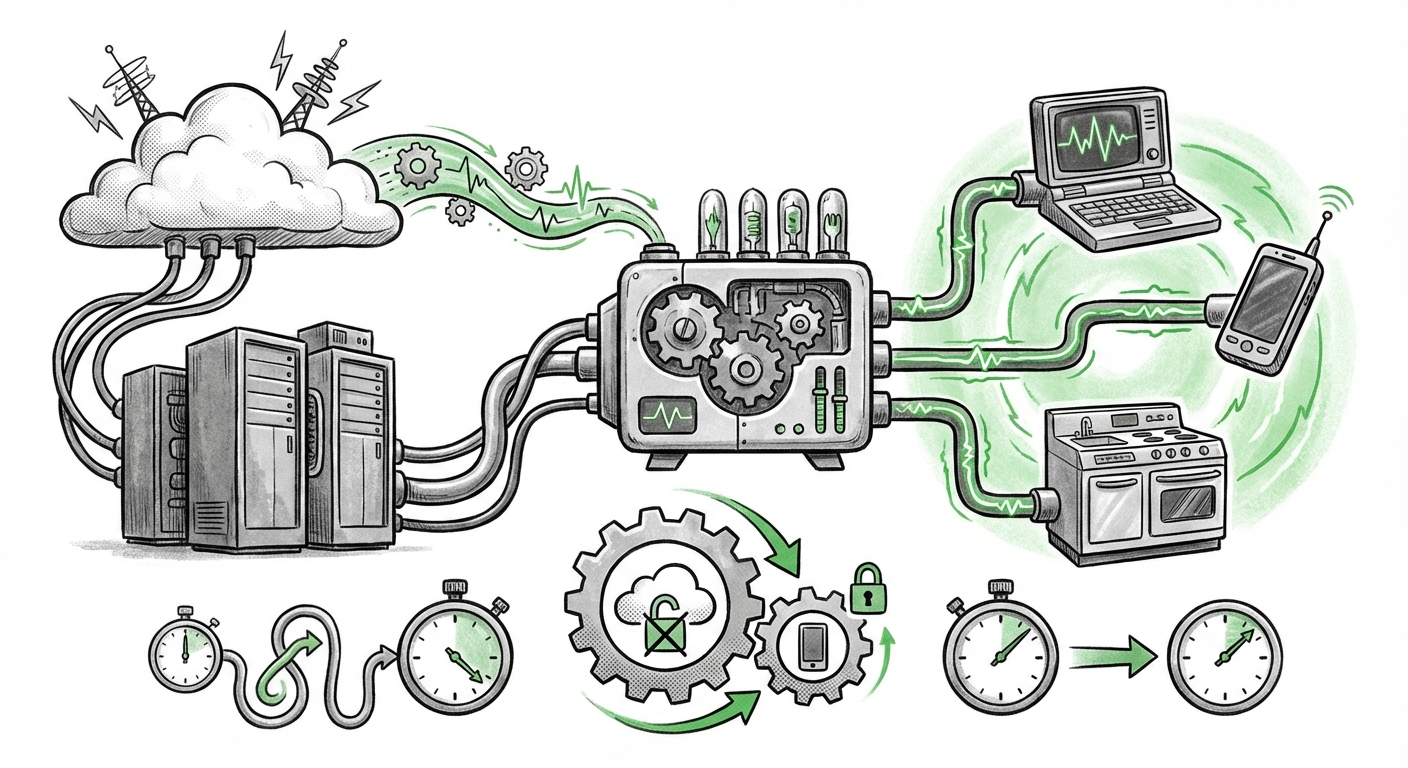
Anthropic Opens Claude for Teachers – A Bold Promise to Keep Student Data Off the Training Table
The worlds of artificial intelligence and education have been circling each other for years, but a major new announcement finally brings them together with a commitment that many educators have been waiting for. A leading AI company has opened a version of its flagship assistant, Claude, specifically designed for teachers — and it comes with a powerful guarantee: student data will not be used to train the models. This move marks a pivotal moment in the ongoing debate about privacy, trust, and the role of AI in the classroom.
What Actually Happened
In a move that signals a new chapter for AI in education, the company behind Claude has launched a dedicated offering called Claude for Teachers. The headline feature is a clear, enforceable promise: any data entered by students or teachers while using Claude will not be used to improve or train the company's underlying AI models. This is a direct response to one of the biggest fears that schools, parents, and administrators have had about bringing generative AI into the classroom.
Until now, many educators have been hesitant to adopt AI tools because of concerns about where student work, questions, and personal information might end up. With this announcement, the company is drawing a bright line: the classroom is a private space, and what happens there stays there.
Why This Matters for the Future of AI in Education
The promise not to train on student data is more than just a privacy feature — it is a strategic bet on the future of AI adoption in one of the most sensitive sectors of society. Education is a massive market, and it is also one where trust is the currency that matters most. Schools cannot afford to experiment with tools that might expose student information or use their work to build commercial products.
This announcement directly addresses that trust gap. By taking training off the table, the company is sending a message that it understands the unique responsibilities of serving children and young adults. It also sets a new baseline for what schools should expect from any AI vendor.
Looking ahead, this move will likely accelerate adoption of AI tools in classrooms that were previously on the fence. When teachers know that their students' essays, homework questions, and classroom discussions are not being fed back into a model to make it smarter (and potentially more profitable), they can focus on what matters: using the tool to enhance learning.
What This Means for the Broader AI Industry
The decision to create a dedicated education product with a no-training pledge could have ripple effects across the entire AI landscape. It creates a new category of "privacy-first" AI offerings that are tailored to regulated or sensitive environments. We are likely to see similar products emerge for healthcare, legal services, financial advice, and other domains where data confidentiality is not optional — it is the law, or at least the ethical baseline.
This is a smart competitive move. By being the first major AI company to make this explicit commitment for the education sector, the company behind Claude is raising the bar for everyone else. Competitors will now face pressure to offer similar guarantees, or risk being seen as less trustworthy in the eyes of schools.
Furthermore, this announcement highlights a growing trend in the AI industry: the move away from a one-size-fits-all approach and toward specialized, context-aware versions of large language models. Just as we have seen models fine-tuned for coding, customer service, or creative writing, we are now seeing models designed for the specific needs and constraints of the classroom.
Practical Implications for Teachers and Schools
For teachers, the arrival of Claude for Teachers means they can finally bring a powerful AI assistant into their workflow without having to worry about violating student privacy. Imagine a teacher using Claude to help draft lesson plans, create differentiated reading materials for students at different levels, generate quiz questions, or even provide feedback on student writing — all while knowing that no student data is being harvested for model training.
For school administrators and IT departments, this announcement provides a clear policy framework. They can now point to a major AI vendor that has explicitly agreed to the data-handling standards that many school districts require. This reduces legal and compliance risk and makes it easier to say "yes" to AI adoption.
For parents, the promise offers reassurance. The fear that a child's personal information or schoolwork might be used in ways that are not transparent has been a real barrier. This commitment directly addresses that concern.
The Bigger Picture: AI and the Trust Economy
We are entering an era where the success of AI depends not just on how smart the models are, but on how much people trust them. The education sector is a proving ground for this idea. If AI companies can earn the trust of teachers, parents, and students, they will unlock a market that is both enormous and deeply impactful. If they fail, they will face resistance from every side.
This announcement is a sign that at least one major player understands the stakes. By voluntarily giving up the right to train on student data, the company is making a trade-off: it is sacrificing a potential source of training data in exchange for trust and adoption. That is a bet on the long-term value of being seen as a responsible actor.
It is also a recognition that not all data is created equal. Student data is especially sensitive. It belongs to minors. It is protected by laws like FERPA (in the United States) and similar regulations around the world. Using it to train commercial AI models would be a violation of trust that could set the entire industry back years. By drawing a clear line, this company is saying: we will not cross that line, and we will make that a feature of our product.
What Educators Should Do Now
For educators who have been waiting for the green light to use AI in their classrooms, this announcement is that green light. The next step is to evaluate how Claude for Teachers fits into existing workflows. Start with small experiments: use it to generate lesson ideas, to summarize complex topics for different reading levels, or to create practice problems.
Teachers should also ask questions about how the data promise is enforced. Is it contractual? Is it technical? Is it audited? While the announcement is a strong signal, the details matter. Schools should request clear documentation about data handling practices and make sure they align with district policies.
It is also worth thinking about how AI can augment, not replace, the human elements of teaching. The best use of a tool like Claude is to handle the repetitive or time-consuming parts of the job — grading rubrics, differentiated materials, parent communication drafts — so that teachers can spend more time on the things that only humans can do: building relationships, inspiring curiosity, and providing emotional support.
The Competitive Landscape and What Comes Next
This announcement puts pressure on every other AI company that wants to serve the education market. We can expect to see similar pledges from competitors in the coming months. Some may go further, offering on-device processing or zero-data-retention policies. The bar has been raised, and the conversation has shifted from "should we use AI in schools?" to "which AI tool respects our students' privacy the most?"
We may also see the emergence of third-party certifications or audits for AI tools used in education. Schools will want independent verification that data promises are being kept. This could create a new ecosystem of trust markers that help educators make informed choices.
In the longer term, the success of Claude for Teachers will depend on how well it actually works in the classroom. A privacy promise is necessary, but it is not sufficient. The tool has to be genuinely useful. It has to save teachers time. It has to make learning more engaging for students. If it delivers on all three fronts — privacy, utility, and engagement — then this could be a watershed moment for AI in education.
Final Thoughts
The decision to open Claude for Teachers with a promise not to train on student data is a clear signal that the AI industry is maturing. It shows an understanding that the path to widespread adoption runs through trust, not just capability. For educators, this is the moment to start exploring what AI can do, with confidence that student privacy is protected. For the rest of us, it is a glimpse of a future where AI is not a wild west of data harvesting, but a carefully governed tool that earns its place in our most important institutions.
The classroom has always been a place of trust. Now, AI is finally ready to earn that trust, too.