Google Search Is Now Making Up Images On The Spot — What This Means For The Future Of The Web
Imagine this: You search for something rare — an obscure type of vintage car engine, a specific cloud formation, or the perfect outfit for a "dinosaur-themed office party." Google looks for it. Doesn't find it. And then… creates it for you.
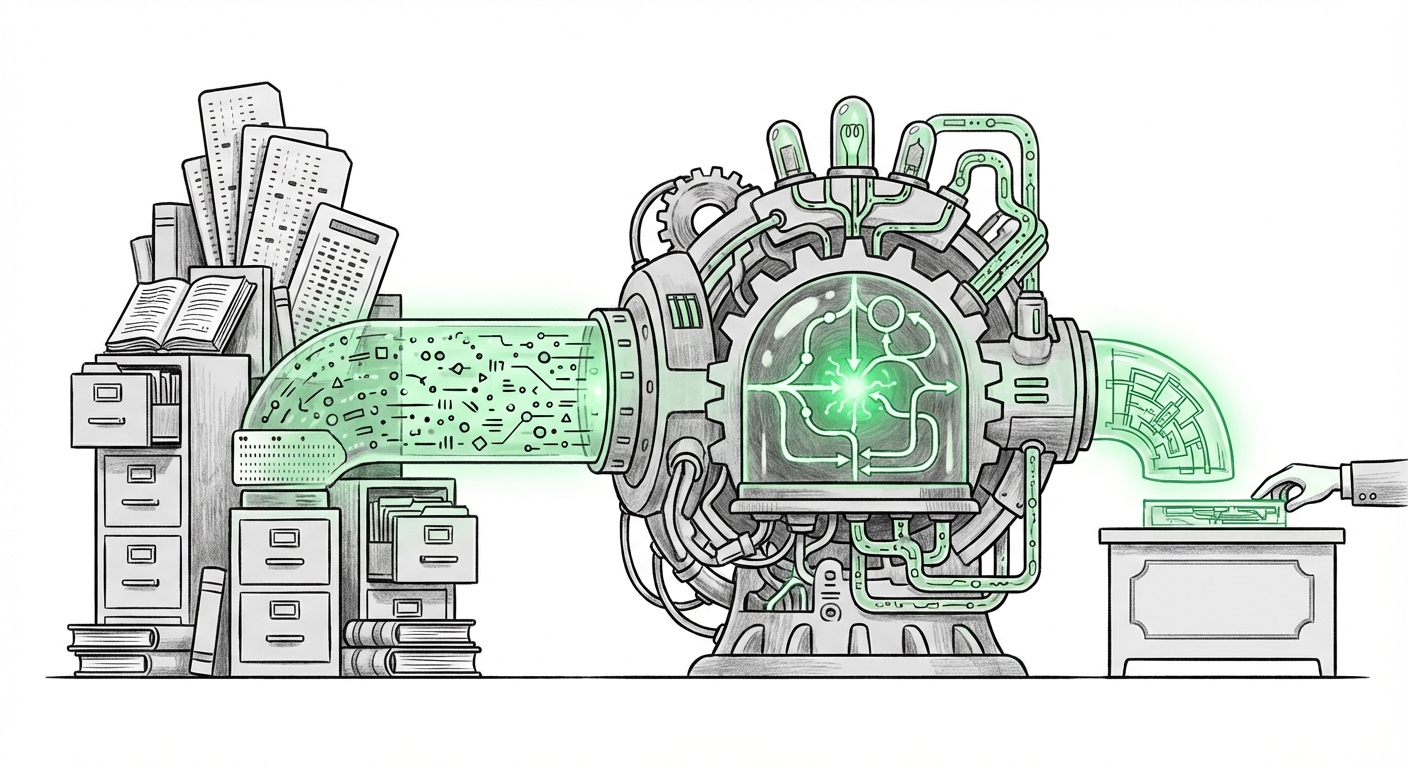
That is no longer a futuristic fantasy. As of a major update, Google Search has begun generating AI images whenever it cannot find a satisfactory visual result on the open web. This change is not a small tweak. It is a fundamental shift in what a search engine does — moving from finding existing information to creating new content on demand.
For users, it means you will almost never see the dreaded "no results" screen again. For businesses, content creators, and society at large, it raises deep questions about traffic, trust, and the value of original work. Let's break down what this actually means and where it leads.
The Core Change: Search Turns Creator
Historically, Google Search was a library. You asked a question, and it pointed you to a shelf (a website) where the answer lived. If no shelf had what you needed, you got a message saying, essentially, "we couldn't find that."
With this new capability, when Google cannot locate a suitable image or visual representation for a query, it deploys its generative AI models to build one from scratch. The search engine does not just display text results or say "try a different term." It paints a picture for you based on its understanding of your request and the data it has learned from.
This is a leap from information retrieval to information invention. Google is no longer a passive conduit between users and publishers. It is an active participant in creating the content you consume — often without you ever realizing the image did not exist before you asked for it.
Why Now? The Logic Behind the Move
Several forces are driving this change, and they reveal a lot about where the entire AI industry is headed.
1. Closing the "Zero Results" Gap
The web is vast, but it is not infinite. For millions of niche, hyper-specific, or newly emerging topics, there is simply no high-quality image available. Before generative AI, this was a dead end. Now, it is a creative opportunity. By generating a result anyway, Google keeps users on its platform rather than sending them away disappointed.
2. Competing with AI-Native Search Tools
New AI search tools like Perplexity, You.com, and ChatGPT's browsing mode are already generating written summaries instead of just listing links. By adding image generation to the mix, Google is matching — and in some cases surpassing — what these competitors offer. It turns search into a full content studio, not just a gateway.
3. Improving User Experience (in the Short Term)
For the user, getting an image — any image — is usually better than getting a blank page. Especially for visual queries like "what does a [rare animal] look like?" or "show me a modern version of [historical clothing]," a generated image can be instantly useful. It feels like magic.
What This Means for the Future of Search
This single feature ripple effects across the entire search experience. Here is what we can expect as this capability matures and spreads.
Search Becomes a "Content Creator" First
For the last twenty-five years, Google's job was to index the web. The company's mission was to organize the world's information. That mission assumed the information already existed. Now, Google is in the business of creating information to fill the gaps. This represents a philosophical pivot: if the information does not exist, Google will make it.
Over time, this could reduce the incentive for websites to produce original visual content. If users know Google will just generate an image for them, why would they click through to an artist's portfolio, a photographer's gallery, or even a product page? The search engine becomes the destination, not the map.
The Line Between "Real" and "Generated" Blurs Further
As generated images become seamlessly mixed with organic results, users will find it harder to tell what is real and what is created by AI on the fly. This is not just a philosophical concern. It has practical consequences:
- Trust erosion: If you cannot trust that an image of a historical event, a scientific concept, or a product actually exists in the real world, your trust in search itself declines.
- Misinformation risk: A generated image of a nonexistent object could be presented with the same authority as a photograph. Without clear labeling, users may mistake AI creations for real documentation.
- Bias amplification: Generative models reflect the biases in their training data. If Google's image generator tends to produce certain visual stereotypes, those biases will now appear in search results — even when no real image existed before.
Implications for Businesses and Content Creators
If you run a website, create visual content, or rely on search traffic to reach customers, this change is a double-edged sword.
Traffic Loss for Visual Content Creators
Consider an artist who creates illustrations of rare birds. Previously, someone searching for "blue-feathered kingfisher with crest" would find that artist's page, visit it, and perhaps become a customer. Now, Google may generate a passable image on its own. The user never clicks through. The artist loses traffic, ad revenue, and exposure.
The same dynamic applies to stock photography, product photography, infographic designers, and anyone who produces visual assets for searchable queries. If Google can generate an acceptable alternative, the incentive to click — and the incentive to create — diminishes.
Opportunities for Very Specific / Local Content
Not all queries are replaceable. For highly localized, timely, or personal content — "photo of my neighborhood after the storm," "new menu item at Joe's Diner," "my custom car paint job" — Google cannot generate the specific image because it does not know the details. Unique, original, and real-world content will become even more valuable.
Businesses should double down on content that is deeply specific, experiential, and connected to real events or people. Generic visual content, on the other hand, will increasingly be handled by AI.
New Opportunities for AI Literacy and Curation
As generated images become common, there will be growing demand for:
- Tools that detect whether an image is real or generated
- Services that curate and verify original human-made content
- Platforms that certify the authenticity of visual media
- Educators who teach people how to critically evaluate AI-generated visuals
Businesses that position themselves as trusted sources of verified, human-created content will stand out in a sea of AI-generated sameness.
What This Means for Society
The ability of the world's most used search engine to generate images on demand has consequences far beyond convenience.
The Information Ecosystem Shifts
Search engines have long been the entry point to the web. They directed traffic, supported business models, and shaped what content was created. If Google now keeps users within its own generative bubble, the entire flow of traffic changes. Websites that relied on search referrals for visual queries may see a sharp drop. Ad revenue that once flowed to publishers may stay inside Google's ecosystem.
This is not necessarily "good" or "bad" — but it is a massive redistribution of value. Society will need to decide how to support original visual creation when the primary distribution channel becomes a competitor.
Cultural Homogenization Risk
Generative AI models are trained on large, often Western-centric datasets. If Google's image generator becomes the default source for "what does X look like," there is a risk that visual culture becomes more homogenized. Niche, local, or underrepresented visual traditions may be less likely to be accurately represented — because the model will fall back on its training averages rather than showing the true diversity of the world.
The web has always been a messy, wonderfully diverse place. A single AI model acting as a layer over that diversity risks smoothing out the edges that make the web valuable.
Actionable Insights: What You Can Do Now
Whether you are a business owner, a marketer, a content creator, or just someone who uses search, there are practical steps to take in response to this shift.
For Content Creators and Website Owners
- Focus on originality and specificity: Generic queries are the ones most likely to be absorbed by AI generation. Create content that is tied to real events, real locations, real people, and real stories.
- Build direct relationships with your audience: If users come to you because they trust your specific expertise or unique perspective, they are far less likely to settle for a generated image. Email lists, social communities, and membership models become more important.
- Use structured data and metadata carefully: Make it clear to Google that your images are original, high-quality, and relevant. While this may not guarantee a click, it can help your images appear as referenced sources — and users may still visit for context or verification.
- Watermark or brand your visual content: A subtle but clear identifier can help users recognize when they are looking at real work from a specific creator, especially if generated images become the default.
For Businesses and Marketers
- Monitor your search traffic for visual queries: Use analytics to see if visits from image searches drop after this change rolls out broadly. If they do, adjust your strategy toward more experiential and less generic visual content.
- Invest in video and interactive content: Generated images are still and static for now. Moving, interactive, or immersive content is harder for AI to convincingly generate on the fly — and often more engaging for users anyway.
- Educate your team on AI literacy: Help your team understand when an image is likely generated versus real. This will be crucial for content planning, brand safety, and competitive analysis.
For Everyday Users
- Be skeptical of search images: Especially for queries about rare objects, historical events, or niche topics, assume the image could be generated unless proven otherwise.
- Check the source link: If Google provides a generated image, it may not link to a specific source in the same way as an organic image result. Look for context clues.
- Support original creators: When you find an image that is clearly original, consider visiting the source site. Your engagement directly supports the ecosystem of human-made content.
Where This Leads: The Next Five Years
This change is part of a larger pattern. Search engines are evolving from directories into answer engines that generate responses rather than list resources. Google's move into image generation is one of the most visible signs of this shift.
In the near future, we can expect:
- Video generation in search: If Google cannot find a video for your query, it may generate one using AI video models.
- Personalized generated content: Search results could include images tailored to your specific tastes, location, or past behavior — all created on the fly.
- New forms of search advertising: If Google is generating the content, it may also generate advertising within that content — a truly native ad experience that blends seamlessly.
- Regulatory pressure: Governments and consumer groups may push for mandatory labeling of AI-generated search results, similar to rules around sponsored content.
The key uncertainty is how users will adapt. Will they accept generated images as a helpful tool, or will they demand authenticity and push back against the blurring of real and fake? The answer will shape not just Google's strategy, but the future of the entire web.
Conclusion: A New Contract with Search
Google's decision to generate AI images when it cannot find real ones is a quiet revolution. It changes the fundamental contract between the search engine, the user, and the content creator.
For users, the promise is simple: never be left without a visual answer. For creators, the challenge is existential: if the search engine can make its own images, why would anyone come to your site?
The answer — for now — lies in what AI cannot do. It cannot capture a specific moment in time. It cannot reflect a unique human perspective. It cannot tell the story of a real person, place, or thing with authenticity. Those things will only become more valuable as the background noise of generated content grows louder.
The future of search is no longer just about finding what exists. It is about creating what does not. How we navigate that new reality — as users, creators, and citizens — will define the next era of the internet.