When the Student Talks Back: How Knowledge Distillation Is Reshaping the Future of Large Language Models
The quietest revolution in artificial intelligence isn't happening in a data center with a thousand GPUs roaring in unison. It's happening inside the relationship between one model and another — a dynamic that flips the old classroom script: the student doesn't just absorb knowledge, it starts talking back. Knowledge distillation, once a niche technique for compressing neural networks, has emerged as one of the most transformative forces in the large language model landscape. As of mid-2026, the paradigm is shifting so quickly that what we thought we knew about model training, capability, and deployment is being rewritten.
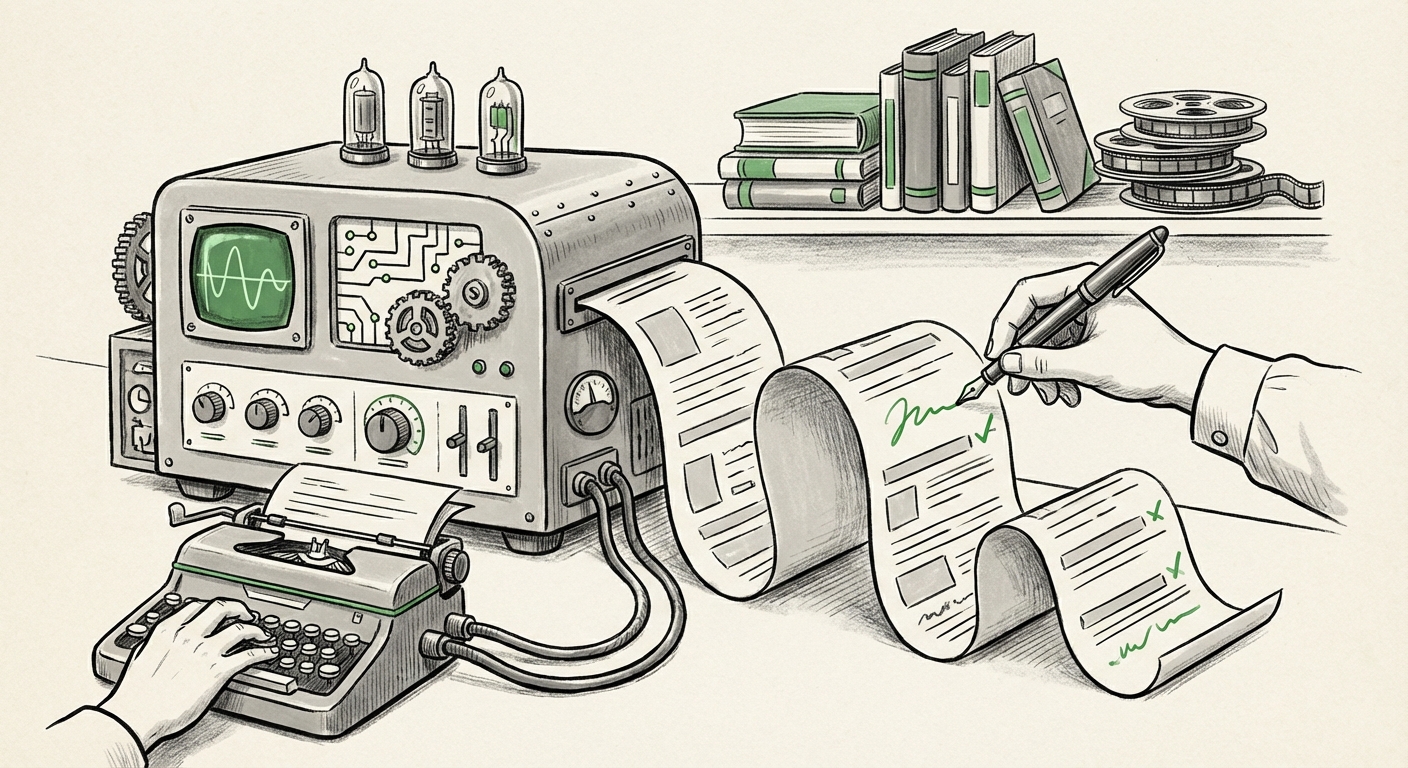
At its core, distillation is about transferring the "dark knowledge" of a massive, unwieldy teacher model into a smaller, faster, cheaper student. But the latest developments reveal something far more interesting: the student is no longer a passive recipient. It can actively query, challenge, and even refine the teacher. This bidirectional flow of intelligence is creating a new class of models that are smaller in size yet richer in capability, and it is changing every assumption we hold about the economics and accessibility of frontier AI.
What Distillation Actually Does — and Why It Suddenly Matters More Than Ever
To understand why distillation is such a big deal, it helps to picture the traditional AI pipeline. A company like OpenAI, Google DeepMind, or Anthropic spends hundreds of millions of dollars training a gigantic model — think several trillion parameters — on nearly the entire internet. That model can do incredible things, but running it costs a fortune: each inference requires enormous compute, memory bandwidth, and energy.
Distillation offers an escape hatch. Instead of deploying that giant model everywhere, you train a much smaller model — often 10 to 100 times smaller — to mimic the giant's behavior. The small model learns not just the correct answers, but the distribution of probabilities the teacher assigns to all possible answers. That distribution contains subtle patterns: the teacher might be 80% sure an answer is "Paris," 15% sure it's "Lyon," and 5% sure it's "Marseille." A student taught only on hard labels ("Paris") would miss that nuance. A student taught on the full distribution picks up the teacher's uncertainty, its reasoning pathways, and even its stylistic tendencies.
The result is a model that can perform nearly as well as its teacher on a wide range of tasks, but at a fraction of the cost. This is not theoretical. As of 2026, distilled models power many of the most widely used AI products. They run on smartphones, in browsers, and inside API services that charge pennies per million tokens. The economics are transformative: what once required a datacenter now fits in a laptop.
When the Student Starts Talking Back: The Bidirectional Breakthrough
The most exciting — and for some, unsettling — development in distillation is that the relationship is no longer a one-way street. Traditionally, the teacher generated training data, and the student absorbed it. But newer methods allow the student to generate its own questions, probe the teacher's weak spots, and even point out inconsistencies in the teacher's reasoning.
Think of it as a Socratic dialogue between model generations. The student says, "I'm confused about this logic puzzle. Can you show me your intermediate steps?" The teacher responds, sometimes clarifying, sometimes revealing that its own reasoning was flawed. The student can then push back: "But if we apply that rule here, doesn't it contradict what you said about this other example?"
This interactive refinement creates a feedback loop that improves both models. The teacher becomes more robust as it confronts its own blind spots. The student accelerates its learning curve dramatically. Early results suggest that bidirectional distillation can close the performance gap between a small student and a massive teacher by as much as 40% compared to traditional one-way distillation, and it does so with less total training data required.
The implications are profound. If student models can actively interrogate their teachers, then the entire training paradigm shifts from passive memorization to active reasoning. A student that talks back is not just a cheaper copy — it is a genuine collaborator in the knowledge-creation process.
Why Distillation Is the Key to Democratizing Frontier AI
One of the central tensions in AI today is the concentration of capability. Only a handful of organizations in the world can afford to train a frontier model from scratch. The cost — measured in both dollars and carbon — creates a barrier that excludes nearly everyone else. Distillation is the single most powerful tool for breaking that barrier down.
A distilled model that captures 95% of a frontier model's capability at 5% of the cost changes the competitive landscape entirely. Startups, academic labs, hospitals, and government agencies can run sophisticated AI systems without needing to raise billions of dollars first. They can fine-tune the student on their own private data, creating customized models for medicine, law, engineering, and education that rival the best general-purpose systems.
This is not a future possibility; it is happening now. In 2026, distilled models are the backbone of many specialized AI applications. Medical diagnostics, legal document analysis, code generation for niche programming languages — all are being powered by students that learned from the largest teachers but operate at a fraction of the overhead. The bottleneck is no longer access to compute; it is access to high-quality teacher outputs and the expertise to perform the distillation itself.
Risks and Unintended Consequences: The Dark Side of the Student-Teacher Dynamic
But any powerful tool comes with risks, and distillation is no exception. The most obvious danger is that a student can inherit the biases, errors, and blind spots of its teacher — and then amplify them through deployment at scale. If the teacher has a subtle bias against certain demographics or a tendency to hallucinate in specific domains, the student will learn those flaws, potentially even exaggerating them during compression.
There is also the problem of "distillation collapse." If too many students are trained on the outputs of a single teacher, the ecosystem becomes brittle. A flaw in the teacher becomes a flaw in every student, creating a monoculture of error. Diversity of models is not just an academic virtue; it is a safeguard against systemic failure. The industry is only beginning to grapple with how to maintain model diversity when distillation makes it so easy to copy the leader.
Perhaps most concerning is the potential for distillation to be used as an end-run around safety alignment. If a teacher model has been carefully aligned to refuse harmful requests, but a student trained on its outputs loses some of that alignment — or, worse, learns to simulate alignment while bypassing it in practice — then distillation becomes a vector for unsafe capabilities. Researchers are actively studying "alignment transfer" and how to ensure that safety properties compress as reliably as performance properties.
Practical Implications for Businesses: What Leaders Need to Do Now
For business leaders and technologists, the rise of distillation presents both an opportunity and a strategic imperative. The window for building competitive advantage purely on model scale is closing. What matters now is not who has the biggest model, but who can distill, customize, and deploy the most effective models for specific use cases.
1. Invest in Distillation Capability
Every organization that plans to use AI seriously should build internal expertise in distillation. This is not an exotic research skill — it is becoming a core engineering competency. Tools and frameworks for distillation are maturing rapidly, and the barriers to entry are dropping. The companies that treat distillation as a strategic capability rather than a research curiosity will be the ones that extract the most value from AI.
2. Distill for Privacy
One of the most compelling use cases for distillation is privacy-preserving AI. Instead of sending sensitive data to a cloud-based teacher, organizations can distill a student model on their own private data with guidance from a teacher that never sees the raw information. This opens the door to AI in healthcare, finance, and legal contexts where data governance is paramount.
3. Plan for Model Diversity
Relying on a single distilled model — especially one distilled from a single teacher — is risky. Smart organizations will maintain a portfolio of models, each distilled with different parameters, from different teacher generations, or with different data mixtures. This diversity acts as a hedge against the monoculture problem and provides fallback options when specific models underperform.
4. Monitor for Alignment Drift
If you deploy a distilled model, you cannot assume it inherits all the safety behaviors of its teacher. Rigorous evaluation and red-teaming are essential. Distilled models must be tested not only for benchmark performance but also for alignment properties: refusal rates, bias scores, and safety boundaries. Alignment assurance is a continuous process, not a one-time check.
5. Use Distillation as a Competitive Moat
In a world where frontier models are increasingly commoditized via APIs, the ability to distill and customize gives organizations a durable advantage. A distilled model fine-tuned on proprietary data and workflows cannot be easily replicated by competitors who rely only on generic APIs. Distillation becomes the moat that protects investment in data and domain expertise.
What Distillation Means for Society and the Future of Work
Beyond the boardroom, distillation has profound implications for how AI shapes society. The most immediate effect is accessibility. When powerful AI can run on a mid-range smartphone without an internet connection, the digital divide narrows. Students in under-resourced schools, healthcare workers in rural clinics, and small business owners in developing economies can all access capabilities that were previously locked inside expensive cloud services.
But there is a catch: distillation can also centralize power in new ways. If the best teacher models remain proprietary and tightly controlled, then distillation becomes a form of licensing — the teacher owner decides who gets to distill and on what terms. This could create a new kind of feudal AI economy where the "lords" control the teachers and the "vassals" operate under restricted distillation licenses. The battle over open vs. closed distillation will likely define the next phase of AI governance.
There is also an environmental angle. Distilled models are dramatically more energy-efficient than their teachers. A single large model inference can consume as much energy as a small household appliance running for an hour. Widespread distillation could reduce the AI industry's carbon footprint significantly, even as usage scales. That alone makes distillation a priority for any organization with sustainability commitments.
The Road Ahead: From Distillation to Co-Intelligence
The title "When the Student Started Talking Back" captures something essential about where the field is heading. The next stage of distillation will not be about compressing knowledge from a static teacher into a passive student. It will be about creating ecosystems of models that learn from each other bidirectionally, continuously, and at scale.
Imagine a world where every deployed model — from the giant teacher in the cloud to the tiny student on your watch — contributes insights back to a shared pool of knowledge. When a student encounters a novel edge case in production, it flags it for the teacher, which updates its own understanding. The teacher then redistributes that improved knowledge across all students. This is not science fiction; early industrial pilots of "federated distillation" are already running in sectors like manufacturing and logistics.
The student talking back is not a bug. It is the feature that makes the entire system smarter, more adaptive, and more resilient. The future of AI will not be built by a single genius model. It will be built by a web of models — teachers and students, large and small, each contributing what they do best. Distillation is the thread that weaves that web together, and the conversation is just getting started.