Agentic AI Is the Future – But Most Enterprises Are Still Just Building Fancy Chatbots
AI adoption is booming, but a dangerous gap is forming between what companies think they’re building and what they’re actually deploying. The latest enterprise research reveals that organizations are mistaking simple conversational chatbots for true AI agents – and the real bottleneck isn’t the technology platform, it’s how those agents are orchestrated in the real world.
Almost every large company now has an AI initiative. Teams are investing heavily in large language models, retrieval-augmented generation, and multi‑turn dialog systems. Yet a startling finding shows that more than half of what enterprises proudly call “agents” are really just chatbots with a few extra prompts. They can answer questions and even perform isolated tasks, but they collapse under the weight of complex, multi‑step business processes.
The core insight is this: enterprise AI has a deployment problem, not a platform problem. The models are ready. The infrastructure is mature. What’s missing is the orchestration layer – the glue that lets autonomous agents hand off work, track state, recover from failures, and collaborate across departments.
What Is a True Agent? (And Why the Distinction Matters)
Let’s strip away the jargon. A chatbot answers a question, maybe books a meeting, and then the conversation ends. An agent, on the other hand, is a program that perceives its environment, makes decisions, and takes a series of actions toward a long‑term goal – even when that goal requires adapting to surprises, calling external systems, and coordinating with other agents.
The confusion is understandable. Many vendors market their products as “agentic.” But when you look under the hood, you see stateless prompt chains, no memory of past interactions, and zero ability to recover when an API call fails. Companies inflate their AI capabilities to impress investors and customers, but internally they know the truth: their “agents” break as soon as a process hits a real‑world hiccup.
Here’s what a true agentic system typically needs:
- Persistent state and memory – it remembers what happened in previous steps
- Planning and re‑planning – if one path fails, it tries another
- Tool use that spans multiple systems – not just one API call
- Human‑in‑the‑loop escalation – when confidence drops, it asks for help
- Coordination with other agents – handing off work like a well‑run project team
When these features are missing, you don’t have an agent. You have a chatbot dressed up in a fancy suit.
The Real Bottleneck: Orchestration, Not the Platform
Why do so many enterprise AI teams fall short? It’s tempting to blame the model – “GPT‑5 wasn’t smart enough” or “our vector database was slow.” But the evidence points elsewhere. The models are astonishingly capable. The platforms – cloud services, model APIs, vector stores – are stable and scalable. The failure is in the orchestration code that stitches these pieces together.
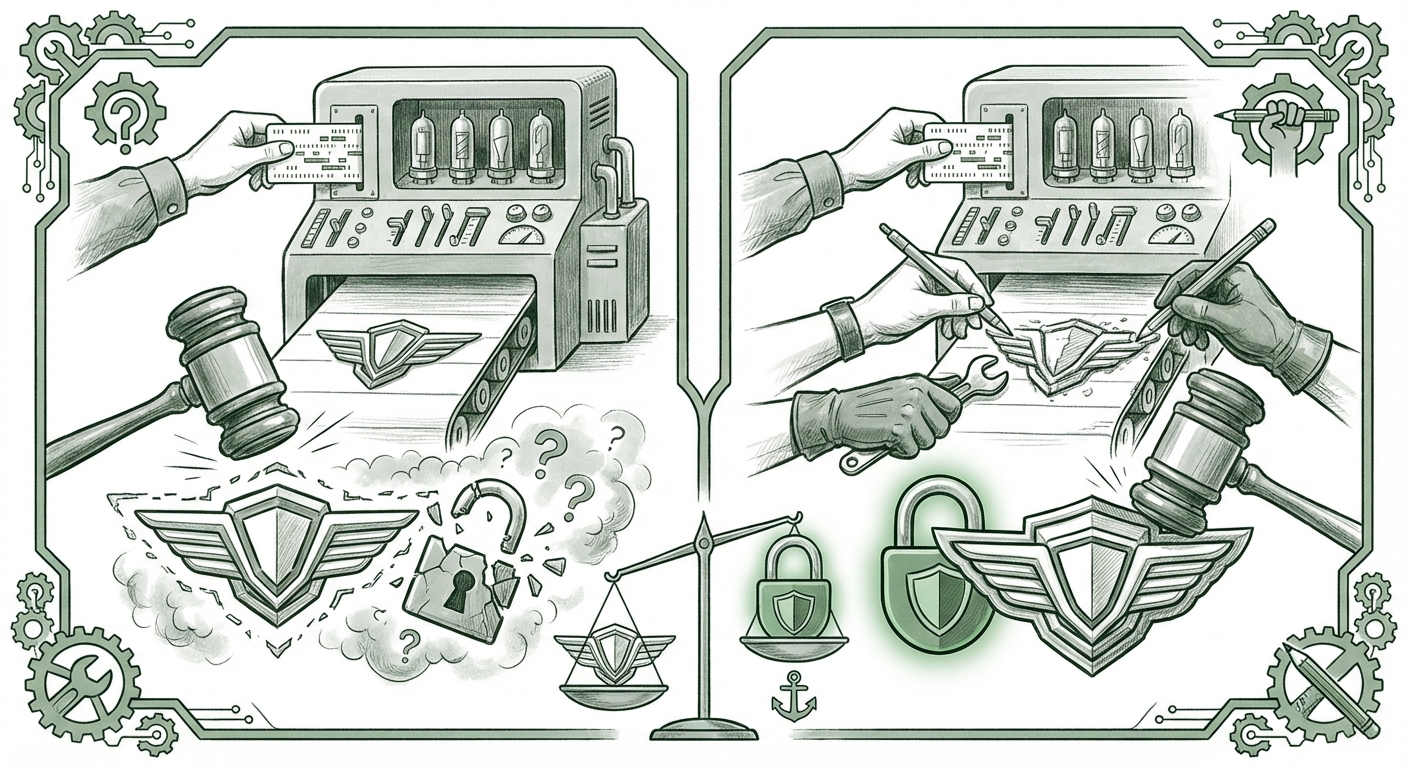
Think of it like a factory floor. You can have the best robots in the world, but if you don’t have a reliable conveyor belt, a quality control loop, and a repair crew for when a robot jams, the factory stops. In the AI world, the robots are the models, and the conveyor belt is the orchestration layer.
Most organizations simply don’t have the internal expertise to build this layer. They lean on prompt engineering (which is fragile) or off‑the‑shelf agent frameworks (which are too generic). The result? A “deployment gap” – amazing AI prototypes that never make it to production because they cannot be trusted to run autonomously for more than a few minutes.
Why This Is a Business Problem, Not Just a Tech Problem
This deployment gap has real costs. Projects stall. Budgets get wasted. And the C‑suite starts to lose faith. After two years of aggressive AI investment, many enterprise leaders are asking: “Where are the ROI‑generating agents we were promised?”
The answer is uncomfortable: they’re still being built, but they’re being built wrong. Instead of deploying a handful of truly reliable agents that handle complex workflows end‑to‑end, companies release dozens of fragile chatbots that require constant human babysitting. The chatbots look good in demos, but in production they hallucinate, get stuck in loops, or drop the user into a black hole of “I’m sorry, I can’t help with that.”
Actionable insight: Focus on fewer, deeper agentic deployments. Pick one high‑value process – like customer returns, supply chain exception handling, or claims triage – and build an agent that can handle 80% of cases autonomously. Then harden the orchestration, add monitoring, and expand. Trying to do everything at once guarantees mediocrity.
What This Means for the Future of AI
The shift from chatbots to true agents will define the next phase of AI. Here’s how I see the landscape evolving:
1. The Rise of Agentic Middleware
A new category of tools will emerge – not more model providers, but orchestration platforms purpose‑built for agent state management, inter‑agent communication, and failure recovery. These will become as essential as databases are today. Companies that ignore this layer will fall behind.
2. Hybrid Workflows Become the Norm
Agents won’t replace people overnight. Instead, the most successful deployments will blend autonomous agent actions with human approval gates. For example, an agent drafts a contract clause, a human reviews it, and the agent then files it. This “human‑in‑the‑loop orchestration” is where the real productivity gains live.
3. Specialized Agents Likely Outperform General‑Purpose Ones
Instead of one giant agent that does everything, we’ll see swarms of smaller, focused agents – each trained or prompted for a specific domain (e.g., a “logistics agent,” a “customer sentiment agent,” a “regulatory compliance agent”). The orchestration layer coordinates them. This mirrors how companies already operate with specialized human teams.
4. Trust Will Be the Decisive Factor
The reason many enterprises stick with chatbots is they’re low‑risk. A chatbot that sounds human but makes mistakes is annoying but not dangerous. An autonomous agent that makes a bad decision could cost millions. Building trust requires transparency – agents that can explain their reasoning and escalate when uncertain. Companies that invest in explainability and guardrails will deploy agents faster.
Practical Steps for Business Leaders
If you’re leading an AI initiative inside a large organization, here are five concrete things you can do to bridge the deployment gap:
- Audit your “agents.” Go through every AI project you call an agent. Does it have persistent state? Can it recover from failure? Does it act toward a multi‑step goal without human re‑prompting? You might be surprised how many don’t qualify.
- Invest in orchestration skills. Your best prompt engineers are valuable, but you also need system architects who understand event‑driven architectures, state machines, and async workflows. Hire or train for this.
- Start with a narrow, high‑impact use case. Look for a process that is repetitive, rule‑based, and high‑volume but that also requires occasional exceptions. That’s the sweet spot for agentic automation.
- Build a human‑in‑the‑loop pipeline from day one. Don’t try to launch a fully autonomous agent. Design a system where the agent proposes actions and a human approves them. Automate the approval step only after you have enough data to trust the agent’s decisions.
- Measure agentic reliability, not just accuracy. Track completion rate, recovery rate, and escalation rate. A truly successful agent should have high completion without excessive human hand‑offs.
The Bottom Line: We Need to Raise Our Standards
The AI industry has spent years making models bigger and smarter. Now the bottleneck has shifted. The next frontier isn’t a bigger model – it’s better orchestration. Companies that realize this will be the ones that finally unlock the productivity revolution we’ve been promised. Companies that keep calling chatbots “agents” will waste billions and wonder why their AI investments never pay off.
The future of enterprise AI isn’t about having the most advanced platform. It’s about deploying agents that actually work in the messy, unpredictable real world. That’s a deployment challenge – and it’s one we can solve if we stop pretending our chatbots are something they’re not.