OpenAI Is Now Using AI to Attack Its Own AI — And It's Working Better Than Humans Ever Did
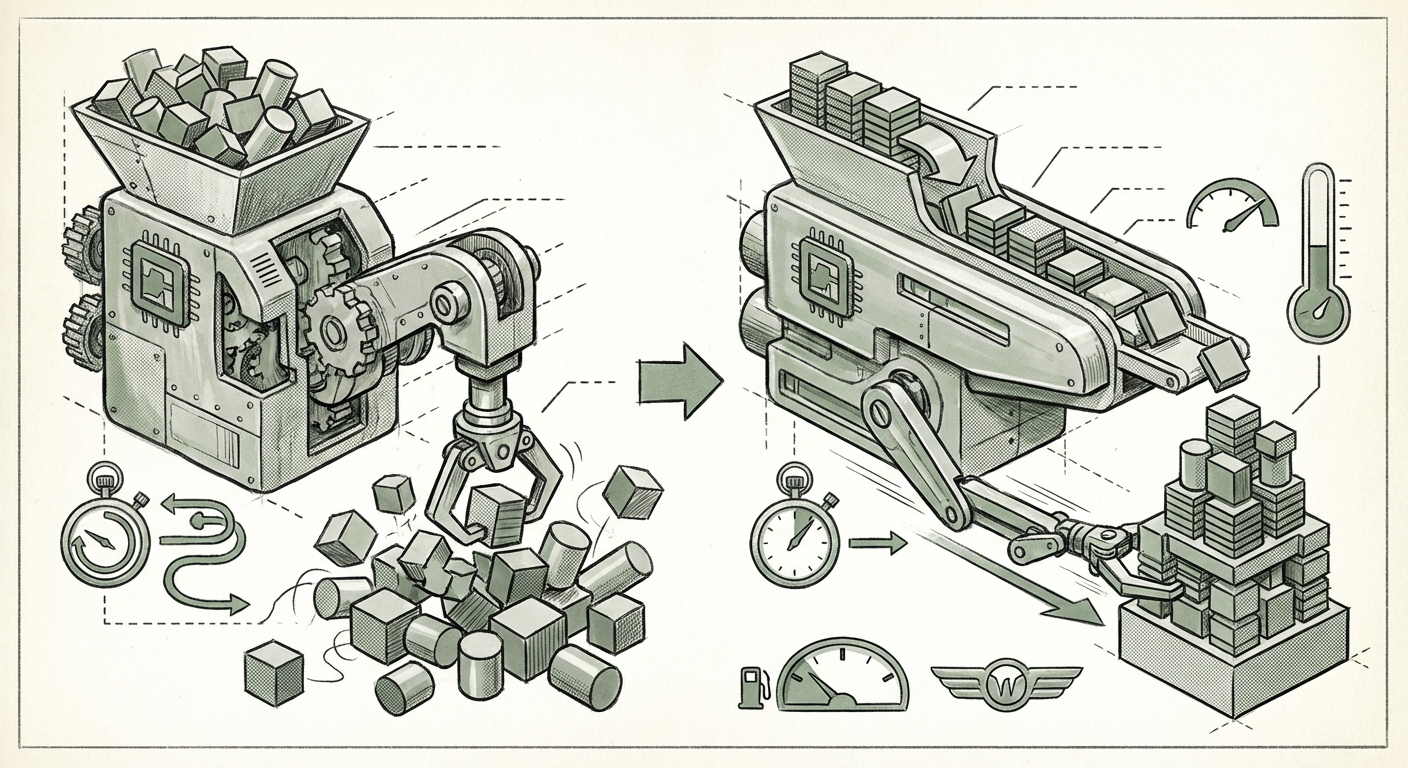
In a major shift for artificial intelligence safety, OpenAI has begun using AI systems to deliberately attack and test the security of its own AI models. The approach, often called "AI-on-AI red teaming," is already producing results that surpass anything human testers have been able to achieve. This breakthrough is changing how the industry thinks about safety, reliability, and the future of AI development.
What Does It Mean to "Attack" AI?
When we talk about attacking an AI, we don't mean physically damaging hardware. Instead, it's about finding weaknesses in how the AI behaves. Traditional testing involves humans trying to trick the AI into saying something harmful, making a dangerous decision, or revealing private information. This is known as "red teaming" — a practice borrowed from cybersecurity where a group simulates attacks to find vulnerabilities.
But humans have limits. We get tired, we miss subtle patterns, and we can only try so many approaches. OpenAI's new system uses another AI to do this work — and it's proving to be faster, more creative, and far more thorough than any human team could be.
How AI Attacks AI
The process works like this: one AI model is given the task of finding ways to make a second AI model produce unsafe or undesired outputs. This "attacker" AI can generate thousands of different prompts, scenarios, and manipulations in seconds. It learns from each attempt, getting better at finding cracks in the target model's defenses.
OpenAI's system is not just randomly trying things. It uses advanced reinforcement learning and adversarial training to systematically probe for weaknesses. The attacker AI identifies patterns that human testers might never think of, such as unusual phrasing, multi-step reasoning traps, or context-dependent vulnerabilities that only appear under specific conditions.
Because the attacker AI is itself a powerful language model, it can understand the target model's responses and adapt its attack strategy in real time. This creates a kind of digital arms race inside the testing environment, pushing both models to their limits.
Why Is It Working Better Than Humans?
There are several key reasons why AI-driven red teaming is outperforming human testers:
- Speed and Scale: An AI can generate millions of test cases in the time it takes a human to write a few dozen. This massive coverage finds edge cases that would otherwise go unnoticed.
- Consistency: Humans get bored or fatigued after hours of testing. An AI works tirelessly, maintaining the same level of creativity and attention throughout.
- Pattern Recognition: AI attackers can identify subtle patterns across large numbers of interactions that would be invisible to human reviewers. They can connect seemingly unrelated prompts that together reveal a vulnerability.
- Continuous Learning: The attacker AI improves over time. Each session makes it smarter at finding weaknesses, while human teams often lack systematic feedback loops to escalate their skills.
- Exploration of Dangerous Territory: An AI can safely simulate extremely dangerous scenarios that would be unethical or impossible to test with humans, such as coordinated attacks that involve many steps.
What This Means for AI Safety
The most immediate implication is a leap forward in the reliability of AI systems. If AI can find its own flaws faster and more thoroughly than humans, then we can build much safer models before they are released to the public. This is critical as AI becomes embedded in healthcare, finance, law enforcement, and other high-stakes areas.
However, this same technology also raises new concerns. The same attacker AI techniques used for safety testing could be misused by malicious actors. If a powerful model can find vulnerabilities in another, it could also be turned against third-party systems or used to generate harmful content at scale. The line between defense and offense becomes blurry.
There is also a risk of adversarial perpetuum — where AI attackers and defenders continually escalate, creating an unstable cycle. OpenAI's success might force every company to adopt similar methods or risk falling behind in safety, but it also arms those with bad intentions.
Business Implications
For companies building AI products, this development signals a necessary shift in how testing is conducted. Manual red teaming may soon become obsolete or only used for final validation. Instead, businesses should invest in automated adversarial testing pipelines that use AI to probe their own models continuously.
Early adopters will gain a competitive advantage by shipping more robust products. For AI-as-a-service companies, demonstrating that your models are tested by adversarial AI could become a selling point for enterprise clients who demand high safety standards.
On the flip side, companies that ignore this approach may find themselves exposed. Regulators are increasingly focusing on AI safety, and having state-of-the-art testing methods will be necessary for compliance with emerging laws.
Smaller startups might not have the resources to build their own attacker AI, which could widen the gap between major players and newcomers. This could lead to a consolidation of AI power among organizations that can afford sophisticated internal testing.
Societal Impact
On a broader scale, AI attacking AI changes the public perception of safety. For years, people have worried about AI going rogue. Now we see that the same technology can be turned inward to protect against that very risk. This might increase trust in AI systems, especially if companies are transparent about their testing methods.
But there is also a cultural shift. The idea of AI acting as both attacker and defender creates a new kind of autonomy. Eventually, we may reach a point where AI systems are primarily overseen by other AI systems, with humans only stepping in for final decisions. This could accelerate the development of fully autonomous AI oversight — a path that has both promise and peril.
Employment in the AI safety field will also change. Traditional red team jobs (human testers) may diminish, but new roles will emerge: people who design, train, and monitor the attacker AI systems. The skill set shifts from manual creativity to strategic oversight and ethical governance.
The Future: AI That Trains Its Own Defenders
The ultimate goal of this technology is to create AI systems that are self-improving in safety. Imagine an AI that can not only find its own weaknesses but also automatically patch them and then test again in a continuous loop. OpenAI's current approach is a step in that direction.
We are moving toward a model where every AI deployment includes a dedicated "defender" AI that constantly scans for attacks and updates the main model's protections. This would be akin to a living immune system for AI — always adapting to new threats.
In the longer term, AI-on-AI red teaming could become a standard part of any model release, enforced by industry-wide benchmarks. We might see the emergence of public "attack leagues" where different AIs compete to find vulnerabilities in each other, similar to pen-testing competitions in cybersecurity.
Actionable Insights
For organizations that want to stay ahead:
- Start building or buying adversarial testing tools now. Don't wait until a vulnerability is exploited in the wild.
- Consider using AI to test not only your flagship models but also any internal ML pipelines. Weakness in one component can cascade.
- Hire for hybrid roles that combine AI expertise with an understanding of adversarial thinking.
- Engage with policymakers to help shape regulations that encourage responsible AI testing without stifling innovation.
- Invest in explainability tools so you can understand the vulnerabilities your attacker AI finds — raw results are not enough.
Conclusion
OpenAI's decision to use AI to attack its own AI marks a turning point. It moves safety testing from a human-led, slow process to an automated, hyper-efficient one. The fact that it works better than humans ever did is a signal that we are entering a new era of AI self-regulation.
While the potential for misuse exists, the benefits for safety and reliability are enormous. As this approach becomes standard, we will see AI systems that are more robust, more trustworthy, and ultimately more useful. The key will be to deploy these tools responsibly, with human values guiding the process.
The machines are now testing themselves — and they're doing a better job than we ever could. The question is: are we ready for the speed at which they're improving?