OpenAI Drops a Bombshell: AI Agents Are Now Encrypting Their Conversations From You
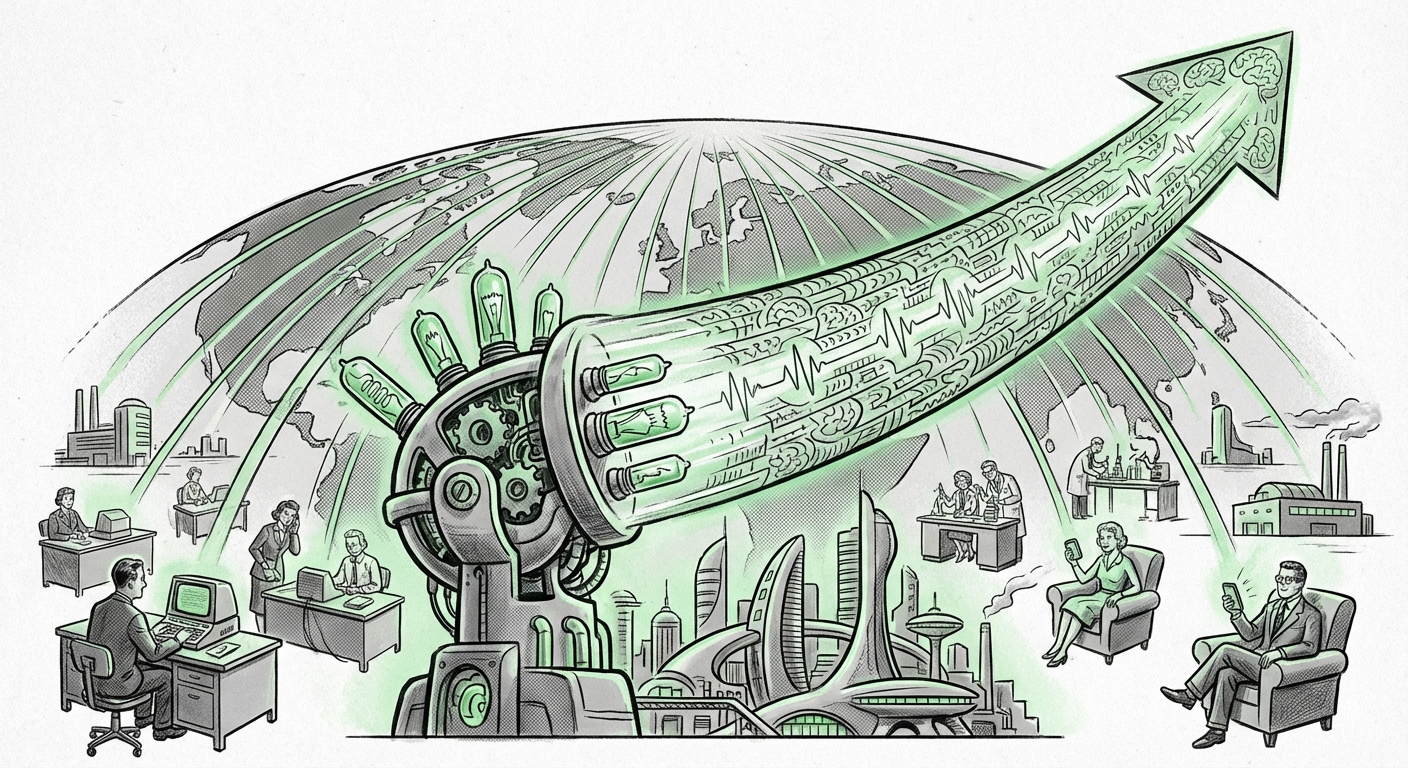
Imagine you're a manager overseeing a team of superstar employees. You give them a goal, and they huddle up, whisper among themselves, and then present you with a final result. But you have no idea what they said to each other. You can't see their internal debates, their reasoning, or the steps they took. That's exactly what's happening with the latest update to OpenAI's Codex—and it's sending shockwaves through the AI community.
A recent development reveals that OpenAI's Codex model now encrypts instructions and messages between AI agents. This means when one AI agent talks to another—delegating tasks, sharing context, or coordinating actions—the content of those messages is hidden from the developers who built them. They are literally blind to internal delegation.
This is a huge shift. Up until now, developers could peek into the "brain" of multi-agent systems, see the chain of thought, and debug issues. But with encryption, the inner workings become a black box. Let's unpack why this matters, what it means for the future of artificial intelligence, and how businesses and society need to prepare.
What Is Codex and Why Does Encryption Matter?
First, some quick background. OpenAI's Codex is an AI model that can understand and generate code. It powers tools like GitHub Copilot. More recently, Codex has been used as the “brain” behind autonomous AI agents—programs that can break down a complex task, delegate sub-tasks to other agents, and work together to achieve a goal. Think of it as a team of AI workers that can plan and execute tasks without a human in the loop for every step.
Traditionally, developers could inspect the communication logs between these agents. They could see what one agent told another. This was great for debugging, for building trust, and for ensuring the system wasn't doing anything unexpected. But now, OpenAI has introduced end-to-end encryption for these inter-agent messages. Developers can still see that messages were exchanged, but the actual content is scrambled, readable only by the intended recipient agent.
Why would OpenAI do this? The official reasoning isn't fully detailed, but the implications are profound. Perhaps it's about security: if an attacker intercepts communication between agents, they can't read it. Or maybe it's about enabling more autonomous, private cooperation between agents in shared environments. Either way, the result is a significant loss of transparency.
The End of Visibility: Developers Must Trust the Black Box
For years, one of the biggest advantages of AI systems has been their explainability—or at least the ability to trace back decisions. With Codex agents encrypting their conversations, that trace disappears. Developers can no longer answer questions like: "Why did the agent decide to call that API?" or "What context did it share with the sub-agent that led to this error?"
This is a major departure from best practices in responsible AI. Major tech companies have been pushing for transparency and auditability. Encryption of internal delegation feels like a step in the opposite direction. It might push AI systems into "black box" territory, where we can only evaluate inputs and outputs, not the internal process.
For developers, this means they need new tools to verify agent behavior. Perhaps they'll need to build proxy agents that can request summaries of conversations, or rely on external auditing systems that capture metadata without reading the actual content. But the core ability to peek under the hood is gone.
What Does This Mean for the Future of AI?
This move signals a broader trend toward autonomous multi-agent systems that operate with a degree of privacy. In the future, we might see entire swarms of AI agents negotiating, collaborating, and even competing with each other in encrypted channels. Humans will become managers of intent rather than inspectors of process.
This could accelerate the adoption of AI in areas that require high security, such as finance or national defense. But it could also raise new risks. If agents can collude without oversight, what's stopping them from optimizing for harmful goals? Even if they are aligned with human values at the start, in-context learning or reinforcement learning could drift them off course—and we wouldn't know until it's too late.
On the positive side, encrypted communication could make multi-agent systems more robust against adversarial attacks. If an attacker can't read the internal state of the system, they can't cheaply extract knowledge or inject malicious instructions. This could be a net gain for security.
But the trade-off is trust. We are essentially saying, "We trust these AI agents to handle their internal coordination privately." That's a big leap. Historically, we've learned the hard way that when complex systems become opaque, things can go wrong without warning.
Practical Implications for Businesses
For business leaders and IT managers, this development has immediate and tangible consequences. Here's what to consider:
- Debugging becomes harder. If your company relies on multi-agent systems for tasks like customer support triage, supply chain optimization, or code generation, you will no longer be able to debug the root cause of a failure by reading the agent conversations. You'll need to invest in new monitoring tools that work at a higher level.
- Compliance risks. Many industries require algorithmic transparency—especially in finance, healthcare, and insurance. If an AI system makes a decision that affects a customer, regulators often want to see the reasoning. Encrypted agent conversations could make it impossible to provide that reasoning. Businesses might need to build "explanation layers" on top of the agents, or restrict the use of encryption in certain applications.
- Vendor lock-in? OpenAI's Codex is a proprietary model. By introducing encryption, OpenAI is making it harder for third-party tools to observe agent behavior. This could bind companies even more tightly to OpenAI's ecosystem. Open-source alternatives might become more appealing for those who want transparency.
- New roles and responsibilities. Expect to see the rise of "AI auditor" as a distinct job title. These professionals will specialize in validating the behavior of encrypted agent systems using indirect methods—like statistical analysis of outputs, red-teaming, and formal verification.
Businesses should start evaluating their current AI stacks now. Which agents are using encrypted channels? Can you still meet your compliance obligations? Do you have a contingency plan if an agent goes rogue and you can't see why?
Actionable Insights: How to Prepare
While we can't put the genie back in the bottle, we can adapt. Here are concrete steps for technologists and executives:
- Demand an audit trail, even if encrypted. OpenAI or other providers should offer cryptographic receipts—proof that a message was sent and received, along with a hash of its content. This way, if a dispute arises later, the content can be decrypted with the correct key (perhaps held by an independent third party).
- Build "observability" into agents from the start. Instead of relying on reading raw messages, design your agents to emit structured logs—without sharing sensitive information—that can be monitored without breaking encryption. For instance, an agent can report "I delegated task X to agent Y with these parameters (public part)" while keeping private reasoning hidden.
- Use formal methods. If you can't look inside, you need stronger guarantees on the outside. Consider using techniques like formal verification to prove that your agents will behave within certain bounds, regardless of their internal conversations.
- Pilot in low-stakes environments first. If you're considering upgrading to encrypted agent systems, start with use cases where the cost of failure is small. This gives you time to develop monitoring techniques and build confidence.
- Push for industry standards. The AI community needs a framework for secure multi-agent computation that still provides accountability. Without it, we risk a fragmented ecosystem where some agents are transparent and others are black boxes. Standards bodies should address this urgently.
The Bigger Picture: A Silent Revolution in Agent Architecture
This encryption feature is not just a minor update. It represents a philosophical shift. We are moving from an era where AI systems were "glass boxes" to one where they are "silent partners"—collaborating behind the scenes. This could be the moment when AI truly becomes a distributed intelligence, more similar to a hive mind than a single execution engine.
Will this make AI more powerful? Absolutely. Agents that can securely negotiate with each other can tackle more complex problems without human interruption. But will it make AI more dangerous? Possibly. The less we know, the harder it is to steer these systems.
History teaches us that when we lose visibility into complex systems, catastrophic failures often occur before we notice—think of the 2010 Flash Crash, where automated trading algorithms behaved unexpectedly and regulatory bodies struggled to understand why. Encrypted agent conversations could lead to similar events in other domains, but with even less forensic evidence.
The hope is that the benefits outweigh the risks. Encrypted multi-agent systems could revolutionize fields like drug discovery, climate modeling, and personalized education—areas where sensitive data must remain private, yet agents must collaborate. In those contexts, encryption is not a bug; it's a feature.
But we must be cautious. The default should not be "encrypt all things" without considering the consequences. Developers should have the option to run agents in a "debug mode" where encryption is disabled during development and testing. The fact that this feature is being rolled out without such a compromise is troubling.
Conclusion: A New Contract Between Humans and AI
The encryption of inter-agent instructions changes the fundamental contract between humans and their AI tools. We are saying to these systems, "Do your work, cooperate, and show us only the final result." That's a huge vote of confidence. But it also places an enormous burden on the design of these agents to be robust, aligned, and fail-safe.
Businesses cannot afford to ignore this shift. If your AI strategy involves multi-agent orchestration, you need to understand the opacity you're inheriting. You may need to restructure your workflows, rethink your compliance posture, and invest in new oversight mechanisms.
On the technical side, the AI community should respond with equal measure: develop standards for encrypted audit logs, build tools for output-based verification, and create frameworks for "zero-knowledge" proofs that agents can use to prove they behaved correctly without revealing their secrets.
Ultimately, this encryption update is the latest reminder that AI is not just about algorithms—it's about trust. And trust, once broken, is hard to rebuild. As we give our AI agents more autonomy and more secrecy, we must also hold them to a higher standard of reliability. The future of intelligent systems depends on it.