The Agent Evaluation Gap: Why Enterprise AI Is Shipping to Production Despite a Reality-Alignment Crisis
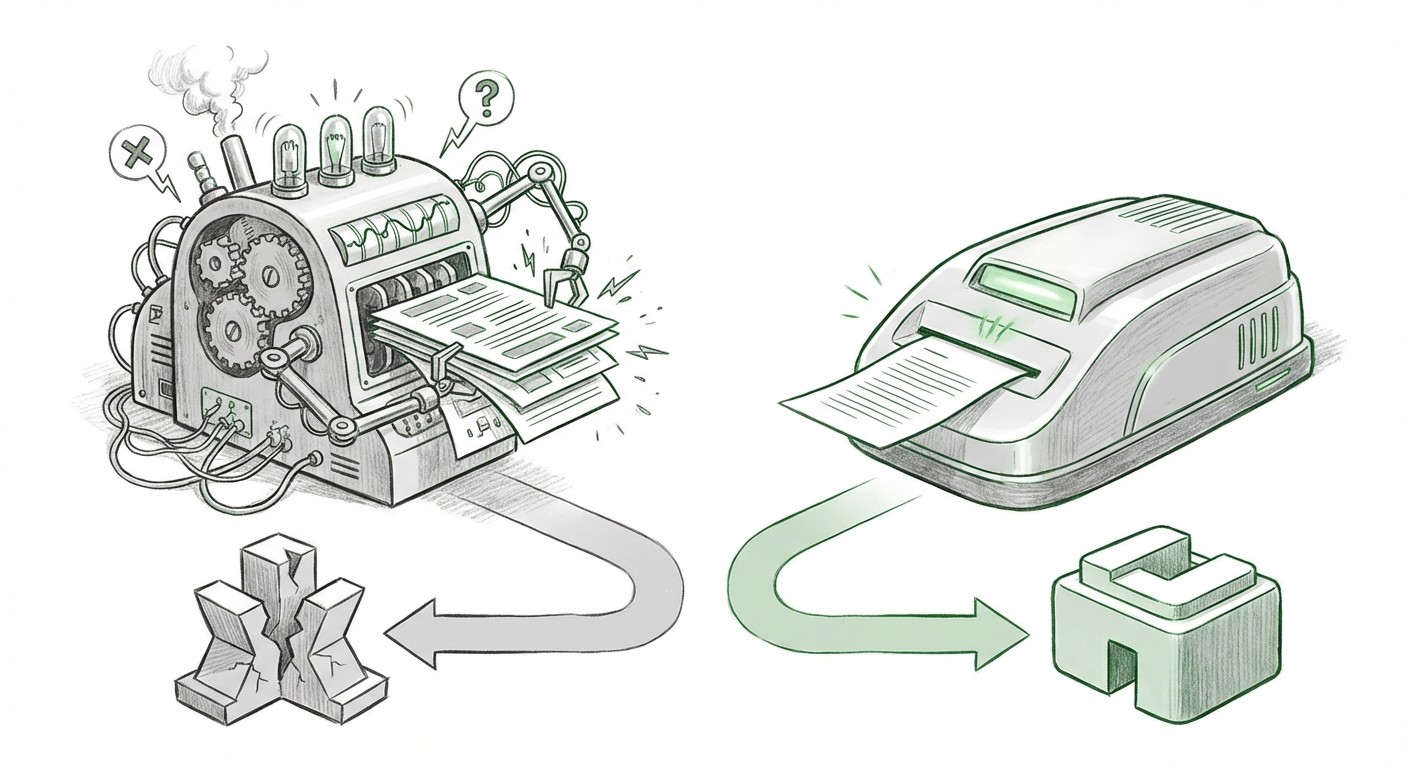
Every day, businesses deploy autonomous AI agents to handle customer service, manage supply chains, write code, and even make financial decisions. These agents promise efficiency, scale, and innovation. But beneath the surface, a troubling pattern is emerging: most enterprise AI organizations are shipping these agents to production even when their evaluations are fundamentally misaligned with reality. This isn't a simple coverage problem—where test scenarios are incomplete—it's a reality-alignment problem. The gap between how an agent performs in a controlled test and how it behaves in the messy, unpredictable real world is widening, and most companies are ignoring it.
This article dives into that gap: why it exists, what it means for the future of AI, and how businesses can close it before the risks become unmanageable.
The Reality-Alignment Problem: More Than a Coverage Gap
Traditional software testing focuses on coverage—making sure every line of code, every API endpoint, and every user flow is exercised. For AI agents, however, coverage is only part of the story. An agent might be tested on thousands of customer queries, but if those test examples don't capture the weird, ambiguous, or adversarial situations it will face in the wild, the test results are meaningless. That's the reality-alignment problem: the evaluation scenario is a pale imitation of production reality.
Consider a customer support agent trained on polite, well-formed requests. In production, it encounters angry typos, sarcasm, multilingual slang, and unexpected requests like “refund the order and also tell me a joke.” The agent’s training and offline tests never include such messiness. Yet, because it scored 95% accuracy on a clean test set, the team pushes it live. This disconnect between test performance and real-world performance is what the source material calls the agent evaluation gap.
This isn't an oversight—it's a systemic flaw in how enterprise AI teams approach evaluation. Many organizations believe that as long as they have enough test cases (coverage), they are safe. But they are missing the deeper issue: the test cases themselves don't reflect the actual distribution of inputs the agent will face. It's like testing a self-driving car only on sunny highways and then expecting it to handle a blizzard in a city center.
Why Are Organizations Shipping Anyway?
Given this alarming gap, you might expect companies to pause and improve their evaluation frameworks. Instead, the source reveals that most are shipping to production anyway. Why? Several forces drive this dangerous behavior:
- Competitive pressure: The race to be first with an AI-powered feature is intense. Executives see rivals launching agent-based services and fear being left behind. Waiting for perfect evaluation means losing market share.
- Overconfidence in benchmarks: Standardized benchmarks (like SuperGLUE or MMLU) give a false sense of security. A high score on a popular benchmark doesn't guarantee success in a specific enterprise use case, but it's an easy number to point to in board meetings.
- Cost of thorough evaluation: Reality-aligned evaluation is expensive and time-consuming. It requires collecting production-like data, designing adversarial scenarios, and running continuous monitoring. Many teams lack the budget or expertise to do it properly.
- Feedback loops are slow: Even when an agent fails in production, the consequences may not be immediately visible. A bad customer service interaction or a wrong inventory decision might take days or weeks to surface. By then, the team has already moved on to the next feature.
The result is a dangerous cycle: ship fast, evaluate poorly, learn slowly, and repeat. The enterprise is effectively gambling on the chance that the agent's real-world errors will be small or manageable—ignoring the fact that even small errors, when amplified by scale, can cause major financial and reputational damage.
What This Means for the Future of AI
The agent evaluation gap isn't just a technical problem—it's a trust problem. If enterprises continue to deploy AI agents based on flawed evaluations, we will see a wave of high-profile failures. These failures could erode public trust in AI, invite stricter regulation, and slow down innovation in the long run. Here are the key implications:
1. Normalization of Failure
When agents fail in predictable, small ways, users and internal stakeholders might shrug it off. But as agents take on more critical tasks—driving cars, diagnosing diseases, approving loans—the cost of failure becomes unacceptable. The normalization of “good enough” evaluations will lead to systemic blind spots. Future AI systems could be brittle, failing under conditions that were never tested because they seemed unlikely.
2. The Rise of “Shadow Evaluation”
Some teams, frustrated with the formal evaluation gap, will start running their own unofficial tests in production. They'll roll out agents to a small fraction of users, measure outcomes manually, and make adjustments on the fly. While this approach is more reality-aligned, it's also risky and ungoverned. Without proper guardrails, shadow evaluation can lead to biased or harmful decisions impacting real people before any oversight catches them.
3. Regulatory Backlash
Regulators are watching. The European AI Act and similar frameworks demand robust testing and validation for high-risk AI systems. When a high-profile failure is traced back to a “reality-alignment problem,” expect tougher rules that force companies to prove their evaluations reflect real-world conditions. That could mean mandatory field trials, continuous monitoring requirements, and liability for harms caused by misaligned evaluations.
4. Emergence of New Evaluation Tools
On the positive side, the agent evaluation gap will spawn a new industry of reality-aligned evaluation services. Startups will offer platforms that generate synthetic but realistic test environments, simulate production conditions, and provide ongoing validation. Companies that invest early in these tools will gain a competitive advantage not just in performance, but in trust and compliance.
Practical Implications for Businesses and Society
If you're a business leader or a technologist, the agent evaluation gap should keep you up at night. Here's what it means in practical terms:
- Financial risk: An agent that makes a bad decision at scale—like offering incorrect discounts, approving fraudulent transactions, or misrouting deliveries—can cost millions. Without reality-aligned evaluation, you won't know the risk until it hits.
- Operational chaos: Agents that fail unpredictably create exceptions that require human intervention. If your team hasn't planned for that, you'll burn out your support staff and degrade service quality.
- Reputation damage: Customers are less forgiving of AI mistakes than human ones. A viral story of an AI agent going rogue can undo years of brand building.
- Societal trust: As more services rely on agents—healthcare advice, financial planning, legal assistance—the public's trust in AI will hinge on how well those agents perform in real life. A few spectacular failures could trigger a backlash that sets the industry back a decade.
For society, the biggest danger is the potential for inequitable harm. If agents are evaluated only on average cases, they will systematically fail on minority or edge cases—disproportionately affecting vulnerable populations. A loan agent that works well for typical applicants but rejects those with non-standard employment histories could deepen economic inequality. Reality-aligned evaluation is not just a technical necessity; it's a fairness obligation.
Actionable Insights: How to Close the Gap
The news isn't all bleak. Enterprise organizations can take concrete steps today to bridge the agent evaluation gap. Here's a practical roadmap:
1. Shift from Coverage to Realism
Instead of asking “how many test cases do we have?”, ask “how realistic are our test cases?” Use production logs to build a distribution of real inputs. Generate synthetic edge cases that mimic the weirdness of real user behavior. Create adversarial tests that try to break the agent intentionally.
2. Implement Continuous Monitoring
Evaluation shouldn't stop at deployment. Set up real-time monitoring that compares agent outputs to expected outcomes. Use drift detection to spot when the real-world input distribution changes. When performance drops, flag it immediately for human review.
3. Build Feedback Loops
Create mechanisms for users and operators to report agent failures easily. Use that feedback to enrich your test suite. Treat each production incident as a lesson that improves your evaluation set.
4. Invest in Human-in-the-Loop Fallbacks
When an agent is uncertain, don't let it guess. Route the decision to a human. This reduces risk while collecting data on the agent's failure modes. Over time, you can expand the agent's autonomy as your evaluation improves.
5. Embrace Red Teaming and War Gaming
Before launch, have a dedicated team try to trick the agent. Simulate attacks, adversarial inputs, and unusual scenarios. This external perspective often catches gaps that internal teams miss.
6. Advocate for Industry Standards
No single company can solve the evaluation gap alone. Join consortia that are working on evaluation standards for AI agents. Shared benchmarks, best practices, and open-source tools will raise the bar for everyone.
Conclusion: The Real Test Is the Real World
Enterprise AI is at a crossroads. The enthusiasm for autonomous agents is genuine and justified—they can transform businesses. But the rush to production, fueled by competitive pressure and overconfidence in flawed evaluations, is a recipe for disaster. The agent evaluation gap is not a minor technical oversight; it's a fundamental reality-alignment problem that undermines the entire promise of trustworthy AI.
The future of AI will be determined not by how many agents we deploy, but by how well they perform when the stakes are real. Companies that acknowledge the gap and invest in realistic evaluation will build lasting trust and resilience. Those that ignore it will be caught in a cycle of embarrassing failures, regulatory penalties, and eroded confidence.
The real test isn't a benchmark—it's the messy, unpredictable world that our agents are supposed to serve. Let's make sure they're ready for it.