Spark, Compute, and the Two Metas: The Battle That Will Define AI's Future
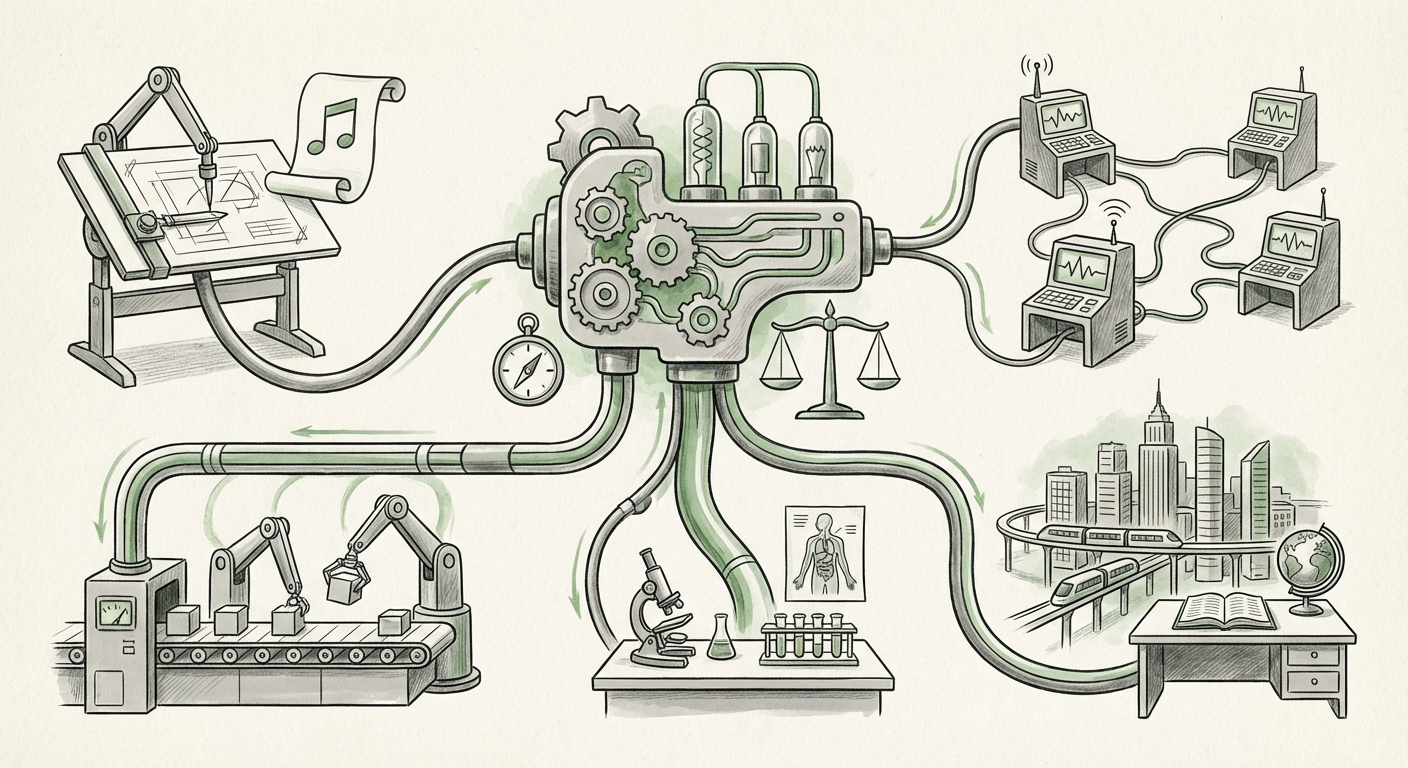
Artificial intelligence stands at an inflection point. For years, the story of AI was simple: more data, bigger models, faster chips. But a new narrative is emerging — one that pits raw computational power against the unpredictable magic of human ingenuity. This is the story of spark — the flash of insight that leads to breakthrough innovation — and compute — the massive infrastructure that turns ideas into reality. And at the center of it all, there are not one but two Metas competing to shape what comes next.
Understanding this tension is not just an academic exercise. It will determine which companies thrive, which countries lead, and whether AI becomes a tool for everyone or a weapon for the few. Let's break down what the convergence of spark, compute, and the two Metas means for the future of AI — and for you.
The Great Divide: Spark vs. Compute
Think of spark as the creative side of AI — the breakthrough algorithms, the elegant architectures, the clever training techniques that push the field forward. It's the "aha!" moment when a researcher realizes that transformer models can understand context, or that reinforcement learning can master games no human can beat. Spark is unpredictable, rare, and deeply human.
Compute, by contrast, is the brute-force engine room. It's the thousands of GPUs running in parallel, the data centers consuming megawatts of power, the billions of dollars spent on chips and cooling systems. Compute is predictable, scalable, and increasingly commoditized. You can buy more compute. You cannot buy more spark.
For the past decade, the AI industry has been on a compute-heavy path. The dominant paradigm — scale — said that if you throw enough data and enough computing power at a problem, intelligence emerges. And it worked. GPT-4, Gemini, Claude — all of them are monuments to this philosophy. But we are hitting limits. The cost of training frontier models has skyrocketed. Energy constraints are real. And some of the low-hanging fruit of scaling has been picked.
This is where the tension between spark and compute becomes critical. The next leap forward in AI may not come from building a bigger cluster. It may come from a smarter idea — a new architecture, a more efficient training method, a fundamentally different way of representing knowledge. That is spark.
The Two Metas: A Clash of Visions
So who will lead us into this next era? The answer lies in understanding the two Metas — two competing visions for how AI should evolve and who should control it.
Meta 1: The Infrastructure Empire
This vision prioritizes compute above all else. It says that the winner of the AI race will be the organization that can build the biggest, fastest, most efficient computing infrastructure. This means owning the supply chain — from chip design to data center construction to energy generation. In this world, AI is a capital-intensive game where scale is king. The players are tech giants with trillion-dollar market caps and nation-states with deep pockets. The risk? A world where only the richest can participate, and where innovation slows because compute becomes a barrier to entry.
Meta 2: The Innovation Ecosystem
This vision prioritizes spark. It says that the future of AI belongs to the organizations that can attract the best talent, foster the most creative research, and rapidly turn ideas into products. This means investing in open research, collaborative tools, and a culture of experimentation. Scale still matters, but it's not the only thing. In this world, startups and academic labs can compete with giants — as long as they have access to affordable compute. The risk? That without enough infrastructure, great ideas never reach the real world.
Neither vision is purely right or wrong. The key insight is that both Metas exist simultaneously, often within the same company or country. The tension between them — between building bigger and thinking smarter — is the engine driving AI forward.
Why This Matters Now
The timing of this debate is not accidental. Several forces are converging to make the spark-versus-compute question urgent:
- Cost escalation: Training a frontier AI model now costs hundreds of millions of dollars. If that trend continues, only a handful of organizations will be able to participate. That is unsustainable for a field that thrives on diversity of thought.
- Energy constraints: Data centers already consume a significant fraction of global electricity. The environmental and geopolitical pressures to find more efficient approaches are mounting.
- Diminishing returns: The performance gains from simply scaling up are getting smaller. Each new generation of model requires exponentially more compute for a linear improvement in capability.
- The rise of open-source: Open-weight models and community-driven research are demonstrating that smaller, more efficient models can rival the giants. This is a pure victory for spark over brute compute.
The next few years will determine which of these forces dominates. And the decisions made today — by companies, by researchers, by policymakers — will echo for decades.
Practical Implications for Business
For business leaders, the spark-versus-compute debate is not abstract. It has direct consequences for strategy, investment, and risk management.
1. Don't bet everything on scale
The lesson of the two Metas is that there are multiple paths to AI value. While it is tempting to pour money into the biggest models and the fastest chips, the smartest strategy may be more balanced. Invest in both infrastructure and talent. Build the compute capacity you need, but also create the culture and incentives that attract spark. The companies that do both will have a durable advantage.
2. Look for efficiency innovations
Some of the most exciting work in AI today is not about making models bigger but about making them smarter in how they use resources. Techniques like mixture-of-experts, quantization, pruning, and knowledge distillation allow models to do more with less. For most businesses, adopting these efficiency innovations is far more practical than trying to build a frontier model from scratch.
3. Prepare for a fragmented landscape
The two Metas are not going to merge into one unified approach. Instead, the AI landscape will remain polarized. On one side, a small number of hyperscale players will control the most powerful models. On the other side, a vibrant ecosystem of specialized, efficient, and open models will serve the long tail of applications. Your business needs to be able to navigate both worlds. Invest in the skills and tools to work with different types of models — from the massive to the compact.
4. Watch the talent market
The scarcity of spark means that the people who generate it — top researchers, engineers, and product thinkers — are the most valuable asset in AI. The competition for this talent is fierce and will only intensify. Companies that cannot offer the resources of a tech giant can still compete by offering autonomy, impact, and culture. In the war for spark, small and agile teams can beat large and slow ones.
Societal Implications: Who Wins, Who Loses?
The tension between spark and compute is not just a business story. It has profound implications for society at large.
If compute wins — if the future of AI is determined by who can build the biggest infrastructure — then power concentrates in the hands of a few. The barriers to entry become insurmountable for most countries, companies, and individuals. AI becomes a tool of the elite, widening existing inequalities. Innovation slows because the pool of people who can contribute to frontier research shrinks to a tiny fraction of the global population.
If spark wins — if breakthrough ideas and efficient algorithms carry the day — then the future of AI is more democratic. Smaller players can compete. New ideas can come from anywhere. The pace of innovation accelerates because more minds are in the game. But there is a risk here too: without sufficient compute, great ideas may remain in the lab, never scaled to have real-world impact.
The most likely outcome is a hybrid path. Compute will remain a critical enabler, but the marginal advantage of pure scale will shrink. Spark — innovation, creativity, efficiency — will become the differentiator. The winners will be those who can combine both: the vision to imagine something new and the infrastructure to bring it to life.
Actionable Insights for the Next 12 Months
The debate between spark, compute, and the two Metas is not a distant future concern. It is happening right now, and there are concrete steps you can take to position yourself and your organization for what comes next.
- Audit your AI strategy: Are you over-indexing on scale? Look at your spending on compute versus your investment in talent and R&D. A healthy balance is essential.
- Build a culture of spark: Create space for experimentation. Encourage your teams to explore unconventional ideas. Some of the most important AI breakthroughs came from projects that seemed impractical at the time.
- Learn the efficiency toolkit: Familiarize yourself and your team with techniques like fine-tuning, retrieval-augmented generation (RAG), and model compression. These allow you to get world-class results without world-class compute budgets.
- Monitor the infrastructure landscape: The cost and availability of compute is changing rapidly. New chip architectures, cloud offerings, and energy technologies are emerging. Stay informed so you can make smart procurement decisions.
- Engage with the open-source community: Some of the most impressive sparks are happening in open-source AI. Participating — even as a consumer of models — gives you access to cutting-edge innovation at a fraction of the cost.
Conclusion: The Age of Balance
The narrative of AI has always been about more — more data, more compute, more parameters. But that story is reaching its natural limits. The next chapter will be about better. Better ideas. Better efficiency. Better alignment between what we build and what we need.
The two Metas — the infrastructure empire and the innovation ecosystem — are not enemies. They are two sides of the same coin. The future of AI belongs to those who can hold both in their hands: the discipline to build massive systems and the creativity to imagine what they can become.
Spark is the vision. Compute is the engine. Together, they will take us places neither could reach alone.