Video Generators Are the World Models AI Has Been Looking For: What This Means for the Future
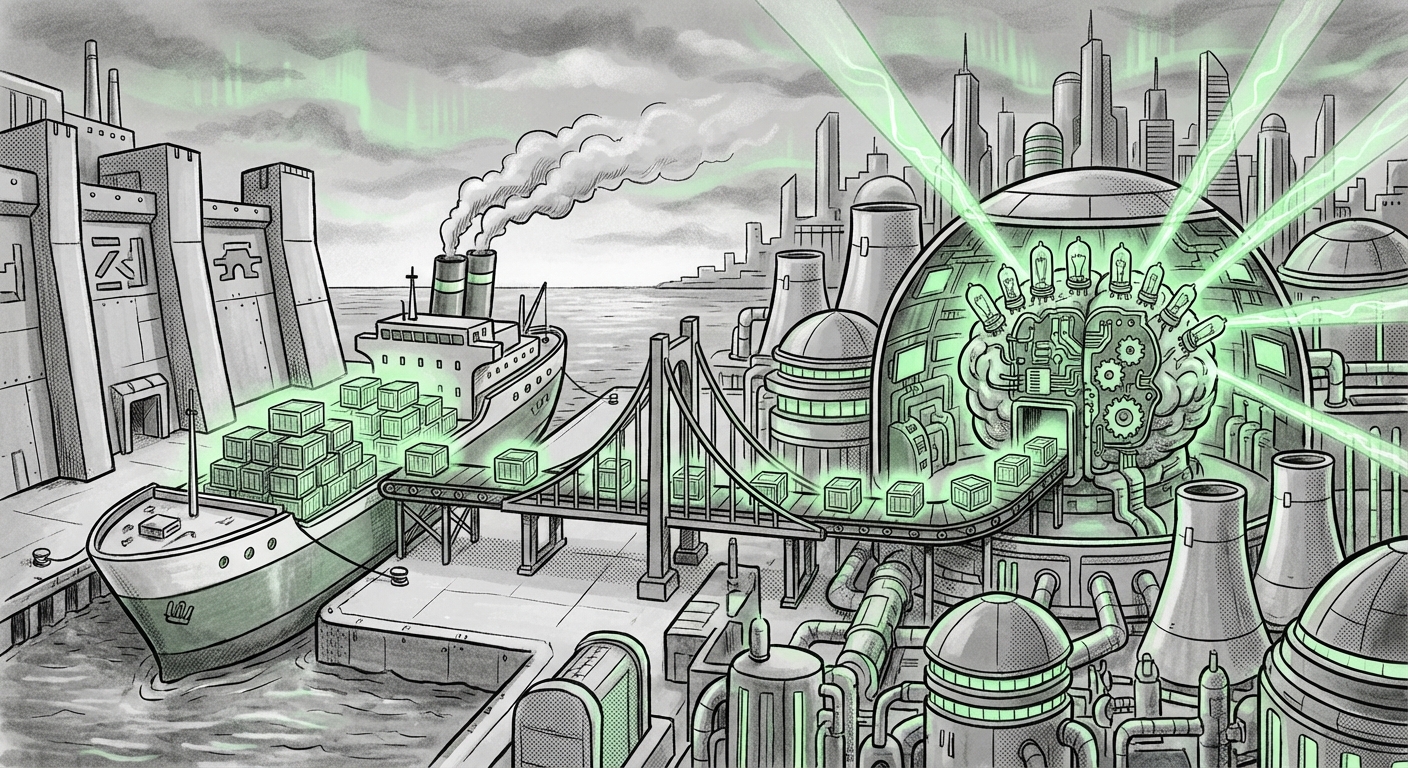
For years, computer vision researchers have chased a holy grail: a world model—an internal representation of the physical world that lets an AI understand cause and effect, predict what happens next, and reason about unseen situations. It’s the kind of common sense that humans pick up in childhood, but that machines have always found elusive. Now, a provocative new argument reshapes the conversation: the very video generators that can create realistic clips of cats playing piano or cars driving through snow may already be the world models computer vision has been missing.
This isn’t just a tweak in theory. It could fundamentally change how we build robots, test self-driving cars, create virtual worlds, and even ensure AI safety. Let’s unpack what this means for the future of AI—and how it will be used in the real world.
The World Model Dream — and the Long Struggle
A world model, in the simplest terms, is a mental simulation of reality. If you see a ball roll toward the edge of a table, you can predict it will fall. You don’t need to watch it happen. Your brain has an internal model of gravity, object permanence, and momentum. For AI, building such a model from pixels has been brutally difficult.
Traditional computer vision relied on hand-crafted features or supervised learning on labeled datasets. A model could be trained to recognize a “dog” in millions of photos, but it had no understanding that a dog can’t become a cat between frames, or that dropping a dog would cause it to fall. It was pattern matching, not true understanding. Researchers tried to manually encode physics rules, but the real world is messy—doorknobs turn, water splashes, shadows deform. Programming all that by hand is impossible.
Then came generative AI. Models like those that power video generation were trained on enormous amounts of video—millions of hours of real-world footage. They learned to predict the next frame given the current one. In doing so, they inadvertently learned the hidden rules of the physical world: objects don’t vanish, they occlude; liquids flow; rigid bodies bounce; people walk with a natural gait. The model doesn’t just see pixels; it sees a simulation of reality.
Why Video Generators Are Different
The key insight is that to generate convincing video, an AI must understand the underlying structure of the world. A cat doesn’t suddenly turn into a bicycle—unless the model has a very poor grasp of continuity. A ball thrown in the air follows a parabola unless it hits something. Light doesn’t flicker randomly. All these constraints are baked into the training data, and the model’s success depends on capturing them.
Earlier generative models (like image generators) could cheat by producing static scenes that didn’t need to obey physical laws across time. But video generation forces the model to be temporally consistent. That temporal consistency is exactly what a world model needs. DeepMind’s researchers argue that once a video generator reaches a certain level of realism, it must contain a latent world model—a compressed simulation of how the world behaves.
Think of it this way: a video generator doesn’t compose frames by copying and pasting. It learns abstract rules like “if I drop this, it falls” and then simulates that drop. That’s world modeling, even if it’s never explicitly labeled as such.
What This Means for Robotics and Autonomous Systems
This insight opens up a direct path to giving robots common sense. Instead of manually programming every rule of physics, engineers can fine-tune a pre-trained video generator to act as a world simulator for a robot.
Imagine a robot arm learning to pick up a cup. Today, it might need thousands of real-world attempts or an expensive physics engine. With a generative world model, the robot can imagine multiple futures: “If I grip here, the cup tips over. If I grip here, it stays upright.” The robot can try thousands of virtual actions inside the model, learn from the consequences, and then execute the best one in reality. This is model-based reinforcement learning powered by a world model that came almost for free from video data.
Autonomous driving is another massive application. Self-driving cars need to predict what pedestrians, cyclists, and other cars will do next. A video generator that has watched millions of hours of traffic already knows how cars accelerate after a green light, how a pedestrian might step off a curb, or how a cyclist wobbles in a crosswind. By using the model as a forward predictor, autonomous systems can anticipate rare but dangerous scenarios without having to experience them in real life.
Safety benefits also emerge: you can query the world model with adversarial situations—“what happens if a dog runs into the street?”—and see how the model reacts, all in simulation.
Cheaper Simulations for Business and Science
Besides robotics and driving, world models will democratize simulation across industries.
- Manufacturing: Engineers can simulate entire factory floors to test robot workflows without physical prototypes.
- Game development: Instead of coding physics engines by hand, game worlds could be generated by a world model that knows how water, fire, and gravity work. Players could interact in ways developers never explicitly programmed.
- Film and VFX: Pre-visualization becomes real-time: directors can place virtual cameras in a scene generated by a world model and see how light and objects behave naturally.
- Scientific research: Climate models, fluid dynamics, and even biological processes could be approximated by generative world models trained on scientific video data, offering faster approximations for experiments.
The cost advantage is huge. Building realistic simulations today requires teams of engineers and significant compute. A pre-trained video generator can serve as a general-purpose world simulator that you can fine-tune for your specific domain with a fraction of the data and effort.
Implications for AI Safety and Alignment
Perhaps the most profound implication is for AI safety. One of the biggest challenges in advanced AI is ensuring that models don’t act in ways that are harmful or unpredictable. If a large language model (LLM) is given a goal, how can we test what it would do in a novel situation? We can’t let it loose in the real world.
A world model gives us a safe sandbox. An LLM could be connected to a video-generator world model and “act” inside the simulation. We could watch the model try to manipulate objects, navigate obstacles, or achieve its goal in a virtual environment, and intervene if it does something dangerous—all before deploying it in the physical world.
Moreover, world models can be used to detect out-of-distribution behavior. If a video generator trained on normal traffic suddenly generates a scene where cars fly or pedestrians disappear, that signals the model has entered an unrealistic regime. This gives us a built-in sanity check for any AI that relies on the model for planning.
Actionable Insights for Business Leaders
If you lead a company that uses vision-based AI—or plans to—here are steps you can take today:
- Invest in video data, not just image data. The temporal dimension is the key. Collect video sequences from your domain (factory cameras, dashcams, bodycams, product usage) even if you don’t have a specific use for them yet. They are gold for training future world models.
- Watch for foundational model releases. Just as LLMs like GPT changed NLP, a single powerful video generative world model (likely from a major lab) could become the base layer that many industries build on. Be ready to fine-tune it for your niche.
- Rethink your simulation strategy. If you currently pay for custom physics or game engines, evaluate whether a generative world model can replace or augment them. The maintenance cost is lower, and the flexibility is higher.
- Start safety conversations early. If your AI uses world models for decision-making, build in monitoring: ensure the model’s predictions stay physically plausible. The same simulation that gives you capabilities can also help you catch mistakes before they harm users.
- Train your team to think in terms of “simulation.” The coming shift is from perception (classifying pixels) to simulation (imagining futures). Upskill engineers in generative models, reinforcement learning, and causal inference.
Challenges and the Road Ahead
Of course, video generators aren’t perfect world models yet. They sometimes produce hallucinations—objects that disappear or reappear, physics that breaks down in long sequences. They also require enormous compute to run. And they only model the world as seen in training data; they don’t understand abstract concepts like economics or electrical circuits. So they are not a universal solver.
Nevertheless, the argument that any realistic video generator must implicitly model the world is a major reframing. It suggests that the hardest part of building a world model—getting the model to learn causal physical laws—has already been achieved, at least in a latent form. The next step is to extract and use that latent knowledge explicitly.
Researchers are already working on techniques to “distill” a world model from a video generator: that is, to train a smaller, faster network that can simulate the future without generating all pixels. That would unlock real-time planning for robots and agents.
In parallel, we may soon see video generators used as evaluation benchmarks for common sense. If an AI claims to understand how the world works, give it a video prompt and see if its predictions are physically consistent. That could become a standard test for machine intelligence.
Conclusion: The World in Every Frame
For decades, computer vision has struggled to bridge the gap between seeing and understanding. The missing link was a world model—a way to simulate reality internally. Video generation, an accidental discovery born from the race to create better deepfakes and entertainment, has handed us exactly that. Every realistic frame a video generator produces is a testament to its latent understanding of physics, continuity, and causality.
This is not just an insight for AI labs. It’s a blueprint for how we build the next generation of intelligent machines. Robots will learn by imagining. Self-driving cars will anticipate by simulating. Businesses will test ideas in virtual worlds that feel real. And AI safety will be grounded in sandboxed simulation.
The future of AI is not just about recognizing patterns—it’s about simulating the world. And thanks to video generators, that simulation is already here, waiting to be unlocked.