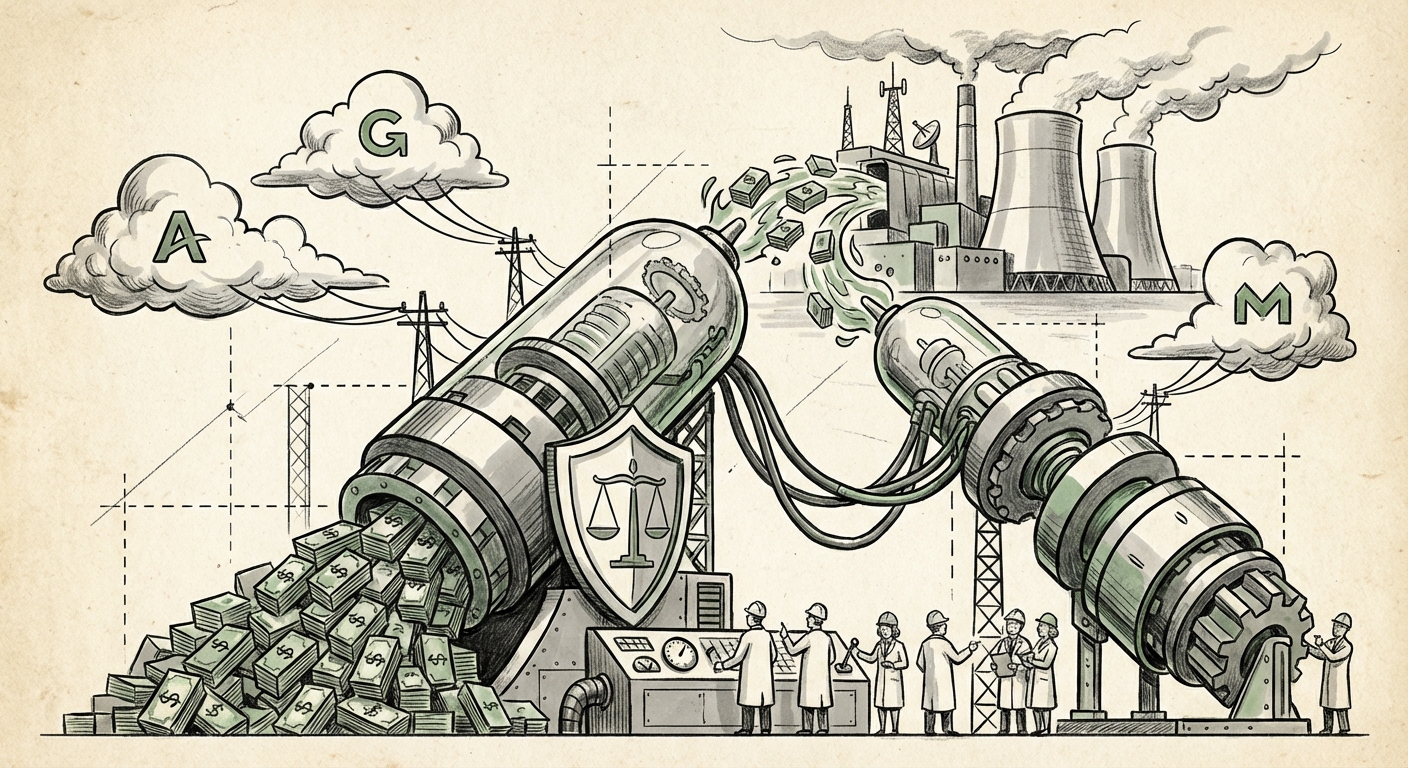
Google's Frozen v2 Chip: The Future of AI Efficiency Built Into Silicon
Artificial intelligence is hungry — hungry for data, hungry for compute power, and above all, hungry for energy. For years, the biggest gains in AI performance have come from throwing more GPUs and TPUs at ever-larger models. But that approach is hitting a wall of diminishing returns, both financially and environmentally. Now a new chip from Google, called Frozen v2, reportedly takes a radically different approach: it bakes the architecture of Google's Gemini model directly into silicon. This isn't just another accelerator — it represents a shift in how we think about the relationship between hardware and AI. Instead of general-purpose chips trying to run every kind of neural network, Frozen v2 is purpose-built for one specific family of models. If the reports are accurate, this could change everything from cloud computing costs to the devices in our pockets.
What Is Frozen v2? A Custom Chip for a Specific AI
The idea of custom hardware for AI isn't new. Google's Tensor Processing Units (TPUs), Apple's Neural Engine, and countless startups have all tried to build chips that accelerate machine learning workloads. But those chips are still relatively general — they can run many different types of neural networks, from image classifiers to language models. Frozen v2 is different. According to details of the design, this chip is hardwired to match the specific operations, layer types, and data flow patterns of Gemini's architecture. Think of it as a bespoke engine built for one car model, rather than a generic engine that can power any vehicle.
Why go to such extremes? Because general-purpose chips waste enormous amounts of energy moving data between memory and compute units, and they spend many clock cycles on instruction overhead. By fixing the architecture in silicon, Google can eliminate those inefficiencies. Every transistor in Frozen v2 is there to do exactly what Gemini needs, no more, no less. The result is a chip that can perform Gemini's inference and training workloads using a fraction of the power that a traditional GPU or even a general TPU would need.
How Baking Gemini's Architecture Into Silicon Works
To understand the breakthrough, we need to look at what "baking an architecture into silicon" really means. When you run a large language model like Gemini on a typical chip, the software has to translate every operation — every matrix multiplication, every attention layer — into instructions the hardware understands. That translation carries overhead. The chip also needs to be flexible enough to handle different models, so it has many extra circuits that sit idle when running a specific model. Frozen v2 flips this model. The chip's logic gates, memory layout, and data buses are all designed to mirror the layers and connections of Gemini exactly. It's like having a factory where the conveyor belts, assembly robots, and packaging machines are all arranged in the exact shape of the product you're making.
In practice, this means that Gemini's forward pass — the calculations needed to generate a response — happens almost entirely in hardware with minimal software intervention. The chip knows exactly where to fetch weights, how to apply them, and where to store intermediate results because those paths are etched into the silicon itself. Early benchmarks suggest that this approach can deliver a 5-10× improvement in energy efficiency per operation compared to running the same model on a GPU, and a significant speed boost as well.
Why This Matters for AI Efficiency
Efficiency isn't just a nice-to-have; it's becoming the central challenge of AI. Training models like Gemini and GPT-4 consume staggering amounts of electricity — some estimates suggest a single training run can match the annual energy use of hundreds of homes. Inference, the process of using the model to answer questions, is even more widespread. Every time you chat with an AI assistant, a data center somewhere is performing trillions of calculations. Multiply that by millions of users, and the energy bill becomes astronomical.
Frozen v2 directly attacks this problem. By making each calculation cheaper in terms of energy, Google can either serve more users with the same power budget, or dramatically reduce costs. For businesses that run AI workloads in the cloud, this could translate into lower prices for API access. For Google itself, it could mean running Gemini at a fraction of the current operating expense. And for the planet, less energy per query means a smaller carbon footprint per AI interaction.
What This Means for the Future of AI
The development of Frozen v2 signals a broader trend: AI models are becoming so important that it makes economic sense to build custom silicon for each major architecture. We may soon see a world where every leading model — from large language models to vision transformers — has its own dedicated chip. This would create a tight coupling between hardware and software that we haven't seen since the early days of computing, when software was often written for one specific machine.
For the AI industry, this convergence could accelerate progress in several ways. First, it enables models that are much larger than current ones because efficiency gains make them feasible to run. Imagine a model with 10 trillion parameters that consumes no more power than today's 1 trillion parameter model. Second, it could enable on-device AI that runs entirely offline. A chip like Frozen v2, scaled down for mobile, could bring Gemini-class intelligence to smartphones, laptops, and even IoT devices — no cloud connection required. That would unlock new applications in privacy-sensitive fields like healthcare, finance, and personal assistants.
But there's a downside. Custom silicon is expensive to design and manufacture. If only the biggest companies can afford to build chips for their own models, it could entrench the dominance of a few players. Smaller AI labs might have to rely on less efficient general-purpose hardware, widening the gap between the haves and have-nots in AI.
Business Implications: Cost, Speed, and Competitive Advantage
For businesses that use AI, the implications are immediate and practical. If Google passes on some of the cost savings from Frozen v2, we could see a significant drop in the price of using Gemini via API. Companies that currently spend thousands of dollars per month on inference might see their bills slashed. This could make AI more accessible to small and medium-sized businesses, leveling the playing field.
Speed improvements matter too. A faster chip means lower latency, which is critical for real-time applications like chatbots, voice assistants, and autonomous systems. A business that relies on AI for customer service could handle more conversations with fewer servers. Developers could build richer, more interactive experiences without worrying about response times.
On the flip side, businesses that are heavily invested in competing platforms — such as those using open-source models on GPUs — may find themselves at a cost disadvantage. The AI hardware race is becoming a key strategic battleground. Companies will need to carefully evaluate which hardware ecosystem they bet on, because migration costs could be high if a custom chip only works with one model.
Societal Impact: Energy, Accessibility, and Concentration of Power
The energy savings from chips like Frozen v2 are a big win for the environment. Data centers currently account for about 1-2% of global electricity consumption, and AI is a growing share of that. Every efficiency gain helps reduce wastewater and carbon emissions. If custom AI chips become widespread, the environmental footprint of the AI boom could be much smaller than feared.
Accessibility also gets a boost. Cheaper and faster AI means more people can use it for education, creative work, and problem-solving. A student in a developing country could run a powerful language model on a modest device, without needing a fast internet connection or a cloud subscription. That could democratize access to intelligence in ways we haven't seen before.
But there is a real risk of power concentration. The companies that control both the model and the chip — like Google with Gemini and Frozen v2 — gain enormous influence. They set the rules, prices, and update cycles. Competitors may find it impossible to match the efficiency of vertically integrated systems. Regulators may need to look at whether custom AI chips create unfair monopolies, especially if they lock in a single model for a critical piece of infrastructure.
Actionable Insights: What You Can Do Today
- For business leaders: Start evaluating your AI infrastructure costs. If you use Gemini or plan to, watch for pricing changes when Frozen v2 goes into production. Consider negotiating long-term contracts with Google that capture efficiency savings.
- For developers: Learn about hardware-aware optimization. Even if you can't design a custom chip, understanding how models interact with hardware can help you write more efficient code. Tools like model quantization and pruning will become even more valuable.
- For investors: Pay attention to the chip design startups that specialize in model-specific silicon. Companies like Cerebras, Groq, and others are pursuing similar approaches. The market for custom AI accelerators is likely to grow rapidly.
- For policymakers: Begin studying the competitive effects of vertical integration in AI hardware. Antitrust frameworks may need to evolve to prevent a handful of firms from controlling the entire stack from model to silicon.
- For researchers: Explore the implications of model-specific hardware for open science. Can open-source models also benefit from custom chips without corporate backing? Cooperative hardware design initiatives could be a way forward.
Conclusion
Google's Frozen v2 chip represents a natural evolution in the AI arms race. As models grow larger and more capable, the general-purpose computing model that served the industry for decades is giving way to something more biological: hardware that is shaped by and for the software it runs. This convergence promises huge leaps in efficiency, speed, and accessibility. But it also raises deep questions about who controls the future of artificial intelligence. The era of one-size-fits-all AI chips is ending. The future is bespoke — and it's being baked into silicon right now.