Alibaba's Qwen-Image-3.0: AI That Generates Infographics and Tiny Readable Text in One Pass
Artificial intelligence image generation has long been about creating beautiful, photorealistic scenes. But what about images that are actually useful for communication — charts, diagrams, infographics with real, readable text? That's been a massive blind spot. Most AI image models turn text into garbled, illegible smudges. Alibaba's latest breakthrough changes that completely.
Qwen-Image-3.0 can render complex multi-panel infographic grids and even text as small as ten pixels high — all in a single pass. No post-processing, no separate text overlay, no iterative fixes. The model outputs the final image directly, with text that is crisp, correctly spelled, and precisely placed. This is a watershed moment for visual content creation.
What Makes Qwen-Image-3.0 Different?
Until now, getting AI-generated images with readable text required a cumbersome workflow: generate the image, then manually add text using design software, or use a separate text-to-image model fine-tuned for typography. Even specialized models like DALL-E 3 or Midjourney struggle with more than a few words, and they often produce invented letters or misspellings.
Qwen-Image-3.0 bypasses these limitations entirely. It understands not just visual elements but also spatial layout, typography, and semantic content. When you ask for an infographic comparing sales across four quarters, it produces a grid with labeled bars, axis markers, and a title — all rendered at native resolution, readable down to the smallest detail.
The "ten-pixel text" claim is stunning. Human-readable text at that micro scale normally requires vector graphics or extremely high resolution raster rendering. The fact that a generative model handles this in one pass shows a level of token-level precision we haven't seen before. Text characters are not just painted on — they are generated as part of the overall image distribution with correct glyph shapes.
How It Works (Simplified)
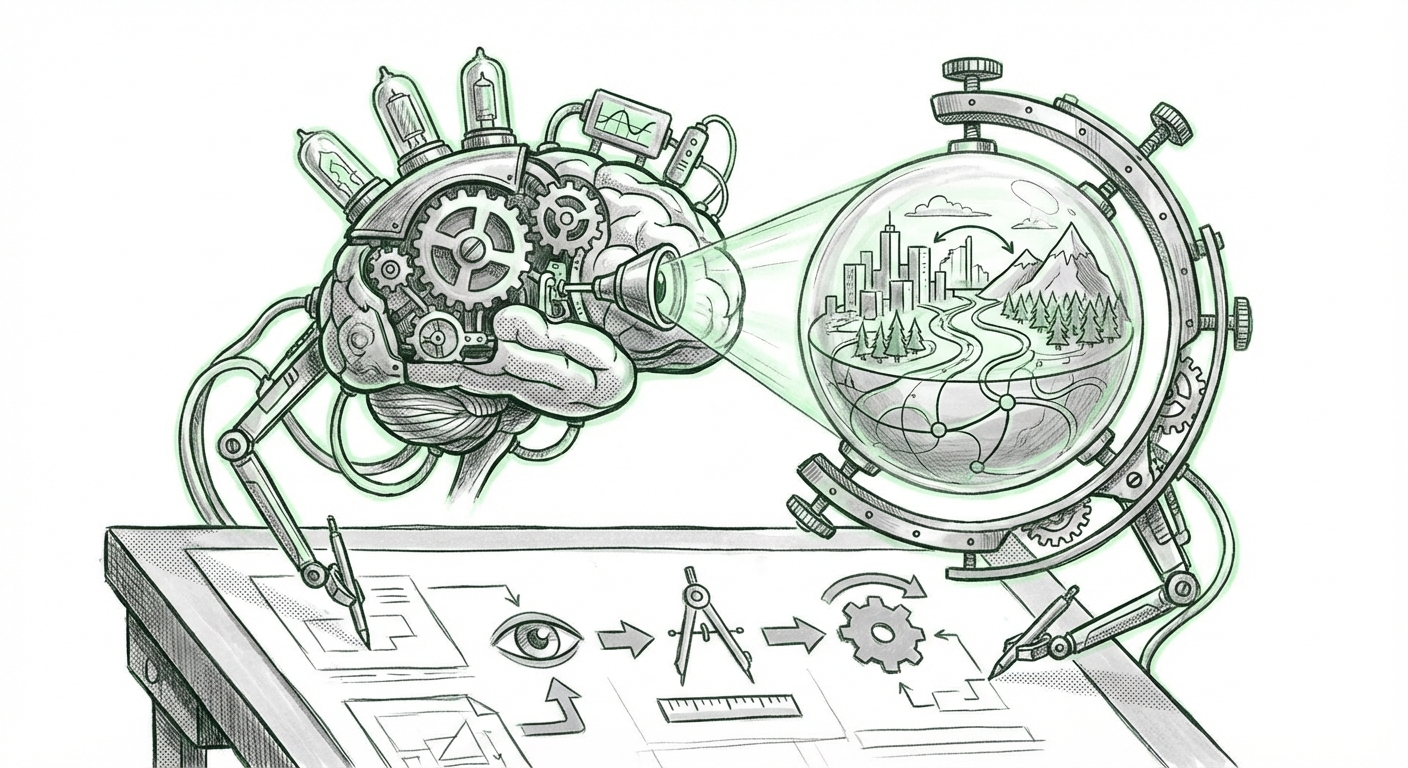
While the full technical details are proprietary, the core innovation likely involves a multimodal architecture that jointly models visual layout, language, and pixel generation. Traditional diffusion or autoregressive models treat text as a nuisance. Qwen-Image-3.0 appears to treat text and graphics as equally important modalities, with attention mechanisms that ensure high fidelity for both.
The model is trained on massive datasets that include documents, slides, posters, and infographics — not just natural images. This training allows it to learn the grammar of visual communication: how fonts interact with spacing, how grids organize information, how color encodes meaning.
Importantly, the entire output is generated in a single forward pass. No iterative refinement, no separate text rendering engine. That makes it both fast and practical for real-time applications.
Implications for the Future of AI
1. Beyond "Pretty Pictures" Toward Functional Visuals
Most AI image generators today are optimized for creativity, not communication. Qwen-Image-3.0 signals a pivot toward functional image generation. The future of AI will include models that produce dashboards, educational diagrams, process flows, and technical illustrations. This opens up entire new categories of use cases where accuracy matters more than aesthetic appeal.
2. Democratization of Data Storytelling
Creating a professional infographic currently requires design skills or expensive software. With Qwen-Image-3.0, anyone can describe the data they want to visualize and get a publication-ready graphic. This lowers the barrier for small businesses, educators, and researchers to present complex information clearly. Expect a surge in AI-generated visual communications across blogs, reports, and social media.
3. Text in Images Becomes Trustworthy
One of the biggest criticisms of AI-generated content has been the inability to produce reliable text within images. That limited use in marketing, internal communications, and documentation. As models like Qwen-Image-3.0 prove text fidelity, businesses can trust AI to generate flyers, certificates, labels, and even signage — reducing the need for human proofreading for spelling errors.
4. Multimodal AI Convergence
This model demonstrates that the boundaries between text generation, layout design, and image generation are dissolving. The next generation of AI will handle any combination of output modalities seamlessly. We might soon see models that output a webpage, a presentation, or a video all from a single prompt — with text, images, and layout all perfectly synchronized.
Practical Implications for Businesses
For businesses, this isn't just a neat trick — it's a potential productivity multiplier. Consider these immediate applications:
- Marketing and Advertising: Generate dozens of variant social media graphics with different text messages and layouts in seconds. Test headlines without waiting for a designer.
- Reporting and Analytics: Turn quarterly data dumps into instantly understandable infographic summaries. Managers can get visual snapshots with minimal effort.
- Education and Training: Create instructional diagrams, posters, and study aids on the fly. Teachers can explain concepts visually without specialized software.
- Internal Communications: Generate meeting slides, org charts, and process maps from text descriptions. Reduce the time spent on formatting.
- E-Commerce: Produce product comparison grids, size charts, and instructional graphics for product pages — complete with readable small print.
Cost implications: Businesses currently spend heavily on graphic designers or stock illustration platforms. AI that generates ready-to-use infographics can cut content production costs by 50–80%, especially for repetitive layouts. However, human oversight will still be needed for strategic messaging and brand consistency.
Actionable Insights for Leaders
If you're a business leader or technologist, here's how to prepare for and leverage this capability:
1. Experiment Now with Text-in-Image Models
Start testing the current generation of models (including Qwen-Image-3.0 if accessible via API or demo) to understand their strengths and limitations. Identify the repetitive visual tasks in your organization that could be automated. The faster you learn the quirks, the sooner you can deploy.
2. Update Your Content Workflows
Traditional content creation pipelines (brief → text copy → designer mockup → review → revise) can be collapsed. An AI generates the first draft of the visual, which a designer then polishes. Change your processes to let AI handle the heavy lifting while humans focus on quality assurance and creativity.
3. Watch Out for Hallucinations
Even with improved text accuracy, AI can still produce wrong numbers, misrepresent data, or create nonsensical layouts. Always verify generated content before publishing. Implement a review step for any AI-produced infographics containing quantitative information.
4. Re-skill Your Teams
Your graphic designers won't become obsolete, but their roles will shift. Instead of manually placing every element, they'll become AI prompt engineers and creative directors. Invest in training that teaches design professionals how to guide AI tools effectively.
5. Evaluate Licensing and Security
Using cloud-based AI to generate internal business infographics may raise data privacy concerns if your data is sensitive. Check whether the model runs on-premises or complies with your industry regulations (e.g., HIPAA, GDPR). Also review usage rights for generated outputs.
The Bigger Picture: AI's Text Revolution
Qwen-Image-3.0 is part of a broader trend where AI is becoming competent at generating precise, structured outputs. We've seen advances in code generation, mathematical reasoning, and long-form text. Now visual-textual coherence is catching up.
This matters because so much of human communication relies on combining images with text. Infographics are everywhere — from restaurant menus to election result maps — because they transfer information efficiently. Until now, creating them required human craftsmanship. AI just made that craft accessible to everyone.
The future of AI is not just about generating content — it's about generating communicative content that serves real-world purposes. With models that can produce ten-pixel readable text and full infographic grids in one pass, we are entering an era where AI becomes a genuine partner in information design. The impact on how we learn, advertise, and share knowledge will be profound.