Microsoft and Mistral Multi-Billion-Dollar Deal: What It Means for the Future of AI Infrastructure in Europe
The artificial intelligence landscape just shifted dramatically. A massive multi-billion-dollar deal between two of the biggest names in AI — Microsoft and Mistral — is set to reshape how artificial intelligence infrastructure is built and deployed across Europe. This isn't just another partnership announcement. It's a signal that the race for AI dominance is entering a new phase, one that will be defined by massive physical infrastructure, cross-border collaboration, and a deliberate push to decentralize AI power away from the traditional tech hubs.
For businesses, policymakers, and technologists, this deal carries implications that will ripple outward for years. Let's break down what this alliance means, why it matters, and what you should be paying attention to right now.
The Deal in Context: Why This Partnership Matters
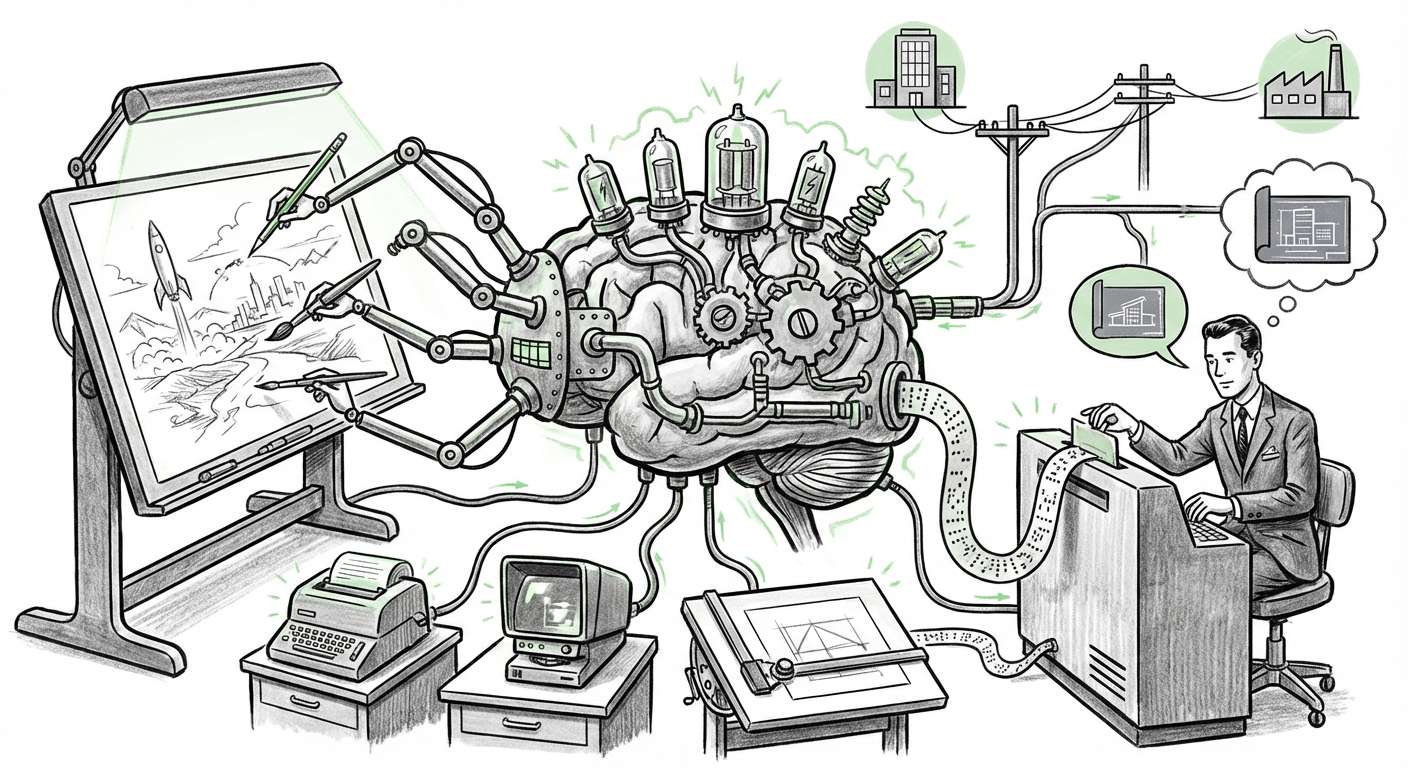
At its core, this agreement is about building the physical backbone that AI needs to operate at scale. AI models — especially the large language models and foundation models that power everything from chatbots to code generators — require enormous amounts of computing power. That computing power comes from data centers filled with specialized hardware like GPUs and TPUs. These facilities consume vast amounts of energy, require sophisticated cooling systems, and need to be located strategically to minimize latency and comply with local regulations.
By joining forces, Microsoft and Mistral are essentially pooling their resources, expertise, and ambitions to build out this infrastructure across Europe. Microsoft brings decades of enterprise cloud experience, a global network of data centers, and deep pockets. Mistral brings cutting-edge AI research, a growing portfolio of open-weight models, and deep roots in the European tech ecosystem. Together, they are positioned to create something that neither could build as quickly on their own.
This is a classic example of the "infrastructure-first" strategy that is becoming essential in AI. You can have the best algorithms in the world, but if you don't have the compute capacity to train and run them, you're stuck. This deal directly addresses that bottleneck.
European AI Sovereignty Gets a Massive Boost
One of the most significant angles here is what this means for European AI autonomy. For years, European leaders have worried about the continent falling behind the United States and China in AI development. European companies and researchers have often had to rely on cloud infrastructure hosted outside the region, raising concerns about data sovereignty, regulatory compliance, and strategic dependence.
This deal changes that equation. By building AI infrastructure across Europe — presumably in multiple countries — Microsoft and Mistral are creating a homegrown alternative. European businesses will be able to train and deploy AI models on infrastructure that is physically located in Europe, subject to European data protection laws, and operated by partners who understand the local regulatory landscape.
This is especially important given the European Union's stringent data protection framework. When sensitive data never leaves the continent, compliance becomes simpler, legal risks shrink, and trust increases. For industries like healthcare, finance, and government — where data localization is often a requirement — this could be a game-changer.
What This Deal Tells Us About the Future of AI Development
Beyond the headline numbers, this partnership reveals several important trends that will define the next phase of AI evolution.
1. AI Is Becoming an Infrastructure Game
The era when a handful of researchers in a garage could build a world-changing AI model is — for now — behind us. The most advanced models require billions of dollars in compute, data, and talent. This deal is a clear acknowledgment that the future of AI will be built on a foundation of massive, capital-intensive infrastructure. Companies that control the physical layer — the data centers, the networking, the energy supply — will have outsized influence over what kinds of AI get built and who gets to use them.
2. Open Models Are Going Mainstream
Mistral has been a leading voice in the open-weight AI movement, releasing models that researchers and developers can download, fine-tune, and deploy on their own hardware. This deal signals that the open approach is not just a hobbyist experiment — it's a viable commercial strategy worthy of multi-billion-dollar investment. Expect to see more foundational model companies follow this hybrid model: open weights for the community, premium infrastructure and support for enterprise customers.
3. Geographic Diversification Is Accelerating
AI development has been heavily concentrated in a few regions — Silicon Valley, Seattle, Beijing, Shenzhen. This deal is part of a broader push to spread AI infrastructure more evenly around the world. Europe has the talent, the regulatory environment, and the market demand to support a thriving AI ecosystem. By investing in European infrastructure, Microsoft and Mistral are betting that the next wave of AI innovation will be global, not just American or Chinese.
Practical Implications for Businesses
If you're a business leader, this deal should be on your radar for several concrete reasons.
Lower latency and better performance. When AI models run on infrastructure that is geographically close to your users, response times improve. For applications like real-time translation, customer service chatbots, and code assistants, every millisecond matters. European infrastructure means better experiences for European customers.
Simpler regulatory compliance. As data protection regulations continue to tighten around the world, having AI infrastructure that is explicitly built for the European market gives you a compliance advantage. You can train models on European data, keep that data in Europe, and deploy models without worrying about cross-border data transfer restrictions.
New partnership opportunities. This deal creates a two-player ecosystem that other companies can plug into. If you are a European startup building on Mistral models, you now have a clear path to scale using Microsoft's cloud infrastructure. If you are an enterprise already using Microsoft Azure, you have easier access to Mistral's models. The wall between cloud platforms and AI model providers is getting thinner.
Potential pricing shifts. When infrastructure capacity increases in a region, competition typically drives prices down over time. Businesses that rely on AI compute should watch for more competitive pricing in European cloud regions as a result of this buildout.
Implications for Society and Policy
The societal impact of this deal is equally important. At a time when many people are worried about AI concentrating power in too few hands, this partnership offers a counter-narrative. By building infrastructure across multiple European locations, the deal inherently spreads out control. No single country or company holds all the cards.
This also has implications for energy and sustainability. Data centers are enormous consumers of electricity. The location choices Microsoft and Mistral make will have real consequences for local power grids and renewable energy targets. It will be worth watching whether they prioritize regions with abundant renewable energy — like the Nordics or Spain — and whether they commit to carbon-neutral operations.
For European policymakers, this deal is both an opportunity and a test. The opportunity is clear: homegrown AI infrastructure that supports European values, regulations, and talent. The test is whether regulators can move quickly enough to approve new data center construction, grid connections, and other logistical requirements without getting bogged down in red tape. Europe has a reputation for slow permitting processes. This deal will put that reputation to the test.
What to Watch Next
The next few months will reveal a lot about how this deal translates into reality. Here are the key signals to track.
- Where exactly will the infrastructure be built? The announcement says "across Europe," but specific locations matter for energy costs, talent availability, and regulatory exposure. Watch for site announcements in countries with strong renewable energy grids and supportive AI policies.
- What kinds of models will be prioritized? Mistral has a range of models, from smaller efficient ones to larger frontier models. The infrastructure buildout will likely prioritize training larger models, but the exact roadmap will tell us a lot about their strategic priorities.
- How open will the infrastructure be? Will this be exclusive to Mistral and Microsoft customers, or will third-party researchers and startups be able to access compute capacity? The openness of the infrastructure will shape how much innovation it enables beyond the two partner companies.
- What will the energy footprint be? The environmental impact of large-scale AI infrastructure is a growing concern. Transparent reporting on energy sources, efficiency measures, and carbon offsets will be important for public trust.
- Will other partnerships follow? This deal sets a precedent. Other cloud providers — think Google Cloud, Amazon Web Services, Oracle — may look for similar deep partnerships with AI model companies in other regions. The landscape could look very different a year from now.
The Bigger Picture: AI Infrastructure as Strategic Asset
If there is one takeaway from this deal, it is that AI infrastructure is now being treated as a strategic asset on par with energy grids, transportation networks, and telecommunications systems. Countries and companies that control the physical infrastructure of AI will control the future of the technology itself.
This is a shift from the early days of AI, when the focus was entirely on algorithms and data. Those things still matter, but they are increasingly seen as commodities. What is scarce — and what is becoming the new moat — is the capacity to train and run models at scale. That capacity requires data centers, networking, energy, and the operational expertise to run it all reliably.
Microsoft and Mistral are making a bet that this infrastructure-first future is the right one. And they are putting billions of euros behind that bet. For everyone else in the AI ecosystem — whether you are a startup founder, a corporate innovator, a policy maker, or an investor — the message is clear: pay attention to where the infrastructure is being built, because that is where the future of AI is being assembled.
Actionable Insights for Different Audiences
For Business Leaders
Start planning for a more distributed AI infrastructure landscape. If your AI workloads are currently concentrated in one cloud region, now is the time to explore multi-region strategies. Evaluate Mistral models if you haven't already — they are likely to become easier to access and deploy on Microsoft Azure, which could simplify your tech stack. And keep an eye on pricing: increased infrastructure supply in Europe should eventually lead to more competitive compute costs.
For Developers and AI Practitioners
This deal is good news for anyone who wants to work with open-weight models at scale. Mistral's commitment to open models, combined with Microsoft's infrastructure, means you will have more options for building and deploying AI without being locked into proprietary ecosystems. Brush up on Mistral's model family and start thinking about how you can leverage the coming infrastructure capacity for your own projects.
For Policymakers
This is a moment to act. The private sector is making a massive bet on European AI infrastructure. Policymakers should meet that bet with streamlined permitting, smart energy policies, and investments in AI education and talent development. The window to shape how this infrastructure is built and used is now — don't let bureaucratic delays squander the opportunity.
Conclusion
The multi-billion-dollar deal between Microsoft and Mistral to build AI infrastructure across Europe is more than a business transaction. It is a declaration that the future of AI will be built on physical foundations, that European AI sovereignty is viable and valuable, and that the era of AI infrastructure as a strategic asset has arrived.
For businesses, the message is clear: prepare for a world where AI infrastructure is distributed, where open models coexist with proprietary ones, and where geographic location matters more than it has in the past. For society, the message is equally important: the decisions made now about where and how to build AI infrastructure will shape the technology's impact for decades to come.
This deal is a signal. Pay attention. The future of AI is being built, and it is being built across Europe.